

Business
US permits 30-day sale of Iran oil at sea in effort to tame prices | The Express Tribune

Energy analysts say admin efforts to control prices will not have a meaningful impact until the Strait is open
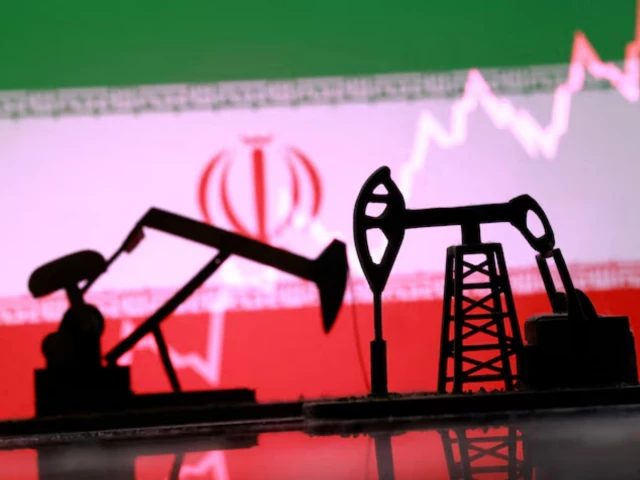
3D-printed oil pump jacks, Iranian flag, and a rising stock graph appear in this illustration taken March 2, 2026. PHOTO: REUTERS
The Trump administration waived sanctions on the purchase of Iranian oil at sea for 30 days on Friday in its latest attempt to ease oil prices that have been driven up by the US-Israeli war on Iran.
The waiver will bring some 140 million barrels of oil to global markets and help relieve pressure on energy supply, Treasury Secretary Scott Bessent posted on X.
Iran is the head of the snake for global terrorism, and through President Trump’s Operation Epic Fury, we are winning this critical fight at an even faster pace than anticipated. In response to Iran’s terrorist attacks against global energy infrastructure, the Trump…
— Treasury Secretary Scott Bessent (@SecScottBessent) March 20, 2026
The move reflects White House worries that the surge in oil prices after nearly three weeks of US and Israeli strikes on Iran will hurt US businesses and consumers ahead of the November midterm elections, when President Donald Trump’s fellow Republicans hope to retain control of Congress.
The licence, posted to the Treasury Department’s website after market hours, says Iranian oil can be imported into the US under the waiver when necessary to complete its sale or delivery.
The US has not meaningfully imported Iranian oil since Washington imposed measures after the 1979 revolution. It was unclear whether any Iranian oil would end up in the country as a result of the waiver.
Read: US issues 30-day waiver for Russian oil shipments stranded at sea
Cuba, North Korea and Crimea are among the regions excluded from the licence, which will remain in effect until April 19.
The move is expected to benefit China, the top buyer of Iranian oil. Energy Secretary Chris Wright said supplies could get to Asia within three or four days and hit the market after being refined over the coming month and a half.
It was the third time the Treasury Department has temporarily waived sanctions on oil from US adversaries in a little more than two weeks. The moves are part of the administration’s attempts to tame energy prices that have soared above $100 a barrel to the highest levels since 2022.
The US previously eased sanctions on Russian oil and on Friday issued a general licence allowing the sale of Iranian crude oil and petroleum products loaded on vessels by Friday.
“In essence, we will be using the Iranian barrels against Tehran to keep the price down as we continue Operation Epic Fury,” Bessent said.
Bessent had telegraphed the move in an interview with Fox Business on Thursday, saying the release of the sanctioned Iranian oil into global supplies would help keep oil prices down for 10 to 14 days.
He said on Friday that Iran would have difficulty accessing any revenue generated by the move, and Washington would maintain maximum pressure on Iran and its ability to access the international financial system.
Running out of options
Oil prices have jumped about 50% since the US and Israel launched their attacks on February 28. Tehran has responded with attacks on Israel and the Gulf states that host US bases.
Vital energy infrastructure in Iran and neighbouring Gulf states has been attacked, and Iran has effectively closed the Strait of Hormuz, a conduit for some 20% of the world’s oil and liquefied natural gas.
Read more: How many countries have pushed back on Trump’s Hormuz ship demand?
In its effort to tame oil prices, the Trump administration on Wednesday announced a 60-day waiver of the Jones Act shipping law, temporarily allowing foreign-flagged vessels to move fuel, fertiliser and other goods between US ports.
Energy analysts, including Brett Erickson, a managing principal at Obsidian Risk Advisers, have said the administration’s efforts to control prices will not have a meaningful impact until the strait is opened to vessels.
“The easing of sanctions raises concerns about the rapid depletion of Washington’s economic toolkit,” to dampen oil prices, Erickson said. “If we’ve reached the point of loosening sanctions on the country we are at war with, we’re really running out of options.”
The US issued a 30-day waiver for countries to buy sanctioned Russian oil stranded at sea after a 30‑day license on March 5, specifically for India to buy Russian oil.
Mark Dubowitz, CEO of the Foundation for the Defence of Democracies, a nonprofit research institute considered hawkish on Iran, praised the decision.
“We’ve worked on sanctioning Iran’s oil industry for years. This is a smart move … to help win the fight against the regime,” Dubowitz said on X.







Containers at the Port of Oakland in Oakland, California, US, on Thursday, March 26, 2026.
David Paul Morris | Bloomberg | Getty Images
Months after the Supreme Court ruled some tariffs were unconstitutional, the first round of tariff refunds has begun flowing in.
Oshkosh Corporation CFO Matt Field confirmed to CNBC that the company has started receiving tariff refunds as of Tuesday.
“Following acceptance of our initial filing, we have begun receiving payments on our tariff refund claims, representing an initial portion of our total claims submitted,” Field said.
The company has not yet verified its total refund amount, Field added.
Basic Fun, the company behind Care Bears and Tonka trucks, also told CNBC it began receiving tariff refunds on Tuesday.
CEO Jay Foreman said the refunds so far have only represented 5% of the company’s total claim on its early invoices.
“We will utilize the refund dollars to help support our 2026 cash flow and invest in our team. This is the toughest time of the year for toy companies,” Foreman said in a statement. “We’ll also be announcing to our staff that we will be increasing salaries to help offset cost of living increase, announcing promotions and larger merit increases. We are reinvesting the funds in our business and people.”
Logistics companies UPS, FedEx and DHL have previously said that they will file for tariff refunds on behalf of their customers, requiring no further action from them. The first phase of tariff refunds only covers requests for entries that CBP finalized within the past 80 days, though that process could take months to reach customers.
The U.S. Customs and Border Protection said in a court filing that it anticipated paying refunds of $35.46 billion on 8.3 million shipments, as of Monday morning.
In February, the Supreme Court invalidated President Donald Trump‘s tariffs imposed under the International Emergency Economic Powers Act of 1977. In the months that followed, companies began filing for tariff refunds in a portal, called the Consolidated Administration and Processing of Entries.
In a radio interview with WABC on Tuesday morning, Trump called the tariff refund situation “crazy.”
“In theory, you have to pay the tariffs back. We’ll fight that,” Trump said. “We were taking in fortunes from people that hate us, countries and companies that hate us.”
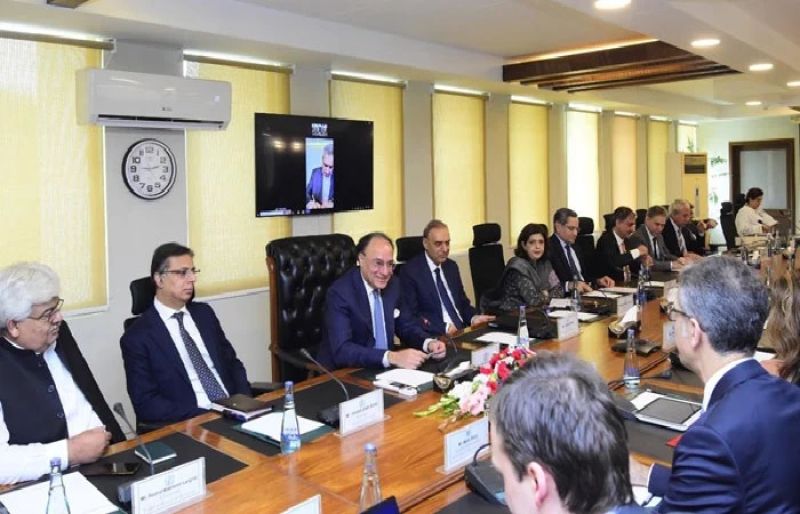
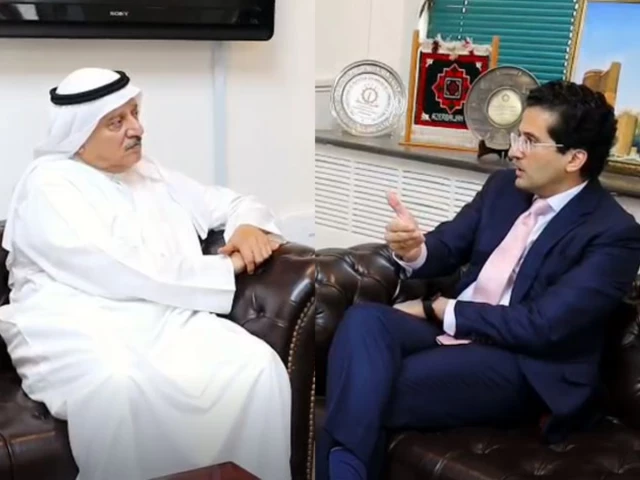
Finance Minister Muhammad Aurangzeb on Wednesday briefed the visiting International Monetary Fund (IMF) mission on the country’s macroeconomic outlook, fiscal strategy, reform priorities, and the government’s ongoing efforts to ensure sustainable economic stability and long-term growth.
The meeting with the visiting IMF mission, led by Mission Chief Iva Petrova, focused on Pakistan’s macroeconomic stabilisation efforts, preparations for the upcoming federal budget, and the broader reform agenda aimed at strengthening fiscal and external sustainability while fostering sustainable economic growth.
During the meeting, both sides exchanged views on maintaining reform momentum, preserving macroeconomic stability, and advancing structural reforms to promote investment, productivity, and export-led growth within a balanced and forward-looking policy framework.
The finance minister appreciated the IMF’s continued engagement and constructive dialogue with the government of Pakistan.
He particularly acknowledged the productive discussions initiated during the Spring Meetings held in Washington earlier this year.
Senator Aurangzeb shared encouraging developments regarding Pakistan’s external sector, highlighting positive trends in remittances and export performance.
He noted that recent data indicated improvement in exports on both a month-on-month and year-on-year basis, reflecting growing resilience in the economy and a gradual strengthening of macroeconomic fundamentals.
The minister emphasised that while economic stabilisation efforts had produced encouraging results, the government remained fully mindful of the structural challenges confronting the economy, particularly external liabilities and the need to accelerate sustainable, export-led growth.
He reiterated the government’s commitment to deepening reforms aimed at strengthening macroeconomic stability without compromising long-term growth prospects.
In this regard, he underscored the importance of moving Pakistan away from recurring boom-and-bust cycles through structural reforms, productivity enhancement, deregulation, and improved export competitiveness.
The minister further stated that the government’s reform agenda had been carefully calibrated in consultation with international experts and economists.
He emphasised that the ongoing policy measures were not driven by short-term considerations, but formed part of a broader and technically grounded economic transformation strategy endorsed at the highest level.
The IMF mission acknowledged the positive progress made by Pakistan in maintaining macroeconomic stability despite a challenging global and regional environment.
The Mission appreciated the government’s continued commitment to prudent economic management and reform implementation.
It emphasised the importance of sustaining reform momentum, maintaining fiscal discipline, and advancing structural reforms to support durable and inclusive economic growth.
Discussions during the meeting also focused on the broader macroeconomic framework, the government’s reform agenda, and priorities for the upcoming budget.
The mission reaffirmed its commitment to continued engagement and constructive cooperation with Pakistan in support of the country’s economic reform programme and long-term economic resilience.
Business
Tata Motors Q4 results: Net profit rises 34% to Rs 1,793 crore; revenue climbs on strong volume growth – The Times of India

Commercial vehicle maker Tata Motors Ltd on Wednesday reported a 33.8 per cent rise in consolidated net profit at Rs 1,793 crore for the fourth quarter ended March 31, 2026, driven by strong volume growth.The company had posted a consolidated net profit of Rs 1,340 crore in the corresponding quarter of the previous financial year, Tata Motors said in a regulatory filing, as reported PTI.Total revenue from operations in the January-March quarter rose to Rs 26,098 crore from Rs 21,863 crore in the year-ago period.Vehicle wholesales during the quarter stood at 1.32 lakh units, up 25 per cent year-on-year.Total expenses in the quarter under review stood at Rs 24,134 crore.For FY26, consolidated net profit stood at Rs 3,030 crore compared with Rs 3,195 crore in FY25. The company said annual profit was impacted by exceptional items related to the new labour code and demerger-related costs.Total revenue from operations for FY26 increased to Rs 83,855 crore from Rs 58,217 crore in the previous financial year.For the full 2025-26 fiscal, total wholesales stood at 4.28 lakh units, up 14 per cent year-on-year.Commenting on the performance, Tata Motors MD and CEO Girish Wagh said FY26 marked a “clear inflection point” for the commercial vehicles industry, with volumes surpassing the pre-FY19 peak, supported by GST 2.0 reforms and sustained infrastructure spending.“For Tata Motors Commercial Vehicles, FY26 was a landmark year as we delivered milestones of revenues and profits and reinforced industry leadership and strengthened our market position,” he said.Wagh said the underlying demand fundamentals remain resilient despite geopolitical uncertainties signalling some moderation in the near term.“With strong business fundamentals, proactive risk mitigation, disciplined execution and a refreshed portfolio offering industry-leading TCO (total cost of ownership) and smart digital solutions, we remain agile and well positioned to sustain momentum through customer-centric solutions to create long-term stakeholder value,” he added.The company’s board has recommended a final dividend of Rs 4 per fully paid-up ordinary share of Rs 2 each for FY26, subject to shareholders’ approval.


OpenAI Brings Its Ass to Court

Christopher Nolan explained Travis Scott casting in ‘The Odyssey’

Gunshots fired in standoff at Philippine Senate over ICC suspect

A new frontier: Identity stack evolves for agentic systems | Computer Weekly

‘Orbs,’ ‘Saucers,’ and ‘Flashes’ on the Moon: Pentagon Drops New UFO Files

India among most resilient large EMs, better placed for future global shocks; policy reforms & strong buffers help: Moody’s – The Times of India

-
 Tech5 days ago
A new frontier: Identity stack evolves for agentic systems | Computer Weekly
-
 Tech5 days ago
‘Orbs,’ ‘Saucers,’ and ‘Flashes’ on the Moon: Pentagon Drops New UFO Files
-
Business1 week ago
India among most resilient large EMs, better placed for future global shocks; policy reforms & strong buffers help: Moody’s – The Times of India
-

 Tech5 days ago
Nick Bostrom Has a Plan for Humanity’s ‘Big Retirement’
-

 Tech6 days ago
What Microsoft Executives Really Thought About OpenAI in 2018
-

 Sports5 days ago
Shaheen Afridi achieves landmark feat during opening Test against Bangladesh
-

 Fashion5 days ago
New orders in German manufacturing up 5% MoM in Mar 2026: Destatis
-

 Tech6 days ago
The Canvas Hack Is a New Kind of Ransomware Debacle