

Politics
US allows Pakistan seafood exports for four years

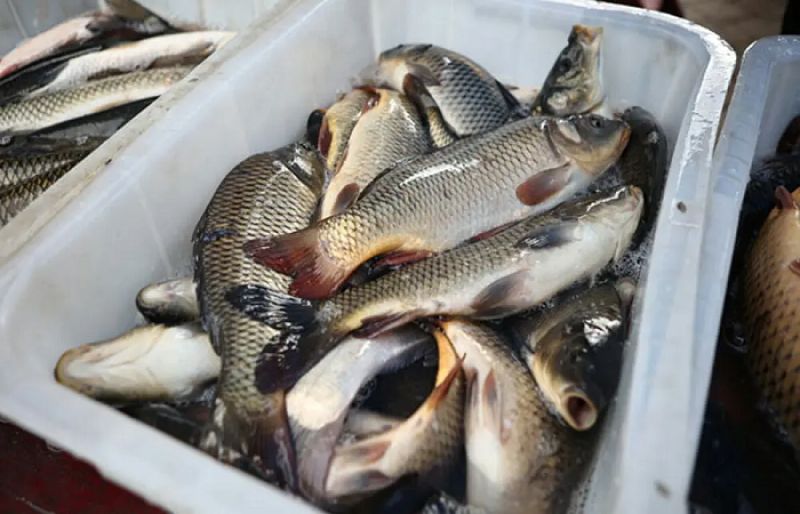

Pakistan’s seafood industry has received a significant boost as the United States granted a four-year approval for fish exports, Federal Minister for Maritime Affairs Junaid Anwar Chaudhry announced.
Chaudhry said the license is global recognition of Pakistan’s seafood quality standards, proving that the country’s fisheries meet strict U.S. benchmarks.
He added that this approval will ensure continuity in exports to one of the world’s most valuable markets.
Sharing figures, the minister noted that Pakistan exported 242,000 tons of fish last year, generating $489 million in foreign exchange.
With U.S. access secured for the next four years, seafood exports are expected to increase, with projections reaching $600 million in the coming year.
He emphasized that U.S. approval will bring stability to the export sector, strengthen Pakistan’s global credibility, and open up fresh opportunities for the fishing community.
“This is a proud achievement for Pakistan, as our fisheries have demonstrated the ability to meet international quality requirements,” Chaudhry stated.
Meanwhile, Federal Finance Minister Muhammad Aurangzeb recently hinted at major U.S. investments in multiple sectors of Pakistan following successful trade talks.
In an informal discussion upon his return from the United States, Muhammad Aurangzeb said that the country will soon receive encouraging news of substantial investments across various sectors from the US.
He stated that during his visit, Pakistan achieved significant success in key meetings held as part of trade negotiations, which were highly appreciated by the US administration.
The minister described the trade talks with the US as a major success for the country, noting that Pakistan is moving in the right direction and the results will be visible soon.
Muhammad Aurangzeb underlined the need for making decisions that will bring long-term improvements to the economy and expressed satisfaction over the mutually successful outcome of the negotiations.
- Tehran seeks framework before new talks with US.
- Trump says more US-Iran talks likely this weekend.
- Iran warns of repercussions if US violates truce.
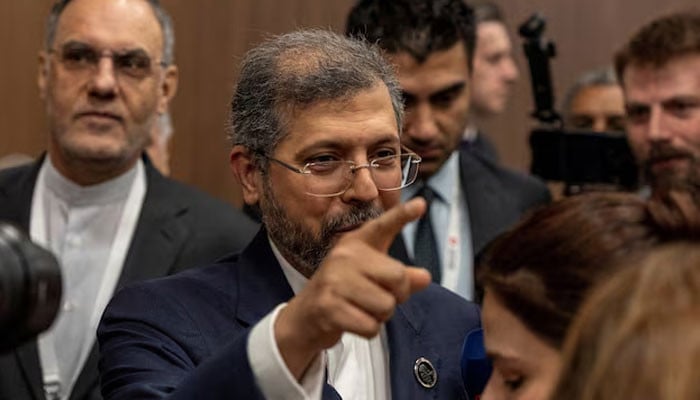
No date has been set for the next round of negotiations between Iran and the United States, Iran’s deputy foreign minister said on Saturday, adding that a framework of understanding must be agreed first.
The highest-level US-Iran talks since the 1979 Islamic Revolution ended in Islamabad without agreement last weekend.
US President Donald Trump has told Reuters there would probably be more direct talks this weekend, though some diplomats said that was unlikely given the logistics of convening in Islamabad, where the talks are expected to take place.
“We are now focusing on finalising the framework of understanding between the two sides. We don’t want to enter into any negotiation or meeting which is doomed to fail and which can be a pretext for another round of escalation,” Saeed Khatibzadeh told reporters on the sidelines of a diplomacy forum in the southern Turkish province of Antalya.
“Until we agree the framework, we cannot set the date… There was significant progress made, actually. But then the maximalist approach by the other side, trying to make Iran an exception from international law prevented us from reaching an agreement,” he said, referring to US demands over Iran’s nuclear programme.
“I have to be very crystal clear that Iran would not accept being an exception from international law. Anything that we are going to be committed to will be within the international regulations and international law.”
Asked about reports that Iran again closed the Strait of Hormuz on Saturday after its temporary reopening following a separate US-brokered 10-day ceasefire between Israel and Lebanon on Thursday, Khatibzadeh said Iran had announced it would allow the safe passage of commercial vessels in line with the terms of the truce.
“The other side, the American side, tried to sabotage that by saying that it is open except for Iranians. So that was the reason we said that ‘if you are going to violate the ceasefire terms and conditions, if Americans are not going to honour their words, there will be repercussions for them’,” he said.
Prime Minister Shehbaz Sharif and Chief of Army Staff (COAS) and Chief of Defence Forces (CDF) Field Marshal Asim Munir concluded separate visits aimed at ending the Iran war, with Field Marshal Munir leaving Tehran and premier Shehbaz headed home from Turkey.
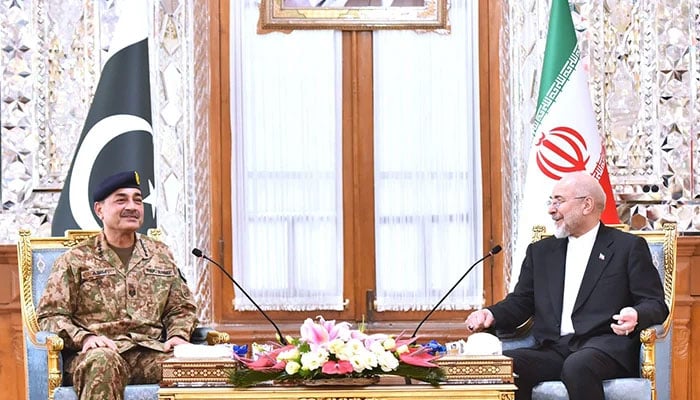
CDF Munir met Iran’s top leadership and peace negotiators during a three-day visit to Tehran, a military’s media wing statement said on Saturday.
Egypt and Pakistan were working “very hard” as mediators to bring about “a final agreement between the United States and Iran”, Egypt´s foreign minister told journalists at the Antalya Diplomacy Forum.
Egypt and Turkey has joined diplomatic efforts with Pakistan to help secure a ceasefire in the conflict.
“We hope to do so (reach an agreement) in the coming days,” Badr Abdelatty said, noting that “not only us in the region, but the whole world is suffering from the continuation of this war”.
“We are pushing very hard in order to move forward,” he said.
Trump ‘tweets a lot’
Iran dismissed US threats of fresh military action, with the senior Iranian official saying that Washington´s statements were inconsistent.
“The American side tweets a lot, talks a lot. Sometimes confusing, sometimes, you know, contradictory,” Khatibzadeh said, referring to US President Donald Trump and his frequent social media posts.
“It is up to the American people to decide whether these statements are consistent and in accordance with international law,” he added.
Khatibzadeh said Iran’s position was clear and vowed resistance to pressure from Washington.
“What we are going to do is quite clear. We will defend heroically and patriotically (our country) … as the oldest civilisation on earth,” he said.
The deputy minister also rejected US accusations that Iran was threatening freedom of navigation in the Strait of Hormuz, a critical route for global oil shipments, after Iran’s military again declared the waterway closed.
“Americans cannot impose their will to do a siege over Iran while Iran, with good intentions, is trying to facilitate safe passage through the Strait of Hormuz,” Khatibzadeh said.
He said Iran had announced safe passage for commercial vessels for the duration of Israel-Lebanon ceasefire, provided there was prior coordination with Iranian maritime authorities.
However, Khatibzadeh accused Washington of attempting to “sabotage” those efforts.
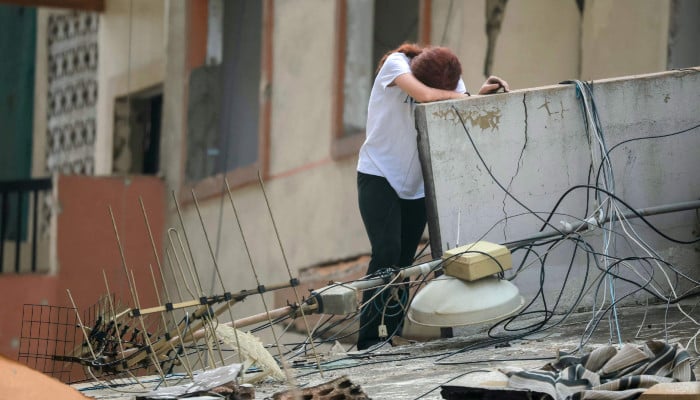
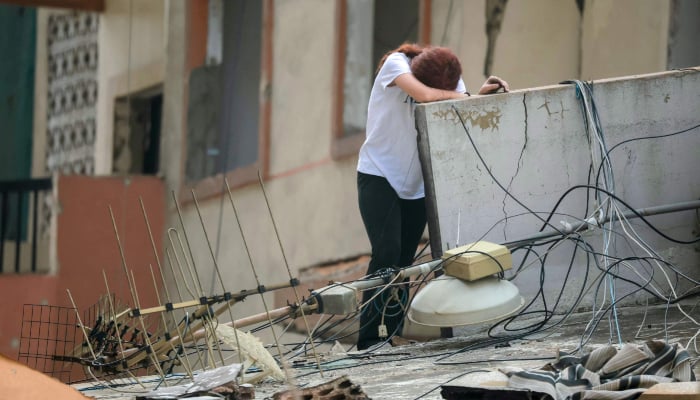
Khodr Sahmarani stood dazed beside the rubble of his south Lebanon home, his forehead in a white bandage, staring at the wreckage where his brother, nephew, and two neighbours died.
“I was upstairs, then I was underground. I screamed ‘Where are you, where are you?’, but there was no one,” he said after surviving an Israeli airstrike on the city of Nabatiyeh just hours before the ceasefire began at midnight on Thursday night.
The afternoon attack flattened what residents say was a five-storey building, creating a jumble of shattered concrete in the battered city.
Nabatiyeh rescuer Mohammad Sleiman told AFP they recovered one body from the strike site on Thursday night, and another three on Friday morning.
Sahmarani, 57, said rescuers “came and took me out of the rubble”.
Israel and Lebanon agreed to a 10-day ceasefire on Thursday in order to negotiate an end to six weeks of war between Israel and the Iran-backed group Hezbollah.
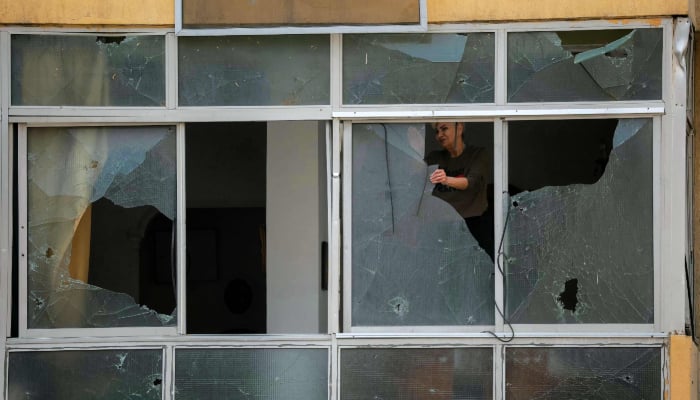
The conflict saw massive Israeli airstrikes across Lebanon and also a ground invasion in the south.
Lebanese authorities say the war that began on March 2 has killed nearly 2,300 people, and caused widespread devastation in southern towns and cities such as Nabatiyeh.
President Joseph Aoun said on Friday that “direct negotiations” with Israel “are crucial, and that the government aims to “consolidate a ceasefire, secure the withdrawal of Israeli forces from the occupied southern territories, recover prisoners, and address outstanding border disputes”.
Hezbollah halted military operations after the ceasefire came into effect, but warned that it was keeping its “finger on the trigger” in case Israel violated the truce.
‘For whose sake?’
Nabatiyeh’s streets were almost empty on Friday, and countless buildings in the city centre have been damaged or destroyed.
A few kilometres outside the city, a small group of Hezbollah supporters cheered on the trickle of cars coming from the direction of Beirut, flashing victory signs and waving the party’s yellow flag.
Deadly Israeli strikes were reported up to the final few minutes before the midnight Thursday deadline agreed upon by the two governments.
“It was the last hours. If it was the beginning of the war, the middle of the war, one can come to terms with it, but it was the last hours,” Sahmarani said, his eyes bloodshot and tearful.
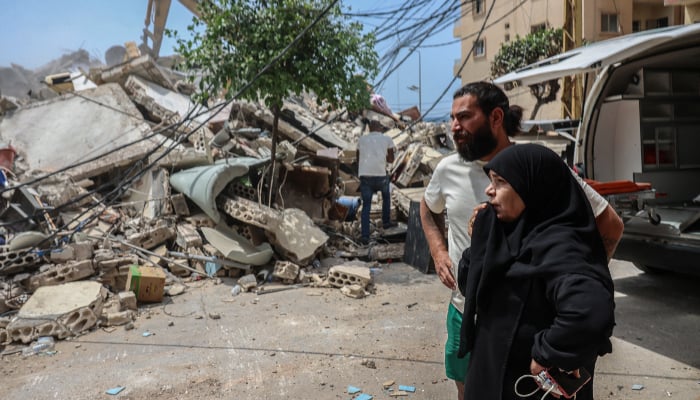
Fadel Hassan Zahri, a neighbour, said the people who were killed had been “lifelong friends of mine”.
“I wouldn’t eat without them, I wouldn’t drink without them.”
Zahri said he was appalled by the government’s willingness to negotiate potential peace and normalisation with Israel.
“We’ve been honourable all our lives… we do not normalise with Israel.”
Sahmarani said he has nowhere else to go and would probably crawl back into the rubble of his home at night and find a ledge or somewhere to lay his head.
“Where should I go now? Who will even look at me?” he asked, adding that he distrusted the Lebanese authorities.
“Let our leaders normalise; no one will listen to them and no one recognises them.
“For whose sake? For whose sake am I supposed to lose all of this?”
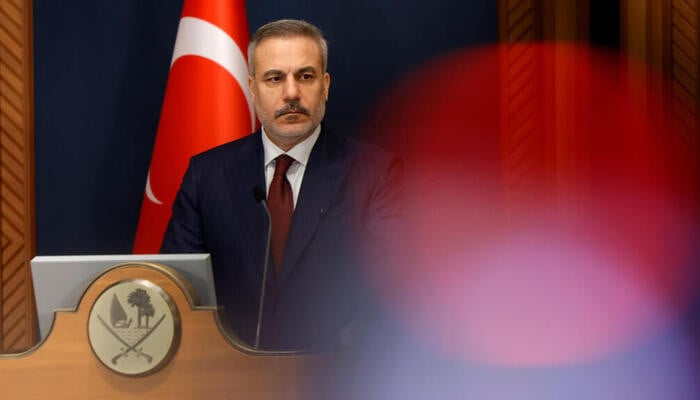
Turkiye’s top diplomat on Saturday accused Israel of creating an international “illusion” and using security concerns as a pretext to seize “more land,” in the latest flare-up in escalating tensions between the two regional powers.
Israel and Turkiye have been trading near-daily diplomatic barbs over a range of regional conflicts, from Israel’s war in Gaza to rising tensions linked to Iran.
“Israel is not after its own security. Israel is after more land,” Turkish Foreign Minister Hakan Fidan said at the Antalya Diplomacy Forum in the Mediterranean resort city.
“Security is being used by the Netanyahu government as an excuse to occupy more land,” he added, referring to Israeli Prime Minister Benjamin Netanyahu.
Speaking in English at a panel discussion, Fidan said Israel had created an “illusion” internationally by portraying itself as acting purely in its own defence.
“It has become very clear, especially in recent years, that it is more than that,” he said.
From Palestinian lands, including Gaza, the West Bank and East Jerusalem, and now extending towards Lebanon and Syria, Israel was pursuing “an onward occupation and expansionism in the region,” Fidan said.
“I think this has to stop.”
“Israel has to know that the only way to live peacefully in the region is to let other countries enjoy their own security, territorial integrity and freedom, and not to use power against them,” he added.
Turkiye and Israel have frequently been at odds, including over Israel’s military campaign in Gaza and differences over Syria’s future.
Relations were severely strained in 2010 when Israeli forces raided a flotilla of ships attempting to breach Israel’s naval blockade of Gaza, killing nine Turkish activists and one US national. The flotilla was co-organised by a Turkish aid group.
‘Move back to Russia-Ukraine talks’
Fidan on Friday met the foreign ministers of Pakistan, Saudi Arabia and Egypt for talks on regional issues, including the Middle East conflict, on the sidelines of the forum.
Asked about the discussions, Fidan said regional countries needed to come together to address shared challenges.
“It is time for all of us to come together in a very mature way and own our problems,” he said, again singling out Israel as the only country seeking territorial gains.
Commenting on Turkiye’s quiet diplomacy over the Russia-Ukraine war, Fidan said those efforts had been overshadowed by tensions involving Iran.
“That has left the Russia-Ukraine war on the side,” he said.
He added that attention should shift back to Ukraine talks once tensions with Iran eased, warning that the conflict remained open to escalation.
Turkiye, which has hosted several rounds of Russia-Ukraine negotiations, is also hosting Russian Foreign Minister Sergei Lavrov and Ukrainian Foreign Minister Andrii Sybiha at separate panels during the Antalya Diplomacy Forum.


‘The Naked Gun’ actor Paul Walter Hauser bloodies opponent at Maple Leaf Pro’s first US show

Iran says no date set for next round of negotiations with US

Hormuz flashpoint: Why Indian-flagged ships are in focus as Middle East tensions hit global shipping – The Times of India

-

 Politics1 week ago
Indian airlines hit hardest after Dubai limits foreign flights until May 31
-

 Entertainment5 days ago
Palace left in shock as Prince William cancels grand ceremony
-

 Sports5 days ago
The case for Man United’s Fernandes as Premier League’s best
-

 Politics1 week ago
Chinese, Taiwanese will unite, Xi tells Taiwan opposition leader
-
 Business5 days ago
UK could adopt EU single market rules under new legislation
-

 Entertainment1 week ago
Dua Lipa hits major career high ahead of wedding with Callum Turner
-

 Sports7 days ago
Lamar Jackson hits back at critics with faithful message on social media
-
 Business1 week ago
He paid $248 in illegal tariffs for this coat. Will he ever get it back?