

Politics
US allows Pakistan seafood exports for four years

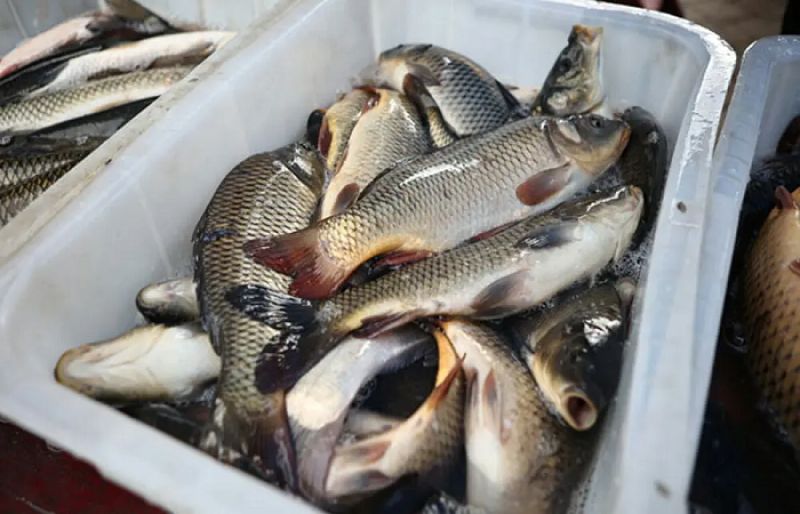

Pakistan’s seafood industry has received a significant boost as the United States granted a four-year approval for fish exports, Federal Minister for Maritime Affairs Junaid Anwar Chaudhry announced.
Chaudhry said the license is global recognition of Pakistan’s seafood quality standards, proving that the country’s fisheries meet strict U.S. benchmarks.
He added that this approval will ensure continuity in exports to one of the world’s most valuable markets.
Sharing figures, the minister noted that Pakistan exported 242,000 tons of fish last year, generating $489 million in foreign exchange.
With U.S. access secured for the next four years, seafood exports are expected to increase, with projections reaching $600 million in the coming year.
He emphasized that U.S. approval will bring stability to the export sector, strengthen Pakistan’s global credibility, and open up fresh opportunities for the fishing community.
“This is a proud achievement for Pakistan, as our fisheries have demonstrated the ability to meet international quality requirements,” Chaudhry stated.
Meanwhile, Federal Finance Minister Muhammad Aurangzeb recently hinted at major U.S. investments in multiple sectors of Pakistan following successful trade talks.
In an informal discussion upon his return from the United States, Muhammad Aurangzeb said that the country will soon receive encouraging news of substantial investments across various sectors from the US.
He stated that during his visit, Pakistan achieved significant success in key meetings held as part of trade negotiations, which were highly appreciated by the US administration.
The minister described the trade talks with the US as a major success for the country, noting that Pakistan is moving in the right direction and the results will be visible soon.
Muhammad Aurangzeb underlined the need for making decisions that will bring long-term improvements to the economy and expressed satisfaction over the mutually successful outcome of the negotiations.
- More than dozen tankers passed through when strait reopened.
- UK Navy reported that Iranian gunboats fired at some ships.
- Hundreds of ships remain stranded and oil flows disrupted.
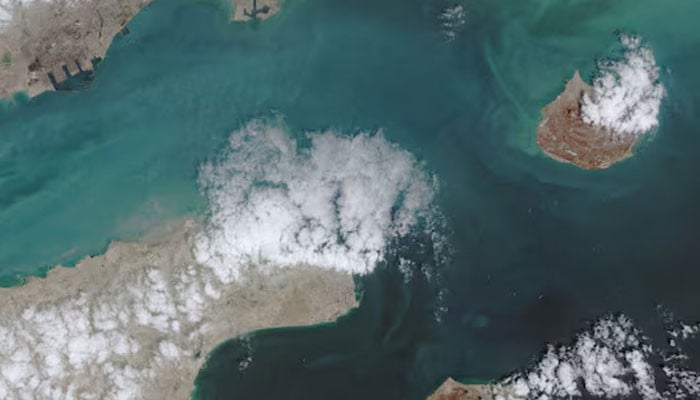
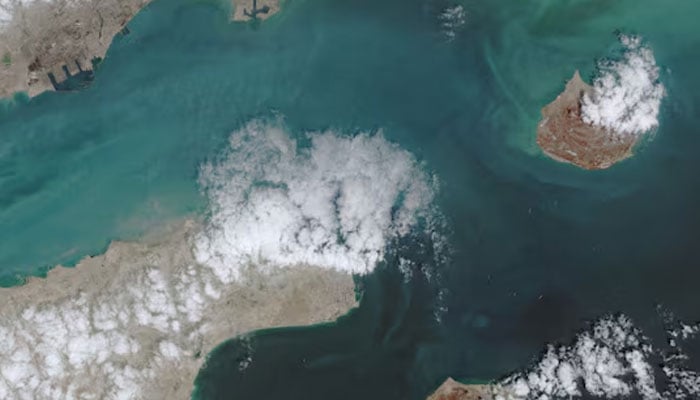
OSLO: More than a dozen tankers, including three sanctioned vessels, passed through the Strait of Hormuz after a 50-day blockade was lifted on Friday, shipping data showed, before Iran reimposed restrictions on Saturday and fired at some vessels.
Reopening the strait is key for Gulf producers to resume full oil and gas supplies to the world, and end what the International Energy Agency has called the worst-ever supply disruption.
US President Donald Trump said on Friday Iran had agreed to open the strait, while Iranian officials said they wanted the US to fully lift its blockade of Iranian tankers.
Western shipping companies cautiously welcomed the announcements but said more clarity was needed, including on the presence of sea mines, before their vessels could transit.
Iran resumes restrictions
The ships that passed through the strait on Friday and Saturday via Iranian waters south of Larak island were mainly older, non-Western-owned vessels and included four sanctioned ships, according to ship-tracking data.
Iran arranged passage for a limited number of oil tankers and commercial ships following prior agreements in negotiations, a spokesperson for Iran’s Revolutionary Guards said.
Other ships have been seen approaching the strait and turning back as Iran said it would maintain strict controls as long as the US continues its blockade of Iranian ports.
The UK Navy reported on Saturday that Iranian gunboats fired at some ships attempting to cross the strait.
Some merchant vessels received radio messages from Iran’s navy saying the strait was shut again and that no ships were allowed to pass, shipping sources said on Saturday.
Ship-tracking data showed five vessels loaded with liquefied natural gas from Ras Laffan in Qatar approaching the strait on Saturday morning.
No LNG cargoes have transited the waterway since the US-Israeli war with Iran began on February 28.
Hundreds of ships have been stuck in the Gulf since the conflict started and Tehran closed the strait, forcing Gulf oil and gas producers to sharply cut production.
Top producers such as Saudi Arabia, the UAE, Iraq and Kuwait say they need steady tanker flows and unrestricted passage through the strait to resume normal export operations.
- Tehran seeks framework before new talks with US.
- Trump says more US-Iran talks likely this weekend.
- Iran warns of repercussions if US violates truce.
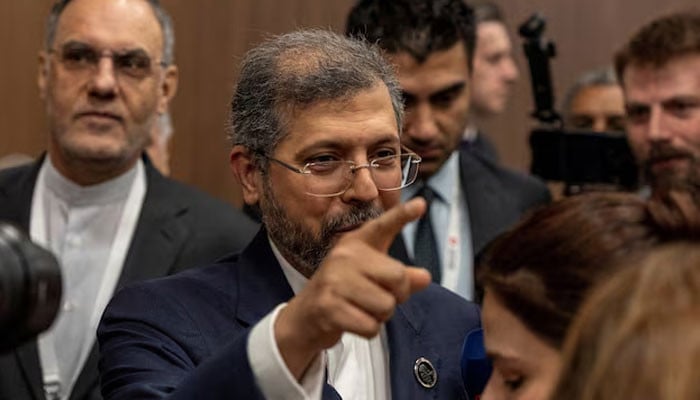
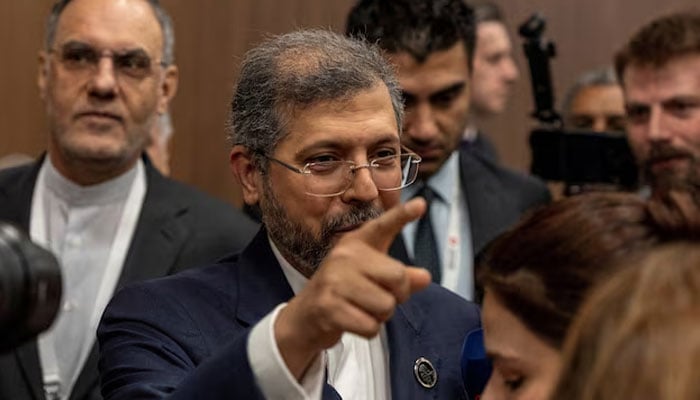
No date has been set for the next round of negotiations between Iran and the United States, Iran’s deputy foreign minister said on Saturday, adding that a framework of understanding must be agreed first.
The highest-level US-Iran talks since the 1979 Islamic Revolution ended in Islamabad without agreement last weekend.
US President Donald Trump has told Reuters there would probably be more direct talks this weekend, though some diplomats said that was unlikely given the logistics of convening in Islamabad, where the talks are expected to take place.
“We are now focusing on finalising the framework of understanding between the two sides. We don’t want to enter into any negotiation or meeting which is doomed to fail and which can be a pretext for another round of escalation,” Saeed Khatibzadeh told reporters on the sidelines of a diplomacy forum in the southern Turkish province of Antalya.
“Until we agree the framework, we cannot set the date… There was significant progress made, actually. But then the maximalist approach by the other side, trying to make Iran an exception from international law prevented us from reaching an agreement,” he said, referring to US demands over Iran’s nuclear programme.
“I have to be very crystal clear that Iran would not accept being an exception from international law. Anything that we are going to be committed to will be within the international regulations and international law.”
Asked about reports that Iran again closed the Strait of Hormuz on Saturday after its temporary reopening following a separate US-brokered 10-day ceasefire between Israel and Lebanon on Thursday, Khatibzadeh said Iran had announced it would allow the safe passage of commercial vessels in line with the terms of the truce.
“The other side, the American side, tried to sabotage that by saying that it is open except for Iranians. So that was the reason we said that ‘if you are going to violate the ceasefire terms and conditions, if Americans are not going to honour their words, there will be repercussions for them’,” he said.
Prime Minister Shehbaz Sharif and Chief of Army Staff (COAS) and Chief of Defence Forces (CDF) Field Marshal Asim Munir concluded separate visits aimed at ending the Iran war, with Field Marshal Munir leaving Tehran and premier Shehbaz headed home from Turkey.
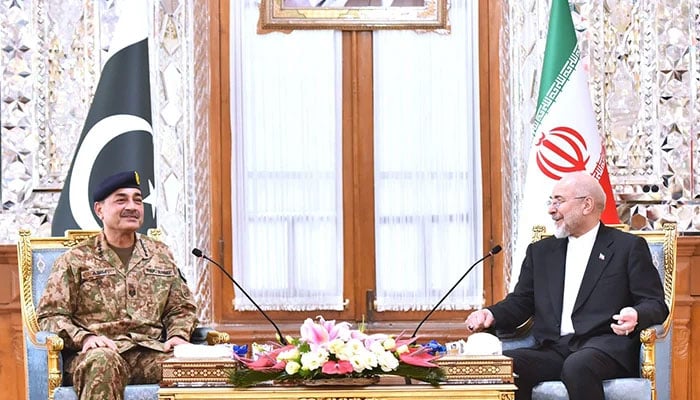
CDF Munir met Iran’s top leadership and peace negotiators during a three-day visit to Tehran, a military’s media wing statement said on Saturday.
Egypt and Pakistan were working “very hard” as mediators to bring about “a final agreement between the United States and Iran”, Egypt´s foreign minister told journalists at the Antalya Diplomacy Forum.
Egypt and Turkey has joined diplomatic efforts with Pakistan to help secure a ceasefire in the conflict.
“We hope to do so (reach an agreement) in the coming days,” Badr Abdelatty said, noting that “not only us in the region, but the whole world is suffering from the continuation of this war”.
“We are pushing very hard in order to move forward,” he said.
Trump ‘tweets a lot’
Iran dismissed US threats of fresh military action, with the senior Iranian official saying that Washington´s statements were inconsistent.
“The American side tweets a lot, talks a lot. Sometimes confusing, sometimes, you know, contradictory,” Khatibzadeh said, referring to US President Donald Trump and his frequent social media posts.
“It is up to the American people to decide whether these statements are consistent and in accordance with international law,” he added.
Khatibzadeh said Iran’s position was clear and vowed resistance to pressure from Washington.
“What we are going to do is quite clear. We will defend heroically and patriotically (our country) … as the oldest civilisation on earth,” he said.
The deputy minister also rejected US accusations that Iran was threatening freedom of navigation in the Strait of Hormuz, a critical route for global oil shipments, after Iran’s military again declared the waterway closed.
“Americans cannot impose their will to do a siege over Iran while Iran, with good intentions, is trying to facilitate safe passage through the Strait of Hormuz,” Khatibzadeh said.
He said Iran had announced safe passage for commercial vessels for the duration of Israel-Lebanon ceasefire, provided there was prior coordination with Iranian maritime authorities.
However, Khatibzadeh accused Washington of attempting to “sabotage” those efforts.
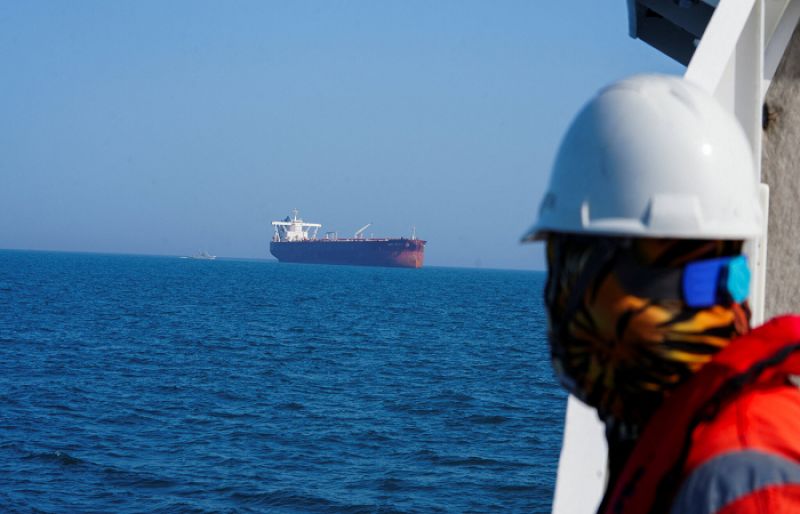
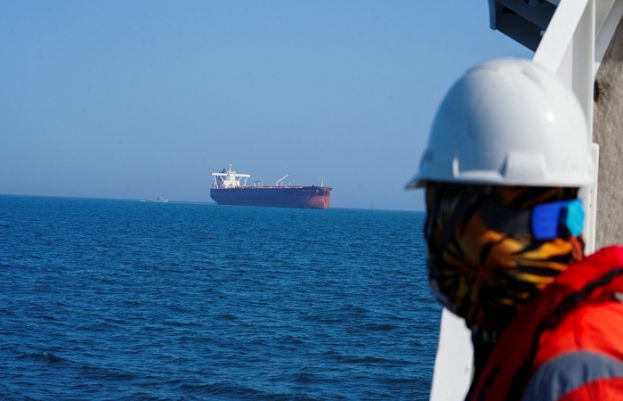
Iran’s Islamic Revolutionary Guard Corps (IRGC) has said that control of the Strait of Hormuz has reverted to what it described as its “previous state,” citing the continuation of a US blockade on Iranian ports.
In a statement carried by state broadcaster IRIB, the IRGC’s joint military command accused the United States of engaging in “acts of piracy and maritime theft” under the pretext of enforcing a blockade.
The statement said the key shipping lane is now under “strict management and control” of Iran’s armed forces, adding that the situation would persist unless Washington restores full freedom of navigation for vessels travelling to and from Iran.
“Until the United States restores full freedom of navigation… the status of the Strait of Hormuz will remain tightly controlled,” the statement said.
The latest development underscores ongoing tensions over the vital waterway, a major route for global oil shipments.


Explained: On way to 4th largest, how India slipped to 6th rank & what it means for 3rd largest economy dream – The Times of India

NJ Transit CEO explains World Cup fare hike as NJ Gov again implores FIFA to pay for $150 train tickets

Alison Hammond blasted for comments about Meghan Markle

-

 Politics1 week ago
Indian airlines hit hardest after Dubai limits foreign flights until May 31
-

 Entertainment5 days ago
Palace left in shock as Prince William cancels grand ceremony
-

 Sports5 days ago
The case for Man United’s Fernandes as Premier League’s best
-

 Politics1 week ago
Chinese, Taiwanese will unite, Xi tells Taiwan opposition leader
-

 Entertainment1 week ago
Dua Lipa hits major career high ahead of wedding with Callum Turner
-
 Business5 days ago
UK could adopt EU single market rules under new legislation
-

 Sports1 week ago
Lamar Jackson hits back at critics with faithful message on social media
-
 Business1 week ago
He paid $248 in illegal tariffs for this coat. Will he ever get it back?