

Fashion
APAC CEOs positive about domestic growth, doubt global growth: KPMG


In 2023, 73 per cent of APAC CEOs were optimistic about global economic prospects; however, it was down to 64 per cent in 2025. Globally, only 68 per cent of CEOs remain upbeat about this—the lowest level seen in four years.
APAC CEOs reported much more optimism in 2025 about the growth prospects of their own economies over the next three years, while confidence in global economic prospects dropped, KPMG said.
Optimism about their own country’s prospects was the highest in Australia and lowest in India last year.
About four-fifths of APAC CEOs also saw substantial growth opportunities for their organisations and industries.
Optimism about their own country’s prospects was the highest in Australia (90 per cent) and lowest in India (71 per cent) last year, a KPMG release said citing its latest annual ‘APAC CEO Outlook’.
The declining confidence of APAC CEOs in the global landscape also reflects ongoing uncertainty and volatility that has plagued the global markets, stemming from an evolving geopolitical landscape, persistent supply chain constraints and intensifying scrutiny on sustainability, KPMG noted.
Furthermore, about 80 per cent of APAC CEOs also saw substantial growth opportunities for their organisations and industries, in line with the global average.
In fact, in 2025, executives appear more certain that their companies are on an upward trajectory compared to the previous year: 61 per cent of respondents expect earnings to increase by more than 2.5 per cent this year, compared to just 52 per cent in 2024.
CEOs in Japan (76 per cent) are particularly optimistic about their earnings outlook compared to global and regional peers, reflecting its solid domestic demand and stable GDP performance.
This positivity is driving many in APAC to continue investing in their businesses, with executives noting that there is strong appetite for increased hiring (92 per cent) and mergers and acquisitions (87 per cent) over the next three years, and a substantial number (82 per cent) of APAC CEOs expecting to spend more than 10 per cent of their budgets on artificial intelligence (AI) in the next 12 months.
This clearly indicates that subdued global outlook has not dampened optimism around companies’ prospects in APAC, KPMG remarked.
Confidence in the growth prospects of the global economy is lowest among Chinese companies (58 per cent). This likely reflects, in part, the impacts of an uncertain tariff environment. Strained relations with its main export partner and uncertainty around global demand are likely some areas of concern among firms in China.
Global trade risks topped the minds of APAC CEOs last year, especially as geopolitical tensions and trade realignments dominated headlines. These trends have persisted in 2025, with supply chain resilience remaining a top three driver of organisational decision-making in the short term.
However, the landscape is shifting with the arrival of emerging technologies like generative AI. AI integration is the top issue driving APAC executives’ short-term decision-making, a notable contrast with global peers who are more focused on cybersecurity issues and supply chain resilience, KPMG added.
Fibre2Fashion News Desk (DS)







He said the four new codes consolidated 29 labour laws into a simplified and contemporary framework.
Now that India has operationalised four new pro-worker and business friendly labour codes, the Ministry of Labour and Employment plans to come up with a comprehensive employment policy that will serve as a blueprint for employment generation, minister handling the portfolio Mansukh Mandaviya said.
“Labour and industry should complement each other and adapt to change for effective coordination,” he said.
“Labour and industry should complement each other and adapt to change for effective coordination,” he recently told the Confederation of Indian Industry (CII) Summit.
The government published the final rules across the four codes earlier this month, making them fully operational.
The four codes are the Code on Wages, 2019; the Industrial Relations Code, 2020; the Code on Social Security, 2020; and the Occupational Safety, Health and Working Conditions Code, 2020. These came into effect on November 21, 2025.
Fibre2Fashion News Desk (DS)

“We are delighted to report sustained, robust double-digit sales growth in FY26, driven by healthy momentum in both volume and value,” said Hemant Jain, joint managing director of KKCL.
The company’s EBITDA for FY26 increased 24.8 per cent YoY to ₹237.9 crore (~$23.79 million), while EBITDA margin improved to 19.6 per cent from 19 per cent in FY25, surpassing the company’s guidance. The gross profit rose 22.8 per cent to ₹511.6 crore (~$51.16 million), with gross margin improving to 42.2 per cent.
Kewal Kiran Clothing Limited (KKCL) has reported 20.9 per cent YoY revenue growth to ₹1,212.8 crore (~$121.28 million) in FY26.
EBITDA rose 24.8 per cent to ₹237.9 crore (~$23.79 million), while PAT increased 2.1 per cent to ₹152.3 crore (~$15.23 million).
The company credited Vision 2028 execution, strong distribution growth, and the Kraus Casuals acquisition for the performance.
The profit after tax (PAT) for FY26 grew 2.1 per cent to ₹152.3 crore (~$15.23 million). The company noted that FY25 PAT included one-time gains related to the sale of shares via IPO-OFS and fair value gains on shares of Baazar Style Retail Limited and adjusted underlying PAT growth was stronger on a YoY basis, KKCL said in a press release.
“These encouraging results validate that the strategic levers outlined in Vision 2028 are well-placed and are delivering results across all our brands. Execution-led operational discipline has enabled us to grow at scale while preserving profitability, resulting in a strong FY26 EBITDA margin,” added Jain.
He highlighted that Kraus Casuals delivered high double-digit sales growth with EBITDA margins exceeding 21 per cent following its acquisition. He said the acquisition strengthened KKCL’s entry into the women’s casualwear segment and proved financially accretive.
Q4 performance remains strong
Meanwhile, the company posted a revenue of ₹323.8 crore (~$32.38 million) in the fourth quarter (Q4) of FY26, up 12.4 per cent YoY. EBITDA rose 18.4 per cent to ₹61.7 crore, while PAT increased 14.2 per cent to ₹34.5 crore. Gross profit during the quarter climbed 17.5 per cent to ₹132.8 crore.
The company said its multi-pronged distribution strategy and continued investments in exclusive brand outlets (EBOs), large-format stores and brand-building initiatives supported growth across channels.
KKCL currently operates 666 exclusive brand outlets, works with over 80 distributors and has presence across more than 3,000 multi-brand outlets nationwide through brands including Killer, Integriti, Lawman, Easies, Junior Killer and Kraus.
Looking ahead, the company expressed confidence in sustaining momentum in FY27, supported by disciplined execution, expanding distribution and a healthy margin profile.
Fibre2Fashion News Desk (DS)
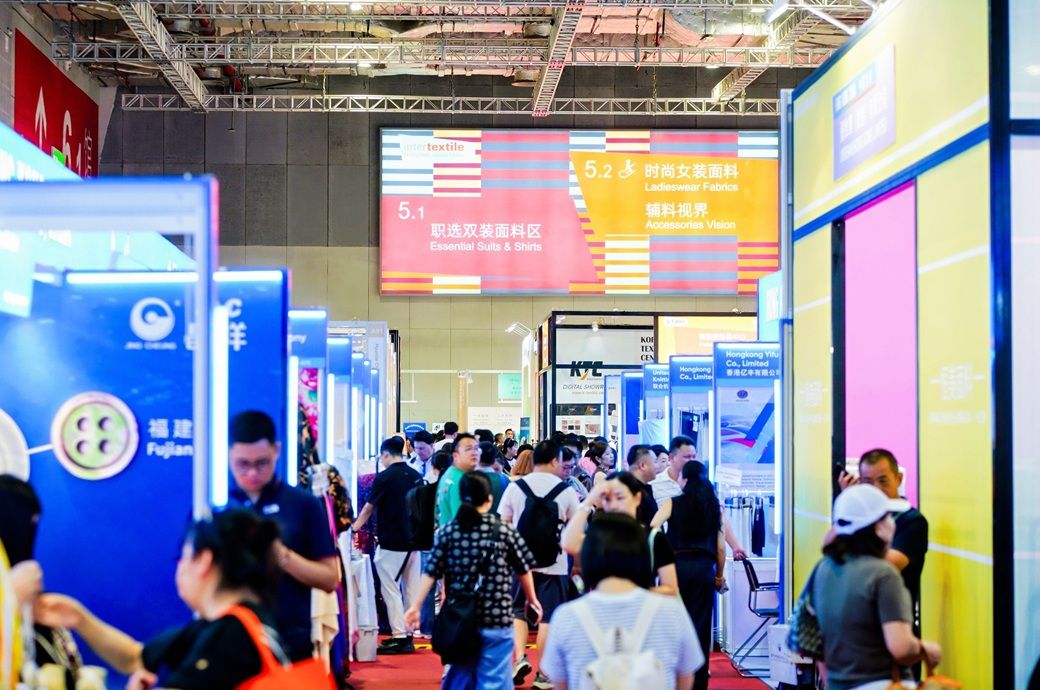
“In today’s evolving market landscape, buyers are looking for more than materials – they are looking for direction, innovation, and long-term partners,” said Ms Wilmet Shea, General Manager of Messe Frankfurt (HK) Ltd. “Intertextile Apparel continues to evolve alongside the industry, expanding its showcase to address functional performance, sustainability priorities, and emerging product categories, catering to a wide range of buyer preferences – from the traditional to the unconventional.”
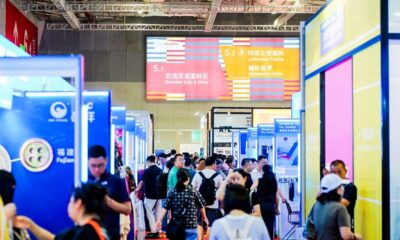
Intertextile Shanghai Apparel Fabrics, Autumn Edition 2026 will be held from August 25-27 in Shanghai, focusing on functionality, sustainability and digital transformation.
The fair will feature Pet Boutique’s autumn debut, an expanded Functional Lab, climate-adaptive textiles, silver-age applications and specialised sourcing zones for the apparel value chain.
Responding to these priorities, the 2026 edition is guided by four overarching themes reflecting the industry’s most compelling opportunities. Fashion Forward inspires creative direction through curated fabric displays and the Intertextile Directions Trend Forum, offering buyers and designers early insight into upcoming seasonal trends. Performance Textiles highlights advanced functional fabrics engineered for sportswear, outdoor, and lifestyle applications, addressing growing demand for comfort, durability, and technical enhancement. Under Sustainability, exhibitors present eco-conscious materials, solutions, and innovations aligned with international standards, centred around the Econogy Hub’s variety of sustainable textiles and certifications. Meanwhile, Textile Future spotlights smart textiles, AI-driven design tools, and next-gen manufacturing technologies shaping the digital transformation of the apparel supply chain.
Pet Boutique makes its autumn debut
Among this year’s notable highlights is the Autumn Edition debut of the Pet Boutique. First introduced at this year’s Spring Edition, the dedicated showcase will expand to leverage demand at the larger autumn platform. Globally, the pet textile market is forecast to compound yearly by 5.6 per cent up to 2031, with Asia-Pacific set for the highest growth.
By bringing together relevant suppliers into a clearly defined showcase, the Pet Boutique enables buyers to efficiently explore fabrics and materials suitable for pet clothing, accessories, and related applications – an increasingly attractive segment within the broader apparel ecosystem. “Applying natural textile materials in the pet sector is still an emerging avenue. The primary role of this display area is to help the industry understand these materials and master their application methods,” said Mr Fred Wang, BD Manager for Functional Wear at Lenzing, who participated in the Spring Edition. “We aim to leverage Intertextile Apparel’s strong influence to attract more pet sector players through the Pet Boutique, while in the related Pet Forum I was honoured to discuss the applications of our natural fibres in the sector.”
Functional Lab expands with climate-adaptive textiles and more
The enhanced Functional Lab will continue to offer an integrated booth, display area, and seminar model designed to foster deeper exchange between exhibitors and sourcing professionals. At the centre of the zone, The CUBE is a high-visibility display area showcasing standout functional fabrics and accessories. New to this edition, The CUBE will introduce a Product Presentation Series, providing brands with a structured opportunity to present their latest innovations directly to an engaged audience.
Beyond its expanded presentation format, this edition’s Functional Lab will extend its spotlight to fast-emerging markets, including climate-adaptive textiles and silver-age applications, among others. Innovations in temperature and humidity regulation are driving the development of fabrics that support comfort across diverse environmental conditions, while the response to ageing demographics ushers in textiles that prioritise comfort, ease of care, lightweight performance, and everyday practicality. Together, these focus areas illustrate how functional textiles are expanding beyond traditional performance categories, opening new avenues for product development and cross-sector collaboration.
Reflecting on her experience at the last Autumn Edition, Ms Zoe Zhang, Engineer at the Hong Kong Research Institute of Textiles and Apparel (HKRITA), commented: “At the forum (Weaving the Future: Advancing Functional Textiles with Innovative Technologies), we joined forces with partners including Lenzing and Highsun to exchange our latest insights on functional textiles. The conversations continued well beyond the show floor with several domestic manufacturers reaching out to us to explore collaboration on nanomaterial applications. Intertextile Apparel is a springboard for meaningful dialogue and cross-disciplinary innovation in the intelligent and sustainable development of functional textiles.”
To enhance sourcing efficiency across the entire apparel value chain, the fair will also feature a broad offering at its other specialised zones:
- Accessories Vision: bringing together the full spectrum of trims, zippers, and finishing components essential to garment creation.
- Beyond Denim: exploring fabrics at the cutting-edge of denim innovation, sustainable finishing processes, and evolving fashion applications.
- Essential Suits & Shirts: a dedicated zone responding to the rising global demand for accessible, ready-to-wear suiting and shirting fabrics.
- Innovation & Digital Solutions Zone: presenting AI-driven tools, digital production systems, and advanced manufacturing technologies.
- Premium Wool Zone: highlighting the performance and versatility of wool, especially for its applications in top-quality suiting.
- Salon Europe: offering a curated window into the finest, high-end European fabric collections, from fashion to function.
- Verve for Design: dedicated to creative studios, trend-led patterns, and original textile design.
Aligned with the four pillars of Intertextile Apparel, these zones combine to create a comprehensive sourcing environment spanning trend-led inspiration, functional innovation, sustainability, and digital transformation.
The fair is co-organised by Messe Frankfurt (HK) Ltd; the Sub-Council of Textile Industry, CCPIT; and the China Textile Information Center. It will take place alongside Yarn Expo Autumn, CHIC and PH Value at the National Exhibition and Convention Center (Shanghai), with the venue playing host to the entire apparel textile value chain.
Intertextile Shanghai Apparel Fabrics – Autumn Edition will be held from 25 – 27 August 2026.
Other upcoming shows:
Intertextile Shenzhen Apparel Fabrics / Yarn Expo Shenzhen
9 – 11 June 2026, Shenzhen (Futian)
Vietnam International Trade Fair for Apparel, Textiles and Textile Technologies
24 – 26 February 2027, Ho Chi Minh City
Note: The headline, insights, and image of this press release may have been refined by the Fibre2Fashion staff; the rest of the content remains unchanged.
Fibre2Fashion News Desk (JP)


India plans comprehensive employment policy after labour code rollout

Trump says made ‘fantastic trade deals’ with Xi

‘Cheaper’ funeral option left Somerset man unable to say goodbye

-

 Tech7 days ago
A new frontier: Identity stack evolves for agentic systems | Computer Weekly
-

 Tech7 days ago
‘Orbs,’ ‘Saucers,’ and ‘Flashes’ on the Moon: Pentagon Drops New UFO Files
-
 Fashion7 days ago
New orders in German manufacturing up 5% MoM in Mar 2026: Destatis
-

 Tech7 days ago
Nick Bostrom Has a Plan for Humanity’s ‘Big Retirement’
-

 Tech1 week ago
What Microsoft Executives Really Thought About OpenAI in 2018
-

 Sports7 days ago
Shaheen Afridi achieves landmark feat during opening Test against Bangladesh
-

 Fashion7 days ago
US’ Carter’s taps retail veteran Sharon Price John as new CEO
-

 Entertainment6 days ago
Rihanna embraces new tattoo given by children