

Fashion
US LMI sees fastest level of expansion since March 2022 in April 2026

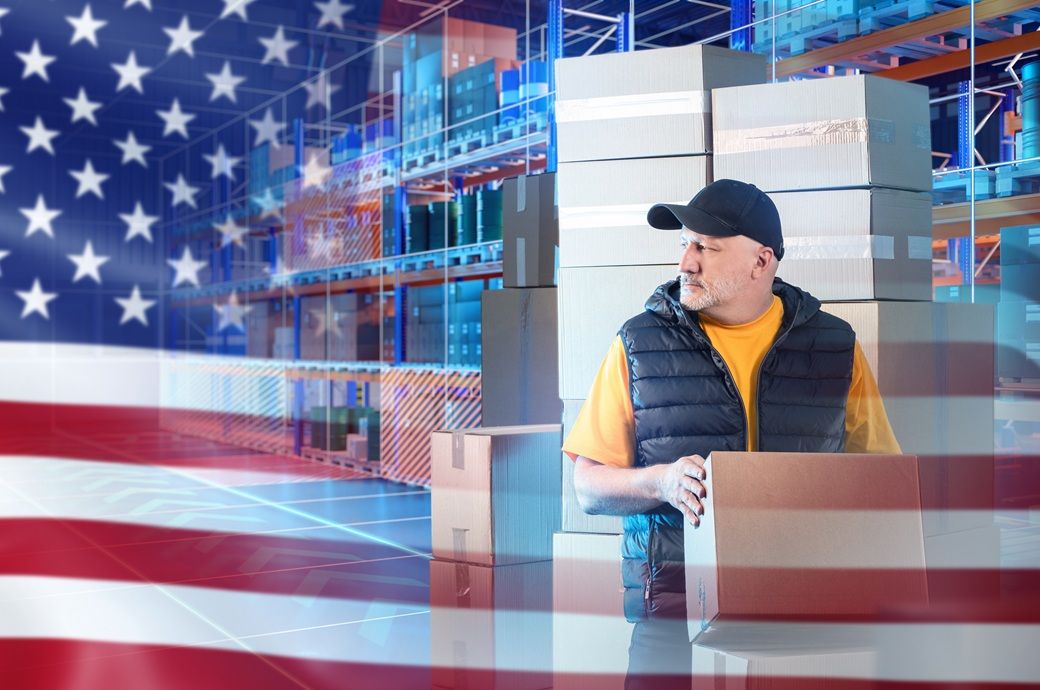
This is driven by continued expansion in the freight market.
The US logistics manager’s index for April was 69.9, up by 4.2 points from March’s 65.7—the fastest level of expansion since March 2022.
Growth is rising at an increasing rate for inventory levels, warehousing utilisation and prices, and transportation utilisation and prices.
Growth is increasing at a falling rate for inventory costs.
Warehousing capacity and transportation capacity are contracting.
Transportation prices continue on their sharp upward trajectory (plus 5.6) in April to 95. This is the second-fasted rate of expansion for this, or any, metric recorded in 9.5-year history of the LMI.
Mirroring this movement, the April 2026 reading also features the second-lowest reading ever for transportation capacity, which is down by 10.9 points to 28.4.
The 66.6-point spread between transportation prices and transportation capacity is the largest delta ever seen. Taken together, this means that the transportation metric has never before been tracked getting simultaneously tighter or more expensive.
Freight markets were already on a strong upward trajectory coming into 2026; the closure of the Strait of Hormuz and subsequent increase in fuel costs have supercharged these movements.
While this is good news for carriers in the near-term, it remains unclear what the long-term effects will be. Inventory costs (74.7) and warehousing prices (72.2) both came in above 70, which is considered the threshold for ‘significant’ expansion.
Aggregating these three costs together, it is observed that upward movements in logistics costs are in at 242.4. This is the fastest rate of expansion since March 2022 and represents a 46.8-point increase from the much milder reading of 195.7 from December.
Previous readings above 240.0 for aggregate logistics costs have been strongly significantly predictive of future supply-induced inflation.
Freight markets have been resilient thus far, partly because low inventories have meant that firms need to keep goods moving. Interestingly, inventory level expansion increased (plus 7.3) from 52.4 to 59.8 over the course of April, corroborating other reporting that inventories have begun increasing as firms consolidate shipments to avoid transportation surcharges.
Researchers at Arizona State University, Colorado State University, Florida Atlantic University, Rutgers University, and the University of Nevada, Reno, and in conjunction with the Council of Supply Chain Management Professionals (CSCMP) issued the latest LMI report.
Fibre2Fashion News Desk (DS)






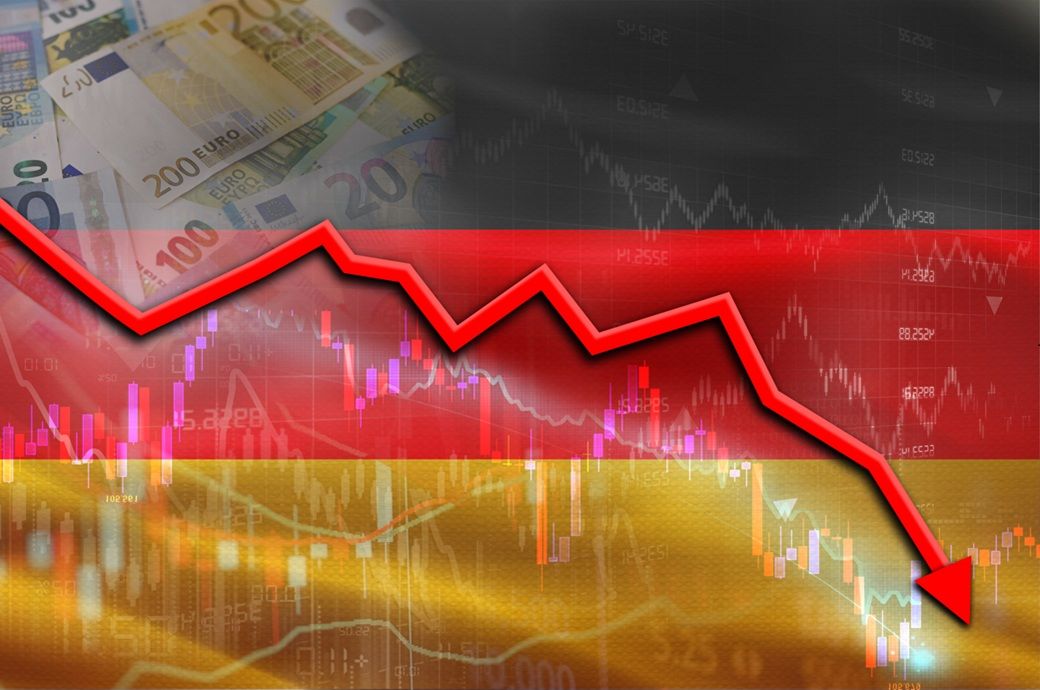
Industry-level expectations showed a mixed trend. The automotive sector deteriorated sharply, with its indicator falling by 13 points to minus 57.2 points. Private demand remained under pressure, with its balance falling by 8.2 points to minus 41.6 points, ZEW said in a press release.
Germany’s economic expectations improved in May 2026 after two months of sharp declines, though sentiment stayed negative.
The ZEW Indicator rose by 7 points to minus 10.2 points, while the current situation indicator slipped to minus 77.8 points.
ZEW cited weak industrial production, rising energy prices, inflation above 2 per cent, and hopes of easing Middle East tensions.
“Expectations are improving but stay in negative territory. The financial market experts are hoping that the Iran war will end soon. Nevertheless, weak industrial production, rising energy prices and an inflation rate that exceeds the two-per-cent mark continue to burden the German economy,” said ZEW president Professor Achim Wambach, PhD.
“There is cautious hope for a potential recovery in the second half of 2026, provided that the Middle East conflict eases and the government’s economic stimulus measures are having an effect,” added Wambach.
For the eurozone, economic expectations improved more strongly. The ZEW indicator rose by 11.3 points to minus 9.1 points, while the assessment of the current economic situation edged up by 1.6 points to minus 41.4 points.
Fibre2Fashion News Desk (SG)
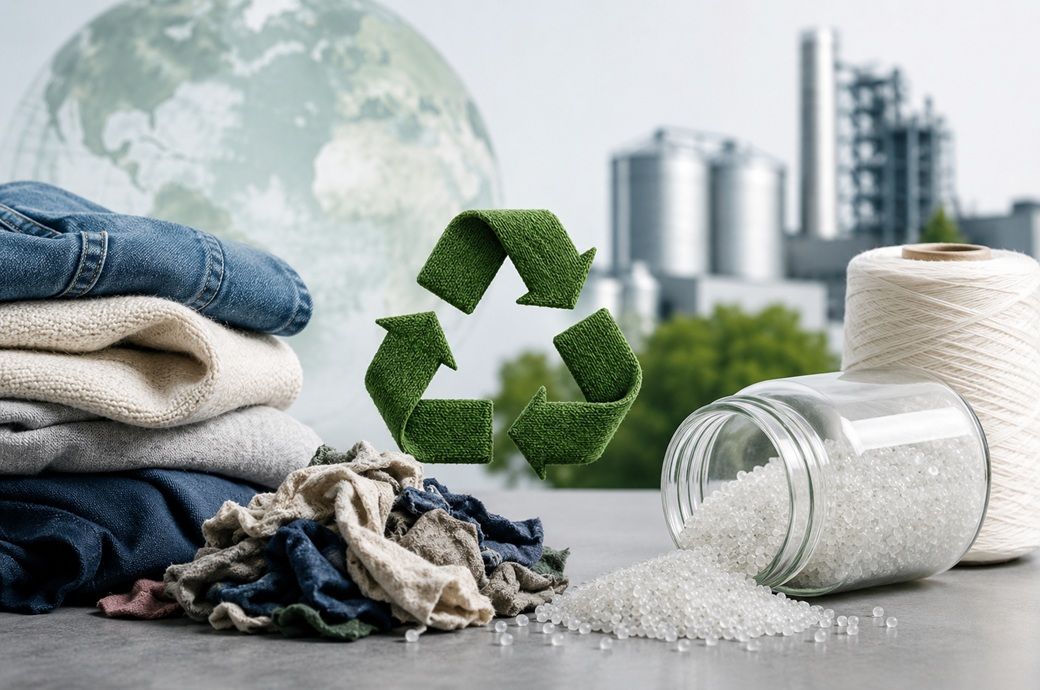
Through this work, Syre will support Target in advancing the integration of textile-to-textile recycled polyester into high-volume categories like apparel and home, bringing more sustainable options to consumers over time.
Syre has expanded its collaboration with Target to scale textile-to-textile recycled polyester across high-volume apparel and home categories.
The initiative is expected to enable the use of 70,000 metric tonnes of polyester made from end-of-life textiles, with meaningful product integration targeted by 2030, supporting Syre’s wider circular textile ambitions.
This effort is expected to enable the use of 70,000 metric tons of polyester made from end-of-life textiles, supporting the scaling of circular material into categories like apparel and home, with meaningful product integration expected by 2030.
“We couldn’t be more proud to continue working with Target to bring next-generation materials into retail at scale,” said Dennis Nobelius, CEO of Syre. “This collaboration helps accelerate adoption and supports the continued development of circular textile solutions across the industry.”
“At Target, our guests look to us for innovative materials without compromising on style, design and value,” said Stephanie Grotta, Vice President of Responsible Sourcing and Sustainable Capabilities at Target. “By advancing textile-to-textile recycled polyester at scale, we’re strengthening our supply chain and continuing to offer quality products at a great value.”
As Syre advances plans for its first large-scale recycling facility, expected to begin construction in 2027 in Southeast Asia, its work with Target further strengthens the foundation for global scale. It also builds on Syre’s growing network of leading brands, including H&M Group and Nike, working to accelerate the transition to circular textiles.
“These leading brands recognize the importance of securing access to emerging material solutions,” said Nobelius. “As we scale, these partnerships will help enable both commercial success and continued progress toward a more circular textile industry.”
Note: The headline, insights, and image of this press release may have been refined by the Fibre2Fashion staff; the rest of the content remains unchanged.
Fibre2Fashion News Desk (JP)
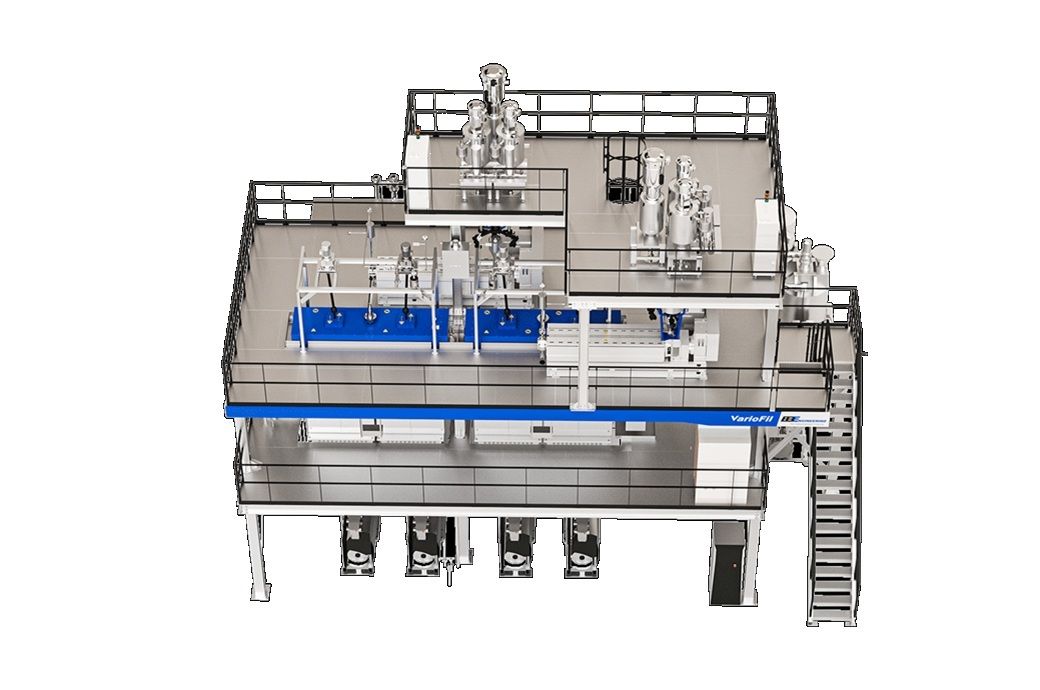
ValuePack – The new generation spin pack
With its new, patented spin pack, BB Engineering underlines its expertise in synthetic fiber spinning. Until now, spin packs have been equipped with either metal powder (“sand”) or fil-ter candles as filter media. Both variants have their place in specific applications but come with their own set of advantages and disadvantages. While sand packs score points primarily for their homogeneity and are therefore well-suited for virgin material, packs with filter candles offer an in-creased filter area and were originally developed specifically for recycling applications. The large filter area leads to better filter performance and service life, but at the same time is accompanied by a lower flux rate and shear. This can compromise homogeneity.
BB Engineering will present its man-made fibre and recycling technologies at ITM Istanbul from June 9-13, alongside Barmag and Tekstil Servis.
Highlights include the patented ValuePack spin pack, VarioFil compact spinning system, and COBRA filter.
The company will showcase solutions for synthetic fibre spinning, air-texturing, PET recycling, improved filtration, and higher yarn quality.
The ValuePack combines both methods — metal sand and filter candle — in a two-step filtration process. The melt first passes through the filter candle, where it is optimally filtered over a large filter surface down to 15 µm. The melt then flows through the sand chamber, where homogenization and shearing are the primary processes. As simple as the concept is, it is equally innovative and advantageous. BB Engineering is a pioneer with its multi-step filtration in the spin pack. The result is significantly better homogeneity in terms of temperature and viscosity, improved spinning performance, and higher yarn quality for a wide range of applications that goes beyond pure recycling. Another advantage of the Value Pack is that it is already forced sealed independently of pressure. This prevents leaks that can occur with self-sealing packages and offers a larger process window. Existing systems can be easily retrofitted to accommodate the Value Pack, which is slightly longer due to its design.
VarioFil – A trusted and popular system for good reasons
Such as the popular VarioFil compact spinning system from BB Engineering. Compact size, flexibility, and consistently high yarn quality—that’s what VarioFil stands for, and that’s what Turkish fiber and textile producers value. “Our compact spinning system perfectly meets the needs of the Turkish textile market. Fibers and yarns from our VarioFil customers are used, for example, in clothing, carpets, or textile automotive components such as seat covers or seat belts,” reports Ralf Morgenroth, Head of Sales and Customer Service. With over 60 systems installed since its market launch, Turkey is the largest market for VarioFil. Accordingly, BB Engineering will once again be showcasing its compact spinning system at ITM this year for customers, prospective clients, and industry professionals. VarioFil produces high-quality yarns (POY, FDY, HTY, LSY, HMY) from all common polymers with a production capacity of up to 450 kg/h per extruder. VarioFil also spins recycled PET or bottle flakes directly into POY or FDY with impressive quality.
COBRA Filter sets new standards
BB Engineering first introduced the new COBRA filter at the Plastics Recycling Show Europe and K 2025 — setting new standards in the process. The company had clear goals in mind during development: The filter was designed to handle the increasing levels of contamination in recycling, simplify filter changes and cleaning through automation, and significantly reduce operating costs.
The result is a system that combines continuous, large area filtration with automated, chemical free intermediate cleaning. Two filter cartridges with automatic switching ensure stable, reliable, and uninterrupted operation. As a result, COBRA can handle even high levels of contamination where conventional candle filters or screen changers reach their limits. The integrated cleaning system significantly extends the service life of the filter media. At the same time, it reduces operational effort, melt loss, and energy consumption—all without the use of chemicals. This increases process reliability and significantly lowers operating costs.
As a versatile solution, COBRA is suitable for both coarse and fine filtration. In addition to PET recycling, the system is also suitable for other applications, such as plastic spinning, where it can be used to improve efficiency or retrofitted.
Note: The headline, insights, and image of this press release may have been refined by the Fibre2Fashion staff; the rest of the content remains unchanged.
Fibre2Fashion News Desk (SG)

.jpeg?width=1200&height=800&crop=1200:800 "UK household wealth tumbles, as taxes, food bills and rent costs bite")
UK household wealth tumbles, as taxes, food bills and rent costs bite

Germany’s economic sentiment improves in May but stays negative

Found: The Easiest Microgreens You’ll Ever Grow

-

 Tech6 days ago
A new frontier: Identity stack evolves for agentic systems | Computer Weekly
-

 Tech6 days ago
‘Orbs,’ ‘Saucers,’ and ‘Flashes’ on the Moon: Pentagon Drops New UFO Files
-
 Fashion6 days ago
New orders in German manufacturing up 5% MoM in Mar 2026: Destatis
-

 Tech6 days ago
Nick Bostrom Has a Plan for Humanity’s ‘Big Retirement’
-

 Sports6 days ago
Shaheen Afridi achieves landmark feat during opening Test against Bangladesh
-

 Entertainment6 days ago
Rihanna embraces new tattoo given by children
-

 Tech6 days ago
What Microsoft Executives Really Thought About OpenAI in 2018
-

 Fashion6 days ago
US’ Carter’s taps retail veteran Sharon Price John as new CEO