

Tech
Why Has the US Banned Foreign-Made Routers?


The Federal Communications Commission has banned new consumer internet routers manufactured outside the US, citing national security concerns. The ban doesn’t affect any routers already in American homes or currently on sale in the US, but all new routers aimed at the consumer market will need to be approved.
While the headline is that foreign-made consumer routers are banned, manufacturers can apply for exemptions. There’s no need to throw out your router, and you’ll still find plenty of mesh systems on the store shelves. But what does this mean for you?
Why Are Foreign-Made Routers Banned?
“Malicious actors have exploited security gaps in foreign-made routers to attack American households, disrupt networks, enable espionage, and facilitate intellectual property theft,” the FCC wrote. “Foreign-made routers were also involved in the Volt, Flax, and Salt Typhoon cyberattacks targeting vital US infrastructure.”
Foreign-made consumer routers were added to the Covered List, which details equipment and services “deemed to pose an unacceptable risk to the national security of the United States.”
Which Routers Are Banned?
The ban only affects the sale of new Wi-Fi routers aimed at consumer households. The ban does not apply to existing FCC-approved routers on sale in the US. Previously purchased routers already in use in homes across the country are also fine and are not part of the ban, according to the FCC’s FAQ. These routers can continue to be sold, used, and updated with new firmware.
Any new router manufactured outside the US now requires FCC approval before it can be imported, marketed, or sold in the US. This includes routers from US companies that are manufactured overseas, which is the vast majority of the market right now.
What Does Foreign-Made Mean?
This is decidedly murky. The ban is concerned with “consumer-grade” routers and could include any that are designed or manufactured outside the US or manufactured by companies that are not completely US-owned and operated. All the major players in the market, including Netgear, TP-Link, Asus, Amazon’s Eero, Google’s Nest, Synology, Linksys, and Ubiquiti, fall under the definition. As do most, if not all, of the routers supplied by internet service providers in the US.
Just like the recent federal drone ban, the router only applies only to new routers, but manufacturers can apply for Conditional Approval from the Department of Defense and the Department of Homeland Security. Applications must include details about ownership, board membership, and country of origin for components, IP ownership, design, assembly, and firmware, among other things. The final section requests details of the applicant’s US manufacturing and onshoring plan, so there’s a clear push to persuade companies to commit to making their routers in the US.
“No routers or manufacturers have been granted a Conditional Approval so far, but as the process gets underway, we expect approvals to be granted in a timely manner,” an FCC spokesperson tells WIRED.
What About Foreign-Made Components?
Well, the FCC provides some clarification in its FAQ (“covered” here means banned):
“Non-‘covered’ devices do not become ‘covered’ simply because they contain a ‘covered’ component part, unless the ‘covered’ component part is a modular transmitter under the FCC’s rules,” it says. “Therefore, a router produced in the United States is not considered ‘covered’ equipment solely because it contains one or more foreign-made components.”
Manufacturers importing components from China but assembling them in the US will presumably be OK, though it’s far from clear. “Applicants will need to be able to have sufficient evidence that the routers were not produced in a foreign country to make this certification, but there is no specific documentation or evidence required,” according to the FCC.
Let’s look at the big three US router brands and see how they’re affected.
Will TP-Link Be Banned?
Since all of its routers are made overseas, TP-Link will have to apply for Conditional Approval or spin up manufacturing in the US to sell any new routers. Estimates vary, but TP-Link’s US consumer router market share is somewhere around 35 percent, with Netgear and Asus accounting for another 25 percent or so.
The US Commerce, Defense, and Justice departments have reportedly been investigating and considering a ban on TP-Link routers for more than a year over concerns about the company’s links to China. No ban has been enacted until now, but Texas attorney general Ken Paxton sued TP-Link in February, claiming the company allows the Chinese Communist Party to access American consumers’ devices. Detractors have also criticized perceived predatory pricing, claiming TP-Link flooded the US market with a wide range of affordable routers to establish dominance.
TP-Link has repeatedly denied any wrongdoing and claims it has divested from its Chinese roots and is now headquartered in the US with the bulk of manufacturing in Vietnam. TP-Link’s cofounder and CEO, Jeffrey Chao, recently applied for permanent US residency through President Trump’s Gold Card program, according to the Times of India.
“Virtually all routers are made outside the United States, including those produced by US-based companies like TP-Link, which manufactures its products in Vietnam,” a spokesperson from TP-Link tells WIRED. “It appears that the entire router industry will be impacted by the FCC’s announcement concerning new devices not previously authorized by the FCC.”
TP-Link is a privately owned company and not publicly listed on any stock exchange. Chao and his wife, Hillary, are listed as the company’s sole owners.
Will Netgear Be Banned?
While it is a US-founded and headquartered company, Netgear’s routers are manufactured abroad, mostly in Vietnam, Thailand, Indonesia, and Taiwan, so it will have to apply for Conditional Approval. The company has moved away from China in recent years. Netgear has been lobbying the government on “cybersecurity and strategic competition with China.”
“We commend the administration and the FCC for their action toward a safer digital future for Americans,” a Netgear spokesperson tells WIRED. “Home routers and mesh systems are critical to national security and consumer protection, and today’s decision is a step forward.”
Netgear is a publicly traded company on the Nasdaq, mostly owned by institutional investors, including BlackRock and Vanguard. The company’s stock rose on news of the ban, suggesting that many investors believe it won’t be hit too hard.
Will Asus Be Banned?
Asus primarily makes its routers in Taiwan, though it has production facilities in China and works with several third-party manufacturers. Recent tariff pressures led the company to branch out to Thailand, Vietnam, Indonesia, Mexico, and the Czech Republic, but the bulk of its routers still come from Taiwan or China. Asus will have to apply for Conditional Approval to sell new routers. The company did not respond to WIRED’s request for comment.
The company is listed on the Taiwanese Stock Exchange and is mostly owned by public shareholders. The ban doesn’t appear to have impacted its stock price.
Are Any Routers Manufactured in the US?
The only routers I know of that are manufactured in the US are some Starlink Wi-Fi routers, which are primarily made in Texas. Starlink is part of Elon Musk’s SpaceX company, but many of the components in these routers come from East Asia.
How Will the Router Ban Impact Ordinary Folks?
It’s not entirely clear, but it probably won’t have a huge immediate impact. There is already a wide range of Wi-Fi 7 routers and mesh systems on the market that will continue to be sold—they enable speeds well in excess of what most people need at home. Whether companies spin up manufacturing in the US or find other ways to satisfy government agencies that their wares are not a security risk, the result is likely to be higher prices for consumers.
“This ruling has the potential to significantly disrupt the U.S. consumer router market,” Brandon Butler, Senior Research Manager, Network Infrastructure and Services at IDC tells WIRED. “In the near term, much will depend on how quickly conditional waivers are processed. Most vendors are likely to pursue them, but any delays could constrain supply and create upward pressure on pricing.”
If you haven’t upgraded to the latest Wi-Fi 7 standard, now might be a good time to do it.
Unanswered Questions
The ban does leave several unanswered questions. Why is it being applied only to consumer routers? Which routers or manufacturers will be granted a Conditional Approval? Why are the foreign-made routers currently on sale and in our homes deemed safe? The FCC did not address these questions.












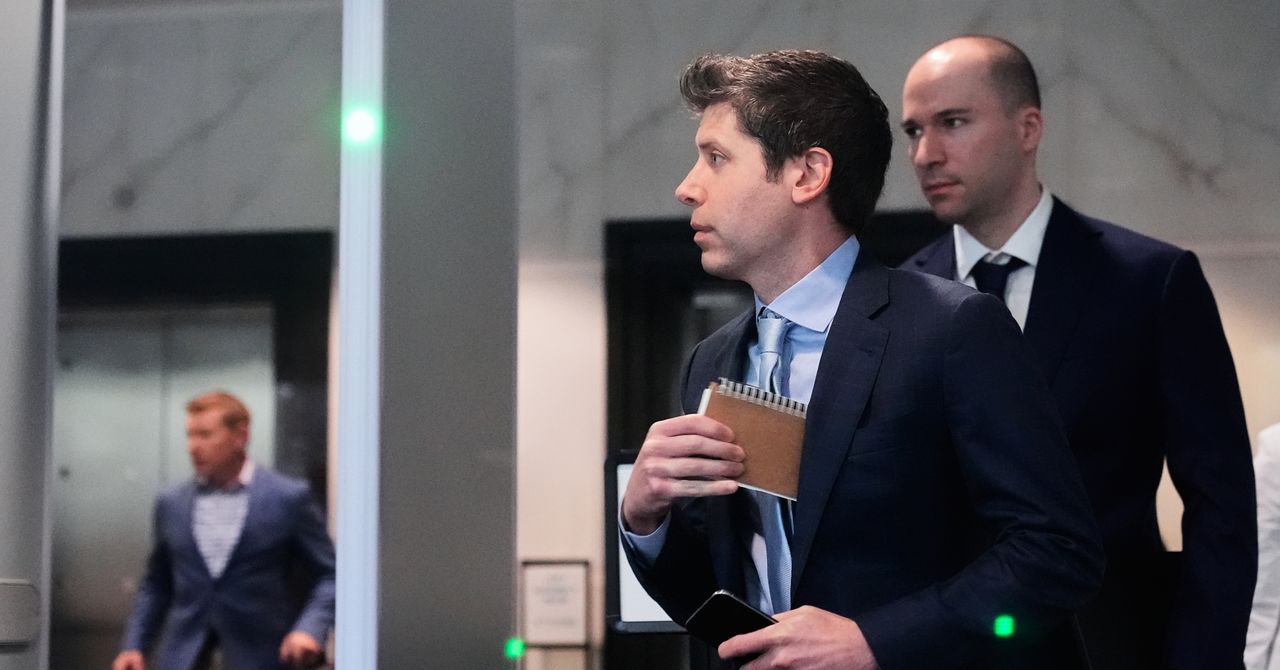
OpenAI told staff on Friday that it would reorganize the company as part of an ongoing effort to unify its product offerings, WIRED has learned. OpenAI cofounder and president Greg Brockman will now lead the company’s product strategy, in addition to his work on AI infrastructure, OpenAI confirms to WIRED. Brockman was previously assigned to oversee OpenAI products on an interim basis while CEO of AGI deployment, Fidji Simo, was on medical leave; the change is now official.
“We’re consolidating our product efforts to execute with maximum focus toward the agentic future, to win across both consumer and enterprise,” Brockman said in a memo to staff seen by WIRED. Brockman added that OpenAI’s products are naturally converging, and that the company has decided to merge ChatGPT and Codex into one unified experience.
OpenAI says it’s folding ChatGPT, its AI coding agent Codex, and its developer-facing API into one core product team. The company says that Codex is increasingly powering its consumer and enterprise offerings, which are gaining the ability to perform digital tasks autonomously on behalf of users.
Two other OpenAI leaders are also taking on larger roles at the company as part of the changes. OpenAI’s head of Codex, Thibault Sottiaux, has been tapped to lead the core product and platform across consumer, enterprise, and developer surfaces. Sottiaux was a key leader in building Codex into one of the company’s fastest-growing products of all time. OpenAI’s longtime head of ChatGPT, Nick Turley, is moving to a new role at the company that aims to revamp enterprise products. OpenAI says Turley will continue his work on ChatGPT, which he has helped grow to more than 900 million weekly active users since he took over in 2022.
The changes are the latest shakeup for OpenAI as leadership aims to refocus the company on a few key product areas, including ChatGPT, Codex, and its forthcoming “everything app.” Last month, OpenAI announced many executive changes, including that CEO of AGI dDeployment, Fidji Simo, was taking a medical leave to focus on her health. OpenAI previously said Brockman would oversee product strategy in her absence. The company tells WIRED that Simo remains on medical leave, and worked directly with Brockman on these organizational changes and product strategy.
In the last year, OpenAI has faced increasing pressure from competitors, including Anthropic in coding domains and Google in consumer chatbots. OpenAI leaders are hoping to simplify product offerings ahead of its plan to file for an IPO, which could happen later this year.
Other OpenAI executives left the company entirely last month, including the head of its AI workspace for scientists, Kevin Weil; head of Sora, Bill Peebles; and its chief technology officer of enterprise applications, Srinivas Narayanan.
This is a developing story. Please check back for updates.

Employee benefits are in the spotlight this week, and that’s because of three recent stories about US companies cutting back on non-wage compensations for workers.
A Texas tech consulting firm with a forgettable name—TTEC—suddenly became a lot more memorable when it suspended its discretionary 401(k) match program for 16,000 employees through at least the end of 2026. According to Business Insider, which viewed an internal TTEC memo, the company plans to invest in AI certifications, AI tools and training, and automation, among other things.
The auditing and consulting giant Deloitte is also reportedly slashing benefits for some workers starting next year. This includes reducing PTO, halving parental leave, and eliminating a $50,000 reimbursement for family planning services such as adoption, surrogacy, and IVF. San Francisco-based Zoom, meanwhile, has made a smaller-scale change and reduced its parental leave for employees from 22 weeks to 18 weeks for birthing parents.
So what’s the driving force behind this? And are there more cuts to come? The latter is impossible to answer, and the former is unfortunately more complicated than “corporate ghouls go AI.”
First off, “what Deloitte did is completely unconscionable,’” says Joan C. Williams, a professor at UC Law San Francisco, the author of several books on work culture and class dynamics, and an oft-cited scholar on these topics. The consulting firm is cutting the benefits of a specific class of internal workers—in admin, IT support, and finance—while leaving intact benefits for people in client-facing roles. An affected worker will see their parental leave cut from 16 weeks to just eight weeks.
“It treats people differently based on the type of job they’re in, and cutting any mother down to eight weeks of paid leave is just outlandish,” Williams says. “When labor is tight, employers are more generous. But once the power shifts, the benefits contract.”
AI certainly is a convenient excuse these days for any corporate decision that harms workers. But the impetus here is also the cost of the benefits themselves. Earlier this year subsidies from the Affordable Care Act lapsed, and people began dropping out of health care plans entirely. Insurers have cited this as one reason they’ve raised premiums.
Sarahjane Sacchetti, a former top executive at benefits administration companies Cleo and Collective Health, who is working on a new health care initiative, told me that the costs of employer-sponsored health plans have increased significantly over the past five years. A survey last year of over 1,700 US employers by the Mercer health care consulting group found that the health care cost per worker was expected to rise on average 6.5 percent in 2026, the highest since 2010. And this was after factoring in cost-reduction measures; otherwise, the cost of a plan would go up by nearly 9 percent.
“This just starts to eat into how you think about total compensation as an employer,” Sacchetti says. That doesn’t mean the corporation is the ‘good guy,’ she says, but the poor state of American health care policy and lack of safety net are responsible for a lot of the stress that plagues undercompensated or laid-off workers.
Williams points out that the US is one of the few countries that doesn’t offer a federal paid maternal leave—putting it in league with Papua New Guinea and Suriname. “This just shows how crazy it is to provide employee basics like pension and paid parental leave through private employers rather than how other industrialized countries do it,” Williams says. Her proposed solution? “The US needs to join the rest of the universe.”
The irony, of course, is that the US government professes to be obsessed with women having more babies. If women in the US are—as celebrity doctor Mehmet Oz put it this week in the Oval Office—“underbabied,” a comprehensive paid federal leave policy would be the obvious place to start. (Oz also said that “making babies” is “the most creative thing the universe knows.” Don’t tell the AI CEOs.)

Gantri, a San Francisco-based company known for making soft, stylized 3D-printed lamps, is going wireless. That’s thanks to a new partnership with the design firm Ammunition.
Gantri 3D-prints its lamps using plastics made from corn-based polylactic acid (PLA) in its Bay Area facilities. The result is a collection of carefully designed light fixtures with gentle curves that aim to make luxury-style lighting feel somewhat affordable. (Prices range from $200 to $500.)
Last year, the company introduced a program called Gantri Made, which allows shoppers to customize their lights and gives third-party designers the ability to build their own designs using Gantri’s foundational pieces.
Courtesy of Gantri
Gantri first partnered with Ammunition in 2020, developing a line of stylish lamps aiming to highlight what premium light pieces could look like. You’ve almost certainly seen something built with Ammunition’s flair. The firm designed Beats by Dre headphones, the Square point-of-sale tablets you see in shops everywhere, and many other projects, from robot coffee machines to Jay-Z’s failed weed vape cartridges.
This Gantri new collab is a range of lamps that include floor lamps, table lamps, and ones small enough to hold in your hand. (Those are rectangular, with designs inspired by piers around San Francisco.) All the lights are wireless and can be removed from charging ports to run for what Gantri says is 10 or more hours of battery life. Gantri is also developing an app to control the lights. They will work with Matter, the connectivity standard that aims to make smart home tech from different companies work together, but that compatibility isn’t expected until next year.
Gantri CEO Ian Yang points out that for most of human history, light sources were something people carried with them—torches, candles, lanterns. Lights staying in fixed places has become the norm, but he wants these wireless lamps to show there’s another way.
“I really think this product is going to change the way that people think about lighting, but also think about the power of digital manufacturing, about this new material that’s plant-based,” Yang says.
The lamps have a custom charging port, which allows them to stand upright and face any direction while still receiving a charge. They also require a custom charger and cannot be charged via USB-C or another cord in a different room. That may inhibit the mobility the lamp promises, as you won’t be able to move them from room to room and plug them in with any USB-C cord lying around—you’d have to bring that proprietary cable with you. But Yang says this was a deliberate choice, even though it was much more difficult than finding a spot for a USB-C connection. He wanted the lamps to feel portable while also having a place for them to become a fixture in a home.


Greg Brockman Officially Takes Control of OpenAI’s Products in Latest Shakeup

Oil price gains and Westminster worry sink stocks

PM Modi’s UAE visit: How India will benefit from agreements on strategic petroleum reserves, LPG – explained

-

 Tech1 week ago
A new frontier: Identity stack evolves for agentic systems | Computer Weekly
-

 Tech1 week ago
‘Orbs,’ ‘Saucers,’ and ‘Flashes’ on the Moon: Pentagon Drops New UFO Files
-

 Fashion1 week ago
New orders in German manufacturing up 5% MoM in Mar 2026: Destatis
-

 Tech1 week ago
Nick Bostrom Has a Plan for Humanity’s ‘Big Retirement’
-

 Fashion1 week ago
US’ Carter’s taps retail veteran Sharon Price John as new CEO
-

 Tech1 week ago
What Microsoft Executives Really Thought About OpenAI in 2018
-

 Sports1 week ago
Shaheen Afridi achieves landmark feat during opening Test against Bangladesh
-

 Entertainment7 days ago
Rihanna embraces new tattoo given by children