

Tech
Pentagon’s ‘Attempt to Cripple’ Anthropic Is Troubling, Judge Says

The US Department of Defense appears to be illegally punishing Anthropic for trying to restrict the use of its AI tools by the military, US district judge Rita Lin said during a court hearing on Tuesday.
“It looks like an attempt to cripple Anthropic,” Lin said of the Pentagon designating the company a supply-chain risk. “It looks like [the department] is punishing Anthropic for trying to bring public scrutiny to this contract dispute, which of course would be a violation of the First Amendment.”
Anthropic has filed two federal lawsuits alleging that the Trump administration’s decision to designate the company a security risk amounted to illegal retaliation. The government slapped the label on Anthropic after it pushed for limitations on how its AI could be used by the military. Tuesday’s hearing came in a case filed in San Francisco.
Anthropic is seeking a temporary order to pause the designation. The relief, Anthropic hopes, would help convince some of the company’s skittish customers to stick with it just a bit longer. Lin can issue a pause only if she determines that Anthropic is likely to win the overall case. Her ruling on the injunction is expected in the next few days.
The dispute has sparked a broader public conversation about how artificial intelligence is increasingly being used by the armed forces, and whether Silicon Valley companies should give deference to the government in determining how the technology they develop is deployed.
The Department of Defense, which now calls itself the Department of War (DoW), has argued that it followed procedures and appropriately determined that Anthropic’s AI tools could no longer be relied upon to operate as expected during critical moments. It has asked Lin not to second-guess its assessment about the threat it claims Anthropic poses to national security.
“The worry is that Anthropic, instead of merely raising concerns and pushing back, will say we have a problem with what DoW is doing and will manipulate the software … so it doesn’t operate in the way DoW expects and wants it to,” Trump administration attorney Eric Hamilton said during Tuesday’s hearing.
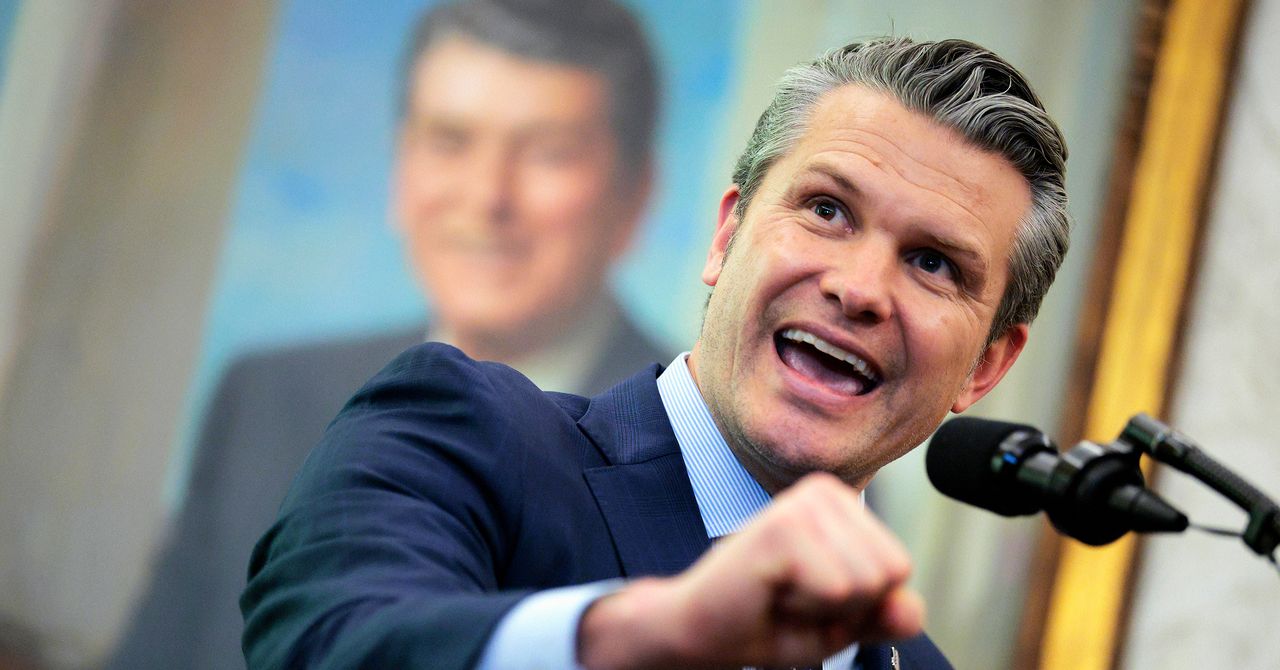
Lin said that it was Defense Secretary Pete Hegseth’s role—not hers—to decide whether Anthropic is an appropriate vendor for the department. But Lin said it’s up to her to determine whether Hegseth violated the law by taking steps beyond simply canceling Anthropic’s government contracts. Lin said it was “troubling” to her that the security designation and directives more broadly limiting use of Anthropic’s AI tool Claude by government contractors “don’t seem to be tailored to stated national security concerns.”
As Anthropic’s spat with the government escalated last month, Hegseth posted on X that “effective immediately, no contractor, supplier, or partner that does business with the United States military may conduct any commercial activity with Anthropic.”
But on Tuesday, Hamilton acknowledged that Hegseth has no legal authority to bar military contractors from using Anthropic for work unrelated to the Department of Defense. When asked by Lin why Hegseth would have posted that, Hamilton said, “I don’t know.”
Lin further questioned Hamilton about whether the Pentagon had considered taking less punitive measures to move the department away from using Anthropic’s tools. She described the supply-chain-risk designation as a powerful authority typically reserved for foreign adversaries, terrorists, and other hostile actors.
Michael Mongan, a WilmerHale attorney representing Anthropic, said it was extraordinary for the government to go after a “stubborn” negotiating partner with the designation.
The Pentagon has said it is working to replace Anthropic technologies over the coming months with alternatives from Google, OpenAI, and xAI. It also said it has put measures in place to prevent Anthropic from engaging in any tampering during the transition. Hamilton said he didn’t know if it was even possible for Anthropic to update its AI models without permission from the Pentagon; the company says it is not.
A ruling in the other case, at the federal appeals court in Washington, DC, is expected to come soon without a hearing.











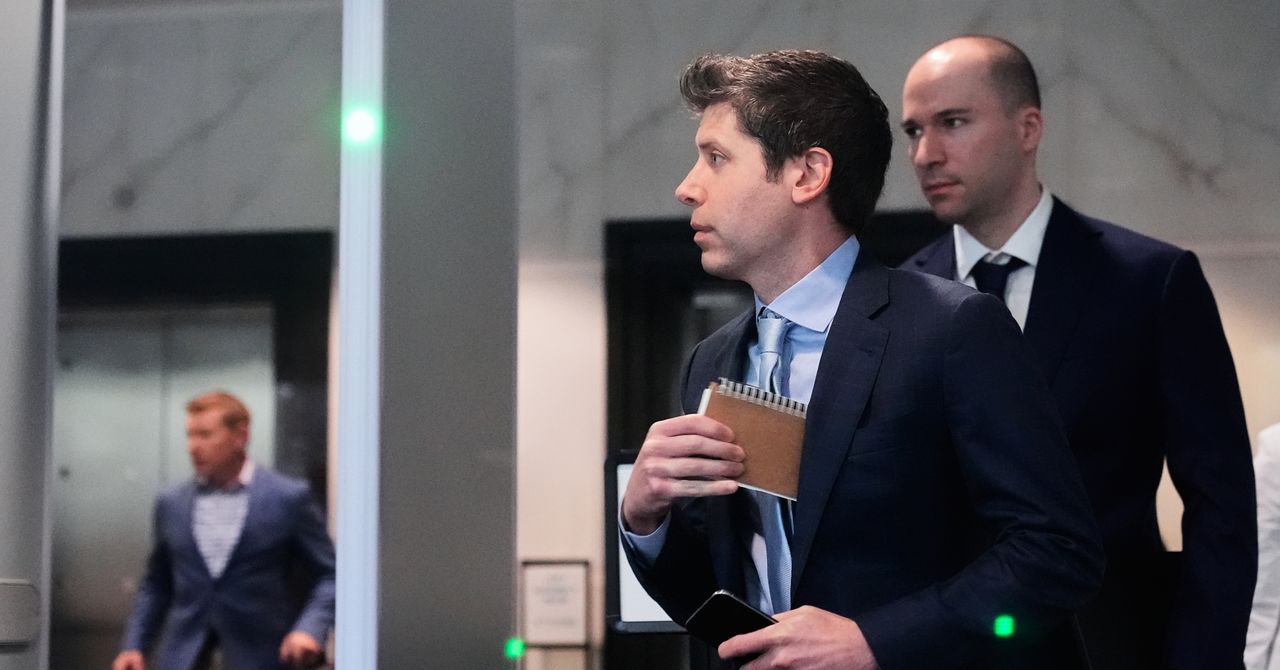
OpenAI told staff on Friday that it would reorganize the company as part of an ongoing effort to unify its product offerings, WIRED has learned. OpenAI cofounder and president Greg Brockman will now lead the company’s product strategy, in addition to his work on AI infrastructure, OpenAI confirms to WIRED. Brockman was previously assigned to oversee OpenAI products on an interim basis while CEO of AGI deployment, Fidji Simo, was on medical leave; the change is now official.
“We’re consolidating our product efforts to execute with maximum focus toward the agentic future, to win across both consumer and enterprise,” Brockman said in a memo to staff seen by WIRED. Brockman added that OpenAI’s products are naturally converging, and that the company has decided to merge ChatGPT and Codex into one unified experience.
OpenAI says it’s folding ChatGPT, its AI coding agent Codex, and its developer-facing API into one core product team. The company says that Codex is increasingly powering its consumer and enterprise offerings, which are gaining the ability to perform digital tasks autonomously on behalf of users.
Two other OpenAI leaders are also taking on larger roles at the company as part of the changes. OpenAI’s head of Codex, Thibault Sottiaux, has been tapped to lead the core product and platform across consumer, enterprise, and developer surfaces. Sottiaux was a key leader in building Codex into one of the company’s fastest-growing products of all time. OpenAI’s longtime head of ChatGPT, Nick Turley, is moving to a new role at the company that aims to revamp enterprise products. OpenAI says Turley will continue his work on ChatGPT, which he has helped grow to more than 900 million weekly active users since he took over in 2022.
The changes are the latest shakeup for OpenAI as leadership aims to refocus the company on a few key product areas, including ChatGPT, Codex, and its forthcoming “everything app.” Last month, OpenAI announced many executive changes, including that CEO of AGI dDeployment, Fidji Simo, was taking a medical leave to focus on her health. OpenAI previously said Brockman would oversee product strategy in her absence. The company tells WIRED that Simo remains on medical leave, and worked directly with Brockman on these organizational changes and product strategy.
In the last year, OpenAI has faced increasing pressure from competitors, including Anthropic in coding domains and Google in consumer chatbots. OpenAI leaders are hoping to simplify product offerings ahead of its plan to file for an IPO, which could happen later this year.
Other OpenAI executives left the company entirely last month, including the head of its AI workspace for scientists, Kevin Weil; head of Sora, Bill Peebles; and its chief technology officer of enterprise applications, Srinivas Narayanan.
This is a developing story. Please check back for updates.

Employee benefits are in the spotlight this week, and that’s because of three recent stories about US companies cutting back on non-wage compensations for workers.
A Texas tech consulting firm with a forgettable name—TTEC—suddenly became a lot more memorable when it suspended its discretionary 401(k) match program for 16,000 employees through at least the end of 2026. According to Business Insider, which viewed an internal TTEC memo, the company plans to invest in AI certifications, AI tools and training, and automation, among other things.
The auditing and consulting giant Deloitte is also reportedly slashing benefits for some workers starting next year. This includes reducing PTO, halving parental leave, and eliminating a $50,000 reimbursement for family planning services such as adoption, surrogacy, and IVF. San Francisco-based Zoom, meanwhile, has made a smaller-scale change and reduced its parental leave for employees from 22 weeks to 18 weeks for birthing parents.
So what’s the driving force behind this? And are there more cuts to come? The latter is impossible to answer, and the former is unfortunately more complicated than “corporate ghouls go AI.”
First off, “what Deloitte did is completely unconscionable,’” says Joan C. Williams, a professor at UC Law San Francisco, the author of several books on work culture and class dynamics, and an oft-cited scholar on these topics. The consulting firm is cutting the benefits of a specific class of internal workers—in admin, IT support, and finance—while leaving intact benefits for people in client-facing roles. An affected worker will see their parental leave cut from 16 weeks to just eight weeks.
“It treats people differently based on the type of job they’re in, and cutting any mother down to eight weeks of paid leave is just outlandish,” Williams says. “When labor is tight, employers are more generous. But once the power shifts, the benefits contract.”
AI certainly is a convenient excuse these days for any corporate decision that harms workers. But the impetus here is also the cost of the benefits themselves. Earlier this year subsidies from the Affordable Care Act lapsed, and people began dropping out of health care plans entirely. Insurers have cited this as one reason they’ve raised premiums.
Sarahjane Sacchetti, a former top executive at benefits administration companies Cleo and Collective Health, who is working on a new health care initiative, told me that the costs of employer-sponsored health plans have increased significantly over the past five years. A survey last year of over 1,700 US employers by the Mercer health care consulting group found that the health care cost per worker was expected to rise on average 6.5 percent in 2026, the highest since 2010. And this was after factoring in cost-reduction measures; otherwise, the cost of a plan would go up by nearly 9 percent.
“This just starts to eat into how you think about total compensation as an employer,” Sacchetti says. That doesn’t mean the corporation is the ‘good guy,’ she says, but the poor state of American health care policy and lack of safety net are responsible for a lot of the stress that plagues undercompensated or laid-off workers.
Williams points out that the US is one of the few countries that doesn’t offer a federal paid maternal leave—putting it in league with Papua New Guinea and Suriname. “This just shows how crazy it is to provide employee basics like pension and paid parental leave through private employers rather than how other industrialized countries do it,” Williams says. Her proposed solution? “The US needs to join the rest of the universe.”
The irony, of course, is that the US government professes to be obsessed with women having more babies. If women in the US are—as celebrity doctor Mehmet Oz put it this week in the Oval Office—“underbabied,” a comprehensive paid federal leave policy would be the obvious place to start. (Oz also said that “making babies” is “the most creative thing the universe knows.” Don’t tell the AI CEOs.)

Gantri, a San Francisco-based company known for making soft, stylized 3D-printed lamps, is going wireless. That’s thanks to a new partnership with the design firm Ammunition.
Gantri 3D-prints its lamps using plastics made from corn-based polylactic acid (PLA) in its Bay Area facilities. The result is a collection of carefully designed light fixtures with gentle curves that aim to make luxury-style lighting feel somewhat affordable. (Prices range from $200 to $500.)
Last year, the company introduced a program called Gantri Made, which allows shoppers to customize their lights and gives third-party designers the ability to build their own designs using Gantri’s foundational pieces.
Courtesy of Gantri
Gantri first partnered with Ammunition in 2020, developing a line of stylish lamps aiming to highlight what premium light pieces could look like. You’ve almost certainly seen something built with Ammunition’s flair. The firm designed Beats by Dre headphones, the Square point-of-sale tablets you see in shops everywhere, and many other projects, from robot coffee machines to Jay-Z’s failed weed vape cartridges.
This Gantri new collab is a range of lamps that include floor lamps, table lamps, and ones small enough to hold in your hand. (Those are rectangular, with designs inspired by piers around San Francisco.) All the lights are wireless and can be removed from charging ports to run for what Gantri says is 10 or more hours of battery life. Gantri is also developing an app to control the lights. They will work with Matter, the connectivity standard that aims to make smart home tech from different companies work together, but that compatibility isn’t expected until next year.
Gantri CEO Ian Yang points out that for most of human history, light sources were something people carried with them—torches, candles, lanterns. Lights staying in fixed places has become the norm, but he wants these wireless lamps to show there’s another way.
“I really think this product is going to change the way that people think about lighting, but also think about the power of digital manufacturing, about this new material that’s plant-based,” Yang says.
The lamps have a custom charging port, which allows them to stand upright and face any direction while still receiving a charge. They also require a custom charger and cannot be charged via USB-C or another cord in a different room. That may inhibit the mobility the lamp promises, as you won’t be able to move them from room to room and plug them in with any USB-C cord lying around—you’d have to bring that proprietary cable with you. But Yang says this was a deliberate choice, even though it was much more difficult than finding a spot for a USB-C connection. He wanted the lamps to feel portable while also having a place for them to become a fixture in a home.


Greg Brockman Officially Takes Control of OpenAI’s Products in Latest Shakeup

Oil price gains and Westminster worry sink stocks

PM Modi’s UAE visit: How India will benefit from agreements on strategic petroleum reserves, LPG – explained

-

 Tech1 week ago
A new frontier: Identity stack evolves for agentic systems | Computer Weekly
-

 Tech1 week ago
‘Orbs,’ ‘Saucers,’ and ‘Flashes’ on the Moon: Pentagon Drops New UFO Files
-

 Fashion1 week ago
New orders in German manufacturing up 5% MoM in Mar 2026: Destatis
-

 Tech1 week ago
Nick Bostrom Has a Plan for Humanity’s ‘Big Retirement’
-

 Tech1 week ago
What Microsoft Executives Really Thought About OpenAI in 2018
-

 Fashion1 week ago
US’ Carter’s taps retail veteran Sharon Price John as new CEO
-

 Sports1 week ago
Shaheen Afridi achieves landmark feat during opening Test against Bangladesh
-

 Entertainment7 days ago
Rihanna embraces new tattoo given by children