

Business
FTSE 100 ends down as oil rises while Iran war remains in deadlock


Blue chips in London outperformed European and US peers on Friday, but closed marginally lower, as oil prices rose once more amid few signs of progress in ending the Iran war.
“The simple fact is that sentiment is likely to stay negative for as long as the Strait of Hormuz remains unsafe for shipping and controlled by Iran,” commented David Morrison, senior market analyst at Trade Nation.
The FTSE 100 closed down just 4.82 points at 9,967.35. The FTSE 250 ended down 331.32 points, 1.6%, at 20,964.75, and the AIM All-Share closed down 13.43 points, 1.9%, at 705.63.
For the week, the FTSE 100 rose 0.5%, the FTSE 250 fell 1.8% and the AIM All-Share Index fell 1.7%.
On Thursday, US President Donald Trump issued a 10-day extension on his deadline for Tehran to open the Strait of Hormuz or face the destruction of its energy assets.
But with Iran maintaining a hold on the Straits, Mr Trump’s announcement largely failed to lift the mood for markets.
“Traders are now discounting the daily torrent of posts and incoherent press conferences from the White House, as the war rages on,” said Kathleen Brooks, research director at XTB.
“Investors are facing the facts: the Strait of Hormuz is effectively closed and it does not appear that there is a real end in sight to the war.”
Mr Trump has insisted Iran wanted “to make a deal” to end the war engulfing the region, but the Iranian side has indicated no let-up in reprisal attacks against Israel and targets across the Gulf.
Kuwait said on Friday its main commercial port was damaged in a drone attack.
Iran’s Tasnim news agency said the country has responded to Washington’s 15-point plan to end the war and was awaiting a reply.
Reports also suggested the US is weighing up sending up to 10,000 additional troops to the Middle East, fuelling speculation that Washington may be preparing for a potential ground operation in Iran.
The Wall Street Journal reported that the move would provide Mr Trump with “more military options”.
Amid the impasse, the oil price’s upward trajectory resumed.
Brent oil was higher at 111.63 US dollars a barrel on Friday afternoon, from 108.80 dollars late on Thursday.
In European equities on Friday, the CAC 40 in Paris closed down 0.9%, while the DAX 40 in Frankfurt ended 1.4% lower.
“Trump’s 10-day Taco (Trump always chickens out) has had a less profound impact compared with Monday’s five-day reprieve, with equities losing ground in Europe despite the president’s decision to once again postpone strikes on key energy infrastructure. Instead, there is a real concern that we could see escalation through the use of boots on the ground,” said Joshua Mahony at Scope Markets.
Stocks in New York were lower. The Dow Jones Industrial Average was down 1.1%, the S&P 500 index was 1.0% lower, and the Nasdaq Composite fell 1.4%.
The yield on the US 10-year Treasury widened to 4.42% on Friday from 4.40% on Thursday. The yield on the US 30-year Treasury stretched to 4.95% from 4.94%.
The pound fell to 1.3288 US dollars on Friday afternoon from 1.3338 dollars at the equities close on Thursday. Against the euro, sterling fell to 1.1554 euros from 1.1563 euros a day prior.
The euro stood lower against the greenback at 1.1521 dollars from 1.1534 dollars. Against the Japanese yen, the dollar was trading higher at 160.10 yen compared to 159.65 yen.
Supporting the FTSE 100, AstraZeneca rose 3.4% after reporting positive phase three results for its chronic obstructive pulmonary disease treatment, tozorakimab.
The company said the drug delivered “significant and highly clinically meaningful” reductions in exacerbations in two replicate trials, Oberon and Titania.
The Bank of America said the data was a “pleasant surprise” after failed trials at Roche and Sanofi for similar drugs.
Cambridge-based AstraZeneca is the FTSE 100’s most valuable company, worth about £223 billion.
The firm sees peak sales for tozorakimab of 3-5 billion dollars, while the current Visible Alpha consensus is 1.2 billion dollars.
3i rallied by 1.0%, after slumping 18% on Thursday amid disappointing like-for-like growth at its main investment, Dutch discount retailer Action.
JPMorgan said lower guidance for flat margins and lower like-for-like sales at Action “than we were expecting, was disappointing.”
Nonetheless, JPM said Action remains a “leading compound growth story” and “3i now offers a cheap way in”.
Elsewhere, the rising gold price boosted Fresnillo and Endeavour Mining, up 0.6% and 1.9% respectively.
Gold rose to 4,517.90 dollars an ounce on Friday from 4,383.70 dollars at the same time on Thursday.
NatWest rose 0.9% as Deutsche Bank raised its share price target to 840p from 730p.
“NatWest has unfairly derated in our view,” analyst Robert Noble said.
In the debit column, Metlen Energy was the biggest faller, down 8.6%.
The Athens-based energy and metallurgy company said auditors PricewaterhouseCoopers have requested more time to complete work on its 2025 financial statements, its first as a dual-listed company in London and Athens.
The group now expects to release results on April 9, a nine-day delay, and reiterated guidance for earnings before interest, tax, depreciation and amortisation of around £750 million.
Housebuilders were once more under pressure. The Bank of America cut price targets by 20% across the sector and lowered pre-tax profit forecasts by 7% through 2026 to 2028, with sector earnings per share expectations now 6% below consensus.
Barratt Redrow fell 4.7%, Persimmon 3.9% and Taylor Wimpey 1.7%.
The biggest risers on the FTSE 100 were: AstraZeneca, up 472.0p at 14,302.0p; Endeavour Mining, up 80.0p at 4,262.0p; Rio Tinto, up 115.0p at 6,545.0p; Reckitt Benckiser, up 90.0p at 5,164.0p; and Glencore, up 6.4p at 538.4p.
The biggest fallers on the FTSE 100 were: Metlen Energy & Metals, down 3.0p at 31.75p; Barratt Redrow, down 12.6p at 255.7p; Babcock International, down 57.0p at 1,155.0p; Persimmon, down 43.0p at 1,075.0p; and Autotrader, down 17.5p at 447.3p.
Monday’s global economic calendar has UK mortgage approvals data at 7am BST. German and Italian inflation figures are also due, along with the Dallas Fed manufacturing index in the US.
Monday’s local corporate calendar has full-year results from Artisanal Spirits, Aoti and RTW Biotech.
In Europe, daylight saving time starts on Sunday, and clocks go forward by one hour.
Contributed by Alliance News
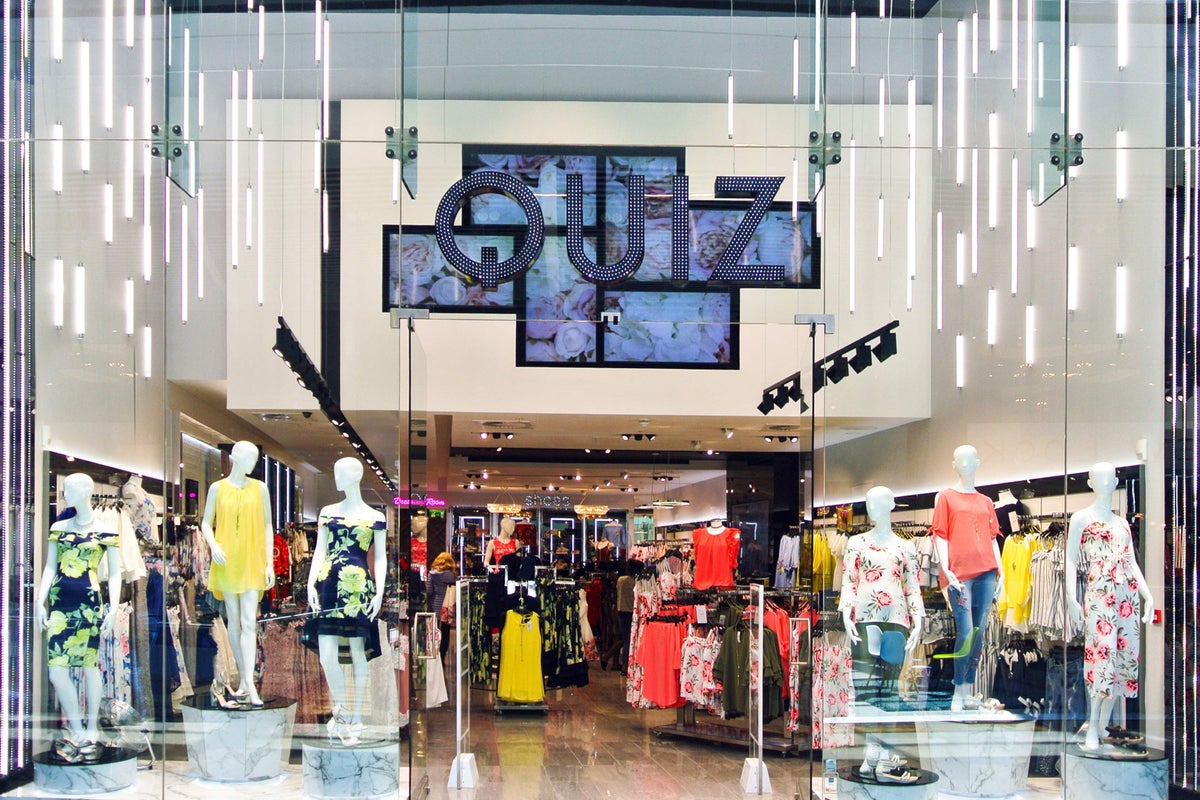
Fashion retailer Quiz is set to close its remaining 37 stores by the end of June, administrators have confirmed.
The high street chain appointed Interpath in February after a “tough start” to 2026.
Insolvency specialists announced on Thursday that a closure plan for its final outlets will be implemented over the coming weeks.
Three other stores, in Castlecourt, Belfast, Leeds, and Romford, recently shut permanently.
The precise timing for these remaining closures, and the number of staff affected, is yet to be confirmed.
Over 100 head office and warehouse jobs were put at risk when Quiz first entered administration.
It is the second time Quiz had fallen into administration in just over a year, having collapsed in February 2025 before immediately being bought in a so-called pre-pack deal by a subsidiary of the founding Ramzan family.
Quiz concessions in New Look and Matalan stores in the UK are not included in the administration and remain unaffected.
Remaining stock is being delivered to its stores, with heavy discounts of at least 60% as administrators seek to sell off as much as possible to help pay the collapsed firm’s outstanding debts.
Alistair McAlinden, head of Interpath in Scotland and joint administrator, said: “As we head into the May bank holiday weekend, we would encourage shoppers to visit their local store as we commence our final closing down sale.”
Geoff Jacobs, managing director at Interpath and fellow joint administrator, said: “We’d once again like to say a huge thank you to Quiz staff who have shown such dedication and professionalism under difficult circumstances.”
Here are the locations of the stores facing closure:
-Aberdeen, Scotland
-Basingstoke, Hampshire
-Bracknell, Berkshire
-Cardiff, Wales
-Carlisle, Cumbria
-Castleford, West Yorkshire
-Clydebank, Scotland
-Craigavon, Northern Ireland
-Derby, Derbyshire
-Dunfermline, Scotland
-Eastbourne, East Sussex
-Gateshead Metro, Tyne and Wear
-Glasgow Braehead, Scotland
-Glasgow Buchanan Galleries, Scotland
-Glasgow Fort, Scotland
-Glasgow St Enoch, Scotland
-Hanley, Staffordshire
-Hull, East Yorkshire
-Inverness, Scotland
-Irvine, Scotland
-Leicester, Leicestershire
-Livingston, Scotland
-Manchester Arndale, Greater Manchester
-Manchester Trafford Centre, Greater Manchester
-Mansfield, Nottinghamshire
-Merryhill, West Midlands
-Newry, Northern Ireland
-Newtownabbey, Northern Ireland
-Northampton, Northamptonshire
-Norwich, Norfolk
-Portsmouth, Hampshire
-Sheffield Meadowhall, South Yorkshire
-Stirling, Scotland
-Telford, Shropshire
-Thurrock Lakeside, Essex
-Warrington, Cheshire
-Watford, Hertfordshire
Business
Trump administration says new EPA rules will save you money at the supermarket. It’s not clear they will

U.S. President Donald Trump speaks during an announcement with U.S. Environmental Protection Agency (EPA) Administrator Lee Zeldin (not pictured) in the Oval Office at the White House, in Washington, D.C., U.S., May 21, 2026.
Kevin Lamarque | Reuters
President Donald Trump announced on Thursday a delay to two Biden-era EPA refrigerant rules, arguing the move will cut costs for companies and save consumers money at the grocery store.
The administration estimated that American families and businesses will save more than $2.4 billion under the new rules.
“Our actions allow businesses to choose the refrigeration systems that work best for them, saving them billions of dollars,” said EPA Administrator Lee Zeldin in a statement.
He added, “This will be felt directly by American families in lower grocery prices.”
But it was unclear Thursday whether or how companies like grocers would use those savings to make it more affordable for shoppers to fill their carts. The changes would not require grocers to take any steps to cut prices at a time when many households see their budgets stretched by soaring gas prices and years of elevated inflation.
The rules target hydrofluorocarbons, or HFCs, potent greenhouse gases commonly used in refrigeration and air conditioning systems that are widely accepted as contributors to global warming. Under the Biden administration, the EPA in 2023 finalized regulations aimed at cutting leaks and emissions from those systems, affecting industries ranging from grocery stores and food distribution to semiconductor manufacturing.
Now, the EPA is delaying compliance by revising the 2023 rule and another regulation from 2024.
The administration’s messaging appears aimed squarely at inflation-weary consumers, especially as food prices remain politically sensitive ahead of the midterm elections this fall. Grocery retailers rely heavily on refrigeration infrastructure, and compliance with the EPA rules would have required upgrades, leak detection systems and new refrigerants in some cases.
At the time the rules were put in place, the EPA argued they would ultimately save businesses and consumers $4.5 billion over time through energy efficiency and lower-cost refrigerants. Grocery and food industry groups warned the transition could cost the industry billions in upfront equipment and compliance expenses.
Large chains such as Walmart, Kroger, and Costco have already been investing in “natural refrigerant” systems for years, so the biggest operators were generally better positioned to absorb the transition. Smaller regional grocers and independent stores may feel the cost burden more acutely.
“An orderly transition of equipment reduces both capital costs and operating costs, and at the end of the day that’s good for consumers because we’re able to take that and put that into lowering prices,” said Kroger CEO Greg Foran at an event at the White House.
Still, it remains unclear how grocers would pass on cost savings to consumers. When asked at the signing, Foran said the company is “right in the middle” of passing savings on to the consumer and making sure they’re “paying the right price.”
Earlier Thursday before Trump’s policy announcement, Bloomberg News reported that Foran planned price cuts at Kroger to allow the grocer to better compete with Walmart and Costco.
Food inflation is driven by a wide range of factors, including labor, transportation, feed costs and commodity prices, and some of those expenses have risen in recent months due to the war in Iran. Refrigeration compliance costs represent a small slice of overall grocery operating expenses.

AUBURN HILLS, Mich. — Stellantis said Thursday it plans to invest 60 billion euros ($69.7 billion) under a new five-year strategic plan by CEO Antonio Filosa that also targets annual cost savings of 6 billion euros by 2028.
The plan includes putting 36 billion euros toward the company’s massive portfolio of automotive brands, with 60% of the investment expected for North America. The company expects to introduce more than 60 new vehicles and conduct major refreshes of 50 models, including all-electric vehicles, hybrids and traditional internal combustion engines.
The other 24 billion euros will be put toward global vehicle platforms and new technologies for the automaker and its products, according to the company.
Stellantis also said it plans to achieve positive free cash flow by 2028 after losing 22.3 billion euros last year with a 22 billion euro restructuring pulling back from all-electric vehicles.
The company is targeting revenue growth across its major global operations through 2030. Most notably, it’s aiming for North American revenue growth of 25%, with adjusted operating income, or AOI, of between 8% and 10% in that period. It’s also targeting 15% revenue growth and AOI of between 3% and 5% for enlarged Europe. It expects double-digit revenue increases in South America, the Middle East and Africa, with an AOI of between 4% and 6% in Asia-Pacific.
Under the plan, Stellantis will not eliminate any of its 14 automotive brands, but it will fold operations of its DS and Lancia European units into Citroen and Fiat, respectively, according to the company.
Fiat is one of four designated “global brands” alongside Jeep, Ram Trucks and Peugot. That division also includes the Pro One commercial operations. Its regional brands will include Chrysler, Dodge, Citroen, Opel and Alfa Romeo. It also owns luxury brand Maserati.

Shares of Stellantis listed in the U.S., Italy and France.
To assist in reducing costs, Stellantis plans to launch a new “STLA One” vehicle platform in 2027. The new platform is designed to bring together five different platforms into “one scalable architecture, reducing complexity and expanding coverage.” It targets achieving 20% cost efficiency, the company said.
By 2030, Stellantis targets 50% of its volume will be produced on three global platforms, with up to 70% component reuse.
Filosa — who began leading the automaker less than a year ago — and other executives are set to lay out details of the “FaSTLAne 2030” plan throughout the day Thursday during his first investor day as CEO at the company’s North American headquarters near Detroit.
Stellantis Chairman John Elkann, a scion of Fiat’s Agnelli family and CEO of Europe’s prominent holding company Exor, on Thursday called the plan “ambitious, but realistic” while outlining industry challenges as well as opportunities for the company under Filosa and his new plan.
The plan’s core pillars are “sharper management” of the brand portfolio, new investments, enhanced partnerships, an optimized manufacturing footprint, “excellence in execution” and empowerment of the company’s regions and local teams.
“What we want you to take away from today is that Stellantis, with all its assets, its capabilities, and its new strategic plan, is well positioned to succeed,” Filosa said to open the event. “You will hear from us today how we leverage our regional roots, our global scale, our partnerships and the new technologies in our journey going forward.”
Antonio Filosa, CEO of Stellantis, speaking with CNBC on May 21st, 2026.
CNBC
The company this week announced several new or expanded tie-ups that included Jaguar Land Rover for the U.S. as well as with Chinese automakers Leapmotor and Dongfeng Group, primarily for Europe and China.
As Stellantis partners with Chinese automakers, it’s also competing against them as many of the companies increase sales in Europe.
Amid such competition, Stellantis said it expects to cut European capacity by more than 800,000 units, while repurposing plants and leveraging partnerships. Filosa said the company plans to reduce production without any plant closures.
In both Europe and the U.S., Stellantis said it targets 80% plant utilization in 2030.
Filling those plants will be a variety, or a “freedom of choice,” of products, according to Stellantis. The company’s new or refreshened products are expected to include 29 battery-electric vehicles, 15 plug-in hybrid or extended-range electric vehicles, 24 hybrids and 39 mild hybrids or traditional vehicles with internal combustion engines.
“The interest of consumers around hybrids is growing, also pushed by the oil prices, and range-extended [vehicles] actually is a more customer-centric idea,” Filosa told CNBC’s Phil LeBeau.

Full list of Quiz stores to close in UK as fashion retailer falls into administration

Russia flexes nuclear muscles as tensions rise with Nato
Trump administration says new EPA rules will save you money at the supermarket. It’s not clear they will

-

 Entertainment1 week ago
Conan O’Brien hat tricks as Oscar host
-

 Fashion1 week ago
Italy’s Zegna Group’s Q1 growth boosted by strong organic performance
-

 Entertainment5 days ago
Where Pete Davidson, Elsie Hewitt stand after breakup: Details revealed
-
 Business1 week ago
Tui issues update on summer jet fuel shortage fears
-
 Business1 week ago
Jersey Election 2026: Cost of living concern in St Helier Central
-

 Entertainment1 week ago
OpenAI chief Altman says Elon Musk wanted control of ChatGPT maker, denies betrayal
-

 Entertainment7 days ago
Emilia Clarke recalls near-death incident while filming ‘Game of Thrones’
-
 Fashion1 week ago
US’ Kontoor Brands’ posts strong Q1, plans Lee divestiture