

Business
United Airlines, flight attendants reach labor deal for first raises since pandemic


United Airline flight attendants picketed outside Terminal B at Logan Airport, seeking a new contract.
John Tlumacki | Boston Globe | Getty Images
United Airlines and its flight attendant union have reached a tentative labor deal that will include their first raises in roughly six years.
If ratified by flight attendants, it would make United the last of the major carriers to secure a labor deal with cabin crew members since the Covid-19 pandemic ended.
United said the agreement will include immediate raises and top pay of $100 an hour at the end of the contract, as well as pay for flight attendants during boarding and “a signing bonus for every flight attendant worth a total of $740 million.”
The Association of Flight Attendants-CWA, the flight attendants union, didn’t provide specific details about the deal but said that in addition to higher base pay, it includes additional compensation for flight disruptions and new restrictions on overnight flight assignments.
The labor deal comes as United is planning an aggressive expansion of its higher-touch premium cabins, with new seats featuring elevated dining options and seats that convert into beds.
United flight attendants last July rejected a previous labor deal that would have included immediate, 26% raises.





The NFL shield logo on the field during a preseason game between the Los Angeles Rams and the Houston Texans at NRG Stadium in Houston on Aug. 24, 2024.
Ric Tapia | Getty Images Sport | Getty Images
The NFL is asking prediction market operators to keep specific event contracts that the league deems “objectionable bets” off of their platforms.
In a letter obtained by CNBC, the league outlines examples of event contracts that would be easily manipulable by a single person, inherently objectionable, related to officiating and knowable in advance — and asks that operators refrain from offering such trades.
The NFL declined to comment on which companies received the letter, but said it was sent to operators that are registered with the Commodity Futures Trading Commission and that offer NFL trades.
Prediction platforms Kalshi and Polymarket have dominated the burgeoning predictions industry in recent months, spurring sports betting incumbents like FanDuel and DraftKings to enter the predictions space, as well.
“Sports prediction markets are not effectively regulated currently,” NFL executive vice president Jeff Miller said in a statement. “We will continue to engage with the CFTC in pursuit of the necessary guardrails to protect both the integrity of the game and consumers participating in these rapidly evolving markets.”
While some leagues such as the NHL, MLB and MLS have embraced prediction markets, signing operators as partners, the NFL has been more cautious.
“There is no greater priority for the NFL than protecting the integrity of our games and the welfare of our players,” the letter stated.
In the letter, signed by NFL Chief Compliance Officer Sabrina Perel, she says it is encouraging that the CTFC recognizes that sports-related prediction markets should be regulated differently than other futures contracts.
The examples provided in the letter of events that could be easily manipulated by a single person included whether a kicker would miss a field goal, a quarterback’s first pass being incomplete, or a receiver missing their first target.
The list also included non-game related event contracts, such as broadcast mentions, or appearances by fans or celebrities at the games. During the Super Bowl, these types of wagers were extremely popular, such as whether Jeff Bezos would be in attendance.
Kalshi CEO Tarek Mansour told CNBC after the February championship game that the prediction platform saw more than $100 million in trading volume alone on a question of what halftime performer Bad Bunny’s first song would be.
The league also took issue with “inherently objectionable” wagers such as play injuries, fan safety and play misconduct.
The letter concludes by saying the NFL would be happy to meet to discuss “our views on sports prediction markets in greater detail, including prohibited bettors, information sharing with leagues and responsible betting measures.”
Disclosure: CNBC and Kalshi have a commercial relationship that includes a CNBC minority investment.
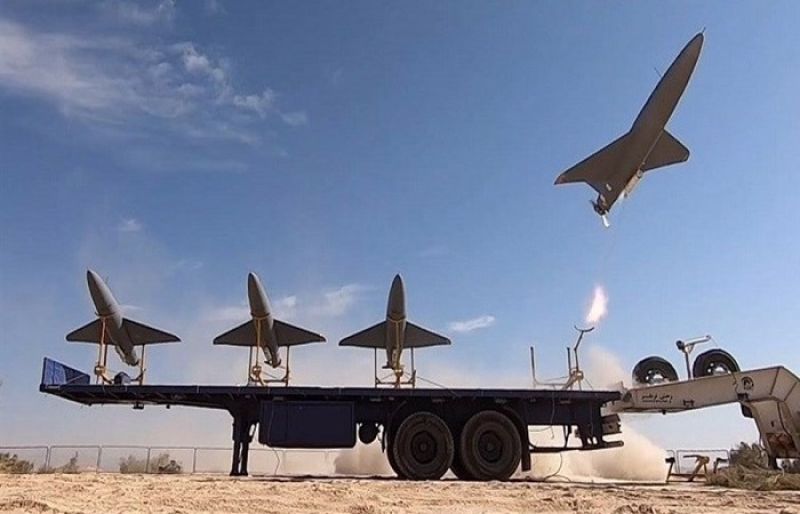
Iran’s Army says it has targeted the US radar stations and a site for the deployment of American military forces in the United Arab Emirates with invading drones, amid an ongoing unprovoked war of aggression by a US-Israeli military coalition against the Islamic Republic.
In a statement on Monday, the Army said its invading drones carried out strikes overnight targeting the enemy’s radar stations in the UAE, responsible for detecting and tracking Iran’s missiles and combat drones.
In its latest wave of retaliatory strikes against American military assets in the region, the Army’s explosive drones also hit US troop positions in the Emirates.
Since the United States and the Israeli regime started unprovoked military aggression against Iran on February 28, Iranian ballistic missiles and drones have repeatedly hit US facilities in the Persian Gulf countries and the Israeli-occupied territories.
The Islamic Revolution Guards Corps said on Sunday that it hit and destroyed a Boeing E3 Sentry surveillance aircraft belonging to the US Air Force in a retaliatory attack against a US-run military installation in Saudi Arabia.
Images circulated on social media platforms show that an Iranian projectile has hit the most important and sensitive section of the aircraft near its tail, where the expensive AN/APY2 reconnaissance radar is lifted.
This came after the IRGC said a warehouse storing Ukrainian anti-drone systems was destroyed in a missile operation in Dubai, the UAE.

War in the Middle East is having an uneven impact on global economies but “all roads” lead to higher prices and slower economic growth, an influential economic body has warned.
The International Monetary Fund (IMF), which advises on policy and gives financial aid to member countries, said it was stepping up support, especially to the most vulnerable economies.
The war’s impact is “both global and highly uneven”, with some countries likely to face a renewed cost-of-living squeeze, IMF economists wrote in a blog post on Monday.
Large energy importers in Asia and Europe are bearing the brunt of higher fuel prices and input costs due to the effective closure of the Strait of Hormuz, which has caused shipments of oil and gas to grind to a halt.
Countries like the UK and Italy have been particularly exposed by their reliance on gas-fired power, while France and Spain were relatively protected by their greater use of nuclear and renewable energy sources, according to the IMF.
The organisation also warned of mounting concerns about food prices shooting up because of disruption to shipments of fertiliser from the Middle East.
“The interruption of crop-nutrient supplies from the Gulf comes just as planting season begins in the Northern Hemisphere, threatening yields and harvests through the year and pushing food prices higher,” it said.
The most vulnerable countries will “bear the heaviest burden”, with people in low-income countries spending a bigger proportion of their incomes on food.
“Although the war could shape the global economy in different ways, all roads lead to higher prices and slower growth,” the IMF warned.
The ultimate impact depends on how long the war lasts and how much damage it does to infrastructure and supply chains, but the world may “settle somewhere in between – tensions linger, energy stays costly, and inflation proves hard to tame”, it wrote.
The IMF said it was supporting member countries, of which it has around 190, with policy advice and, where needed and co-ordinated with the international community, financial assistance.

NFL asks prediction market operators to refrain from ‘objectionable bets’

Lady Gaga thanks fiancé Michael Polansky for making her 40th ‘so special’

Who Is Scott Mills? BBC Radio 2 host fired over ‘personal conduct’

-

 Politics6 days ago
Afghanistan announces release of detained US citizen
-

 Sports6 days ago
Broadcast industry CEO says consolidation is ‘essential’ to compete for NFL soaring media rights prices
-

 Entertainment6 days ago
UN warns migratory freshwater fish numbers are spiralling
-

 Sports1 week ago
Men’s March Madness live tracker: Updates on Saturday’s games
-
 Business6 days ago
Property Play: Home flippers see smallest profits since the Great Recession, real estate data firm says
-

 Tech6 days ago
Can a Home Appliance Fix the Problem of Soft-Plastic Waste?
-

 Sports1 week ago
Arne Slot: Liverpool’s defeat to Brighton ‘hurts a lot’
-

 Fashion6 days ago
ICE cotton slips on weaker crude, profit booking