

Politics
Russia expels UK diplomat on spying allegations

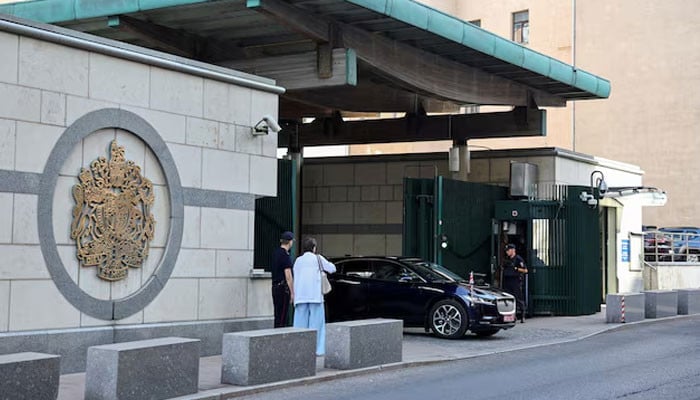
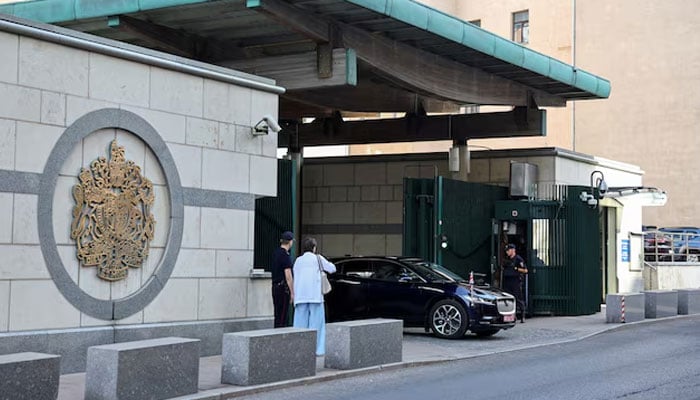
Russia on Monday kicked out a British diplomat over allegations he was working as a spy — charges rejected by London as “complete nonsense”.
Moscow and London have each expelled multiple embassy staff over the last decade, trading accusations of espionage.
Expulsions from one side have typically been followed by a tit-for-tat response from the other.
The diplomat, named as 29-year-old embassy secretary Albertus Gerhardus Janse Van Rensburg, was expelled for engaging in “subversive intelligence activities that threaten Russia’s security”, Russia’s FSB security service said.
“A decision was made to strip Janse Van Rensburg of his accreditation, and he was ordered to leave Russia within two weeks,” it added.
The Russian foreign ministry said it had summoned Britain’s charge d’affaires over the incident and warned the United Kingdom not to retaliate.
Britain accused Russia of waging an “aggressive and coordinated campaign of harassment”.
“The accusations made today by Russia against our diplomats are complete nonsense,” a foreign ministry spokesperson said, adding Russia was “pumping out malicious and completely baseless accusations about their work”.
Relations between London and Moscow, currently at a low point over the Ukraine war, have been strained by spying allegations for decades.
In 2006, former FSB officer and Russian defector Alexander Litvinenko was killed in London, poisoned by polonium in what British investigators said was a hit by the Russian secret service.
In 2018, the UK said Russian double agent Sergei Skripal was poisoned with a Novichok nerve agent in the British cathedral city of Salisbury.
One member of the public was killed after handling the delivery device, a discarded perfume bottle, triggering the largest Western expulsion in decades of Russian diplomats alleged to be spies.
- Rubio meets PM Narendra Modi behind closed doors.
- US secretary calls India a “great ally, great partner”.
- US looking to find ways to sell India more oil: Rubio.
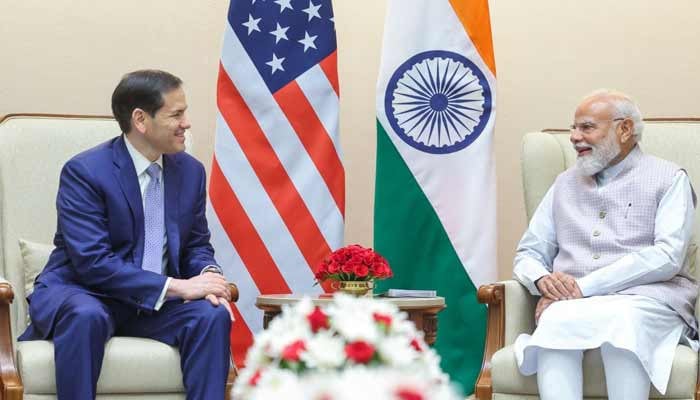
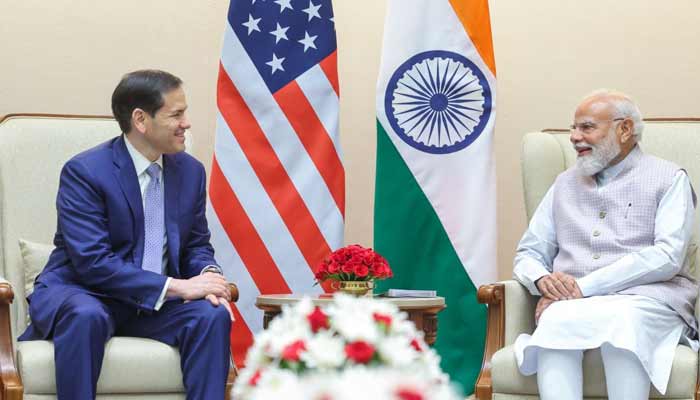
US Secretary of State Marco Rubio on Saturday met Prime Minister Narendra Modi on a visit to India, looking to renew ties with a usually like-minded partner a week after Washington’s warm summit with China.
One week after joining President Donald Trump in Beijing, Rubio — visiting both Asian powers for the first time — flew to New Delhi and saw Modi for more than one hour behind closed doors, a US official said.
Rubio, a devout Catholic, began his four-day, four-city tour by touring the headquarters of Mother Teresa’s charity in the eastern city of Kolkata and praying over her tomb.
Wearing a yellow garland over his suit, Rubio, joined by his wife Jeanette, smiled before an assembly of nuns, all clad in the late humanitarian’s signature white and blue saris.
“Rubio spoke about aiding the homeless, terminally ill and those afflicted by leprosy,” Sister Marie Juan of Missionaries of Charity told reporters after his hour-and-a-half-long visit.
“He was happy to pray and we were also happy to have him,” she said.
Sergio Gor, the US ambassador to India and also a Catholic, later posted that the visit showed that the countries’ relationship was based “not only on strong policies, but also on shared values”.
Before leaving on Tuesday, Rubio will also take part in a meeting of foreign ministers of the so-called Quad — Australia, India, Japan and the United States — four democracies seen as a counterweight to China’s presence in the Indian Ocean.
China has long been suspicious of the Quad, calling it an attempt to encircle it, and has chastised India in the past for taking part in it.
But Rubio’s trip comes as Trump is shaking up traditional assumptions about US priorities.
Visiting China, Trump hailed the reception he received from President Xi Jinping despite limited concrete announcements.
Trump also spoke of the United States and China being a “G2” — a formulation that had fallen out of favour in recent years as US allies fear being shut out of Washington’s dealings with a rising China.
Symbolic first step
While Trump rarely raises human rights, some elements of his base have expressed concerns over the treatment of Christians under the Hindu nationalist Modi, making Rubio’s choice of first stop highly symbolic.
Rights groups say there has been a rise in attacks on minority Christians across India, including vandalism of churches, since Modi came to power in 2014.
The government rejects the claims as exaggerated and politically motivated.
Ahead of the trip, Rubio called India a “great ally, great partner” and said the United States would be looking to find ways to sell it more oil.
India’s fast-growing economy is reliant on energy imports and like many countries has been rattled by the US-Israeli attack on Iran, which retaliated by choking off the strategic Strait of Hormuz, sending global oil prices soaring.
India has historic ties with Iran but also a growing relationship with Israel, which Modi visited just days before the war.
But the conflict has also seen the re-emergence as a key US partner of India’s traditional adversary Pakistan, which has positioned itself as a mediator, with its powerful army chief flying Friday to Tehran.
The United States was a Cold War partner of Pakistan but increasingly took a distance as it prioritised relations with India, seeing the world’s largest democracy as a natural partner in a global order marked by China’s rise.
Trump has turned away from long-held assumptions and warmed to Pakistan, which has lavished him with praise over his diplomacy in its short war with India last year, and has welcomed a cryptocurrency firm owned by the US president’s family.
Modi irritated Trump by not crediting him with ending the war. Trump imposed punitive tariffs on India shortly afterwards, at rates higher than he had put on China, but they were eased under a trade deal.
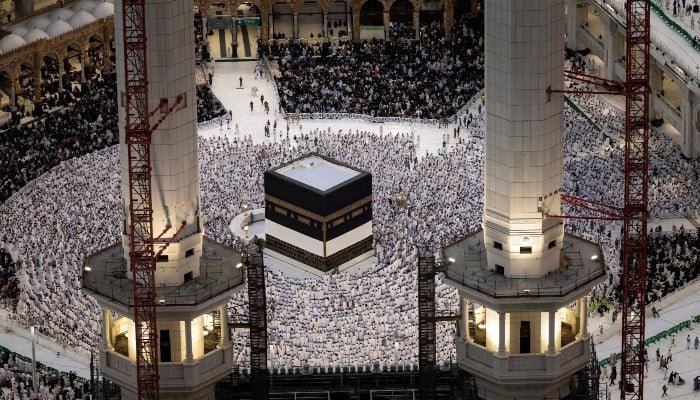
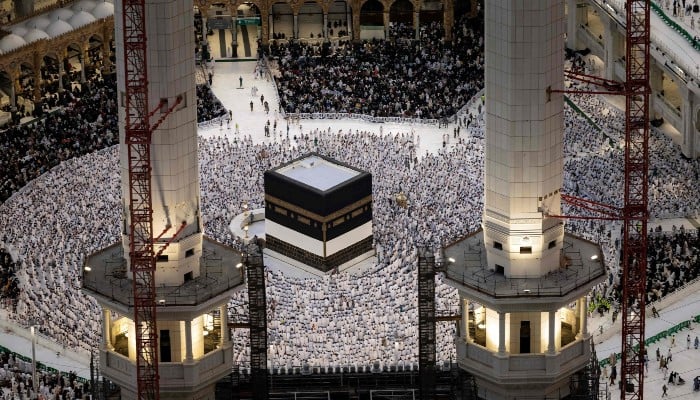
MAKKAH: Over 1.5 million pilgrims have arrived in Saudi Arabia from outside the kingdom for the upcoming hajj, according to a Saudi official, exceeding the number of international visitors last year despite the war in the Middle East.
The conflict triggered by the US and Israeli strikes on Iran in late February saw Tehran order waves of strikes on targets in Saudi Arabia and across the Gulf, prompting widespread air traffic disruptions and causing travel costs to surge.
Major Gulf airlines in the UAE, Qatar, and Bahrain have worked to quickly restore much of their operational capacity after weeks of airspace closures and flight cancellations.
Despite the complications, pilgrims have continued to flock to Saudi Arabia to participate in this year’s hajj.
“The total number of pilgrims arriving from abroad has reached 1,518,153,” Saleh Al-Murabba, the commander of Saudi Arabia’s Hajj Passport Forces, told a press conference late Friday.
These figures are expected to rise further over the next two days as pilgrims continue to arrive from abroad ahead of the formal rituals that mark the beginning of the hajj on Monday.
Last year, the total number of pilgrims at the hajj reached 1,673,320, including 1,506,576 from outside Saudi Arabia.
The hajj, one of the five pillars of Islam, must be performed at least once by all Muslims with the means.
- 247 workers were underground.
- 201 brought to surface safely.
- President Xi orders full investigation.
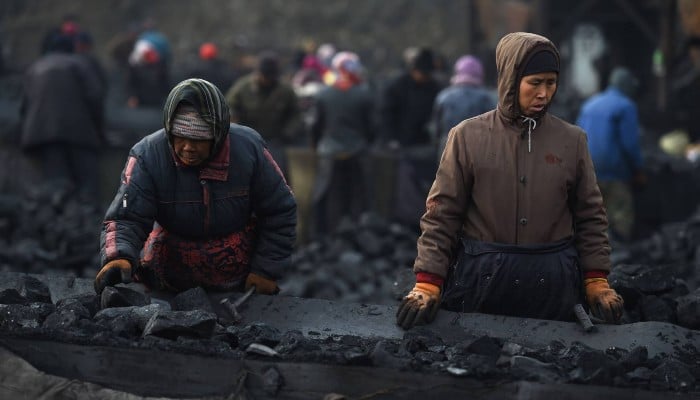
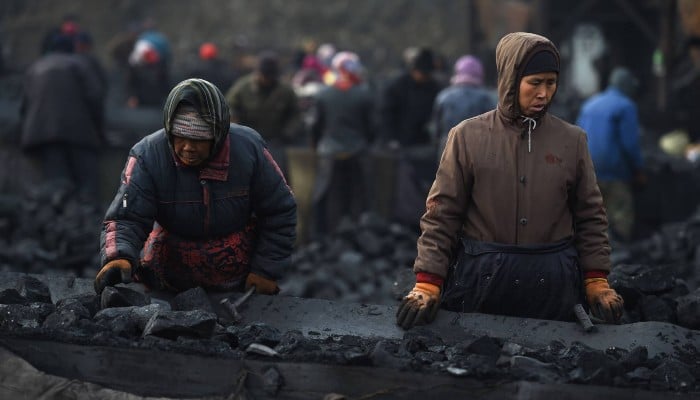
BEIJING: At least eight people have died and dozens are trapped underground after a gas explosion at a coal mine in northern China, state media reported on Saturday.
The blast occurred at 7:29 pm (1129 GMT) on Friday at the Liushenyu coal mine in Shanxi province, according to state news agency Xinhua.
A total of 247 workers were underground at the time, of whom 201 had been brought to the surface safely as of 6:00 am on Saturday, Xinhua said.
Eight people have been confirmed dead, while 38 remain trapped underground, the agency reported, citing local emergency management authorities.
President Xi Jinping urged “all-out efforts” to treat the injured and called for thorough investigations into the incident, Xinhua said.
He “emphasised that all regions and departments must draw lessons from this accident, remain constantly vigilant regarding workplace safety… and resolutely prevent and curb the occurrence of major and catastrophic accidents”.
Rescue efforts were ongoing, Xinhua said.
Xinhua reported earlier that levels of carbon monoxide — a highly toxic, odourless gas — had “exceeded limits” at the mine.
Some of those trapped underground were in “critical condition”, the earlier report said.
Shanxi, one of China’s poorer provinces, is the country’s coal-mining capital.
Mine safety in the country has improved in recent decades, but accidents still occur frequently in an industry where safety protocols are often lax.
China is the world’s top consumer of coal and the largest greenhouse gas emitter, despite installing renewable energy capacity at record speed.


Ryan Bingham reflects on his award-winning career

NASCAR champion Kyle Busch’s cause of death revealed by family

CDF Munir’s Iran visit resulted in ‘encouraging progress towards final understanding’

-

 Entertainment1 week ago
Where Pete Davidson, Elsie Hewitt stand after breakup: Details revealed
-

 Entertainment1 week ago
Emilia Clarke recalls near-death incident while filming ‘Game of Thrones’
-

 Politics1 week ago
Rising diesel costs from Iran war strain US school budgets
-
 Entertainment1 week ago
Drake drops highly anticipated "Iceman" album, plus two surprise albums
-
 Politics1 week ago
UK’s Starmer faces survival battle as potential rivals circle
-
 Politics1 week ago
Trump says China will order 200 Boeing jets
-
 Tech1 week ago
Greg Brockman Officially Takes Control of OpenAI’s Products in Latest Shakeup
-

 Tech6 days ago
Why Is Your Grill So Dumb? The Best Grills Set Temp Like an Oven