

Fashion
Sweden’s H&M’s Q1 FY26 sales dip but margins improve on cost control

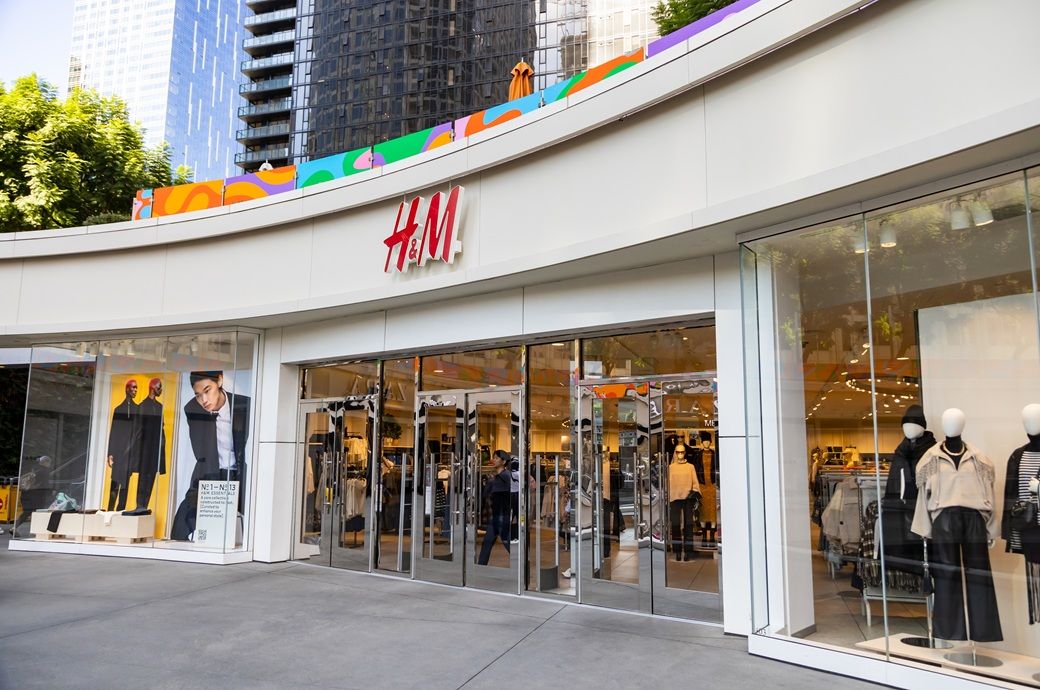
The gross profit reached SEK 25,138 million (~$2.39 billion), with the gross margin improving to 50.7 per cent from 49.1 per cent a year earlier, supported by lower markdown costs and more efficient sourcing.
H&M has reported net sales of SEK 49,607 million (~$4.72 billion) in Q1 FY26, with sales down 1 per cent in local currencies.
Improved cost control lifted gross margin to 50.7 per cent and operating profit rose 26 per cent.
The net profit increased to SEK 704 million (~$75.05 million), while inventory fell 16 per cent.
Currency effects weighed on revenue despite stronger margins and improving sales.
The operating profit rose by 26 per cent to SEK 1,512 million, lifting the operating margin to 3 per cent from 2.2 per cent. Selling and administrative expenses declined by 1 per cent in local currencies and by 9 per cent in SEK terms, reflecting continued cost discipline, H&M said in a press release.
The net profit after tax (PAT) increased to SEK 704 million (~$75.05 million), with earnings per share (EPS) improving to SEK 0.45 from SEK 0.37. Inventory management also showed progress, with stock-in-trade falling 16 per cent to SEK 34,608 million, indicating improved inventory productivity.
However, sales in SEK terms were impacted by a currency translation effect of just over 9 percentage points due to the strengthened Swedish krona. The quarter began with weaker demand following strong Black Friday trading, though sales trends improved towards the end, supported by spring collections.
“Good cost control and improved gross margin contributed to strengthened profitability in a quarter marked by cautious consumption and large currency translation effects,” said Daniel Erver, CEO at H&M.
Looking ahead, H&M expects March 2026 sales to rise by 1 per cent in local currencies. The company also highlighted its sustainability progress, noting that 32 per cent of materials used in 2025 were recycled, while 91 per cent were either recycled or sustainably sourced.
Fibre2Fashion News Desk (SG)











The Indian PET resin market witnessed significant week-on-week fluctuations during March-May ****. During the first week of March, Asia domestic India PET bottle flakes prices were assessed near $*.** per kg and remained largely stable on a weekly basis. However, during the second week of March, prices sharply increased to around $*.** per kg, reflecting a week-on-week rise of nearly ** per cent amid tight domestic supply conditions and reduced producer operating rates. In the third and fourth weeks of March, prices increased further to nearly $*.** per kg, marking an additional weekly gain of around * per cent. The bullish momentum continued into the first week of April, when prices touched nearly $*.** per kg, reflecting another week-on-week increase of approximately * per cent.
From mid-April onward, the market entered a correction phase as downstream polyester demand remained weak, and buyers shifted towards cautious procurement activity. During the second and third weeks of April, prices eased gradually towards $*.** per kg, indicating a weekly decline of around *–* per cent. The softer trend continued through late April and early May, with prices declining towards $*.** per kg and later $*.** per kg due to subdued polyester operating rates and sufficient domestic availability. By May **, ****, Asia domestic India PET bottle flakes prices were assessed around $*.*** per kg, reflecting an overall decline of nearly * per cent from the April peak, while Asia FOB India PET Bottle Flakes prices were reported near $*.*** per kg during the same period.
The country imported apparel worth $**.*** million during January-March ****, up **.* per cent from $**.*** million in the corresponding period of ****. The latest figures indicate that inbound apparel shipments have remained on a steady growth path since ****, according to *fashion.com/market-intelligence/texpro-textile-and-apparel/” target=”_blank”>sourcing intelligence tool TexPro.
The Russia-Ukraine war has had a significant economic impact on Georgia. The conflict triggered a large influx of Russian and Ukrainian migrants, which initially acted as an economic boon for the country. It fuelled rapid growth, lifted consumer spending, and increased demand for housing, services, textiles, and apparel. However, the war also deepened geopolitical polarisation and accelerated Georgia’s economic and energy reliance on Moscow.
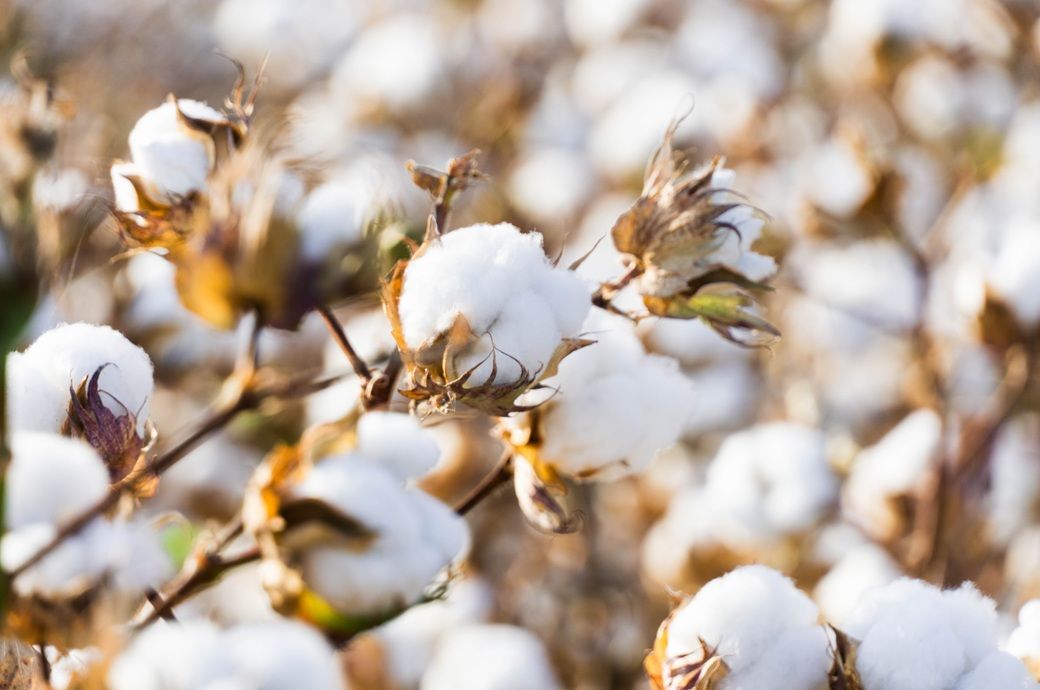
Net sales of Upland cotton for the 2025–26 marketing year totalled 131,800 RB (running bales, each weighing 226.8 kg), up sharply from 47,700 RB in the previous week and 16 per cent higher than the prior four-week average. The recovery followed a steep decline in the week ending May 7 when sales had fallen 61 per cent week-on-week and 66 per cent below the four-week average.
US Upland cotton export sales rebounded to 131,800 RB in the week ending May 14, 2026, after the previous week’s sharp fall.
Pakistan led buying, followed by Vietnam and Turkiye, while new-crop sales surged to 216,000 RB.
Shipments stayed below the recent average.
Pima sales improved slightly but remained weak, with India the top buyer and destination.
Pakistan emerged as the largest buyer during the latest reporting week with purchases of 65,300 RB, including reductions of 200 RB. Vietnam followed with 26,100 RB, including 4,500 RB switched from China, 900 RB switched from South Korea, 100 RB switched from Japan, and reductions of 4,400 RB. Turkiye booked 20,100 RB, including reductions of 100 RB, while Malaysia purchased 5,300 RB and China 3,400 RB. These gains were partly offset by reductions of 1,100 RB for Peru and 900 RB for South Korea.
New crop Upland sales for the 2026–27 marketing year rose sharply to 216,000 RB, compared with 29,700 RB in the previous week. Pakistan accounted for the bulk of new crop sales with 206,100 RB, followed by Indonesia and Turkiye at 4,500 RB each, and Mexico at 900 RB.
Upland export shipments remained broadly steady during the week. Exports totalled 289,400 RB, unchanged from the previous week but 11 per cent below the prior four-week average. Vietnam remained the leading destination with 110,800 RB, followed by Turkiye at 28,700 RB, Pakistan at 26,000 RB, Mexico at 22,100 RB, and Bangladesh at 21,200 RB.
Pima cotton sales showed a marginal weekly improvement but remained well below recent average levels. Net sales for the 2025–26 marketing year totalled 9,500 RB, up 2 per cent from the previous week but 52 per cent below the prior four-week average. India remained the largest buyer with 7,600 RB, followed by Pakistan at 1,100 RB, Peru at 500 RB, Thailand at 200 RB, and Vietnam at 100 RB.
New crop Pima sales for the 2026–27 marketing year stood at 7,700 RB, slightly below 7,900 RB in the previous week. Sales were reported for Peru at 4,000 RB and India at 3,700 RB.
Pima export shipments declined further during the week. Exports totalled 9,900 RB, down 18 per cent from the previous week and 19 per cent below the prior four-week average. India was the top destination with 4,600 RB, followed by China at 3,200 RB, Costa Rica at 1,700 RB, Pakistan at 300 RB, and Mexico at 100 RB.
Overall, the latest USDA data indicate a recovery in US Upland cotton export sales after the previous week’s sharp fall, supported mainly by strong buying from Pakistan, Vietnam, and Turkiye. However, export shipments remained below the recent average, while Pima demand continued to show weakness despite India’s sustained buying interest.
Fibre2Fashion News Desk (KUL)


Royals take protective step for Beatrice, Eugenie as key appearance looms

Market recap: 6 of top-10 most-valued firms add Rs 74,111 crore; Reliance biggest winner

Katie Price refuses to accept Lee Andrews dad’s arrest story

-

 Entertainment1 week ago
Where Pete Davidson, Elsie Hewitt stand after breakup: Details revealed
-

 Politics1 week ago
Rising diesel costs from Iran war strain US school budgets
-

 Entertainment1 week ago
Drake drops highly anticipated "Iceman" album, plus two surprise albums
-
 Business1 week ago
UK borrowing costs rise and pound falls as leadership drama continues
-

 Tech1 week ago
Greg Brockman Officially Takes Control of OpenAI’s Products in Latest Shakeup
-

 Tech7 days ago
Why Is Your Grill So Dumb? The Best Grills Set Temp Like an Oven
-

 Tech7 days ago
This Solar-Powered Smart Sprinkler Keeps My Lawn Watered Without Any Power Cables
-
 Fashion1 week ago
RMG trade bodies seek policy support from Bangladesh PM