

Business
EasyJet passengers describe new EU border controls ‘nightmare’

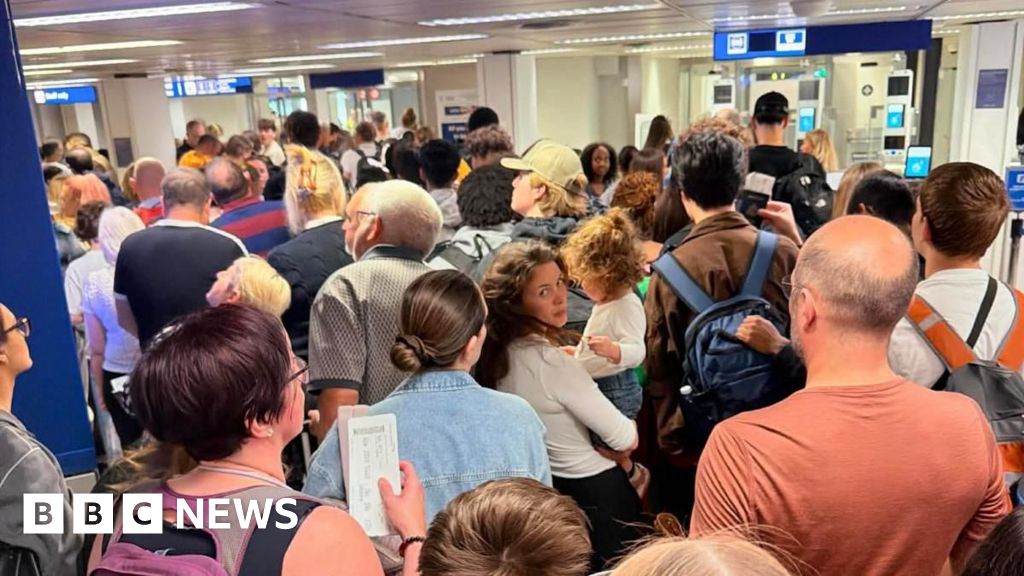
Airlines warn of further disruption due to the introduction of a new EU digital border control system.
Source link
Business
First time in 7 years! India gets 4 million barrels of crude oil from Iran just ahead of Trump waiver expiry – The Times of India
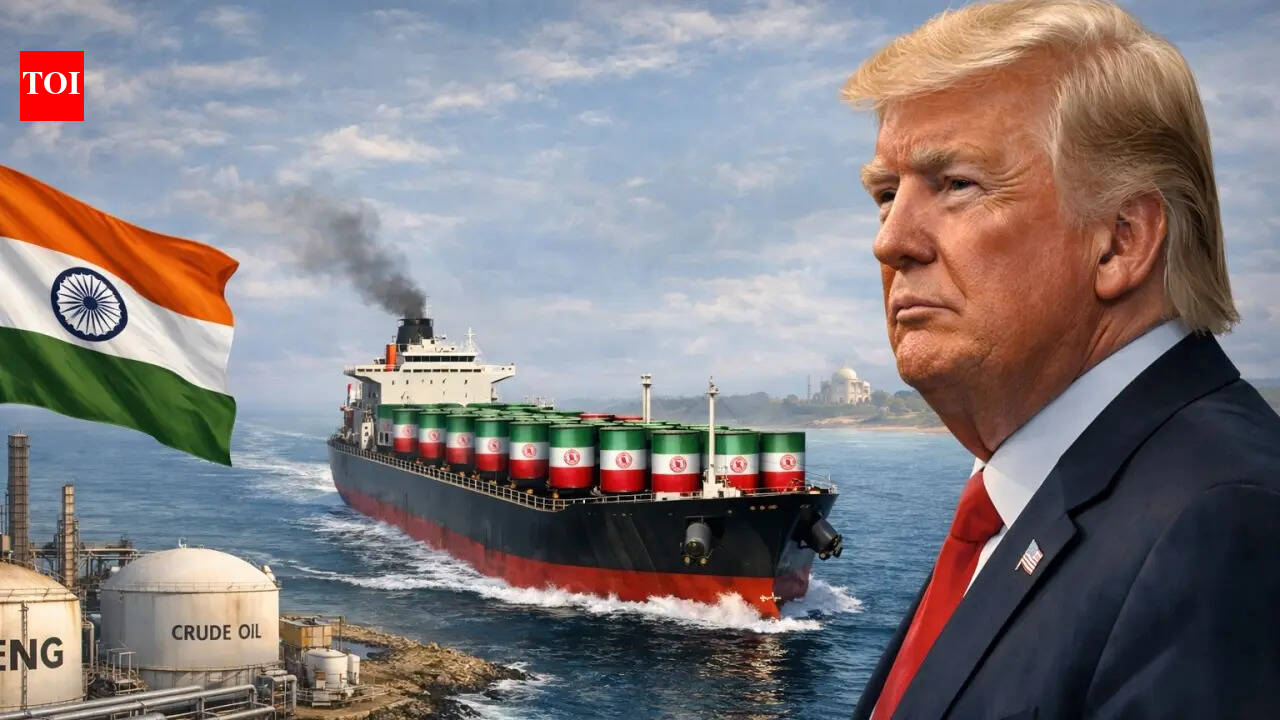
In the middle of the ongoing Middle East conflict, India has received around 4 million barrels of crude from Iran. This is the first time in around seven years that India has procured crude oil from Iran. India is looking to quickly secure supplies ahead of a deadline set by the Donald Trump administration that expires over the weekend.India, which relies heavily on imported energy and is sensitive to price fluctuations, has felt the impact of disruptions in global oil flows following strikes by the United States and Israel on Iran since late February.
To manage the situation, it has made use of temporary waivers granted by Washington that permitted purchases of previously restricted Russian and Iranian crude, aimed at easing global oil prices. One of these waivers has already lapsed, while the other is set to expire soon unless extended at the last moment.
India Receives Crude Oil From Iran
A Bloomberg report quoting sources familiar with the matter and vessel-tracking data from intelligence firms Kpler and Vortexa, said that the very large crude carrier Jaya, fully loaded with Iranian oil, is currently unloading its cargo at Paradip on India’s eastern coast.Also Read | Atmanirbhar Bharat 2.0 push: Amid Middle East conflict, India working on self-reliance in energy, nuclear power Another tanker, Felicity, is carrying out similar operations at Sikka on the western coast. Both vessels, which are under US sanctions, are expected to leave Indian ports by Friday, based on port documents reviewed by Bloomberg News.Indian Oil Corporation handles crude shipments at Paradip, while Sikka is used by Reliance Industries and Bharat Petroleum Corporation, which operates a single-point mooring facility in the area.India had been a major importer of seaborne Russian crude until last year and quickly ramped up those purchases. However, refiners have faced greater challenges in sourcing and paying for Iranian shipments due to continuing financial sanctions. Earlier this month, India indicated that it would procure crude from Iran, among other sources, to deal with the ongoing supply strain.The arrival of cargoes carried by the tankers Jaya and Felicity, both under US sanctions for their role in transporting Iranian oil, suggests that alternative arrangements have been put in place to facilitate these imports, the report said.Meanwhile, another Iran-linked vessel, Derya, is currently positioned off India’s western coast with a full load of crude. The tanker had taken on cargo at Kharg Island in late March, but may have missed the deadline tied to the US waiver. It is currently signaling that it is awaiting further instructions, indicating that it has yet to secure a destination port.Also Read | Trump’s blockade of Strait of Hormuz begins: How will India be impacted?
Standard Life has agreed to buy rival Aegon’s UK business for £2 billion in a move set to create a pension and savings giant.
The deal will see Standard Life, recently rebranded from Phoenix Group, oversee 16 million customers and £480 million in assets under administration.
Under the terms, Standard Life will pay £750 million in cash, part-funded through debt, and issue 181.1 million new shares to Dutch financial firm Aegon.
The transaction will grant Aegon a 15.3 per cent stake in the FTSE 100-listed Standard Life, along with the right to appoint one non-executive director to the combined group’s board.
Andy Briggs, Standard Life chief executive, said the agreement to acquire Aegon UK “significantly accelerates our vision to be the UK’s leading retirement savings and income business”.
“Together, we will not only be stronger, we will be better.”
Standard Life is understood to have seen off rival bidders, such as Lloyds Banking Group and Barclays, to secure the deal.
Amsterdam-listed Aegon, which is based in Schiphol in the Netherlands, put its UK arm up for sale at the end of last year as part of a group-wide overhaul that will see it move its headquarters to the US and be renamed as Transamerica.
Standard Life said the deal – set to complete around the end of 2026 – will catapult it to second place in Britain’s retail pensions and savings market and in the same position for workplace pensions, adding Aegon UK’s 3.8 million customers and £160 billion in assets under management.
It is aiming to drive savings of £110 million a year after the deal, with over half delivered by the end of 2029 and the rest by the end of 2031, driven by cuts made across combined group and head office operations and as the pair integrate their platforms.
Lard Friese, Aegon chief executive, said: “The businesses are complementary and the combination offers an excellent outcome for Aegon UK’s customers and colleagues.
“Aegon’s shareholding will provide an opportunity to participate in the future success of the enlarged group.”
Phoenix Group bought Standard Life’s insurance business from the then Standard Life Aberdeen in 2018 and announced plans to rebrand as Standard Life last year.
It also has brands including SunLife, Phoenix Life, ReAssure and Phoenix Wealth.
Panmure Liberum analyst Abid Hussain said: “Overall, this looks like a good deal, although there will be questions on why the expense and capital synergies take five years to fully realise; we would ordinarily expect this to be achieved in three years.”
Business
Fuel Prices Pakistan: Iran war impact: Will Pakistan be forced into rationing fuel if conflict drags on? – The Times of India
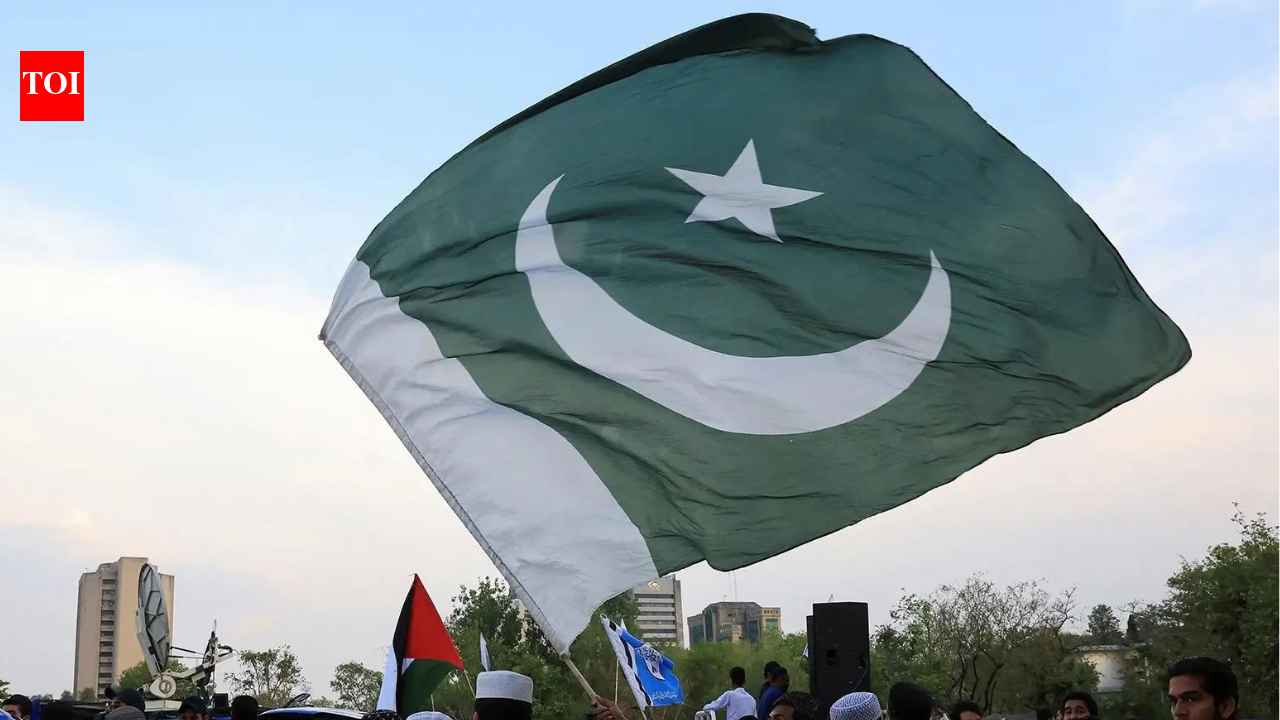
Pakistan could be forced to consider fuel rationing at petrol pumps if the ongoing US-Iran conflict continues for a prolonged period, finance minister Muhammad Aurangzeb has said.Speaking at the World Bank–IMF Spring Meetings 2026 in Washington, DC, Aurangzeb indicated that while Islamabad has so far avoided rationing, the situation remains fluid and dependent on how the conflict evolves.
“So far we have stayed away from interventions at the gas stations and at the petrol pumps… from our perspective that’s a much better way to go than going into rationing,” he said, while responding to a question on whether Pakistan may impose fuel restrictions.
Govt prefers price mechanism over rationing
The minister explained that the government is currently relying on price adjustments and targeted subsidies to manage demand, rather than imposing strict supply controls.“What we’ve seen is it has led to law and order situations in other countries,” he said, referring to rationing measures elsewhere. “If demand destruction can be done through price transmission combined with targeted subsidies… that’s a much better way to go.”However, he cautioned that this approach may not hold if the crisis deepens. “I have to put an asterisk there, it all depends how long this goes and how far this goes,” he added, signalling that rationing remains a fallback option.
Oil crisis driven by Hormuz disruption
The warning comes amid heightened global energy volatility triggered by the US-Iran war, which has disrupted supplies through the Strait of Hormuz — a key route for nearly a third of global oil flows,.Pakistan, which imports around 85% of its fuel through the strait, is particularly vulnerable to supply shocks and rising prices. The country has already witnessed sharp fuel price hikes in recent weeks, sparking protests and forcing the government to roll back increases.
Rising prices, public pressure shape policy
Petrol prices in Pakistan surged by over 40% earlier this month before being partially reduced following public backlash. The spike pushed transport costs higher and triggered unrest in several regions.To cushion the impact, the government introduced targeted subsidies for transporters, farmers and other key groups, alongside relief measures such as free public transport in some areas.Aurangzeb’s remarks highlight the delicate balancing act facing Islamabad managing dwindling energy supplies while avoiding public unrest, as the Middle East conflict continues to cast a long shadow over global oil markets.


Kornit brings global apparel leaders together at Konnections 2026

These Are Our Favorite Standing Desks to Liven Up Your Workstation

AI Slop Is Making the Internet Fake-Happy

-

 Fashion1 week ago
India’s exports face reset as EU links trade to carbon metrics: EY
-

 Entertainment1 week ago
Queen Elizabeth II emotional message for Archie, Lilibet sparks speculation
-

 Entertainment1 week ago
Lamar Odom shocking response to Khloé Kardashian account of his overdose
-

 Tech7 days ago
As the Strait of Hormuz Reopens, Global Shipping Will Take Months to Recover
-

 Tech1 week ago
Azure customers up in arms over ‘full’ UK South region | Computer Weekly
-

 Fashion1 week ago
CII submits 20-pt agenda to Indian govt to back firms hit by Iran war
-

 Tech6 days ago
This AI Button Wearable From Ex-Apple Engineers Looks Like an iPod Shuffle
-

 Politics5 days ago
Indian airlines hit hardest after Dubai limits foreign flights until May 31