

Tech
Report on social media age assurance trial says there is not a one-size-fits-all solution

Australia’s government trial has found age-assurance for its under-16 social media ban can be done effectively and protect privacy, but there is not a one-size-fits-all model.
The report, from an independent company and released in full, also warns continued vigilance is needed on privacy and other issues.
It found some providers, in the absence of guidance, were collecting too much data, over-anticipating what regulators would require.
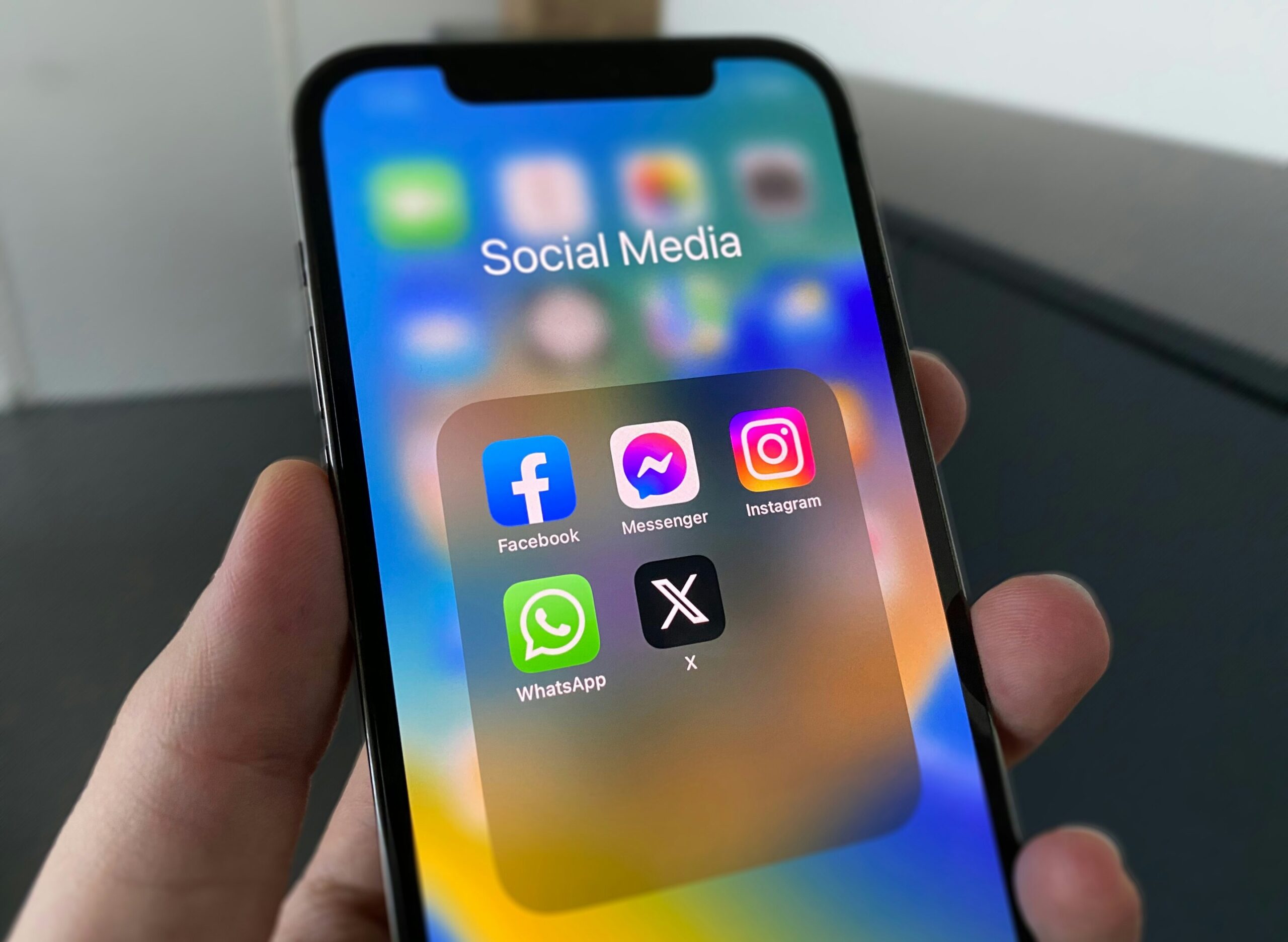
The ban on under 16s having their own social media accounts has been passed by parliament and comes into effect in December. It covers a wide range of platforms, including Facebook, Instagram, TikTok, X, and YouTube (which was recently added).
The measure is world-leading, and has been very controversial. One issue has been the degree of likely reliability of age verification.
The trial looked at various age assurance methods, including AI, facial analysis, parental consent and identity documents. The methods were judged on accuracy, usability and privacy grounds.
More than 60 technologies were examined from 48 age assurance vendors.
The report concluded age assurance systems “can be private, robust and effective.” Moreover there was “a plethora” of choices available for providers, and no substantial technological limitations.
“But we did not find a single ubiquitous solution that would suit all use cases, nor did we find solutions that were guaranteed to be effective in all deployments.” Instead, there was “a rich and rapidly evolving range of services which can be tailored and effective depending on each specified context of use.”
The age assurance service sector was “vibrant, creative and innovative,” according to the report, with “a pipeline of new technologies.”
It had a robust understanding of the handling of personal information and a strong commitment to privacy.
But the trial found opportunities for technological improvements, including ease of use.
On parental control systems, the trial found these could be effective.
“But they serve different purposes. Parental control systems are pre-configured and ongoing but they may fail to adapt to the evolving capacities of children including potential risks to their digital privacy as they grow and mature, particularly through adolescence.
“Parental consent mechanisms prompt active engagement between children and their parents at key decision points, potentially supporting informed access.”
The trial found while the assurance systems were generally secure, the rapidly evolving threat environment meant they could not be considered infallible.
They needed continual monitoring, improvement and attention to compliance with privacy requirements.
Also, “We found some concerning evidence that in the absence of specific guidance, service providers were apparently over-anticipating the eventual needs of regulators about providing personal information for future investigations.
“Some providers were found to be building tools to enable regulators, law enforcement or coroners to retrace the actions taken by individuals to verify their age which could lead to increased risk of privacy breaches, due to unnecessary and disproportionate collection and retention of data.”
Communications Minister Anika Wells said, “While there’s no one-size-fits-all solution to age assurance, this trial shows there are many effective options and importantly that user privacy can be safeguarded.”
This article is republished from The Conversation under a Creative Commons license. Read the original article.
Citation:
Report on social media age assurance trial says there is not a one-size-fits-all solution (2025, September 1)
retrieved 1 September 2025
from https://techxplore.com/news/2025-09-social-media-age-trial-size.html
This document is subject to copyright. Apart from any fair dealing for the purpose of private study or research, no
part may be reproduced without the written permission. The content is provided for information purposes only.












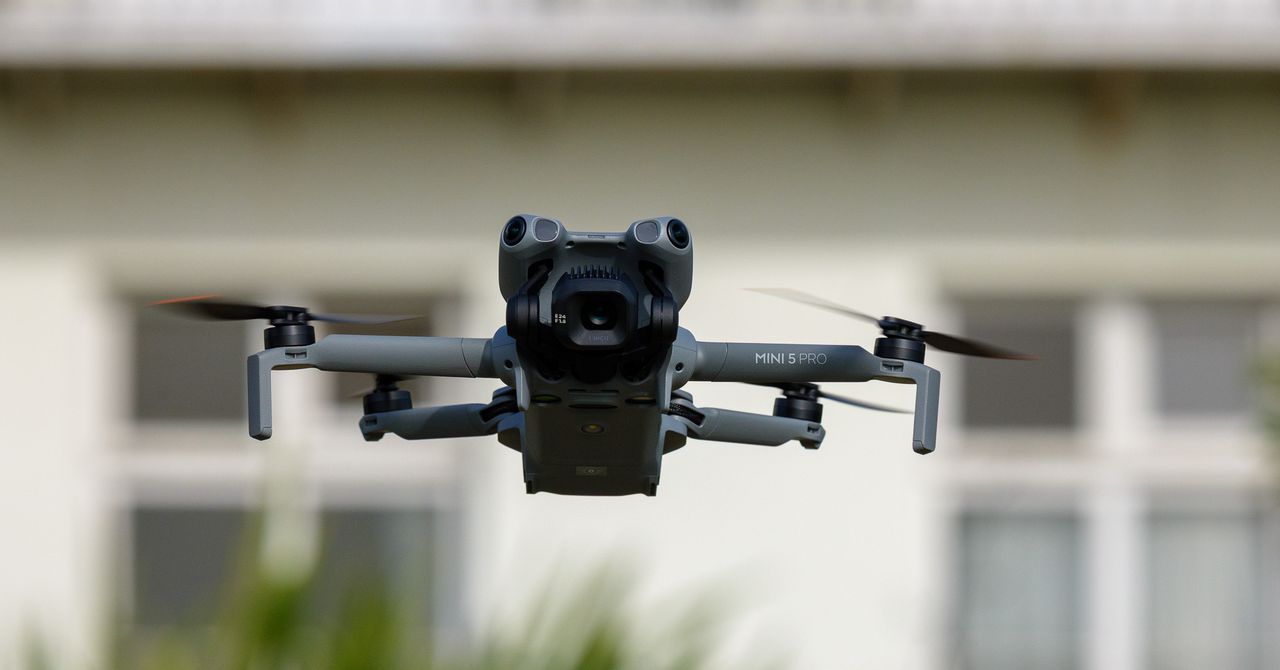
As of December 23, 2025, the US Federal Communications Commission barred Chinese-based drone maker DJI from importing any new drones into the United State. That might sound like you can’t buy a DJI drone right now, but that’s not true. Head over to Amazon and just about the whole DJI drone lineup is still for sale. So what gives? Are they banned or not?
The key word in the previous paragraph was any new drone. Nothing DJI has made in the past is banned. No one is taking your drone away. It’s still perfectly legal to fly a drone. And this isn’t just a DJI ban. It’s a ban on foreign-made drones, which includes those from companies such as DJI, Autel Robotics, HoverAir, and thers. That DJI is singled out in headlines has more to do with its market dominance than the way the rules are written.
I’d like to say that with the biggest competitor essentially removed from the market that US-based companies are swooping in with new drones. Actually we did say that once about Skydio, and we even liked the Skydio drone we tested, but since then Skydio has shifted away from the consumer market.
No New Drones
Courtesy of DJI
While it’s good news that the old stuff is still for sale, it’s unlikely that any new drones will arrive.
In order to sell in the United States, anything that uses radio frequency components has to be approved by the FCC. Drones use radio frequencies when flying, so they fall under FCC jurisdiction. Because none of the drone companies have had the security review they need by an approved US agency, they have all been placed on what’s called the Covered List. Companies on the Covered List do not have approval to import products into the US, effectively banning them.
There’s some evidence that wheels are turning somewhere, in a way that could spell good news for consumer drone flyers. Last week, the FCC amended its Covered List to exempt drones and components already approved by the Defense Contract Management Agency’s Blue UAS list. The FCC says in its public statement, “The DoW has determined that UAS and UAS critical components included on Defense Contract Management Agency’s (DCMA’s) Blue UAS list do not currently present unacceptable risks to the national security of the United States or to the safety and security of US persons.”
For the most part, this doesn’t really impact consumer drones, unless you were in the market for a $13.6k Parrot Anafi USA Gov edition thermal drone, but it’s better than silence, which has been the primary thing we’ve heard leading up to the December ban.

In a move described as underscoring the company’s strategic focus on pan-European connectivity amid rising data demands from artificial intelligence (AI), cloud and next-generation technologies, Zayo Europe has launched a “landmark” network in Iberia.
Operating across 13 countries and connecting 47 markets, Zayo already connects more than 600 datacentres with a “future-ready” network spanning over 2.7 million fibre kilometres and eight subsea systems. The company said its mission is to deliver the infrastructure that powers Europe’s digital economy, offering tailored connectivity solutions that enable telecom service providers, cloud platforms, datacentres, system integrators and enterprises to deliver the network performance they require from core to cloud to edge.
Following a recent expansion in the German Market, Iberia has become the next strategic link for Zayo, furthering the reach of its pan-European network. The new network will encompass the region’s leading cities including Madrid, Lisbon, Barcelona, Bilbao and Sines.
It is being delivered in partnership with Spanish dark fibre operator Reintel, which boasts more than 54,000km of interconnected fibre infrastructure across Spain. The company provides neutral and high-quality connectivity products through a network of sites linked to both the energy and railway sectors.
Zayo Europe sees the partnership marking a major milestone as brings its 400GE enabled wavelength network to the Iberian Peninsula, as well as expanding its Tier-1 IP offering to Portugal and to more Spanish cities.
The collaboration will look to deliver low-latency, high-capacity connectivity across Iberia, connecting the key business hubs. The partners see the new route as a way to enhance network diversity, reduce deployment times and strengthen connectivity options for businesses and carriers operating in the region.
Spanning over 3,500km of fibre across Iberia, Zayo Europe’s network will look to enable “seamless” datacentre-to-datacentre connectivity, faster cloud adoption and high-performance handling of data-intensive workloads. The move is set to strengthen Zayo Europe’s global reach, linking Iberia to international networks across the Mediterranean and Atlantic, and supporting the digital transformation of businesses across multiple continents.
“This partnership marks another important step in Zayo Europe’s journey to connect the continent’s most dynamic markets. Spain and Portugal are quickly emerging as major datacentre hubs, with a strong supply of renewable energy driving new investments to power AI and other cutting-edge technologies,” said Colman Deegan, Zayo Europe CEO.
“We’re delighted to partner with Reintel, who operate the highest quality, mission-critical fibre infrastructure in the region. By extending our network through their low latency, high availability fibre routes, we’re enabling enterprises, datacentres and carriers across Iberia to access our extensive high-performance connectivity that underpins Europe’s innovation economy. With the significant DC roll-out planned in 2026, Zayo Europe is poised to set connectivity trends for the decade ahead.”
Reintel CEO Francisco J. Blanca Patón added: “Zayo Europe’s expansion into Iberia aligns perfectly with our mission to accelerate Spain’s digital transformation. Combining our extensive dark fibre footprint with Zayo Europe’s international network and unparalleled service excellence creates powerful opportunities for customers across the region. This partnership will empower datacentres and businesses across Spain and Portugal to keep pace with rising data demands and, ultimately, strengthen Europe’s digital backbone. We look forward to what can be achieved together through 2026 and beyond.”

It can be tricky to figure out how to clean your Keurig, but it’s important work. If your household is like mine, your pod coffee maker runs anywhere from three to seven times per day. All of that use can cause buildup and gunk, which can affect the taste of your coffee and the lifespan of your machine. But with proper maintenance and a dedicated routine, cleaning is a breeze. Here’s everything you need to know about light daily cleaning as well as deeper cleans.
Be sure to check out our related buying guides, including the Best Pod Coffee Makers, the Best Coffee Machines, the Best Coffee Subscriptions, and the Best Milk Frothers.
Daily Maintenance
To clean the housing of your Keurig coffee maker or other pod machine, just take a damp cloth and wipe down the outside. You can clean the K-Cup holder and needle by brushing or vacuuming away any loose debris like coffee grounds—be careful near the needle part since, obviously, it’s sharp.
Some machines come with a needle cleaning tool that you insert into the top and bottom of the needle, and a few people on various forums have used a paper clip instead. Some machines have removable pod holders that can be soaked in hot water. It’s always a good idea to refer to your specific model’s user guide, and you’ll probably want to unplug your machine beforehand.
To clean your drip tray and water reservoir, remove them and wash them by hand with hot, soapy water (though avoid using too much dish soap to prevent buildup). If your machine came with a carafe, wash it by hand or pop it in the dishwasher if it’s dishwasher-safe. Let them air dry or wipe them down with a lint-free towel after rinsing them off. You should be replacing the fresh water in your reservoir often, especially if it’s been sitting for a while. If your machine has a water filter in its reservoir, replace it every two to three months. Most machines with these types of filters have maintenance reminders—heed them!
For cleaning out the internal bits and pieces, you can use something like a Keurig Rinse Pod, which helps to flush out any excess oils or flavors that might be lingering. They are especially handy after brewing with flavored K-Cups like hot cocoa or some coffee varieties. You can also just run a hot water cycle every so often, which is a particularly good idea if you haven’t used your machine for a few days.
Deeper Cleaning and Descaling
Some manufacturers recommend using filtered water or distilled water instead of tap water in your reservoirs, but I’ve always used tap water with the knowledge that I might have to clean my machine more frequently. You should deep-clean or descale your pod coffee maker every three to six months, or possibly more often if you notice hard water stains, calcium deposits, or mineral buildup, or your machine prompts you to deep-clean it.
You can do this a few ways. For the DIY method, fill your water tank with white vinegar and water (about half and half) and run large-capacity brew cycles until the reservoir is empty; Halfway through, consider letting the vinegar solution soak for a while, around 20 to 30 minutes. Follow up with a few rinsing cycles using clean water until the vinegar smell is gone. Alternatively, you can use a dedicated Keurig descaling solution according to the instructions on the bottle. That solution can be used on non-Keurig machines too. Make sure your machine is fully rinsed out before brewing your next cup of coffee.
It’s important to perform these deeper cleaning cycles on a regular basis to ensure your machine lasts as long as possible. And that your coffee tastes good, of course.
Power up with unlimited access to WIRED. Get best-in-class reporting and exclusive subscriber content that’s too important to ignore. Subscribe Today.


José Mourinho rejects ‘soap opera’ links to Real Madrid vacancy

Valentino Garavani dies aged 93

Prince Harry returns to U.K. to be in court for case accusing tabloids of illegal snooping

-

 Tech7 days ago
New Proposed Legislation Would Let Self-Driving Cars Operate in New York State
-

 Sports1 week ago
Clock is ticking for Frank at Spurs, with dwindling evidence he deserves extra time
-

 Entertainment6 days ago
X (formerly Twitter) recovers after brief global outage affects thousands
-

 Fashion1 week ago
South India cotton yarn gains but market unease over US tariff fears
-

 Fashion1 week ago
China’s central bank conducts $157-bn outright reverse repo operation
-

 Sports1 week ago
US figure skating power couple makes history with record breaking seventh national championship
-

 Sports4 days ago
Pak-Australia T20 series tickets sale to begin tomorrow – SUCH TV
-

 Entertainment1 week ago
Five killed in road accident in Khyber