

Tech
War Memes Are Turning Conflict Into Content


As ceasefire announcements between the US and Iran—and separately between Israel and Lebanon—dominated headlines over the past two weeks, they also prompted a look back at how war spread online: through memes.
There were jokes about conscription. Captions about getting drafted, but at least with a Bluetooth device. The song “Bazooka” went viral, with users lip-syncing to: “Rest in peace my granny, she got hit by a bazooka.” Military filters followed. So did posts about Americans wanting to be sent to Dubai “to save all the IG models.”
Across the Gulf, the tone was different but the instinct was the same. Memes joked that Iran was replying to Israel faster than the person you’re thinking about. Delivery drivers were shown “dodging missiles.” “Eid fits” became hazmat suits and tactical vests.
Dark humor is one of the oldest responses to fear, a way of reclaiming control, however briefly, over events that offer none. Variations of that idea appear across psychology and philosophy, including Freud’s relief theory, which frames humor as a release of tension.
But social media changes the scale and speed of that instinct.
A joke once shared within a small community can become a global template in minutes. Algorithms do not reward depth or accuracy; they reward engagement. The memes that travel fastest are usually stripped of context, easy to recognize and simple to remix.
Middle East scholar and media analyst Adel Iskandar traces political satire back centuries, from banned satirical papyri in ancient Egypt to cartoons during revolutions and gallows humor in modern wars. “Where there is hardship, there is satire,” he says. “Where there is loss of hope, there is hope in comedy.”
That tradition still exists online. But today it is fused with recommendation systems designed to keep attention moving.
Memes Spread Faster Than Facts
The word “meme” was coined by Richard Dawkins in his 1976 book The Selfish Gene, where he described how ideas replicate like genes. On today’s internet, replication follows platform logic.
Fitness means generality. A meme does not need to be accurate. It needs to feel familiar. It needs the right format, paired with trending audio and the right emotional shorthand.
“A meme is like a virus,” Iskandar says. “If it doesn’t travel, it’ll die.”
The most visible response online is not always the truest one. It is often just the easiest to spread. And once context disappears, one crisis can start to resemble any other.
Geography shapes humor too, and adds another level of tension. “If you live far away from the threat, you’re capable of producing content that ridicules it with an element of safety,” says Iskandar. “Whereas if you happen to be within close proximity, it is more of a fatalism.”
That divide matters. For some users, war exists mainly as mediated spectacle: clips, edits, graphics, headlines, and reaction posts. For others, it is sirens, uncertainty, disrupted flights, rising prices, and messages checking who is safe.
The same meme can function as entertainment in one country and emotional survival in another. Take the American experience of violence, which Sut Jhally, professor of communication at the University of Massachusetts Amherst, says “is very mediated.”
What much of the Western world has consumed instead is what cultural critic George Gerbner called “happy violence”: spectacular, consequence-free, and detached from the aftermath.
Jhally argues that the September 11 attacks remain the defining modern American experience of war-adjacent political violence. Much else has been cinematic: distant invasions, blockbuster destruction, video-game logic, apocalypse franchises.
The teenager from the Midwest joking about being drafted is drawing from zombie films and superhero apocalypses. “There is almost no discussion about what an actual Third World War would look like,” he says. “People do not have a perception of what that really looks like.”








The base of the lamp has two slider buttons. One toggle adjusts the warmth, from cold white light all the way to red. One adjusts the intensity, from ultra-bright down to a glareless glow. Hard taps on each button skip ahead, while holding the toggle down on one side or another adjusts the light settings quite slowly—slowly enough I at first sometimes question whether it’s happening.
The maximum brightness is 1,000 lumens—the approximate intensity of a 75-watt incandescent bulb. At this brightness, the battery lasts about five hours. At a lower intensity, this can extend to as long as a dozen hours.
Red Shift
Photograph: Matthew Korfhage
There’s an added feature I have come to appreciate at night, which is the red-light mode. There’s little evidence that blue light from your little smartphone is keeping you awake at night. But numerous studies do show that blue light wavelengths can affect melatonin levels and thus your body’s circadian rhythm, while red light doesn’t do this.
Red light therapy is, of course, the province of TikTok as much as science—a field where wild exaggerations live alongside legitimate uses and benefits. For every sleep study showing that red light is superior to blue light when it comes to melatonin levels, there’s another showing that red light is associated with “negative emotions” before bed.
So I can only offer my own experience, which is that Edge Light Go’s red reading light offers me a pleasant liminal space between awake time and sleepy time, one not offered by a basic nightstand lamp. It allows me to sort of bask in a darkroom space that still lets me see and read, and drift off a little easier.
If I fall asleep, the light has an automatic 25-minute shut-off, which means I won’t do what I far too often do, which is drift off while reading and then wake up, alarmed, to a room filled with bright light in the middle of the night.
Caveats and Quirks

Photograph: Matthew Korfhage
This said, for all the virtues of portability, the Edge Light Go does not boast a base that’s heavy enough to stop the lamp from tipping over if I bend it forward from its lowest hinge. This can be an annoyance when trying to use the lamp as a reading light from a bedside table or the arm of a couch.
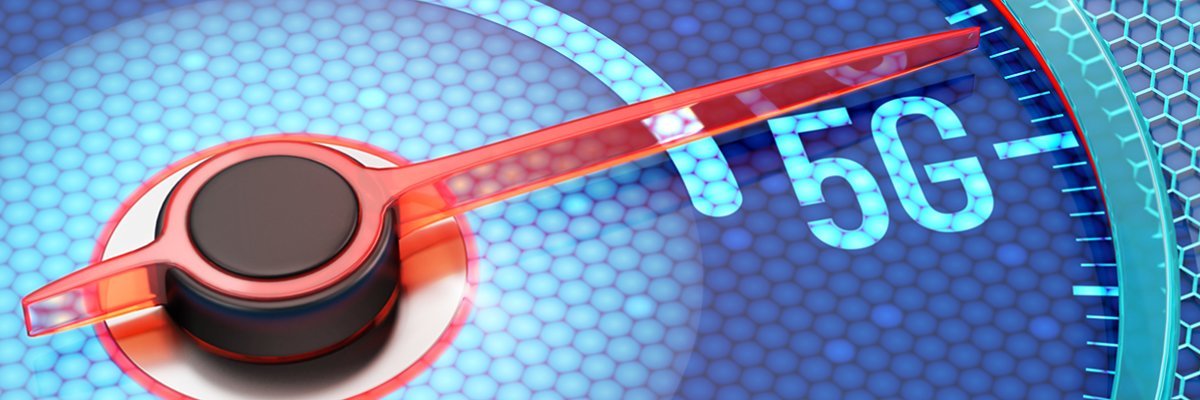
With reliable mobile connectivity still a major issue inside modern office buildings – particularly as energy-efficient materials block signal and user expectations remain high – connectivity infrastructure-as-a-service (IaaS) provider Freshwave has launched 5G on Omni to offer businesses “assured” indoor 5G connectivity from all the mobile network operators (MNOs).
Freshwave said that its mission is to invest expertise and capital to assure connectivity, bringing mobile operators, central and local government, and real estate providers to work together in new ways. It added that it has connected some of the biggest, most challenging wireless environments in the UK, including several central London boroughs and more than 2,000 buildings.
At launch in June 2024, the company’s Omni Network was described as a world first, offering 4G mobile connectivity indoors from all the UK mobile network operators via a combined small cell unit. It boasts more than six million square feet of real estate live or in-build.
Omni Network was previously only available on Andrew Onecell, but the solution is now multi-supplier, being available using Ericsson Radio Dot technology which is seeing use in the new 5G on Omni offer.
In another claimed first and the next stage in the evolution of the Omni Network, 5G on Omni is designed to deliver 4G/5G connectivity indoors from all the UK MNOs – EE, O2, and VodafoneThree – via the Ericsson’s Radio Dot System, extending the 5G carrier-grade mobile coverage to more spaces than ever before.
Aiming to address the aforementioned issue whereby building materials can potentially block mobile signals from reaching indoors, Freshwave said its dedicated multi-operator in-building mobile system can ensures everyone inside has the mobile connectivity they need, no matter which network they’re on.
Connecting securely to the MNOs’ networks, 5G on Omni is configured and controlled by Freshwave’s engineers via the company’s datacentre as a fully managed service. For organisations whose connectivity needs are met by 4G today, 5G on Omni provides a simple software upgrade path to 5G when required.
In addition, the company said that 5G on Omni uses up to 50% less energy than a traditional distributed antenna system (DAS), is faster and more cost effective to deploy with less cabling, and needs less space in the comms room.
Remarking upon the launch and its objectives, Simon Frumkin, Freshwave’s CEO, said: “After a world-first with Omni Network, I’m delighted we’re now able to offer our customers another first with 5G on Omni. It’s the next stage of assured indoor mobile connectivity, bringing all the operators indoors on 5G via small cells.
“Indoor connectivity is an essential productivity driver, as evidenced by our Mobile connectivity ROI index which found that the UK could gain £70bn of added value by eliminating mobile signal not-spots indoors. 5G on Omni represents an important step forward for indoor connectivity in the UK. We’re grateful to all the UK mobile operators and to our technology partner Ericsson for their collaboration in making this possible.”
Luca Orsini, head of Ericsson North Europe, added: “We’re thrilled to have collaborated with neutral host provider Freshwave to deliver 5G from all UK mobile operators on the Ericsson Radio Dot for the very first time. It highlights how shared indoor infrastructure can accelerate high-quality 5G coverage and capacity at a lower total cost of ownership than legacy solutions, ensuring organisations and users benefit from seamless connectivity regardless of their mobile provider.”
The service is also available via a pay-as-you-occupy model, which allows landlords to pay to cover shared areas in a building, while giving tenants the ability to contract directly with Freshwave to join the in-building system as and when they move in.
Freshwave claims 5G on Omni is already seeing strong demand and that it is in the process of deploying it at several other customer sites this year across sectors including financial services, luxury goods brands and a global fast moving consumer goods company. One of the early adopters of the service has been flexible office provider Workspace’s Record Hall site in central London, bringing 4G/5G mobile signal from all the MNOs to the offices and workshops there.
“Good connectivity should be something our SME customers don’t have to think about,” said Chris Boultwood, head of technology at Workspace. “With 5G on Omni from Freshwave now live at Record Hall, our customers can rely on seamless mobile coverage throughout the building, whichever network they use.”

For airlines to run critical operations on networks that are set up and run for them, removing the complexity and cost of managing connectivity themselves, air industry tech firm SITA has launched a new network solution designed to support the demands of complex airport and transport environments.
With around 2,500 customers, SITA technology supports more than 1,000 airports and more than 19,600 aircraft worldwide. The company said that it also helps more than 70 governments “strike the balance between secure borders and seamless journeys” and connects 45-50% of the industry’s data exchange to enable complex global networks to operate smoothly and reliably.
As part of the latter aim, the SITA Campus Network, powered by HPE Aruba Networking, aims to offer a managed network service covering more than 150 countries wherein SITA takes care of the design, procurement, shipping, installation, configuration and support for all devices involved. Boasting a low total cost of ownership (TCO), SITA is proposing “one of the most competitive” fully managed local area network/wireless local area network (LAN/WLAN) available in the industry.
Explaining the rationale for the launch, SITA noted that managing networks across multiple locations, devices and suppliers is complex and costly. Furthermore, it said that when networks are fragmented, performance suffers and disruptions can spread quickly.
SITA Campus Network is attributed with being able to remove this burden by delivering a fully managed network across wired and wireless environments. The campus network is claimed to combine “robust” connectivity with centralised, cloud-based management to ensure consistent, reliable performance across airport campuses and other large transport hubs.
Designed for high-density environments such as terminals, hangars and airline operations centres, the solution is said to support large volumes of users and devices without compromising performance, even during peak demand. By integrating HPE technology into its managed service, SITA’s customers get a network that is centrally operated by SITA while retaining the flexibility to use different technologies and vendors.
Available in more than 145 countries, with 24/7 operational support, SITA assured that by reducing the need for costly hardware and simplifying operations the network lowers both upfront investment and ongoing costs. Its pay-as-you-go model allows customers to scale usage up or down based on demand, with rapid deployment across locations.
This is said to reduce the need for on-site support, spare equipment and recurring training, freeing up IT teams to focus on higher-value activities. Where needed, the campus network connects to SITA’s global wide-area network services. This connectivity links more than 600 airports worldwide.
As is the norm with other leading networking solutions, the SITA Campus Network uses AI to improve visibility across the network, detect issues earlier and automate troubleshooting, helping reduce downtime. It also provides centralised management, allowing infrastructure and devices to be monitored and controlled across both on-site systems and remote environments.
Martin Smillie SITA senior vice-president of communications and data exchange, said integrating diverse systems and devices across airport environments is becoming more complex as operations become more connected: “At the same time, expectations on performance, resilience and security continue to rise. With SITA Campus Network powered by Aruba, we take on that complexity. We deliver a network that is set up, run and continuously optimised, so our customers can focus on keeping operations moving while maintaining control across increasingly demanding environments.”
Sujai Hajela, executive vice-president and general manager for enterprise campus and branch at HPE, added: “Airports and airlines have to support thousands of staff, passengers and mission critical systems across terminals, gates and airside areas – and any network issue shows up immediately as delays and frustration.
“SITA Campus Network powered by HPE Aruba Networking is built on our secure, AI-native technology to deliver a self-driving network that spots and fixes problems in real time, often before anyone notices, so operations keep moving and passengers stay connected.”


‘Summer House’ is going to get cancelled? details revealed

UK’s SwitchDye gets investment to scale eco-friendly dyeing

Prince William tries to squeeze into Formula E car on Louis’ birthday

-

 Fashion1 week ago
France’s LVMH Q1 revenue falls 6%, shows resilience amid Iran war
-

 Entertainment1 week ago
Is Claude down? Here’s why users are seeing errors
-

 Sports1 week ago
PSL 11: Peshawar Zalmi win toss, opt to field first against Quetta Gladiators
-

 Tech1 week ago
The Deepfake Nudes Crisis in Schools Is Much Worse Than You Thought
-

 Politics1 week ago
Iran in continuous message exchange with mediator Pakistan after US talks: Report
-
 Business1 week ago
Standard Life buys rival in £2b deal to create savings giant
-

 Tech1 week ago
CYBERUK ’26: UK lagging on legal protections for cyber pros | Computer Weekly
-

 Sports1 week ago
World Cup kit ranking: Which teams will look best in 2026?