

Business
Govt signs IFC deal to roll out smart metres for 10 million power consumers | The Express Tribune

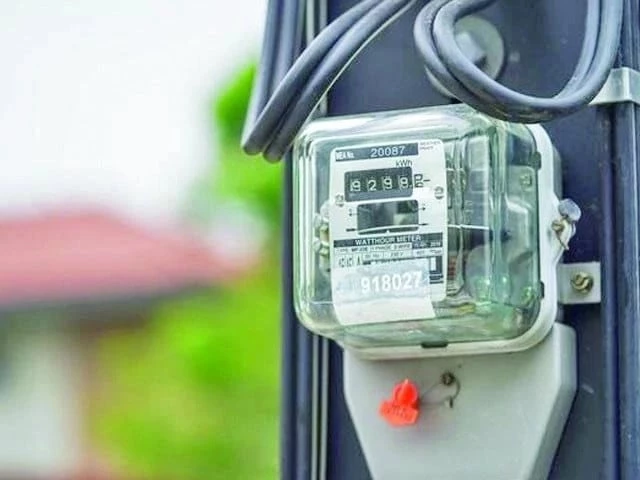
Officials say initiative expected to attract local, foreign investment and support transition toward digital system
The Power Division and the International Finance Corporation (IFC) on Monday signed a Transaction Advisory Services agreement aimed at modernising Pakistan’s electricity distribution system through large-scale smart metering, PTV reported.
Under the plan, around 10 million electricity consumers across the country will be equipped with smart metres. Officials said the initiative is expected to attract both local and foreign investment and support the transition toward a digital power system.
Driven by the prime minister’s vision, the digital transformation of the power transmission and distribution system is being accelerated. The programme forms part of broader power sector reforms designed to improve efficiency, reduce electricity theft, and enhance transparency in billing, the statement said.
پاور ڈویژن اور آئی ایف سی کے درمیان ٹرانزیکشن ایڈوائزری سروسز معاہدہ، pic.twitter.com/TVVy7p2AzL
— PTV News (@PTVNewsOfficial) April 20, 2026
Through an international competitive process, the cost of smart metres has been reduced by around 40 per cent. Installation of smart metres has been made mandatory for all new electricity connections, while traditional metres are being phased out as part of the shift toward a digital system, it added.
Officials stated that existing three-phase, commercial, and industrial connections will also be converted to smart metres in phases. Authorities said effective measures have been taken to address faulty metre issues, with the process being expedited following approval from the National Electric Power Regulatory Authority.
The rollout of smart metres is expected to improve recovery, reduce system losses, and enhance overall efficiency. The initiative, approved in line with regulatory requirements, is expected to strengthen the financial stability of the power sector while improving recovery and reducing losses.
Business
Govt lists 40 sub-sectors for faster FDI clearance from border nations-check details – The Times of India
The government has identified 40 sub-sectors, including rare earth magnets and printed circuit boards, for expedited clearance of foreign direct investment (FDI) proposals from countries sharing land borders with India, PTI reported.Under the revised framework, proposals from countries such as China, Pakistan, Bangladesh, Nepal, Bhutan, Myanmar and Afghanistan in these sectors will be processed within 60 days, as per the updated standard operating procedure (SOP).The move follows a decision taken in March to fast-track FDI approvals in specified manufacturing sectors from these countries.However, the government has clarified that majority ownership and control of the investee entity must remain with resident Indian citizens or Indian-owned entities at all times.The 40 identified sub-sectors fall under six broad categories –capital goods manufacturing, electronic capital goods and electronic components, polysilicon and ingot-wafer production, advanced battery components, rare earth permanent magnets, and rare earth processing.These include manufacturing of insulation items, castings and forgings for thermal, hydro and nuclear power plants, machine tools, display components such as LCD and LED panels, camera modules, electronic capacitors, speakers and microphones, lithium-ion batteries, wearables, and rare earth metal and magnet processing facilities.The SOP also introduces detailed reporting norms for investments involving entities with direct or indirect ownership from land-bordering countries.“The reporting under these guidelines will be governed under the Foreign Exchange Management (Mode of Payment and Reporting of Non-debt Instruments) Regulations, 2019, and the information will be accessible by the Reserve Bank of India (RBI),” the DPIIT said.The responsibility for reporting lies with the Indian investee company, which must submit required details to the DPIIT before receiving foreign capital.“The reporting is to be made prior to the inward remittance of foreign capital. In cases which do not involve foreign capital inward remittances, the reporting is to be made prior to execution of the relevant transactions, including issuance/transfer of capital instruments, as the case may be,” it added.Investors will be required to disclose details such as shareholding patterns, beneficial ownership, organisational structure, promoters, board composition, key managerial personnel and control rights.The Indian entity will also need to provide incorporation details and disclose existing or proposed shareholding linked to entities from land-bordering countries.

Ferrari technicians inspect supercars on the production line inside the company’s factory in Maranello, Italy, October 2, 2025. REUTERS/Remo Casilli/File Photo
Remo Casilli | Reuters
DETROIT — Ferrari on Tuesday beat Wall Street’s first-quarter earnings expectations and reconfirmed its guidance for the year, weeks ahead of the sports car maker revealing its first all-electric vehicle.
Here’s how the company performed in the first quarter compared with average estimates compiled by LSEG:
- Earnings per share: 2.33 euros (US $2.72) adjusted vs. 2.27 euros expected
- Revenue: 1.85 billion euros vs. 1.81 billion euros expected
Ferrari’s revenue was up more than 3% compared with 1.79 billion euros during the first quarter of 2025, while its operating profit and adjusted earnings increased 1.1% and 4.2% year-over-year, respectively.
The company’s 2026 guidance includes 7.5 billion euros in net revenues and an adjusted operating profit of at least 2.22 billion euros, or 9.45 euros adjusted EPS. Its industrial free cash flow is targeted at 1.5 billion euros or more for the year.
Those results were despite deliveries being down 4.4% year-over-year to 3,436 units, as the sports car maker said it slowed production to “ease the execution of the planned model change-over.”
The company said deliveries “were not impacted by the surge of hostilities in the Middle East, as Ferrari leveraged its geographical allocation flexibility, bringing forward certain deliveries to other regions.”
Ferrari’s results come weeks before the scheduled debut of the Luce, its first fully electric vehicle, on May 25.
“With only twenty days to the world premiere of the Ferrari Luce, the sense of anticipation has never been so high. The Ferrari Luce brings together so much extraordinary technologies and the passion of so many people. It is the evidence of how tradition and innovation can come together to create something unique,” Ferrari CEO Benedetto Vigna said in a statement Tuesday.
Business
India among most resilient large EMs, better placed for future global shocks; policy reforms & strong buffers help: Moody’s – The Times of India

Amid the ongoing Middle East conflict, a recent report by Moody’s Ratings says that recent global shocks have shown India’s resilience among emerging economies to withstand pressures. The report credits the resilience to timely policy measures and the buildup of robust buffers.“India and Thailand are the sovereigns better placed to manage future global shocks. In both cases, the key policy choices that support stability were made well before the recent stress period,” Moody’s says.In its latest study on emerging-market sovereigns, the agency notes that India has ranked among the more resilient economies since 2020, based on multiple indicators such as sovereign bond spreads, domestic yield movements, and exchange-rate stability.The report highlights the following points of strength:Monetary policy frameworks are clear and predictable, inflation expectations are better anchored, and exchange rates are allowed to adjust when needed. This reduces the risk that currency moves turn into persistent inflation or force abrupt policy shifts.
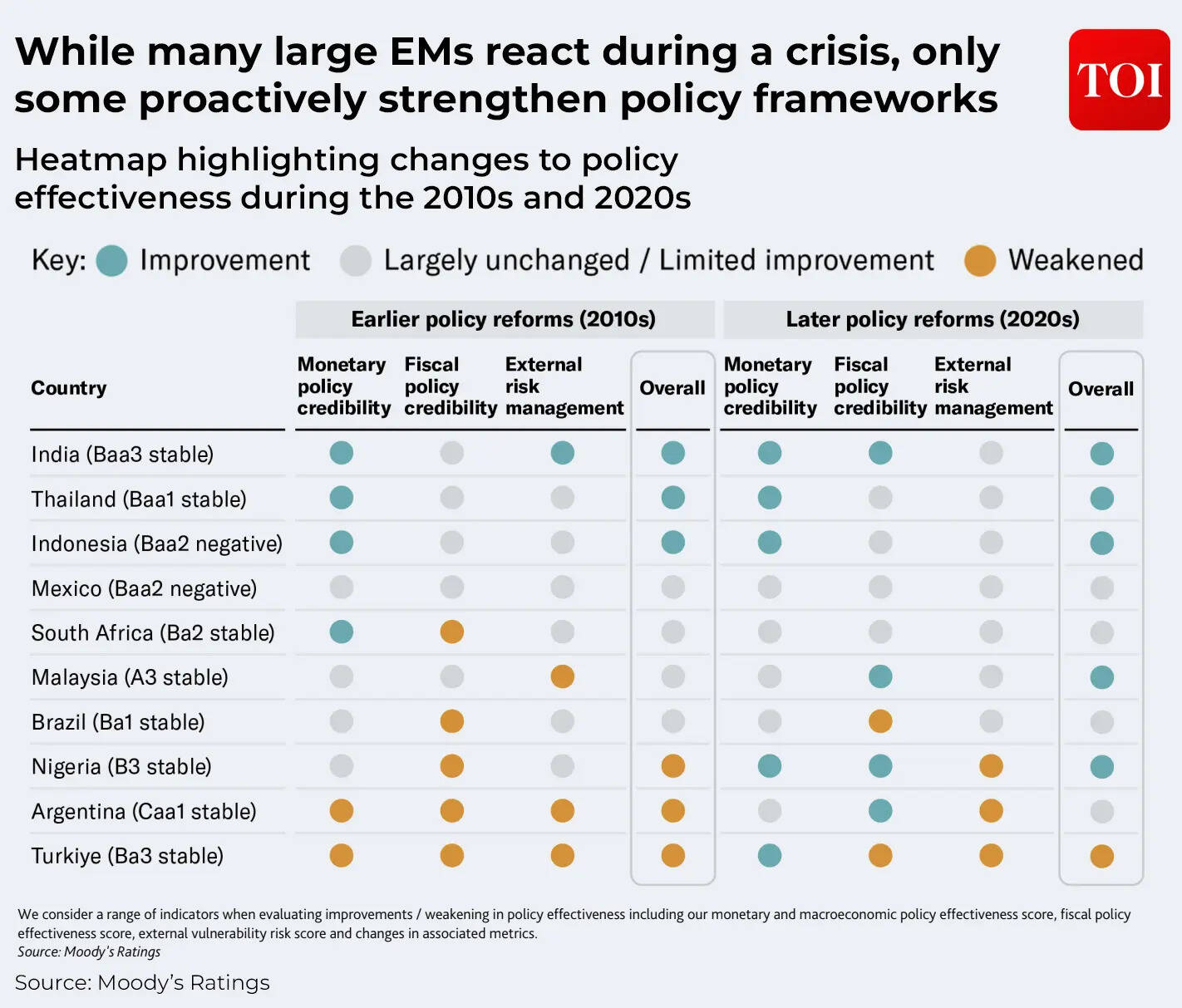
Both countries should also enter future periods of stress with strong and accessible buffers. India’s reliance on domestic funding is balanced by deep local markets and sizeable reserves, the report says.However it notes that India’s relatively high debt burden and weak fiscal balance limit the amount of space available to respond to successive shocks, while Thailand’s rising debt burden risks reducing resilience over time.The report points out that India has consistently demonstrated notable strength during periods of global volatility. Movements in credit spreads have been limited and short-lived, currency depreciation has remained controlled, and fluctuations in local bond yields have been orderly. These factors have helped the country retain uninterrupted access to financial markets even during turbulent phases.
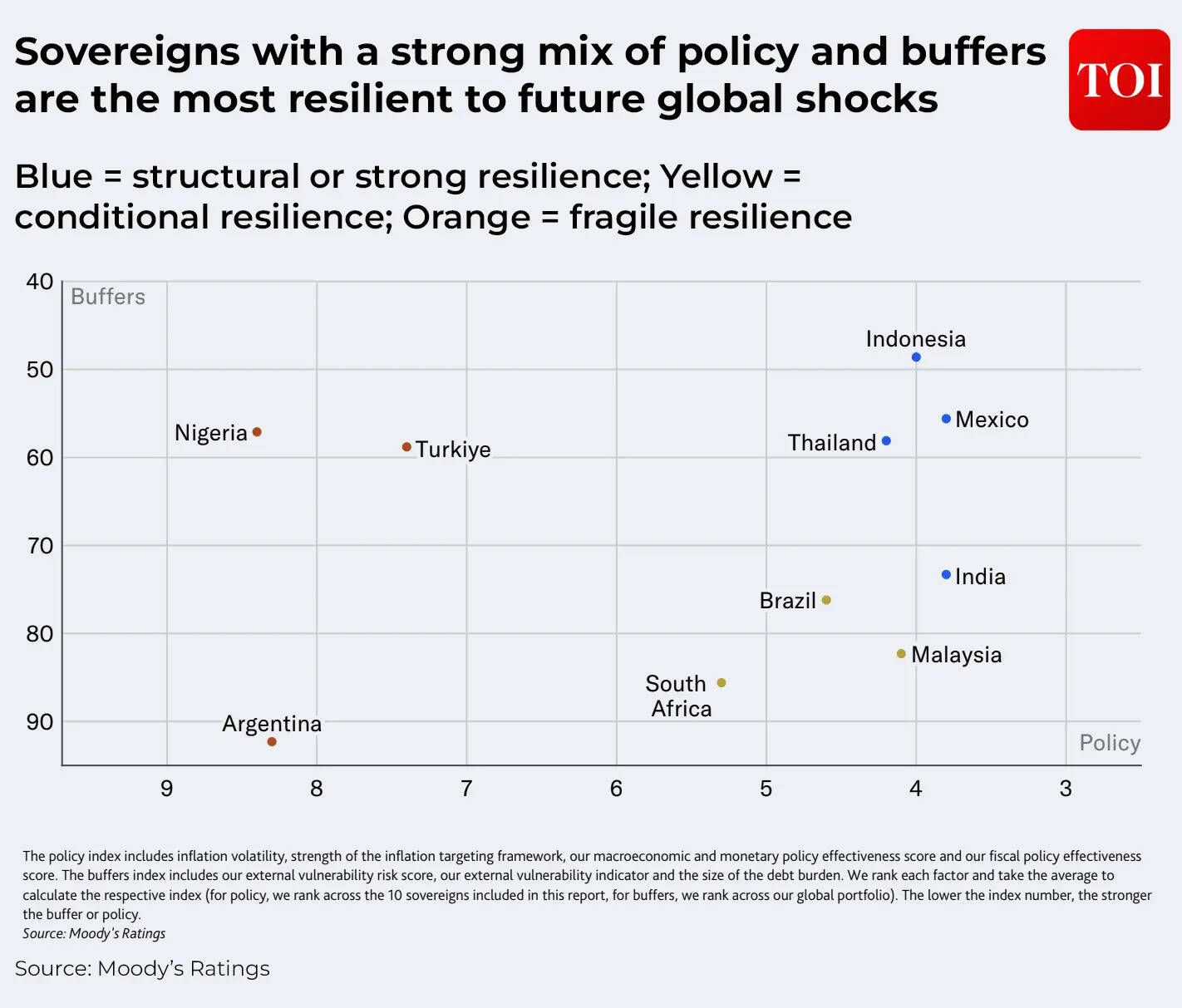
It underscores the role of India’s sizeable foreign-exchange reserves, which have helped stabilise the currency and maintain investor confidence during episodes of global stress, setting it apart from more vulnerable peers.Another key factor has been the presence of a transparent and consistent monetary policy framework. The adoption of inflation targeting well before recent global disruptions has ensured that inflation expectations remain anchored, thereby improving the economy’s ability to absorb external shocks.When compared with relatively more fragile economies such as Türkiye, Argentina and Nigeria, India has largely managed shocks through adjustments in prices rather than prolonged financing stress. This has been supported by deeper domestic financial markets and stronger policy credibility.


US-Iran talks progressing with Pakistan’s efforts, says Araghchi amid Hormuz tensions

Nylon chips & CPL drop over 5% in final week of April, chain follows

Trump goes from eye rolling at Charles to hailing him ‘the greatest’ King

-

 Tech1 week ago
A Brain Implant for Depression Is About to Be Tested in Humans
-
 Business1 week ago
‘I had £20,000 stolen and had to fight a 13-month fraud reporting rule to get it back’
-

 Tech1 week ago
Almost 90% of women leave tech industry within 10 years | Computer Weekly
-

 Sports1 week ago
Pro wrestling star Steph De Lander reveals how colleague’s advice helped lead her to title triumph at ACW
-
 Business1 week ago
Pakistan’s oil market is fuelling the crisis | The Express Tribune
-

 Entertainment1 week ago
Norway joins Type 26 Frigate Programme to boost NATO naval power
-

 Entertainment1 week ago
Melania Trump says ABC should ‘take a stand’ on late-night host Kimmel
-

 Tech1 week ago
This Ambitious Laptop Doesn’t Leave Much Room for Your Hands