

Business
Asia-Pacific outlook dims as Middle East tensions fuel inflation, warns UN | The Express Tribune


Growth in Asia-Pacific developing economies slows to 4.6% in 2025, projected at 4% in 2026
Activists hold a silent protest against the draft agreement, during the COP29 United Nations Climate Change Conference, in Baku, Azerbaijan November 22, 2024. PHOTO: REUTERS
Despite mounting global headwinds, Asia-Pacific developing economies’ growth is projected to slow to 4.0% in 2026 from 4.6% in 2025, while inflation is expected to rise to 4.6% from 3.5%, though the region remains the fastest-growing among developing economies globally.
The 2026 edition of the Economic and Social Survey of Asia and the Pacific, published by the United Nations Economic and Social Commission for Asia and the Pacific, noted that surging energy and food prices alongside weakening global demand are dampening growth prospects and pushing up the cost of living across the region.
Rising geopolitical tensions in the Middle East are casting a shadow over the economic outlook of the Asia-Pacific region, disrupting energy and commodity markets as well as trade routes at a time of heightened global uncertainty, the United Nations warned in a new report.
Also Read: Tear down this war
It suggested that the low-skilled workers and low-income households remain particularly exposed, as they face rising expenses with limited access to social protection mechanisms. At the same time, high public debt levels and the likelihood of rising interest rates due to inflationary pressures may constrain governments’ ability to respond to fresh economic shocks.
The report emphasised the need for a gradual shift away from export-led growth towards stronger domestic and regional demand. Priorities include boosting productivity, expanding social protection, improving access to finance and strengthening digital and physical connectivity, alongside deeper regional cooperation to counter global economic fragmentation.
The UN also highlighted the urgency of strengthening energy resilience through increased reliance on renewable sources, noting that the ongoing global energy crisis underscores the risks of dependence on fossil fuels.
Read More: Floods vs Economy: WB warns Pakistan’s FY26 growth at risk
“This is especially critical today, as we witness in real time the effects of a dependence on fossil fuels, where every conflict risks sending shock waves through the global economy,” said United Nations Secretary-General Antonio Guterres.
However, ESCAP cautioned that poorly designed energy transition policies could trigger unintended socioeconomic consequences, including higher inflation, fiscal strain, rising poverty and widening inequality. It stressed that policy choices must be tailored to country-specific conditions and implemented in a calibrated manner.
Measures such as gradual fossil fuel subsidy reforms, mobilising private capital for green investment and strengthening international support for least developed and small island economies were identified as critical to ensuring a smooth transition.
The report also underscored the role of political and behavioural insights in sustaining reform momentum, including timing policy changes strategically and improving public acceptance of measures such as carbon pricing through transparent and equitable use of revenues.






New European border rules have caused delays at airports across the continent, affecting flights.
Source link
Business
‘A win-win for both nations!’ Three-day India-US trade talks to begin this week – The Times of India
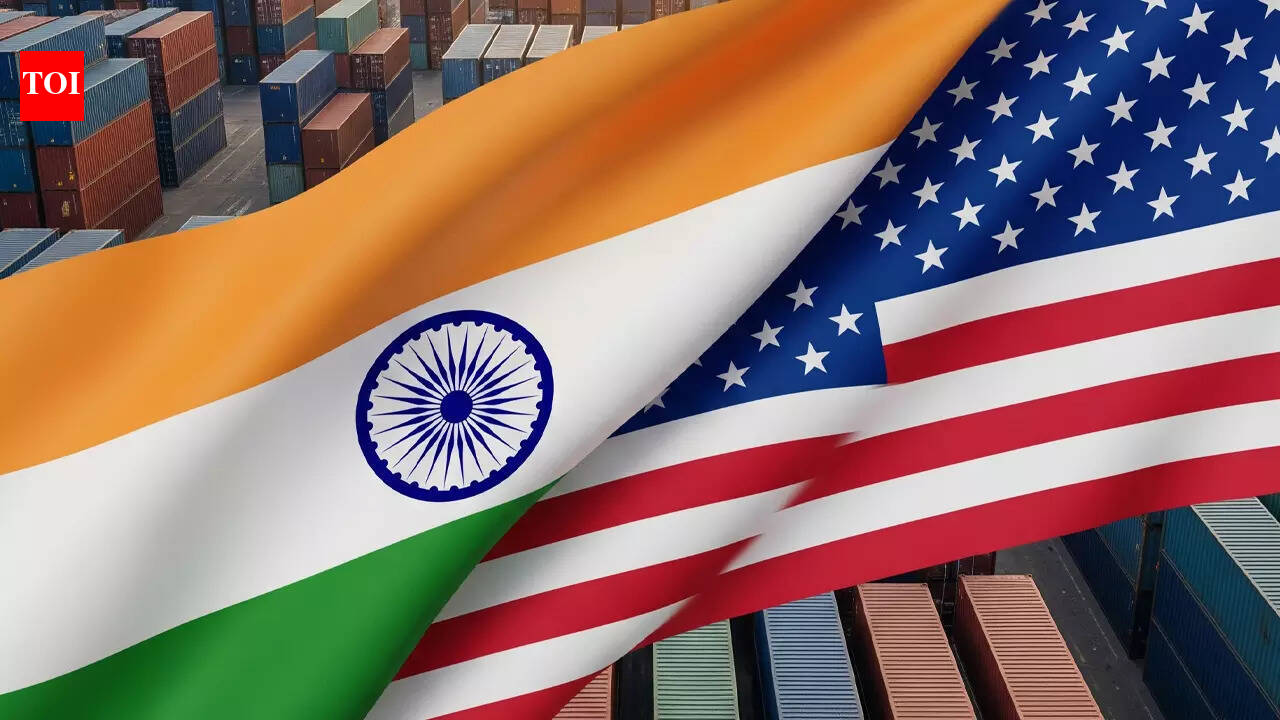
India and the United States are set to resume trade talks this week, taking a “great step to finalize” the proposed agreement. Taking to social media platform X, US Ambassador to India Sergio Gor said “The Indian trade delegation will be arriving in Washington this week. A great step to finalize our bilateral trade deal. A win-win for both nations!”This week, a delegation of around a dozen officials will be travelling from New Delhi to Washington for discussions on the first phase of the proposed bilateral trade agreement (BTA). The talks are scheduled from April 20 to 22 and will be led by India’s chief negotiator Darpan Jain, additional secretary in the department of commerce. The team will also include officials from the customs department and the ministry of external affairs.The negotiations come against the backdrop of recent changes in the US tariff system, prompting both sides to revisit parts of the trade agreement finalised earlier this year and released on February 7.A key development was the US Supreme Court striking down reciprocal tariffs imposed under the 1977 International Emergency Economic Powers Act. Following this, the US administration introduced a temporary flat 10% tariff on all countries for 150 days from February 24.These changes led to the postponement of a planned February meeting between the chief negotiators. The rescheduled talks in Washington will now proceed under the revised tariff framework.Alongside tariff issues, the discussions are also expected to cover two investigations initiated by the US Trade Representative under Section 301 of its trade law. India has refuted the allegations and is seeking withdrawal of the probes, arguing that the initiation notices do not provide adequate justification.

Energy markets have seen wild swings since the US and Israel attacked Iran on 28 February.
Source link

Ryanair flight from Milan to Manchester leaves passengers behind due to border delays

Harry Kane vows Bayern Munich have ‘a lot to play for’ after Bundesliga title

Hyundai’s New Ioniq 3 Has Hot-Hatch Looks, but Can It Beat BYD?

-

 Fashion4 days ago
France’s LVMH Q1 revenue falls 6%, shows resilience amid Iran war
-

 Sports1 week ago
The case for Man United’s Fernandes as Premier League’s best
-

 Entertainment1 week ago
Palace left in shock as Prince William cancels grand ceremony
-
 Business1 week ago
UK could adopt EU single market rules under new legislation
-

 Entertainment5 days ago
Is Claude down? Here’s why users are seeing errors
-

 Fashion1 week ago
Energy emerges as biggest cost driver in textile margins
-
 Business1 week ago
Delta Air Lines unveils first new Delta One suite in premium cabin arms race
-

 Tech1 week ago
A Lot of Shops Won’t Fix Electric Bikes. Here’s Why