

Politics
UK pledges £1m aid for Afghanistan earthquake victims

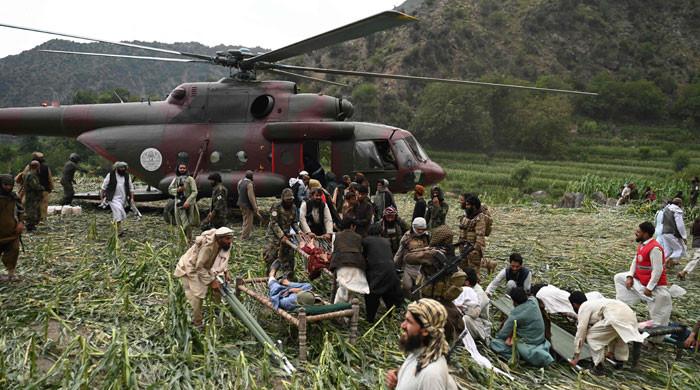
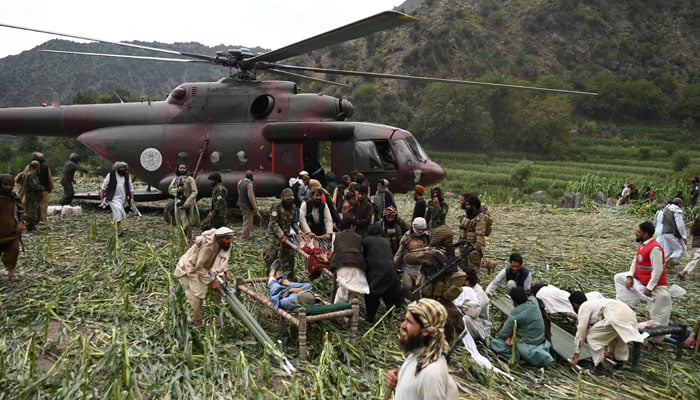
LONDON: Britain has promised £1 million in emergency aid to help people in Afghanistan after a powerful earthquake left families grieving and communities shattered.
The money will go through international partners to make sure vital healthcare and supplies reach those most in need, as the UK seeks to ensure that the funding does not land in the hands of the Taliban administration.
Sunday’s disaster – one of Afghanistan’s worst earthquakes – has killed more than 800 people and injured at least 2,800, authorities said on Monday, as rescue operations continued.
The country’s response to the crisis has been hampered by shrinking funding for Afghanistan, led by US aid cuts.
Britain’s £1 million ($1.35 million) assistance will be split between the United Nations Population Fund (UNFPA) and the International Red Cross (IFRC) to deliver critical healthcare and emergency supplies to Afghans in the most affected regions, according to a government statement.
“The UK remains committed to the people of Afghanistan, and this emergency funding will help our partners deliver critical healthcare and emergency supplies to the most hard-hit,” British foreign minister David Lammy said in the statement.

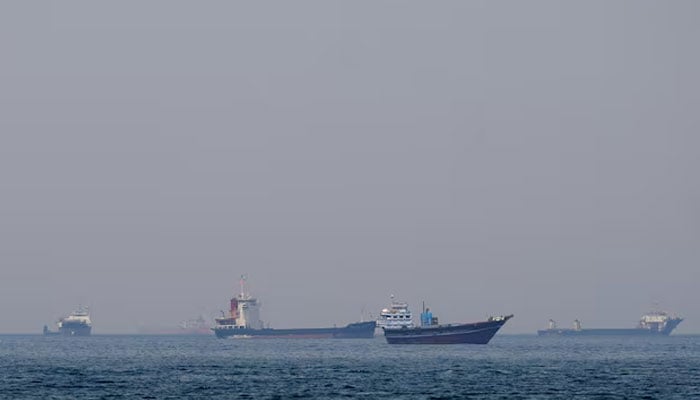
Shipping traffic through the Strait of Hormuz remained broadly halted on Tuesday, with only three ships passing the waterway in the past 24 hours, shipping data showed.
A US blockade of Iranian ports has infuriated Tehran, prompting it to maintain its own restrictions on the strait, which had been typically handling roughly one-fifth of the world’s oil and liquefied natural gas supply.
The Ean Spir products tanker, which had no known flag or known ownership, sailed through Hormuz on Tuesday after previously calling at an Iraqi port, ship tracking data on the MarineTraffic platform showed.
The Lian Star cargo ship, which had no known flag or known ownership, also sailed through the strait from an Iranian port, the data showed.
Separately, the Meda liquefied petroleum gas tanker, which had called at a United Arab Emirates port in the Gulf and also had no known flag or ownership, crossed the strait on Monday in its second attempt to leave the Gulf after turning back previously, according to satellite analysis from data analytics specialists SynMax.
Those are a fraction of the 140 ships that sailed through daily before the US and Israel’s war on Iran began on February 28.
More than a dozen tankers passed through the strait after Iran briefly declared it open on Friday, before Tehran announced it was closed on Saturday, firing shots at vessels.
“Even vessels that seemingly check the publicly known boxes for successful transit through both blockades can find themselves in danger and unable to pass,” shipbroker BRS said in a note this week.
A ceasefire between the US and Iran appeared in jeopardy on Tuesday with Tehran not committing to join new peace talks and the US military saying it had seized a tanker linked to Iran in international waters.
Seafarers’ lives at risk
Hundreds of ships and 20,000 seafarers remain stuck inside the Gulf unable to sail.
“We cannot put at risk the lives of the seafarers,” Arsenio Dominguez, secretary-general of the UN’s shipping agency, told reporters on the sidelines of Singapore’s maritime week on Tuesday.
“We saw what happened last weekend, that on Friday, when some ships started to sail. Then there was an announcement that the strait was closed, and then some ships were actually targeted. Thankfully, we didn’t have any casualties and there was no damage to the vessels.”
Iran’s army said an Iranian tanker had entered its territorial waters from the Arabian Sea on Monday with help from the Iranian Navy, despite what it described as repeated warnings and threats from the US naval task force.
Shipbroker BRS estimated that 61 non-Iran-related supertankers were trapped inside the Gulf at present, 50 of which were laden with cargoes of up to 2 million barrels each.
“At a time when the world is desperate for crude oil, an additional 2 million barrels slipping out of the Middle East Gulf would be gratefully received,” BRS said.
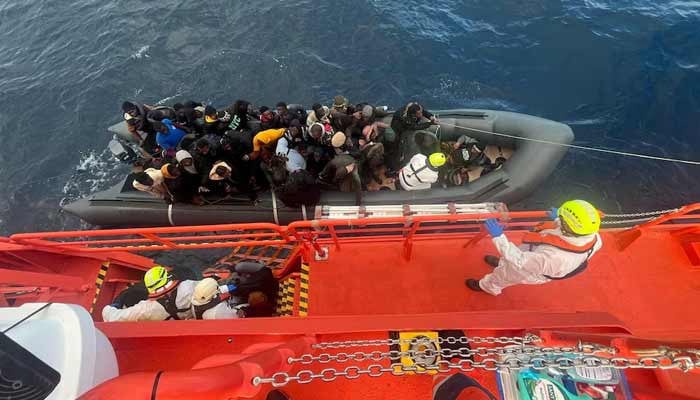
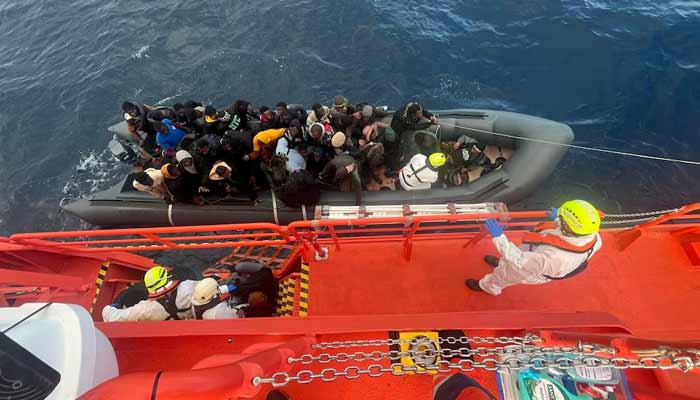
Nearly 8,000 people died or disappeared on migration routes last year, with sea routes to Europe the deadliest and many victims lost in “invisible shipwrecks”, a UN agency said on Tuesday.
“These figures bear witness to our collective failure to prevent these tragedies,” Maria Moita, who directs the International Organisation for Migration’s humanitarian and response department, told a Geneva press briefing.
Though the 7,904 people dead or missing was down from an all-time high of 9,197 in 2024, the IOM said that was partly due to 1,500 suspected cases that went unverified due to aid cuts.
More than four in every 10 fatalities and disappearances came on sea routes to Europe. Many cases were so-called “invisible shipwrecks” where entire boats are lost at sea and never found, the IOM said in a chilling new report.
The West African route northwards accounted for 1,200 deaths, while Asia reported a record number of fatalities, including hundreds of Rohingya refugees fleeing violence in Myanmar or misery in crowded refugee camps in Bangladesh.
“Routes are shifting in response to conflict, climate pressures and policy changes, but the risks are still very real,” said IOM Director General Amy Pope in a statement. “Behind these numbers are people taking dangerous journeys and families left waiting for news that may never come.”
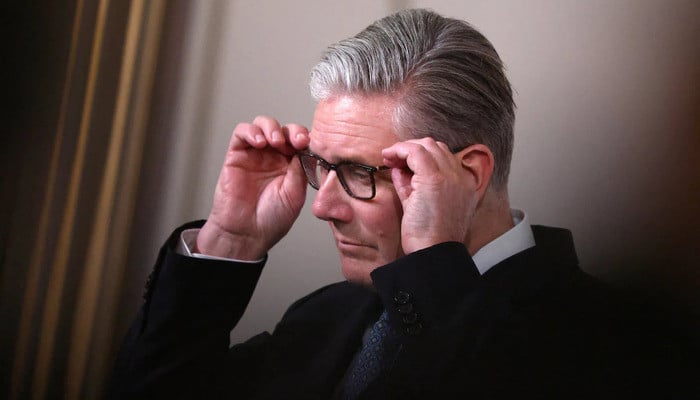
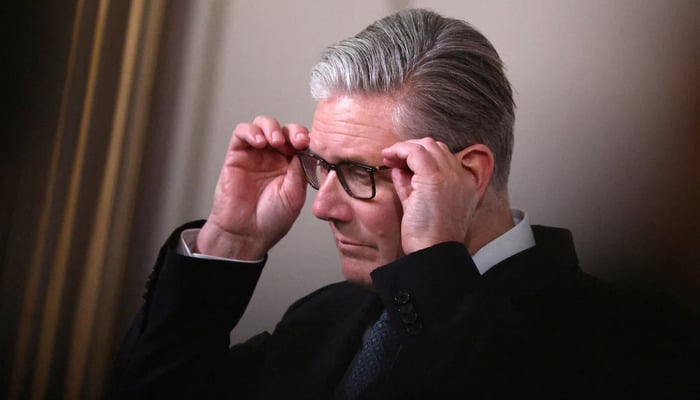
British Prime Minister Keir Starmer put the blame firmly on foreign ministry officials on Monday over the appointment of a US ambassador, saying they had withheld information about Labour veteran Peter Mandelson that would have halted his employment.
Starmer, under pressure to resign by political opponents over the scandal, has repeatedly sought to defend his role in the appointment of Mandelson and turned to parliament to set out his case that he was unaware that foreign ministry officials had been advised not to give security clearance to him.
He again said he regretted appointing Mandelson, whom he sacked in September after revelations about the depth of his ties to the late US sex offender Jeffrey Epstein. The events have prompted questions about the prime minister’s judgment, which resurfaced when the government said last week it had just found out Mandelson had failed a security vetting process.
On Monday, Starmer again expressed his anger over not being told by foreign ministry officials that in January 2025, they had disregarded advice and decided to grant Mandelson what is known as “developed vetting” clearance, a status that allows individuals access to information regarded as top secret.
“It beggars belief that throughout the whole timeline of events, officials in the foreign office saw fit to withhold this information from the most senior ministers in our system in government,” Starmer told parliament.
“That is not how the vast majority of people in this country expect politics, government or accountability to work.”
Starmer says he would not have appointed him if he had known
An appointment that once was hailed as a stroke of genius for employing a Labour veteran with trade experience who could win over incoming US President Donald Trump has turned out to be an ongoing nightmare for Starmer.

Trump, in a post on Truth Social, agreed that the appointment was a “really bad pick.”
“Prime Minister Keir Starmer of the United Kingdom acknowledged that he ‘exercised wrong judgement’ when he chose his Ambassador to Washington. I agree, he was a really bad pick. Plenty of time to recover, however!”, he said.
Starmer said he would not have appointed Mandelson if he had known the UK Security Vetting unit had advised that he should not gain the necessary clearance and that he had stopped the foreign office from being able to go against such advice in future.
Starmer, whose popularity has sunk since he won a landslide majority for Labour at a national election in 2024, had previously told parliament all due process had been followed over Mandelson.
Earlier, his spokesperson said: “The PM would never knowingly mislead parliament or the public … He clearly did not have this information when he previously spoke to parliament.”
After last week’s revelations that the foreign office had overridden a warning that Mandelson should not be appointed, Starmer sacked Olly Robbins, Britain’s top foreign ministry official, who the prime minister said had signed off on a statement on Mandelson clearing the vetting process.
Robbins has yet to make a formal statement on his sacking, but friends of his have been reported as saying he had followed the usual procedure, which allowed the foreign office to overrule advice from UK Security Vetting.
Opponents have accused Starmer of lying and incompetence, and say his position is no longer tenable.
Three weeks before local elections in which Labour is expected to suffer heavy losses, the resurgence of the scandal has triggered new questions about Starmer’s grip on government, although no senior Labour lawmakers have urged him to go.
Kemi Badenoch, leader of the main opposition Conservative Party, accused Starmer of failing to face up to the consequences of his action.
“It is how you face up to those mistakes that shows the character of a leader,” she told parliament. “Instead of taking responsibility for the decisions he made, the prime minister has thrown his staff, and his officials, under the bus.”

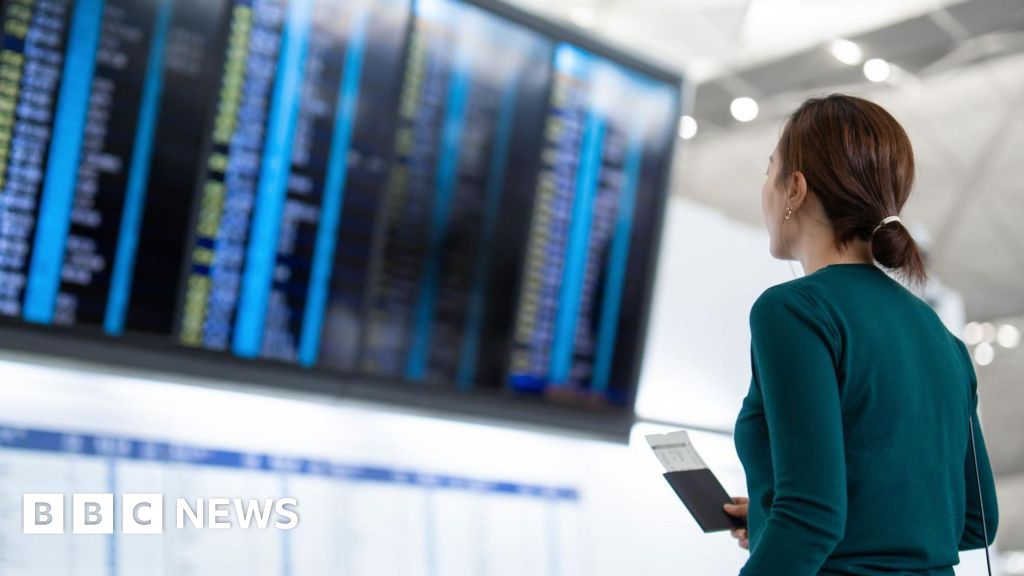
Air fares soar by nearly a quarter, research shows

Kanye West exits quietly after private visit to Human Rights Center

TAG Heuer Has Dropped New Polylight-Powered F1s

-

 Fashion5 days ago
France’s LVMH Q1 revenue falls 6%, shows resilience amid Iran war
-

 Sports1 week ago
The case for Man United’s Fernandes as Premier League’s best
-

 Entertainment1 week ago
Palace left in shock as Prince William cancels grand ceremony
-
 Business1 week ago
UK could adopt EU single market rules under new legislation
-

 Entertainment6 days ago
Is Claude down? Here’s why users are seeing errors
-

 Fashion1 week ago
Energy emerges as biggest cost driver in textile margins
-
 Business1 week ago
Delta Air Lines unveils first new Delta One suite in premium cabin arms race
-

 Fashion1 week ago
Asia claims largest share of markets on Kearney FDI Confidence Index