

Business
Clock ticks on Spirit Airlines as bondholders weigh Trump bailout. Here’s what could happen next


Spirit Airlines‘ future is hanging in the balance over the next week as President Donald Trump said the government could bail out the airline, as the struggling discount carrier‘s lenders assess a potential deal.
“We’re thinking about doing it, helping them out, meaning bailing them out, or buying it,” Trump told reporters in the Oval Office on Thursday.
“I’d love to be able to save those jobs. I’d love to be able to save an airline. I like having a lot of airlines, so it’s competitive,” Trump said.
The White House and major bondholders either didn’t immediately comment or declined to comment on the matter.
Trump told reporters that “when the price of oil goes down,” the government could “sell [Spirit] for a profit.”
Spirit expected to emerge from bankruptcy midyear, but that was before the U.S.-Israel attacks on Iran led to a surge in jet fuel costs. Spirit had a nearly $28.3 million operating loss in February, according to a court filing, which was before the fuel price spike hit carriers — and travelers’ wallets.
Spirit, the iconic budget carrier known for its bright yellow planes and bare-bones service that became a punchline for late-night comedians, has struggled to survive. The industry’s costs ballooned after Covid, as customer tastes changed for more upmarket offerings and international destinations.
Spirit has aggressively axed its costs, selling aircraft and shrinking its network. Last May, Spirit operated 19,575 flights, according to aviation data-firm Cirium. This May, it’s operating 9,353.
A planned acquisition of Spirit by JetBlue Airways was successfully challenged by the Biden administration, which the Trump administration said hurt Spirit.
“Spirit Airlines would be on a much firmer financial footing had the Biden administration not recklessly blocked the airline’s merger with JetBlue,” a White House spokesman said by email. “The Trump administration continues to monitor the situation and overall health of the U.S. aviation industry that millions of Americans rely on every day for essential travel and their livelihoods.”
Will others follow suit?
Some industry members and analysts have suggested other airlines, especially low-cost carriers, could seek similar assistance from the government.
Low-cost airlines met with Transportation Secretary Sean Duffy earlier this week to discuss the current surge in fuel costs, people familiar with the matter told CNBC.
The Trump administration has taken stakes in companies it views as a national security interest, while companies from automakers to banks to the airline industry as a whole have received bailouts in the past, but it’s highly unusual that the government would rescue a single company.
Delta Air Lines and United Airlines account for most of the airline industry’s profit in the U.S., spending years and billions of dollars to successfully court a less price sensitive clientele that is willing to pay up for roomier seats and other perks, as well as broad international networks. Many other carriers, including Spirit, have tried to catch up in recent years.
“We wonder if a potential Spirit deal could become a facility of last resort that other challenged carriers could seek in the future,” Barclays analyst Brandon Brandon Oglenski said in a note Thursday.
Possible deal
The terms of a tentative deal are for a $500 million loan that could eventually give the government a 90% stake in the Florida-based carrier, people familiar with the matter told CNBC. The potential plan would also put the government ahead of other investors, the people said, requesting anonymity to talk about the terms.
A U.S. bankruptcy court hearing to discuss the possible deal could be set for as early as Monday, according to comments in court on Thursday.
Mike Stamer, an Akin attorney who represents bondholders in the bankruptcy case, confirmed in court Thursday that “we did, in fact, receive a copy of the term sheet” for the potential deal with a loan from the U.S. government, a sign of how advanced the talks are.
The deal would also allow the U.S. government to select a board member, a person familiar with the potential terms told CNBC.
Spirit’s labor unions are also pushing for a deal.
“Any assertion that Spirit should just liquidate is only going to harm workers, passengers, and further strain our economy,” the Association of Flight Attendants-CWA said Thursday. “It’s unnecessary and mean spirited — when just a little help can stave off massive harm.”
Spirit’s lawyer, Marshall Huebner of Davis Polk, said in bankruptcy court Thursday that the loan would help Spirit get to “standalone fighting shape” but could also set it up for a potential merger.
Acquisition talks have failed before, however, most recently, with Frontier Airlines, which originally planned to merge with Spirit until a surprise all-cash offer by JetBlue.
Spirit’s challenges might also not go away, said Conor Cunningham, Melius Research airline analyst.
“How deep does he want to go?” he said of Trump and the possible rescue deal. “$500 million is probably not enough.”




United Airlines CEO Scott Kirby (L) and American Airlines CEO Robert Isom listen as U.S. Transportation Secretary Sean Duffy speaks to reporters outside the White House on October 30, 2025 in Washington, D.C.
Kevin Dietsch | Getty Images
United Airlines CEO Scott Kirby confirmed Monday that he contacted American Airlines about a potential merger, a possibility American rejected.
“I approached American about exploring a combination because I thought we could do something incredible for customers together,” Kirby said in a statement. He said he shared his “big, bold vision” because he was confident it could win regulatory approval.
American rejected the idea and its CEO, Robert Isom, last week said such a merger would be bad for customers and “anticompetitive.”
Kirby had floated the idea to the Trump administration earlier this year, according to people familiar with the matter who weren’t authorized to discuss the private conversation, in hopes that the combination would mean a big global airline to compete with foreign rivals
American declined to comment on Kirby’s Monday statement.
“I was hoping to pitch that story to American, but they declined to engage and instead responded by publicly closing the door,” Kirby said in his statement Monday. “And without a willing partner, something this big simply can’t get done.”
He said that “American’s public comments make it clear that a merger like this is off the table for the foreseeable future” but outlined his vision for a combined airline.
Kirby reiterated that the country has deficit with foreign airlines that fly more than half of the long-haul seats into the U.S., with most of the customers being Americans.
“The combined scale of United and American would be a better way to compete with foreign carriers,” he said.
President Donald Trump said he was against the idea of a combination last week.
“I don’t like having them merge,” he told CNBC’s “Squawk Box” on Tuesday morning. He said he would, however, like someone to buy struggling discount carrier Spirit but he also suggested that the federal government could “help that one out.”
Spirit and the Trump administration are in advanced talks for a rescue package.

Sam Sidhu, CEO of Customers Bank.
Courtesy: Customers Bank
Nearly half an hour into a conference call on Friday to discuss first-quarter results with analysts, Customers Bank CEO Sam Sidhu revealed something unusual — up until that point, he hadn’t actually been speaking.
“The prepared remarks you heard on my behalf today were delivered by my AI clone, not read by me,” Sidhu said, calling it a potential first for a public company earnings call.
The point of the stunt, he said, was to underscore a broader shift happening as Customers Bank, a $25.9 billion asset lender catering to startups and small businesses, embraces artificial intelligence.
Customers Bank has signed a multiyear partnership with OpenAI in which the AI giant will embed engineers at the company to help it automate lending and client onboarding, CNBC has learned exclusively.
The deal is part of Sidhu’s effort to get ahead of other banks in the industry’s race to transform itself using AI agents as a new digital workforce. His strategy hinges on automating core banking processes — slashing loan timelines from weeks to days, for instance — and scaling growth without adding staff at the same pace.
While many bankers have described AI in broad terms like productivity gains, Sidhu is tying it directly to financial targets.
Sidhu told CNBC that the project will improve the firm’s efficiency ratio from about 49 to the low 40s, boosting the bank’s returns starting next year.
The relationship with OpenAI — which has targeted finance as one of its core industries, even hiring former bankers to train its models — will be a symbiotic one for the AI giant, according to the bank CEO.
“We’re going to be co-creating enterprise solutions they could potentially sell to other banks in the future,” Sidhu said. “The goal here is end-to-end, automated agentic led workflow” for lending, deposits and payments.
OpenAI said it was proud to help Customers Bank “as they build a more intelligent operating model that empowers employees, strengthens client service, and sets a new standard for regional banking,” chief revenue officer Denise Dresser said in a statement provided to CNBC.
Always-on workers
The bank expects to roll out AI agents across lending, deposits and payments over the next six to 12 months.
If they succeed, closing a commercial loan will go from taking 30 to 45 days, including underwriting, document collection and legal negotiations, to about seven days, Sidhu said.
Opening accounts for complex commercial clients, which can take more than a day, will be collapsed to under 20 minutes using conversational AI and automated document gathering, he said.
“When you have an autonomous agent, you’re essentially creating a digital worker … and they can work around the clock,” Sidhu said.
Customers Bank has been laying the groundwork for this announcement for years, first tapping OpenAI in 2023 because Sidhu had what he describes as a tiny investment in the AI giant through his contacts in the venture capital world. The OpenAI deal signed last week broadens their relationship, enabling AI engineers into the bank’s processes, he said.
The bank is among a handful of smaller lenders that target the startup and venture capital community, and it reportedly bid for Silicon Valley Bank in 2023 amid the regional banking crisis that year.
Key advantage
While it is a relatively tiny firm compared to the likes of JPMorgan Chase, which has $4.9 trillion in assets, Customers Bank has a key advantage, according to Sidhu, who began his career at Goldman Sachs in 2004. The megabanks have sprawling global operations and far higher complexity and regulatory standards for AI implementation, he said.
“Smaller banks are not going to be expected to have the same level of frameworks as many of the larger banks,” he said. Regulators want community and regional banks “to be able to compete with larger banks.”
The lender already uses AI to write half the firm’s software code and has saved 28,000 hours of work so far, equal to not hiring about 15 full-time employees, he said.
“This is an opportunity for us to potentially slow that hiring … and do more revenue per employee,” he said.
The bank is also exploring entering new businesses that would have been prohibitively expensive to tackle before AI agents. For these AI-native business lines, smaller teams oversee automated systems that handle work previously requiring large numbers of humans, he said.
Unlike typical software licensing agreements, Sidhu said both sides are contributing resources to build new tools together, with OpenAI gaining real-world use cases inside a regulated financial institution.
“It’s going to benefit our investors. It’s going to benefit our customers,” Sidhu said. “Our regulators will hopefully also be happier over time, because they’re going to see us reducing risk as well.”
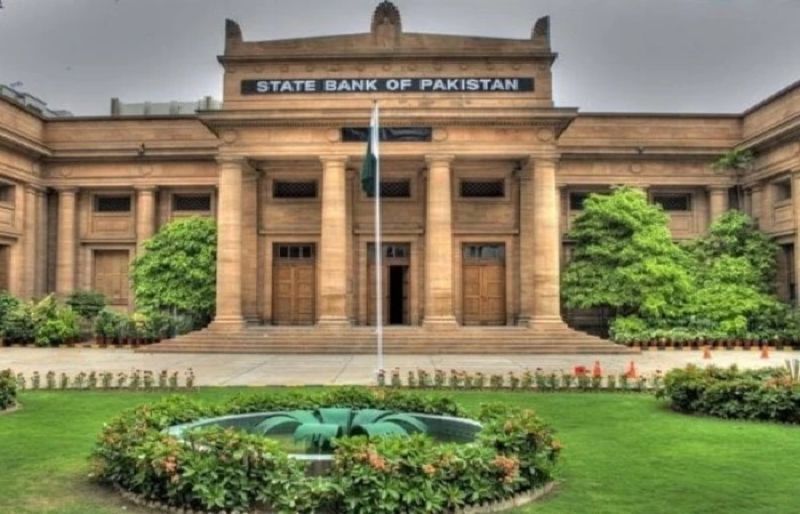
The State Bank of Pakistan (SBP) on Monday raised its benchmark policy rate by 100 basis points (bps) to 11.5% on Monday, warning of “intensified risks” to the macroeconomic outlook due to the US-Israel war on Iran.
In a statement, the central bank said that its Monetary Policy Committee (MPC) noted that global energy prices, freight charges and insurance premiums continued to remain significantly above pre-conflict levels due to the Mideast conflict.
Disruptions in the supply chain have also contributed to the prevailing uncertainty, it added.
While the incoming data has been broadly in line with the MPC’s expectations, the impact of the ongoing global developments will be visible in key economic indicators going forward, the SBP warned.
The MPC assessed that inflation is likely to increase and remain above the target range in the next few quarters.
Accordingly, the committee deemed it necessary to maintain a tighter policy stance to keep inflation expectations anchored and contain second-round effects of the current supply shock to bring inflation within the target range, the SBP said.
This will be important to preserve macroeconomic stability, which is necessary for achieving sustainable economic growth, it added.
Since its last meeting, the MPC highlighted several key developments, including a rise in inflation to 7.3% in March and an increase in core inflation to 7.8%. It also noted deteriorating consumer and business confidence in recent surveys.
On the macroeconomic front, real GDP grew by 3.8% in the first half of fiscal year 2026, compared to 1.9% a year earlier. The current account posted a small surplus during July-March FY26.
SBP’s foreign exchange reserves stood at approximately $15.8 billion as of April 24, bolstered by Eurobond issuances, marking Pakistan’s return to international capital markets after more than four years.
The MPC also referenced the staff-level agreement reached with the International Monetary Fund on March 27 as a positive development supporting external financing.
“In light of the above developments and evolving risks, the MPC viewed today’s decision as important to achieve the objective of price stability over the medium term,” the SBP said.
The MPC stressed the need for continued fiscal discipline, structural reforms, and strengthening of external buffers to ensure resilience against global shocks and sustain long-term growth.
Likely rise in inflation
Inflation was projected to increase up to the upper bound of the target range before the start of the Middle East conflict, mainly due to adverse base effect, the SBP said, adding that the energy price shock has led to a surge in fuel prices, which have already begun to seep into core inflation via transport fares.
However, contained food inflation amidst ample supplies is likely to offset some of the impact on headline inflation, the central bank said.
Going forward, the central bank’s MPC assessed that the current supply shock may push inflation to double digits in the coming months before it starts to ease subsequently.
It expects inflation to stay above the upper bound of the target range of 5% to 7% for most of the fiscal year 2027.
The SBP said that the outlook is subject to multiple risks, particularly the duration and intensity of the Mideast conflict, the extent of pass-through of changes in global energy prices to the domestic economy, and potential fiscal slippages.

United Airlines CEO confirms he approached American Airlines about merger

‘House of the Dragon’ unveils ‘more brutal’ season 3 trailer at CCXP Mexico

French teen faces jail in Singapore for licking vending machine straw

-

 Sports1 week ago
NCAA men’s gymnastics championship: All-time winners list
-

 Sports1 week ago
WWE WrestleMania 42 Night 2: Live match results and analysis
-

 Fashion1 week ago
UK’s Sosandar returns to profitability amid robust FY26 performance
-

 Politics6 days ago
UK’s Starmer seeks to deflect blame over Mandelson appointment
-

 Entertainment7 days ago
Lee Anderson, Zarah Sultana kicked out of UK Parliament for calling PM ‘liar’
-
 Business1 week ago
No fuel shortage: Govt assures 100% domestic LPG, PNG, CNG supply amid Hormuz energy crunch – The Times of India
-
 Business7 days ago
How Trump’s psychedelics executive order could unlock stalled cannabis reform
-
 Business1 week ago
Exercise to test response to offshore energy threat involving vessels and drones