

Fashion
Indian industry seeks relief on polyester GST ahead of crucial meeting

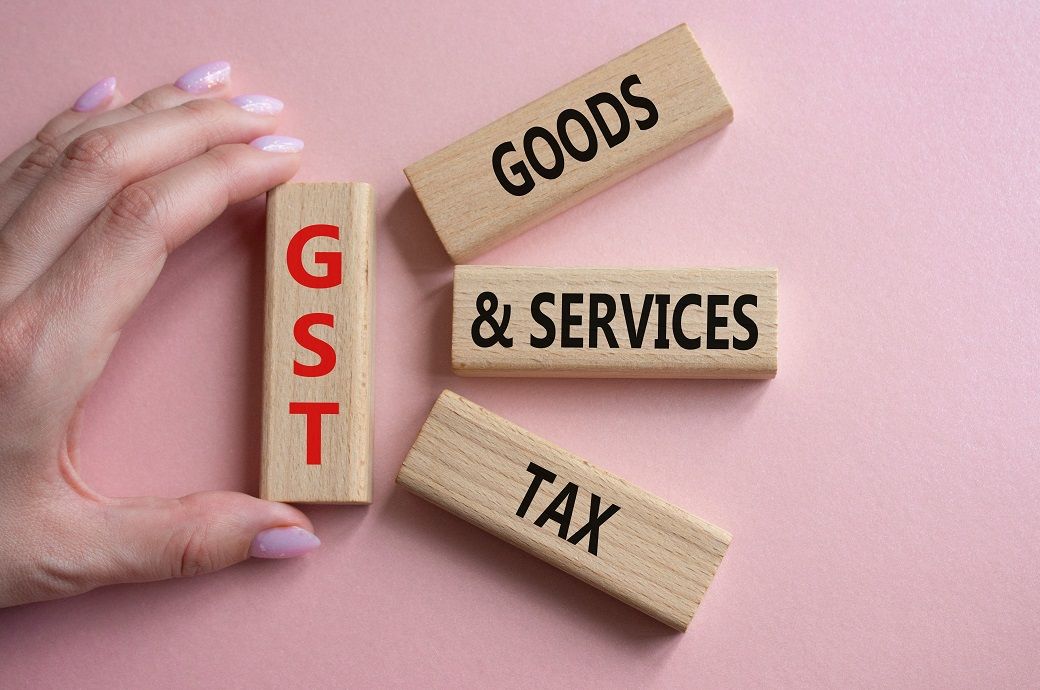
Ahead of the crucial GST Council meeting, the North India Textile Mills Association (NITMA) has demanded a uniform 5 per cent GST on polyester fibre, yarn, fabric, and garments. Following Prime Minister Narendra Modi’s announcement of rationalisation and rate cuts, the Council’s meeting scheduled for September 3–4, 2025, has become especially significant. NITMA raised the demand before Indian Finance Minister Nirmala Sitharaman, who chairs the Council.
North India Textile Mills Association (NITMA) has urged the GST Council to impose a uniform 5 per cent GST on polyester fibre, yarn, fabric, and garments to address the inverted duty structure.
Currently, polyester fibre attracts 18 per cent, yarn 12 per cent, and fabrics/garments 5 per cent GST.
NITMA warned that the imbalance threatens spinning viability, risking shutdowns and job losses.
Sidharth Khanna, president of NITMA, said in a letter: “Unlike the cotton value chain—which benefits from a uniform 5 per cent GST across all stages—the MMF segment continues to suffer from disparate tax rates that distort input-output parity and undermine domestic manufacturing viability.” He pointed out that polyester staple fibre (virgin and recycled) is taxed at 18 per cent, polyester staple yarn attracts 12 per cent GST, while manmade fabrics and garments priced up to ₹1,000 are taxed at 5 per cent GST.
Khanna added that taxing yarn at 5 per cent while fibre remains at 18 per cent creates a distortion that renders spinning operations financially unsustainable. If left uncorrected, this imbalance could trigger widespread unit shutdowns and large-scale job losses across the country.
“This is a defining moment for India’s textile sector. Correcting the inverted duty structure will not only neutralise the impact of US tariffs but also unlock growth, investment, and resilience across the MMF value chain—turning challenge into opportunity. There should be a rationalised GST rate of 5 per cent across all stages of the polyester value chain,” he emphasised.
Fibre2Fashion News Desk (KUL)









Global growth is projected to remain broadly steady over the next two years, easing to 2.6 per cent in 2026 before rising to 2.7 per cent in 2027, an upward revision from the June forecast.
World economy is proving more resilient than anticipated despite persistent trade tensions and policy uncertainty, the World Bank said.
Global growth is projected to stay broadly steady over the next two years, easing to 2.6 per cent in 2026 before rising to 2.7 per cent in 2027.
Global inflation is projected to edge down to 2.6 per cent in 2026, reflecting softer labour markets and lower energy prices.
The resilience reflects better-than-expected growth, especially in the United States, which accounts for about two-thirds of the upward revision to the forecast in 2026.
Even so, if these forecasts hold, the 2020s are on track to be the weakest decade for global growth since the 1960s.
The sluggish pace is widening the gap in living standards across the world, the report says.
In 2025, growth was supported by a surge in trade ahead of policy changes and swift readjustments in global supply chains. These boosts are expected to fade in 2026 as trade and domestic demand soften.
However, the easing global financial conditions and fiscal expansion in several large economies should help cushion the slowdown, a World Bank release said citing the report.
Global inflation is projected to edge down to 2.6 per cent in 2026, reflecting softer labour markets and lower energy prices.
Growth is expected to pick up in 2027 as trade flows adjust and policy uncertainty diminishes.
In 2026, growth in developing economies is expected to slow to 4 per cent from 4.2 per cent in 2025 before edging up to 4.1 per cent in 2027 as trade tensions ease, commodity prices stabilise, financial conditions improve and investment flows strengthen.
Growth is projected to be higher in low-income countries, reaching an average of 5.6 per cent over 2026-27, buoyed by firming domestic demand, recovering exports and moderating inflation.
However, this will not be sufficient to narrow the income gap between developing and advanced economies.
Per capita income growth in developing economies is projected to be 3 per cent in 2026—about a percentage point below its 2000-2019 average.
At this pace, per capita income in developing economies is expected to be only 12 per cent of the level in advanced economies.
These trends could intensify the job-creation challenge confronting developing economies, where 1.2 billion young people will reach working age over the next decade, according to the World Bank.
Fibre2Fashion (DS)
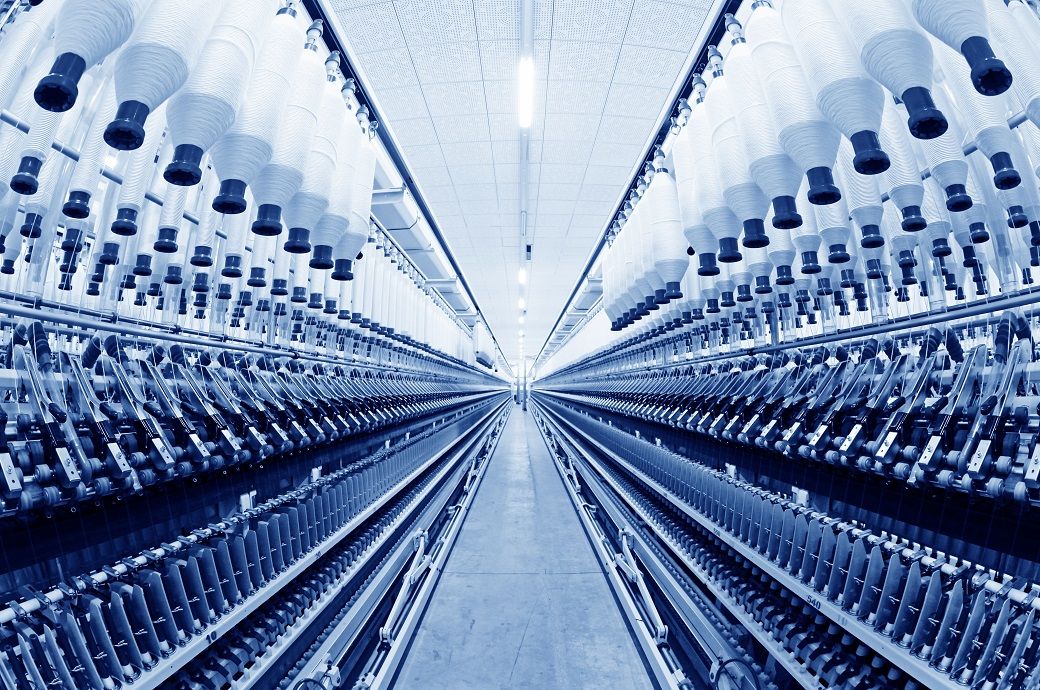
The Confederation of Indian Textile Industry (CITI) expects the upcoming Budget to futureproof India’s textile and apparel sector through measures that will make the arena more resilient, innovative, and globally competitive.
CITI has urged the Union Budget to futureproof India’s textile and apparel sector through reforms on raw material pricing, competitiveness, sustainability and trade facilitation.
Seeking duty-free cotton, technology and green schemes, and export support, CITI said that high US tariffs threaten jobs in a sector vital to GDP, exports and livelihoods.
“Our optimism that the forthcoming Union Budget will significantly move the needle on policy and regulatory reforms is bolstered by the government’s steadfast commitment to the growth and development of India’s textile and apparel sector,” CITI chairman Ashwin Chandran said.
“The Budget enabling the creation of a stronger growth ecosystem for the Indian textile and apparel sector can also have a positive ripple effect on the Viksit Bharat (developed India) goal,” Chandran added.
India’s textile and apparel sector is the second-largest provider of jobs and livelihoods in the country. It is also a significant contributor to the country’s GDP and exports.
Some of the specific measures that the Confederation of Indian Textile Industry (CITI) would like to see in the coming Budget are:
1. Raw material and price stability-related:
- Removal of import duty on all varieties of cotton fibre.
- Change in MSP formula for cotton to align with international benchmark prices.
- Launch of a Cotton Price Stabilisation Fund.
- Ensure availability of man-made fibres (MMF) at globally competitive prices.
2. Competitiveness, technology, and sustainability-related:
- Launch of a Green Technology Scheme to support MSMEs’ transition to clean energy and sustainable practices.
- Launch of an alternative scheme to the erstwhile Technology Upgradation Fund Scheme.
- Launch of a scheme to promote indigenous textile machinery manufacturing.
- Address high power costs and industrial cross-subsidies.
- Establishment of a National Textile Fund.
3. Trade Facilitation-related
- Extension of RBI’s Trade Relief Measures to cover the entire textile value chain.
- Increase in Basic Customs Duty on all types of knitted fabric to curb imports at unviable prices.
- Reintroduction of the MEIS Scheme.
- Extension of the facility of Duty-free Import of specified items/goods to exporters of made-ups.
“Combined, these measures could increase the resilience of India’s textile and apparel sector and help it become a more powerful force globally, while also contributing towards realising the national target of creating a $350 billion textile and apparel industry in India by 2030,” Chandran said.
India’s textile and apparel sector has been hit hard by the 50 per cent US tariff on Indian goods, effective August 27, 2025. The steep US tariff has adversely affected numerous Indian textile and apparel companies, thereby increasing the risk that millions of people working in this sector may lose their jobs and livelihoods.
The US is the single-largest market for India’s textile and apparel exports, contributing almost 28 per cent to the total revenue of the country’s textile and apparel exporters. India’s exports of textile and apparel products to the US were valued at nearly $11 billion in the fiscal year 2024-25.
“India’s textile and apparel exporters have stepped up their diversification efforts, but it is tough to quickly make up for potential business losses in the US. Also, while existing and upcoming FTAs would create new opportunities for India’s textile and apparel sector, these benefits will require time to materialise,” Chandran said.
Fibre2Fashion News Desk (HU)


Gold steadies near record high as trade war risks sour global sentiment – SUCH TV

Asian stocks today: Markets trade mostly in red; Nikkei sheds 1%, HSI remains flat – The Times of India

World growth to ease to 2.6% in 2026, rise to 2.7% in 2027: World Bank

-

 Tech1 week ago
New Proposed Legislation Would Let Self-Driving Cars Operate in New York State
-

 Entertainment7 days ago
X (formerly Twitter) recovers after brief global outage affects thousands
-

 Sports5 days ago
Pak-Australia T20 series tickets sale to begin tomorrow – SUCH TV
-

 Fashion3 days ago
Bangladesh, Nepal agree to fast-track proposed PTA
-
 Business4 days ago
Trump’s proposed ban on buying single-family homes introduces uncertainty for family offices
-

 Politics3 days ago
Saudi King Salman leaves hospital after medical tests
-

 Tech4 days ago
Meta’s Layoffs Leave Supernatural Fitness Users in Mourning
-

 Tech5 days ago
Two Thinking Machines Lab Cofounders Are Leaving to Rejoin OpenAI