

Fashion
Eleventy: Revenue at €127 million, Chicago store opening imminent, push in the US and Asia


Published
January 20, 2026
From its elegantly appointed 1,000-square-metre showroom at 11 Via Uberto Visconti di Modrone in Milan, which showcases the brand’s entire universe, high-end clothing and accessories label Eleventy presented its Autumn-Winter 2026/27 collection, marked by colours new to the house, an expanded assortment—especially in footwear—and the use of new raw materials such as vicuña, as revenue stabilises and new store openings are readied, starting in Chicago.
“It’s an important year for us, one in which we wanted to reinvent ourselves, because we believe it’s right to go back to being special,” Marco Baldassari, who continues to lead the brand he owns as CEO, tells FashionNetwork.com. “We had certainly spent many years operating in our comfort zone, with light colours, which by now are no longer distinctive. So we wanted to introduce new, more sophisticated, darker colours and silhouettes that are new to us, to differentiate ourselves once again from what the market offers.”
“The inspiration for the collection,” Eleventy’s CEO continues, “begins with an inner journey of reconnection with nature, which becomes our stage.”
Brown, therefore, assumes a central role in Eleventy’s wardrobe, as do very deep, almost black greys—like the winter sky—alongside forest greens and burgundy.
“This change has been noticed and, I must say, warmly received by buyers, also because I think it’s right to rekindle the desire of a consumer who perhaps had found the market a bit flat, lacking truly new propositions, where everything seems interchangeable,” the entrepreneur notes.
“It’s one of the contributing factors to this global downturn in fashion and luxury sales. More than tariffs, which in my view have somewhat distracted from the real issue—the strengthening of the euro, alongside the weakening of the yen and the dollar—pricing has certainly played a part, and in many cases the end consumer has not found it justified. With a very balanced price-to-quality proposition, Eleventy has not been particularly affected by this phenomenon. I hope this new collection of ours will reignite a great deal of desire, because we have completely reinvented ourselves, including in terms of fit and aesthetic.”

Eleventy, which in late 2025 opened its first flagship in Lisbon, will continue its programme of monobrand openings in 2026. The most significant will be in Chicago, in the United States.
“The U.S. is our most important market, thanks also to the mentality of the American consumer, who tends to spend more and is more inclined to purchase than the European customer,” Baldassari observes.
Eleventy currently employs 200 people and has 18 monobrand stores managed directly from headquarters, plus 22 with franchise partners, for a total of 40 monobrand stores. In the multibrand channel, the Milan-based label is carried in around 300 carefully selected doors worldwide.
“To be special, and thereby sell a quality product, you also have to be more selective in distribution, sometimes sacrificing opportunities in favour of a longer-term vision,” the CEO said.
The womenswear collection is growing within Eleventy’s business; today it accounts for 25 per cent of revenue, with turnover rising to 127 million euros from approximately 100 million in 2024 (it was 43 million euros in 2022 and 65 million in 2023, ed.), with 18 per cent generated in Italy and 82 per cent abroad. After the US comes the Middle East, Europe overall, and Asia, where Baldassari highlights South Korea and Japan as growth markets, while China remains to be defined.

The agreement between the European Union and Mercosur to further liberalise trade between them “is certainly a new opportunity that we will not fail to evaluate with great attention and interest,” said the founder, in the presence of Gianmarco Tamberi, who has officially become Eleventy’s new brand ambassador.
“The choice of Gianmarco Tamberi is due to two fundamental reasons. First, we are Italian and we want to bring Italy to the world, which an athlete like him represents excellently. Second, the alignment of our respective values: to achieve the results we have, we have made many sacrifices, with hard work, consistency, commitment and discipline. These are all elements that unite our paths,” the founder continued.
Since in recent years fashion has first seen the rise of tennis-inspired style and then that of skiing (preceded about fifteen years earlier by golfwear and polowear), can athleticwear be trendy in the coming years as well?
In other words, will athletics succeed in conveying its values to the general public, as it has almost never managed to do in the past? “Achieving results certainly helps to spur similar developments,” Tamberi replies.
“We were coming out of a period (from around 2000 to 2015) when athletics had a huge void of champions in Italy. Now something has shifted, especially since the Tokyo 2020 Olympics, after the famous five gold medals we managed to bring home. Results can allow the personalities who achieve them to emerge; otherwise it’s difficult to bring a movement to public attention. Today, many young people in athletics are coming through,” explains the high jumper, who in his discipline has won at least once everything there was to win, having been Olympic champion at the Tokyo 2020 Games, world champion in Budapest 2023, world indoor champion in Portland in 2016, and three-time European champion (2016, 2022, 2024), not to mention victories at the European Indoors and two Diamond League finals reached.

“The collaboration with Eleventy came about very naturally, as we share similar values,” confirms the Ancona-born athlete. “For a few years I had the honour of being a Giorgio Armani ambassador, whom I take this opportunity to thank and acknowledge. When that partnership ended, several companies came forward to have me as a testimonial, but I couldn’t find any that resonated with me and with what I want to represent and communicate. Then Marco Baldassari got in touch. And everything clicked into place naturally.”
Founded in Milan in 2007 by Marco Baldassari and Paolo Zuntini, joined in 2009 by Andrea Scuderi, and now majority controlled (65 per cent) by the Fashion Cube fund—a holding company composed of the VEI Capital fund and a Gulf financial group that controls all the sales networks of the high-end apparel and accessories company—Eleventy works exclusively with natural Italian materials and 100% made in Italy production. Present in more than 30 countries, it also has directly operated stores in cities such as Milan, New York, Paris, Tokyo, Seoul and Dubai.
This article is an automatic translation.
Click here to read the original article.
Copyright © 2026 FashionNetwork.com All rights reserved.









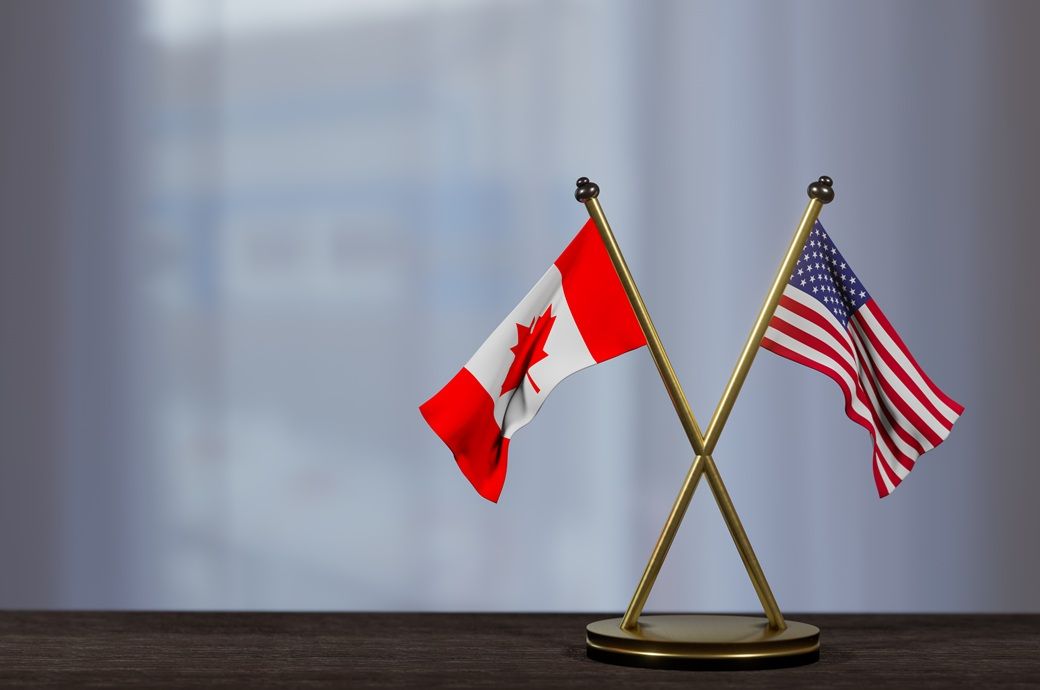
The committee will serve as a forum for expert advice on trade, investment, labour and economic strategy, and will be chaired by Dominic LeBlanc, minister responsible for Canada-US Trade, Intergovernmental Affairs, Internal Trade and One Canadian Economy. It includes leaders from across key sectors of the Canadian economy and will hold its first meeting on April 27, 2026.
Canada has formed a new advisory committee to guide its economic strategy with the United States ahead of the Canada-United States-Mexico Agreement (CUSMA) review.
With 85 per cent of trade remaining tariff-free, the move aims to deepen collaboration, safeguard market access and better position Canada for upcoming negotiations and evolving trade dynamics.
Carney announced members including Jean Simard, Candace Laing, Darryl White, Lisa Raitt, Tracy Robinson, Flavio Volpe, Ron Bedard, Ken Seitz, Dennis Darby, Lana Payne, Francois Poirier, Emile Cordeau, Luc Theriault, Magali Picard, Jonathan Price, Susan Yurkovich, Michael Harvey, Tabatha Bull, Cameron Bailey, Valerie Beaudoin, Erin O’Toole, Jean Charest, P.J. Akeeagok and Ralph Goodale.
The initiative replaces the former Council on Canada-US relations and aims to strengthen engagement with business and labour stakeholders while positioning Canada for future negotiations.
“Canada is approaching its economic relationship with the US with focus, discipline and unity. This new Advisory Committee ensures that government is drawing on the best advice and the broadest perspectives to advance Canada’s economic interests. Our goal is a strong economic partnership with the US that creates greater certainty, security and prosperity for all,” Carney said.
“Canada is strongest when governments, workers, businesses and industry leaders pull in the same direction. This Advisory Committee will help us stay closely connected to key sector perspectives, support effective outreach and strengthen Canada’s position as we establish a new economic and security relationship with the US,” LeBlanc added.
Canada-US trade remains a cornerstone of North America’s economy. In 2024, both countries exchanged nearly $3.6 billion in goods and services daily. Together with Mexico, the three countries represent a market of 517 million consumers with a combined GDP of $48.8 trillion. Since CUSMA came into force on July 1, 2020, bilateral trade has increased by more than 27 per cent, or $196 billion.
CUSMA, which is in force until 2036, will undergo a mandatory joint review on July 1, 2026. Member countries will decide by consensus on potential updates or an extension for another 16 years. If no agreement is reached, annual reviews will continue until consensus is achieved or the agreement expires.
Fibre2Fashion News Desk (CG)

Such industrial units can transfer gas load allocated under the captive power category to the industrial category within the same premises and ownership. But gas load from the industrial power category cannot be transferred to captive use.
Bangladesh’s power, energy and mineral resources division has simplified the industrial gas distribution system, allowing factories within the same premises and ownership to transfer unused gas load with approval from the relevant gas company.
The aim is to improve service amid rising demand.
Industrial units can rearrange or replace gas equipment keeping the approved hourly load unchanged.
Industrial units can rearrange or replace gas equipment keeping the approved hourly load unchanged, according to a circular by the division.
Commissioning work must be carried out by contractors enlisted with the relevant gas company, while no permission from the gas distribution company will be required, the circular noted.
The aim is to improve service amid rising demand.
Textile mills lauded the move, saying the reforms would enhance productivity, reduce cost and streamline operations, particularly for energy-intensive textile and garment sectors, according to domestic media reports.
Fibre2Fashion News Desk (DS)
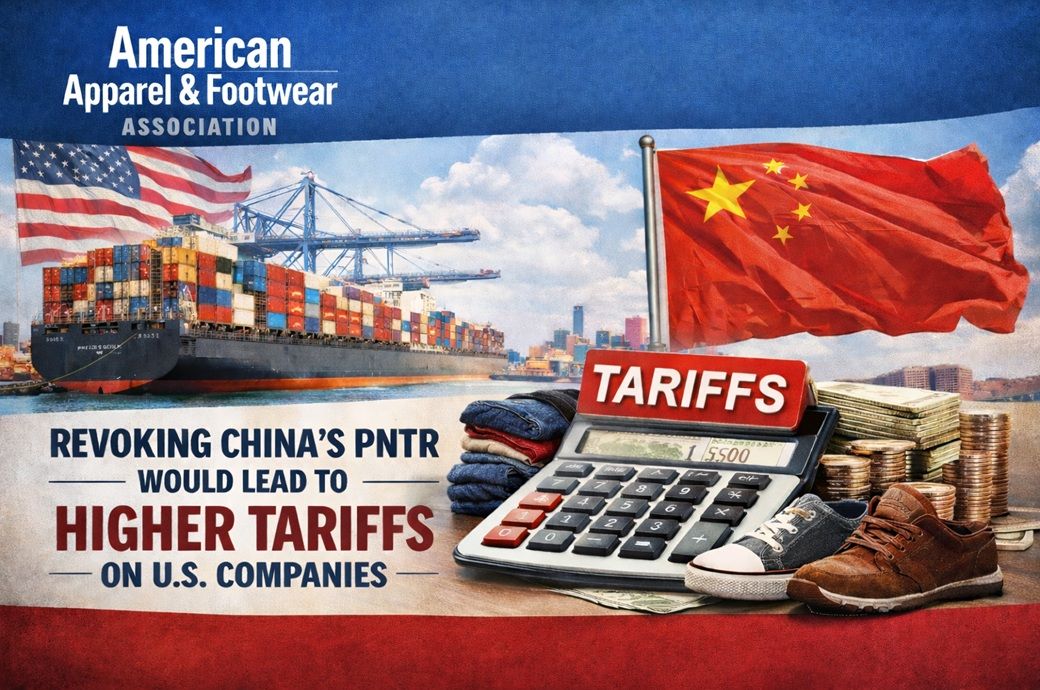
“These significant tariff increases cannot be absorbed by US brands and retailers, as margins are already tight and leave little room to offset such dramatic cost increases. As a result, these added costs would be passed on to consumers, hurting the affordability of clothes and shoes for American families,” Beth Hughes, AAFA vice president for trade and customs policy, wrote in a letter to the ITC.
US trade body AAFA has urged the International Trade Commission not to revoke the permanent normal trade relations (PNTR) status granted to China as that would result in higher tariffs borne by US companies.
Higher tariffs on Chinese imports would constrain US firms’ ability to invest in innovation, expand operations and support US job growth, and would risk closing off commercial opportunities in China.
“At the same time, higher tariffs on Chinese imports would constrain US companies’ ability to invest in innovation, expand operations and support American job growth,’ he noted.
AAFA in its letter said that US manufacturers rely on Chinese raw materials and inputs to produce finished goods under ‘Made in USA’ initiatives. Certain textiles are only available from China at the scale required, with no viable alternatives available now.
China remains the largest supplier for the US apparel, footwear and travel goods industry, accounting for 27.26 per cent of apparel imports, 47.83 per cent of footwear imports and 36.62 per cent of travel goods imports in 2025.
“Revoking China PNTR would result in higher tariffs borne by US companies significantly raising costs, reducing Americans’ ability to purchase affordable clothing, footwear and travel goods, while straining limited US and global manufacturing capacity that cannot readily replace these imports and provoking potential retaliatory measures that could further harm US companies,” the letter read.
Many small businesses and employers may not be in a position to absorb those costs, it observed.
While these additionally costs might ultimately be manageable—by being passed along over time or addressed through other mitigation measures, including alternative sourcing—those measures take time and also involve costs, it said.
An entire class of companies would be eliminated by the existential nature of such high tariff costs.
China’s pattern of retaliation suggests that any US move to revoke PNTR would likely be met with swift and proportional countermeasures, the letter noted.
As China a major market for American goods, the loss of PNTR would not only raise prices and disrupt supply chains, but also risk closing off commercial opportunities in China, it added.
Fibre2Fashion News Desk (DS)


Canada forms new advisory committee to strengthen US trade relations

High street drug dealer sells cannabis to undercover reporter

Clearing Hormuz Strait mines could take six months: report

-

 Fashion1 week ago
France’s LVMH Q1 revenue falls 6%, shows resilience amid Iran war
-

 Entertainment1 week ago
Is Claude down? Here’s why users are seeing errors
-

 Tech1 week ago
The Deepfake Nudes Crisis in Schools Is Much Worse Than You Thought
-

 Sports1 week ago
PSL 11: Peshawar Zalmi win toss, opt to field first against Quetta Gladiators
-

 Tech1 week ago
Human-machine teaming dives underwater
-
 Business1 week ago
Standard Life buys rival in £2b deal to create savings giant
-
 Business1 week ago
BP sees ‘exceptional’ oil trading result as Iran war sends crude costs soaring
-

 Fashion1 week ago
What no one is saying about the 2026 apparel slowdown