

Tech
Jon Kung’s Starter Pack: The Kitchen Gear Behind the Third Culture Flavor


When I ask influencer chef Jon Kung to name the purchase they regret most, there’s no deliberation. “In my early twenties, I bought this used SMEG fridge,” the 42-year-old Chinese American TikTok creator tells me. “It’s got this giant British flag on it, and I still have it. I’ve stuck Sex Pistols, Ozzy Osbourne, and Spice Girls stickers on the sides to try to make it a little better.”
It’s become a conversation piece at the dinner parties Kung hosts at home. Every holiday season, Kung whips up their Chinese takeout feast; it’s a seven-course spread that maps their upbringing across Los Angeles, Hong Kong, Toronto, and Detroit—mapo tofu, pumpkin and lotus root curry, superior stock wonton noodle soup, crab rangoons, Balinese crab fried rice, mushroom lo mein, and, for the grand finale, Cantonese roast duck with cherry duck sauce. And, obviously, dessert.
That layered, third-culture palate is exactly what has made Kung one of the most compelling food personalities of his generation, with over 2 million online followers. (They also published a cookbook, Kung Food, with over 100 recipes.) Whether they’re demystifying global ingredients for a Western audience or sharing meal prep tips, Kung’s perspective remains the same: good food should feel like home.
I caught up with Jon Kung over Zoom to talk about their favorite cooking techniques and kitchen gear.
Wash Your Rice
When I ask Kung what they wish they had that doesn’t already exist, they don’t hesitate: “A rice cooker that also washes your rice.”
“It’s so important to wash your rice, especially if you’re making Asian rice. Italians don’t wash their rice because they need that starch for risotto, but in almost any other culture, you have to wash your rice. Also, I don’t think people know there are bug eggs in rice. They’re called rice weevils, and unless you’re buying that super expensive prewashed rice, there are lots of bugs in rice.”
For now, you’ll need to wash your rice by hand, but if you need a rice cooker, King likes the same Japanese rice cookers the WIRED Reviews team swears by: “Zojirushi rice cookers are fantastic, specifically the ones that have pressure options, because they keep rice fresh for so long.”
Drip Coffee Done Right

“I switch between a drip coffee and an Americano when I make it for myself,” says Kung. “I used to do a Chemex pour-over, but recently I switched to the super automatic Terra Kaffe. It’s kind of awesome.” (Our reviewers also really like the Terra Kaffe.)
Skip the Combination Pans
“Combination pans—the ones that are a mix between nonstick and stainless steel—just end up being garbage versions for both jobs,” says Kung. “I would rather people just get one ceramic nonstick pan and one stainless steel pan.”












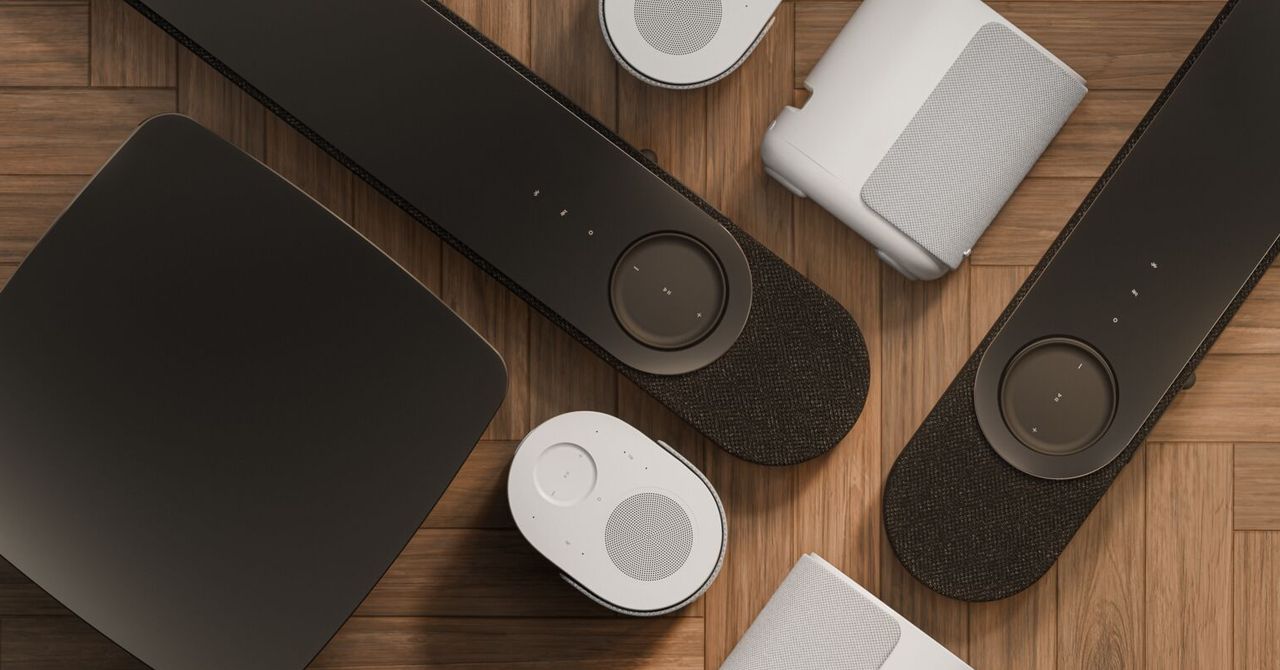
Bose has three new speakers to spice up your home listening. The company’s new “Lifestyle Collection”—designed with a snazzy fabric-wrapped grille and gentle curves—includes the Lifestyle Ultra Speaker, Lifestyle Ultra Subwoofer, and Lifestyle Ultra Soundbar. All of them can be connected to multiple units and third-party speakers via AirPlay and Google Cast for a better multi-room audio experience.
These audio products mark a “reentering” into the home speaker space for the company, bringing back the iconic Lifestyle lineup that originally debuted in 1990—known for simplicity and ease of use—which Bose subsequently discontinued in 2022.
To no surprise, Bose says the Ultra Soundbar is the “best soundbar we have ever made,” and that the Ultra Speaker might even be one of the company’s best in its storied history. The wireless speaker starts at $299, with a $349 limited-edition model in Driftwood Sand; the soundbar costs $1,099, and the subwoofer is $899. They’re available for preorder now and go on sale May 15.
These Wi-Fi-enabled speakers support AirPlay, Google Cast, Spotify Connect, and, uniquely, are the first to integrate with Alexa+ (in the US only), allowing you to ask Amazon’s chatbot to play music through the speakers via voice commands. There’s also Bluetooth support, and even an auxiliary input for connecting the Ultra Speaker to a turntable.
You can group two Lifestyle Ultra Speakers into a stereo system in the Bose app, or group them all together for a home theater system. Sadly, if you hoped to use it as a surround system with your existing Bose soundbar, the company says it’s only backward compatible with the Bass Module 700. And with the new Lifestyle Ultra Soundbar, it can only be used as a wired connection. For multi-room audio, the company has passed those grouping duties to the Google Home app for Google Cast technology, or Apple’s AirPlay for iOS users. Speaking of the app, there’s a redesigned onboarding process that purportedly makes setting up all of these speakers a breeze.
On the audio front, the Ultra Speaker notably features an upward-firing driver for Dolby Atmos–like spatial audio, along with two front-facing drivers. (It doesn’t seem to support Dolby Atmos Music at this time.) The company is also touting its CleanBass technology, which pairs Bose’s QuietPort acoustic opening with the woofer for deep sound that performs better than its size suggests, though we’ll have to hear it for ourselves to see if it lives up to Bose’s claims.

Armed with some Python and a white-hot sense of injustice, one medical student spent six months trying to figure out whether an algorithm trashed his job application.
Source link

Google AI workers in the UK have launched a pioneering unionisation bid to end use of their technology by Israel and the US military.
The British-based Google DeepMind employees – who aim to become the first frontier artificial intelligence (AI) lab worldwide to unionise – sent a letter to management this week to request recognition of the Communication Workers Union (CWU) and Unite the Union as their official representatives. In a vote of CWU members at DeepMind, 98% backed the move.
John Chadfield, CWU national officer for tech workers, said: “This is a really important moment where tech workers at Google’s frontier AI lab are connecting with some of the most oppressed people in communities around the world in meaningful ways, based on foundational values of solidarity and trade unionism.
“By exercising their rights to collectivise they are in a strong position to demand their employer stop circling the ethical drain of military-industrial contracts, echoing the sentiment of many working people in the UK and elsewhere.”
The workers are part of a wider campaign, with DeepMind staff globally considering in-person protests and “research strikes” – where they abstain from work expected to significantly improve core products such as the Gemini AI assistant.
Google employees have previously protested the ethics of contracts such as Project Nimbus, a joint programme with Amazon to make cloud computing and AI tools available to Israel during its campaign in Gaza, which saw upwards of 70,000 dead. Meanwhile, Maven, a US government project from which Google withdrew in 2019 after staff protests, has reportedly been used in targeting in the Iran war.
The unionising DeepMind workers are seeking an end to use of Google AI by Israel and the US military. Their demands also include restoring a scrapped commitment not to make AI weapons or surveillance tools, the creation of an independent ethics oversight body, and the individual right to refuse to contribute to projects on moral grounds.
A DeepMind employee said: “We don’t want our AI models complicit in violations of international law, but they already are aiding Israel’s genocide of Palestinians. Even if our work is only used for administrative purposes, as leadership has repeatedly told us, it is still helping make genocide cheaper, faster and more efficient. That must end immediately, as must harm to Iranians and human lives anywhere.”
Google recently agreed to let the US Department of Defense use its AI models for classified work, a move opposed by over 600 employees. Google staff worry how the technology will be used given the deal could reportedly open the door to autonomous weapons and mass surveillance of US citizens, red-line issues that previously saw the Pentagon impose restrictions on competitor Anthropic.
The unionisation bid aims to gain representation for at least 1,000 staff tied to Google DeepMind’s London office. The employees’ letter gave management 10 working days to voluntarily recognise the CWU and Unite, or take other steps such as agreeing to mediated negotiations, before a formal legal process is launched to force recognition. Google DeepMind is headquartered in London, but has about a dozen offices across North America and Europe.
“I hope that recourse to the statutory procedure will not prove necessary,” CWU official Chadfield wrote in the letter. “We look forward to working with you in a spirit of co-operation on behalf of the workforce.”
The CWU branch for DeepMind staff is United Tech and Allied Workers.


Climate is now in the cost sheet

Dolly Parton shares health update after canceling Las Vegas residency
[CinePlex360] Please moderate: “Hundreds in Teh

-

 Tech1 week ago
A Brain Implant for Depression Is About to Be Tested in Humans
-
 Business1 week ago
‘I had £20,000 stolen and had to fight a 13-month fraud reporting rule to get it back’
-

 Tech1 week ago
Almost 90% of women leave tech industry within 10 years | Computer Weekly
-

 Sports1 week ago
Pro wrestling star Steph De Lander reveals how colleague’s advice helped lead her to title triumph at ACW
-

 Entertainment1 week ago
Norway joins Type 26 Frigate Programme to boost NATO naval power
-

 Entertainment1 week ago
Melania Trump says ABC should ‘take a stand’ on late-night host Kimmel
-

 Tech1 week ago
This Ambitious Laptop Doesn’t Leave Much Room for Your Hands
-
 Business6 days ago
PSX plunges over 4,800 points | The Express Tribune