

Business
Apollo Sports Capital and Tom Dundon make landmark $225 million investment in pickleball


Ben Johns comes over to the right side to hit a dink shot against Anna Bright and Hayden Patriquine in the 2026 PPA Carvana Mesa Cup finals match of the Pro Mixed Doubles Division at Arizona Athletic Grounds on February 22, 2026 in Mesa, Arizona.
Bruce Yeung | Getty Images
Pickleball Inc., the new parent company of Major League Pickleball and the PPA Tour, said Friday it has raised a record $225 million in new investment, as the paddle sport continues its rapid growth trajectory.
The latest investment comes from Apollo Global Management’s newly created sports fund, Apollo Sports Capital, and Dundon Capital Partners, owned by billionaire Tom Dundon. Dundon is an owner of the Portland Trail Blazers NBA team and the Carolina Hurricanes NHL team and was an early investor in pickleball.
The fresh funds bring the total investment in Pickleball Inc. to $315 million, as investors continue to look at emerging sports as a place to park their money. The raise values Pickleball Inc. at $750 million, according to a person familiar with the matter, who asked to remain unnamed because they were not authorized to speak publicly about the company’s valuation.
The deal also includes rolling up several pickleball assets under the Pickleball Inc. umbrella, creating what the company called the largest pickleball ecosystem to date.
Pickleball Inc. will take on a portfolio of pickleball assets previously owned by Dundon, including Pickleball Central, a leading site for pickleball equipment founded in 2006. The portfolio also includes PickleballTournaments.com, software that powers thousands of tournaments across all levels of play, as well as Just Courts, a pickleball court installer.
Pickleball Inc.’s newly merged business verticals combined generated over $140 million in 2025 revenue, the company said.
In a release, MLP and PPA Tour CEO Connor Pardoe called the new investment a “seismic day” for pickleball’s rapidly growing business at all levels.
“This investment allows us to fully integrate the sport into one cohesive ecosystem – uniting professional pickleball, consumer goods, technology, and media under a single, unified platform,” Pardoe said.
Dundon and the Pardoe family will remain majority shareholders in the business after the investment.
Pickleball has exploded in popularity in recent years, with more than 24 million U.S. players participating in 2025, making it the fastest growing sport in the country over the last three years, according to the Sports & Fitness Industry Association’s Annual Report.
At the professional level, the MLP and PPA Tour have seen major growth with a combined $30 million in sponsorship revenue in 2025 and $60 million in combined top line revenue for 2025, according to the United Pickleball Association, which operates both leagues. The MLP and PPA Tour are projecting $74 million in combined revenue in 2026.
The new capital for Pickleball Inc. will be used to further integrate the pickleball business at all levels of play and create a streamlined pickleball ecosystem, the company said.
“This capital raise will allow us to expand our focus into new and scalable opportunities like content, media, and the development of infrastructure to support our fast growing events,” MLP Commissioner Samin Odhwani said in a statement. “The continued and dynamic year-over-year growth data has proven without doubt that pickleball is no longer an emerging sport, and is instead quickly becoming the next tier one sport in America.”








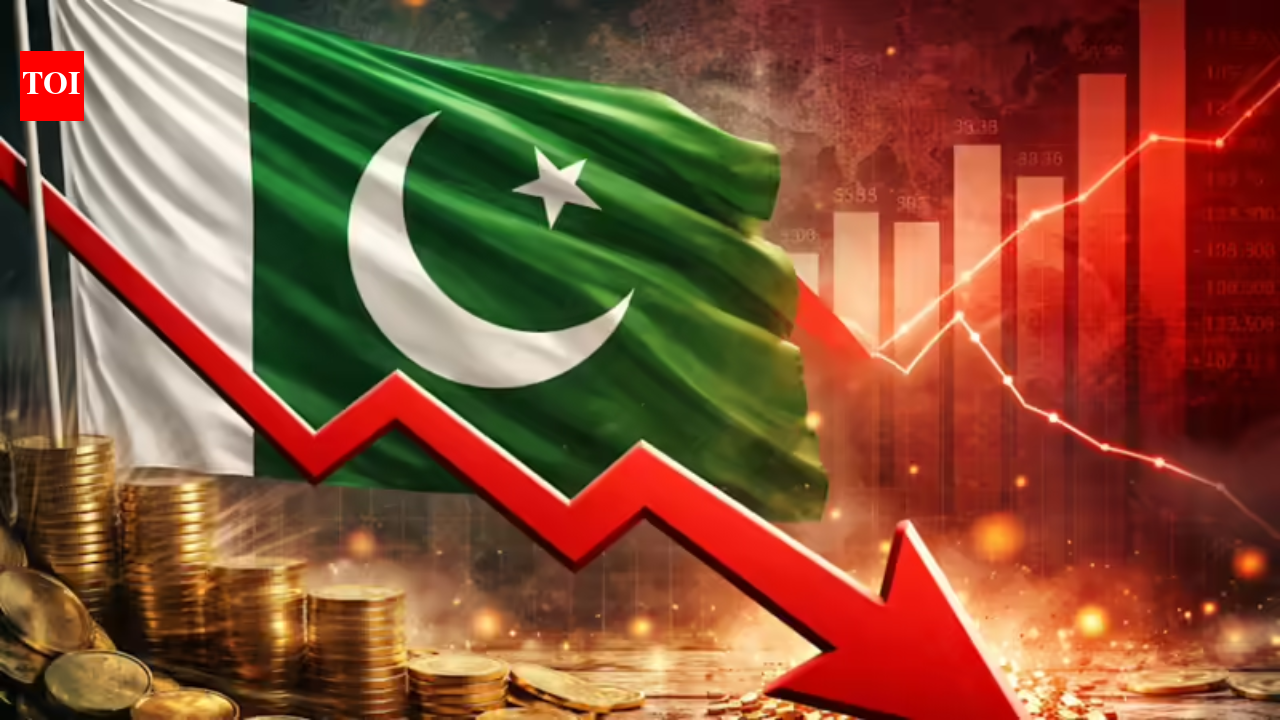
Pakistan’s struggling economy is likely to remain under sustained pressure, with double-digit inflation expected to persist if global oil prices continue to surge amid the ongoing Middle East crisis, according to a report by Dawn.Topline Securities Ltd, in its latest “Pakistan Strategy” report released Saturday, provided a grim assessment of the impact of rising energy costs and regional instability on the country’s economy and stock market. The brokerage described the situation as “prolonged and evolving,” warning that any improvement depends on an immediate and peaceful resolution to the conflict.The report, asx cited by ANI, said that under current conditions, inflation could average between 9 and 10 per cent over the next year, with fourth-quarter FY26 figures expected to exceed 11 per cent. These projections are based on oil prices at $100 per barrel, with every $10 increase adding around 50 basis points to inflation. If oil rises to $120 per barrel, annual inflation could reach 11 per cent, potentially forcing the State Bank of Pakistan into further aggressive interest rate hikes.The rising inflationary pressure is expected to slow economic growth. Topline Securities has cut its GDP forecast for FY27 to between 2.5 and 3.0 per cent from an earlier estimate of 4.0 per cent. Growth for FY26 is projected at 3.5 to 4.0 per cent, but the industrial sector remains vulnerable, with growth possibly dropping to just 1 per cent from nearly 4 per cent.According to Dawn, the current account deficit for FY27 could exceed $8 billion if the government fails to maintain strict import controls, worsening pressure on foreign exchange reserves. The fiscal deficit for FY26 is expected to range between 4.0 and 4.5 per cent of GDP, exceeding targets set by the International Monetary Fund.The Pakistan Stock Exchange has been among the worst-performing markets globally, reflecting the country’s heavy reliance on imported energy. Petroleum imports are projected to reach $15 billion in FY26, while Pakistan imports around 85 per cent of its energy needs. This dependence contributed to a 15 per cent decline in the market during the first quarter of the year.The economic outlook is further affected by a projected 3.5 per cent decline in remittances, with inflows from the Gulf Cooperation Council region expected to fall by 10 per cent. Exports are also forecast to decline by 4 per cent.On the currency front, the Pakistani rupee is expected to weaken to 298 against the US dollar by FY27. Persistent conflict could push depreciation beyond historical averages, increasing pressure on supply and demand.Dawn noted that while domestic exploration firms may eventually increase production to reduce reliance on liquefied natural gas imports, the near-term outlook remains marked by high interest rates, rising urea prices, and a growing dependence on emergency administrative measures to prevent a deeper economic crisis.
Business
OPEC+ set to agree third oil output quota hike since Hormuz closure, sources say | The Express Tribune

Seven OPEC+ members approve 188,000 bpd hike for June but increase remains symbolic until strait reopens
Ships and boats in the Strait of Hormuz, Musandam, Oman, May 1, 2026. PHOTO: REUTERS
OPEC+ is set to agree on Sunday a modest oil output hike, sources said, but the increase will remain largely on paper as long as the United States-Iran war continues to disrupt Gulf oil supplies.
Seven OPEC+ countries have agreed to raise oil output targets by about 188,000 barrels per day in June, the third consecutive monthly increase, the sources said and a draft OPEC+ statement showed.
The move is designed to show the group is ready to raise supplies once the war stops. It is also pressing on with plans to raise output targets despite the departure of the United Arab Emirates from the group this week, sources said.
Read: Oil prices trim gains after UAE exits OPEC, OPEC+
The seven members meeting on Sunday are Saudi Arabia, Iraq, Kuwait, Algeria, Kazakhstan, Russia, and Oman. With the UAE leaving, OPEC+ includes 21 members including Iran, but in recent years only the seven nations plus the UAE have been involved in monthly production decisions.
The Iran war, which began on February 28, and the resulting closure of Hormuz have throttled exports from OPEC+ members Saudi Arabia, Iraq and Kuwait, as well as from the UAE. Before the conflict, these producers were the only countries in the group able to raise production.
The output hike will remain largely symbolic until shipping through the Strait of Hormuz reopens and even then it will take several weeks if not months for flows to normalise, oil executives from the Gulf and global oil traders have said.
Read More: UAE reviewing multilateral ties after OPEC exit but rules out more departures, official says
The disruption propelled oil prices to a four-year high above $125 per barrel as analysts begin to predict widespread jet fuel shortages in one to two months and a spike in global inflation.
Crude oil output from all OPEC+ members averaged 35.06 million bpd in March, down 7.70 million bpd from February, OPEC said in a report last month, with Iraq and Saudi Arabia making the biggest cuts due to constrained exports.
OPEC+ seven members will meet again on June 7, the draft statement said.

Failing High Streets fuel a wider sense of political discontent which could prove crucial in the upcoming elections for English councils in May.
Source link


Princess Royal attends White Ensign Ceremony in Chatham

Israel approves deal to buy fighter jets from US

Karachi’s Shahrah-e-Bhutto to open before Eid ul Adha, announces CM Murad

-

 Tech6 days ago
A Brain Implant for Depression Is About to Be Tested in Humans
-
 Business6 days ago
‘I had £20,000 stolen and had to fight a 13-month fraud reporting rule to get it back’
-

 Tech6 days ago
Almost 90% of women leave tech industry within 10 years | Computer Weekly
-
 Business1 week ago
Pakistan’s oil market is fuelling the crisis | The Express Tribune
-

 Entertainment6 days ago
Melania Trump says ABC should ‘take a stand’ on late-night host Kimmel
-

 Tech5 days ago
This Ambitious Laptop Doesn’t Leave Much Room for Your Hands
-

 Sports5 days ago
Pro wrestling star Steph De Lander reveals how colleague’s advice helped lead her to title triumph at ACW
-
 Business6 days ago
Anta: The Chinese sports brand taking on Nike and Adidas