

Business
Trump says he will raise tariffs on EU autos to 25% | The Express Tribune

Says 100b dollars were invested on plants to built automobiles on US soil under MAGA initiative
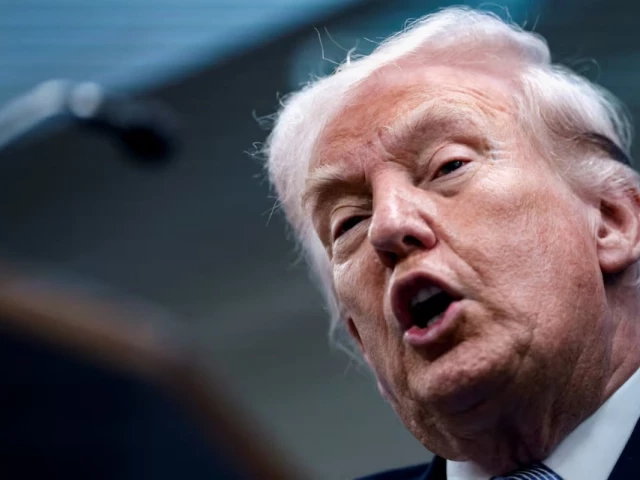
US President Donald Trump speaks during a press conference in the James S Brady Press Briefing Room at the White House in Washington, DC, US April 6, 2026. REUTERS
United States President Donald Trump on Friday said he would be increasing tariffs on cars and trucks from the European Union to 25%, saying the bloc had not complied with its trade deal.
“Based on the fact the European Union is not complying with our fully agreed to trade deal, next week I will be increasing tariffs charged to the European Union for cars and trucks coming into the United States,” he wrote in a social media post.
“It is fully understood and agreed that, if they produce cars and trucks in USA plants, there will be no tariff,” Trump added.
Read More: Trump’s attacks on Europe’s leaders worsen transatlantic frost
In his post, Trump also emphasised manufacturing automobiles in the US.
“Many automobiles and truck plants are currently under construction, with over 100b dollars being invested,” he added.
Trump told reporters at the White House that the higher tariff would force European car makers to move their factory production to the US more quickly.
“We have a trade deal with the European Union. They were not adhering to it. So I raised the tariffs on cars and trucks to 25%, that’s billions of dollars coming into the United States, and it forces them to move their factory production much faster.”
The past weeks have not been reassuring for those who thought Europe could navigate its tricky relationship with Trump.
The Trump administration last year imposed a 25% tariff on global automotive imports under a national security trade law, but reached a deal with the EU in August to lower those duties to a net 15%, inclusive of prior duties.
In exchange, the EU agreed to eliminate duties on US industrial goods, including autos, and accept US safety and emissions standards on vehicles.
Although EU lawmakers advanced legislation in March to implement the tariff reductions, the process is not expected to be completed before June, as EU governments and the European Parliament negotiate final texts.
“President Trump’s behaviour is unacceptable,” Bernd Lange, the chair of the European Parliament’s international trade committee, told Reuters.
“This latest move demonstrates just how unreliable the US side is. We have already witnessed these arbitrary attacks from the US in the case of Greenland; this is no way to treat close partners. Now we can only respond with the utmost clarity and firmness, drawing on the strength of our position,” Lange said.
But a Trump administration official, asked to explain Trump’s move, said: “The EU has not complied with the autos deal after eight months.”
Shares of Ford Motor fell 2% after Trump’s announcement, while those of Stellantis were down 1.7%. General Motors shares dropped 1.1%.
Ryan Majerus, a former senior US Commerce Department official who is now a partner with King & Spalding, said the president’s move also may be related to Trump’s frustration that some European countries had baulked at supporting the US-Israeli war against Iran.
“This is not going to sit well in the EU, and I’m not sure the administration cares, because they’re so incredibly antagonistic toward the EU,” Majerus said.
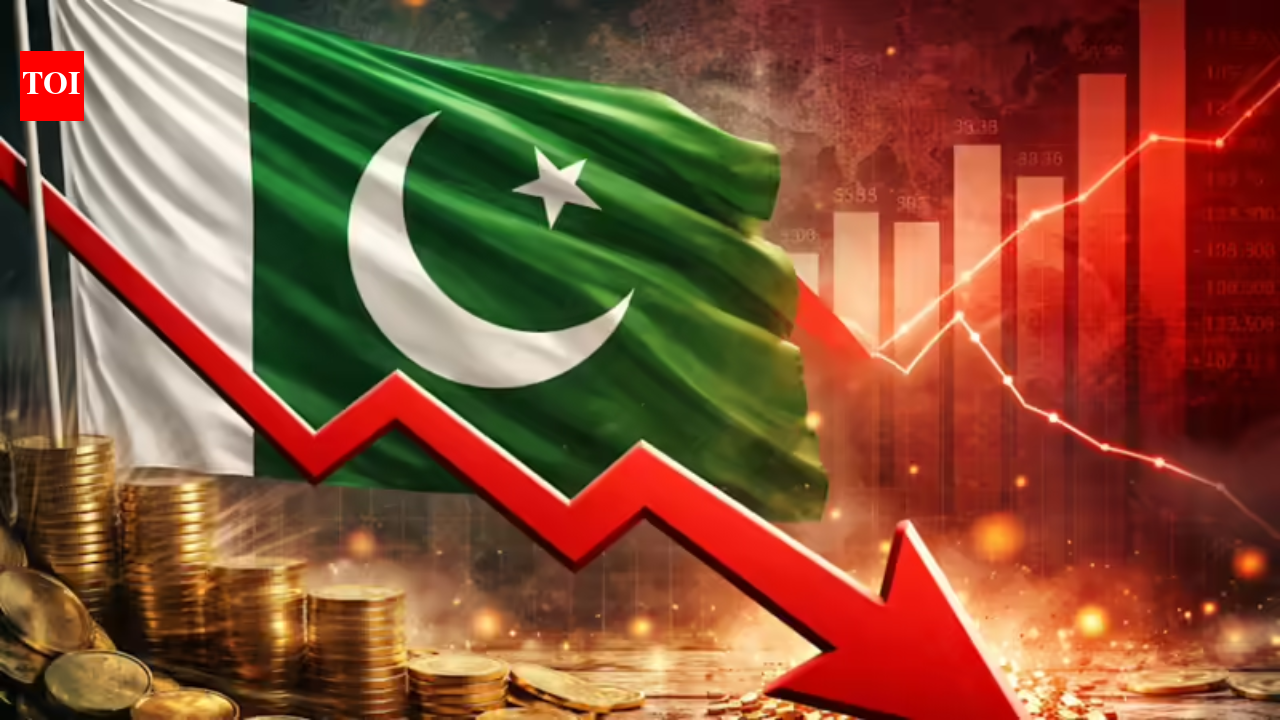
Pakistan’s struggling economy is likely to remain under sustained pressure, with double-digit inflation expected to persist if global oil prices continue to surge amid the ongoing Middle East crisis, according to a report by Dawn.Topline Securities Ltd, in its latest “Pakistan Strategy” report released Saturday, provided a grim assessment of the impact of rising energy costs and regional instability on the country’s economy and stock market. The brokerage described the situation as “prolonged and evolving,” warning that any improvement depends on an immediate and peaceful resolution to the conflict.The report, asx cited by ANI, said that under current conditions, inflation could average between 9 and 10 per cent over the next year, with fourth-quarter FY26 figures expected to exceed 11 per cent. These projections are based on oil prices at $100 per barrel, with every $10 increase adding around 50 basis points to inflation. If oil rises to $120 per barrel, annual inflation could reach 11 per cent, potentially forcing the State Bank of Pakistan into further aggressive interest rate hikes.The rising inflationary pressure is expected to slow economic growth. Topline Securities has cut its GDP forecast for FY27 to between 2.5 and 3.0 per cent from an earlier estimate of 4.0 per cent. Growth for FY26 is projected at 3.5 to 4.0 per cent, but the industrial sector remains vulnerable, with growth possibly dropping to just 1 per cent from nearly 4 per cent.According to Dawn, the current account deficit for FY27 could exceed $8 billion if the government fails to maintain strict import controls, worsening pressure on foreign exchange reserves. The fiscal deficit for FY26 is expected to range between 4.0 and 4.5 per cent of GDP, exceeding targets set by the International Monetary Fund.The Pakistan Stock Exchange has been among the worst-performing markets globally, reflecting the country’s heavy reliance on imported energy. Petroleum imports are projected to reach $15 billion in FY26, while Pakistan imports around 85 per cent of its energy needs. This dependence contributed to a 15 per cent decline in the market during the first quarter of the year.The economic outlook is further affected by a projected 3.5 per cent decline in remittances, with inflows from the Gulf Cooperation Council region expected to fall by 10 per cent. Exports are also forecast to decline by 4 per cent.On the currency front, the Pakistani rupee is expected to weaken to 298 against the US dollar by FY27. Persistent conflict could push depreciation beyond historical averages, increasing pressure on supply and demand.Dawn noted that while domestic exploration firms may eventually increase production to reduce reliance on liquefied natural gas imports, the near-term outlook remains marked by high interest rates, rising urea prices, and a growing dependence on emergency administrative measures to prevent a deeper economic crisis.
Business
OPEC+ set to agree third oil output quota hike since Hormuz closure, sources say | The Express Tribune

Seven OPEC+ members approve 188,000 bpd hike for June but increase remains symbolic until strait reopens
Ships and boats in the Strait of Hormuz, Musandam, Oman, May 1, 2026. PHOTO: REUTERS
OPEC+ is set to agree on Sunday a modest oil output hike, sources said, but the increase will remain largely on paper as long as the United States-Iran war continues to disrupt Gulf oil supplies.
Seven OPEC+ countries have agreed to raise oil output targets by about 188,000 barrels per day in June, the third consecutive monthly increase, the sources said and a draft OPEC+ statement showed.
The move is designed to show the group is ready to raise supplies once the war stops. It is also pressing on with plans to raise output targets despite the departure of the United Arab Emirates from the group this week, sources said.
Read: Oil prices trim gains after UAE exits OPEC, OPEC+
The seven members meeting on Sunday are Saudi Arabia, Iraq, Kuwait, Algeria, Kazakhstan, Russia, and Oman. With the UAE leaving, OPEC+ includes 21 members including Iran, but in recent years only the seven nations plus the UAE have been involved in monthly production decisions.
The Iran war, which began on February 28, and the resulting closure of Hormuz have throttled exports from OPEC+ members Saudi Arabia, Iraq and Kuwait, as well as from the UAE. Before the conflict, these producers were the only countries in the group able to raise production.
The output hike will remain largely symbolic until shipping through the Strait of Hormuz reopens and even then it will take several weeks if not months for flows to normalise, oil executives from the Gulf and global oil traders have said.
Read More: UAE reviewing multilateral ties after OPEC exit but rules out more departures, official says
The disruption propelled oil prices to a four-year high above $125 per barrel as analysts begin to predict widespread jet fuel shortages in one to two months and a spike in global inflation.
Crude oil output from all OPEC+ members averaged 35.06 million bpd in March, down 7.70 million bpd from February, OPEC said in a report last month, with Iraq and Saudi Arabia making the biggest cuts due to constrained exports.
OPEC+ seven members will meet again on June 7, the draft statement said.

Failing High Streets fuel a wider sense of political discontent which could prove crucial in the upcoming elections for English councils in May.
Source link


Princess Royal attends White Ensign Ceremony in Chatham

Israel approves deal to buy fighter jets from US

Karachi’s Shahrah-e-Bhutto to open before Eid ul Adha, announces CM Murad

-

 Tech6 days ago
A Brain Implant for Depression Is About to Be Tested in Humans
-
 Business6 days ago
‘I had £20,000 stolen and had to fight a 13-month fraud reporting rule to get it back’
-

 Tech6 days ago
Almost 90% of women leave tech industry within 10 years | Computer Weekly
-
 Business1 week ago
Pakistan’s oil market is fuelling the crisis | The Express Tribune
-

 Sports5 days ago
Pro wrestling star Steph De Lander reveals how colleague’s advice helped lead her to title triumph at ACW
-

 Entertainment6 days ago
Melania Trump says ABC should ‘take a stand’ on late-night host Kimmel
-

 Tech5 days ago
This Ambitious Laptop Doesn’t Leave Much Room for Your Hands
-

 Tech6 days ago
Are tech leaders risking a cyber resourcing crisis? | Computer Weekly