

Politics
Trump says US not likely to accept new Iran peace proposal

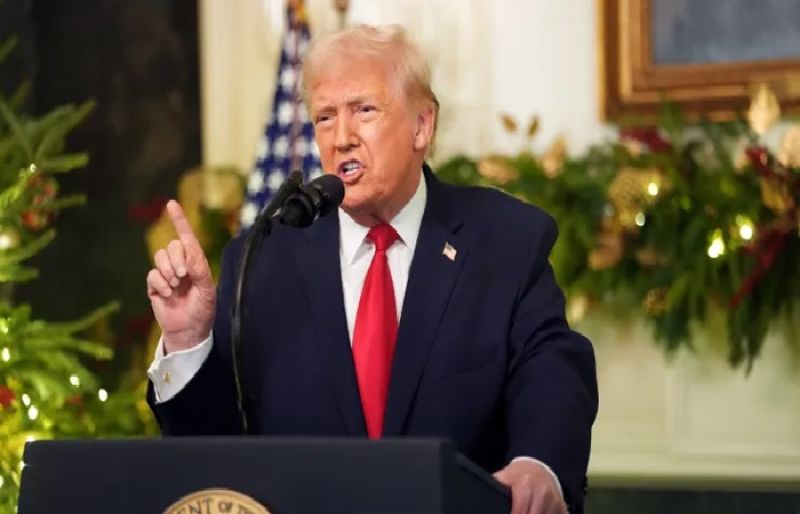
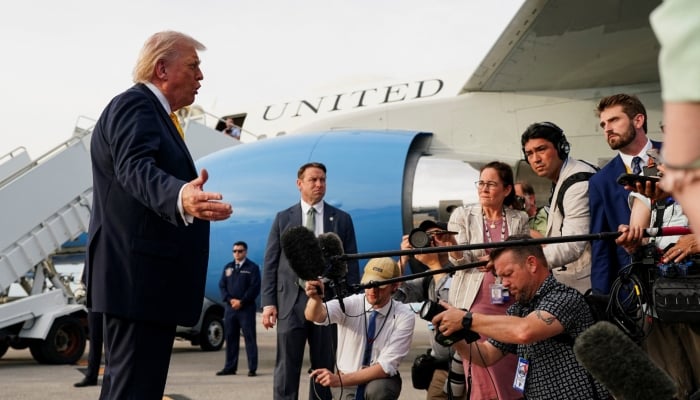
US President Donald Trump said Saturday he will review a new Iranian peace proposal, but cast doubt over its prospects as he left open the possibility of future attacks on Iran.
Negotiations between the two countries have been deadlocked since a ceasefire came into effect on April 8, with one round of peace talks to end the more than two-month war having failed in Pakistan.
The dour outlook came after Iran’s Tasnim and Fars news agencies reported Tehran submitted a 14-point proposal to mediator Islamabad. Details included ending the conflict on all fronts and enacting a new framework for the crucial Strait of Hormuz, Tasnim said.
“I will soon be reviewing the plan that Iran has just sent to us, but can’t imagine that it would be acceptable, in that they have not yet paid a big enough price for what they have done to Humanity and the World, over the last 47 years,” Trump said on his Truth Social platform.
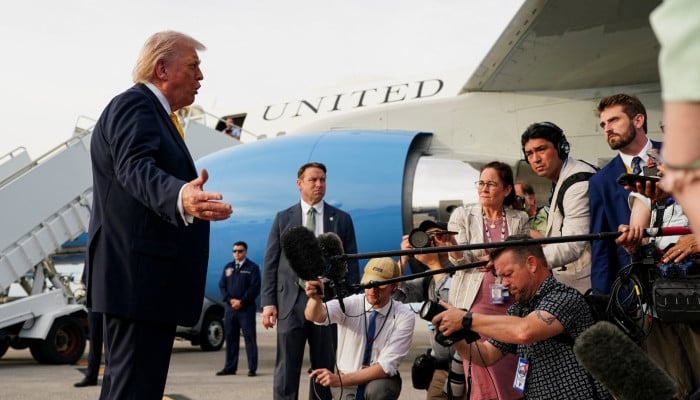
In a brief interview with reporters in West Palm Beach, Florida, he declined to specify what could trigger new military action against the Islamic republic.
“If they misbehave, if they do something bad, but right now, we´ll see,” he said. “But it’s a possibility that could happen, certainly.”
On Saturday, Mohammad Jafar Asadi, a senior figure in the Iranian military’s central command, said “a renewed conflict between Iran and the United States is likely.”
“Evidence has shown that the United States is not committed to any promises or agreements,” he added, according to Fars news agency.
Deputy foreign minister Kazem Gharibabadi told diplomats in Tehran “the ball is in the United States’ court to choose the path of diplomacy or the continuation of a confrontational approach.”
Iran, he said, was “prepared for both paths.”
‘Hypocritical’
US news site Axios reported earlier in the week that Trump’s envoy Steve Witkoff had asked for Tehran’s nuclear program to be put back on the negotiating table.
Iran’s mission to the UN pointed to the massive US nuclear arsenal, accusing Washington on Saturday of “hypocritical behavior” towards Iran’s own atomic ambitions.
There was no legal “restriction on the level of uranium enrichment, so long as it is conducted under the IAEA’s supervision, as was the case with Iran,” it said, using the abbreviation for the UN nuclear watchdog.
Iran has maintained a stranglehold on the Strait of Hormuz since the war began, choking off major flows of oil, gas and fertiliser to the world economy, while the United States has imposed a counter-blockade on Iranian ports.
Oil prices are about 50 percent above pre-war levels.
The vice speaker of Iran’s parliament, Ali Nikzad, said that under draft legislation being considered for managing the waterway, 30 percent of tolls collected would go towards military infrastructure, with the rest earmarked for “economic development.”
“Managing the Strait of Hormuz is more important than acquiring nuclear weapons,” he said.
Fighting meanwhile continued Saturday in Lebanon, where Israel has carried out deadly strikes despite a separate truce with the Iran-backed armed group Hezbollah.
The Israeli military said it had struck dozens of Hezbollah targets across southern Lebanon following evacuation warnings for nine villages.
Lebanon’s state-run National News Agency reported three deaths in the attacks.
Hezbollah, for its part, claimed several attacks targeting Israeli troops.
The Israeli strikes included one in the village of Yaroun on what its military called a “religious building,” which was damaged.
The French Catholic charity L’Oeuvre d’Orient said the troops had “destroyed” a convent belonging to the Salvatorian Sisters, a Greek-Catholic religious order with which the charity is affiliated.
Iran’s economic toll
In Washington, lawmakers were wrestling over whether Trump had breached a deadline to seek congressional approval for the war.
Administration officials argue the ceasefire paused a 60-day clock, after which congressional authorisation would be required — a claim disputed by opposition Democrats.
In Iran, the war’s economic toll is deepening, with oil exports crimped and inflation surging past 50 percent.
“Everyone is trying to endure it, but… they are falling apart,” 40-year-old Amir, a Tehran resident, told an AFP reporter based outside the country.
“We still have not seen much of the economic effects because everyone had a bit of savings. They had some gold and dollars for a rainy day. When they run out, things will change.”
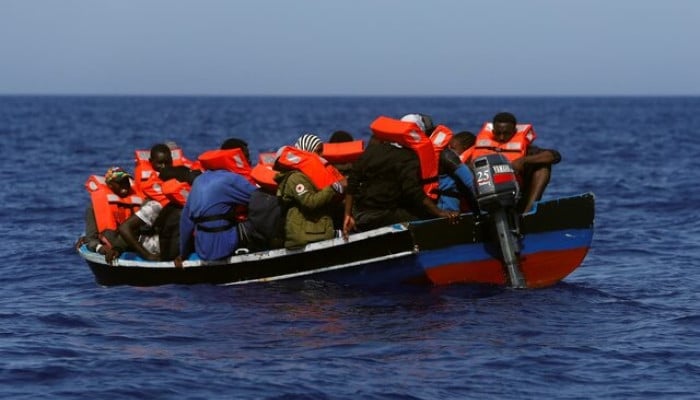
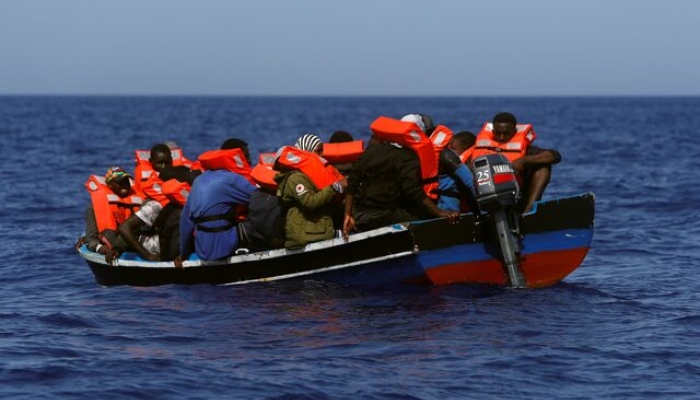
Two young women believed to be of Sudanese origin died Sunday while trying to reach Britain from northern France in a small boat, officials said.
The women, aged about 20, were aboard a small boat carrying 82 people, Christophe Marx, a regional government official, told reporters.
The boat set out to sea during the night from Saturday to Sunday, but “the engine wouldn’t start” and the boat began to drift, Marx said.
Seventeen people were rescued at sea and taken to the port of Boulogne-sur-Mer.
The boat with the remaining 65 people on board eventually ran aground on a beach near Neufchatel-Hardelot, about 12 kilometres (seven miles) south of Boulogne-sur-Mer, he said, adding that the victims had been found “dead inside the boat”.
Thirteen people with moderate injuries and three others with serious wounds, including burn victims, were taken to the hospital.
They were “being treated and will be interviewed by border police to determine who is responsible for this crossing”, Marx said.
He said an investigation would confirm the nationality of the victims. This is the third such tragedy in just over a month at the French-British border.
On April 1, two migrants died off the coast of Gravelines in northern France while attempting to reach the United Kingdom.
On April 9, two men and two women died, swept away by the currents.
In 2025, at least 29 migrants died at sea in the region, according to an AFP tally based on official French and British sources.
Britain and France last month signed a new three-year deal on security operations to stop the crossings.
France will increase the number of police and gendarmes patrolling the coast while the British government will increase its contribution to the cost.
According to French officials, the number of arrivals in Britain so far this year has been drastically cut from 2025.
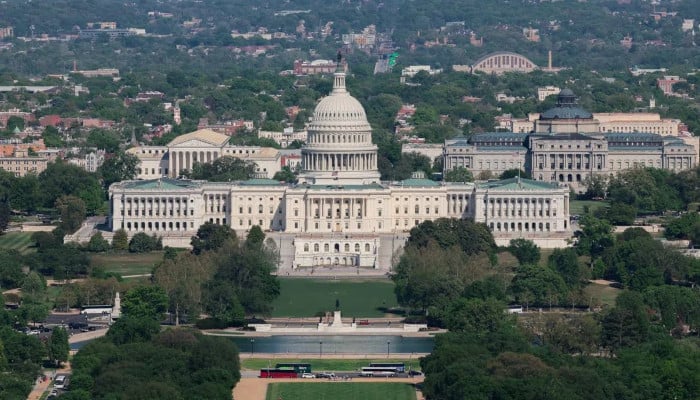
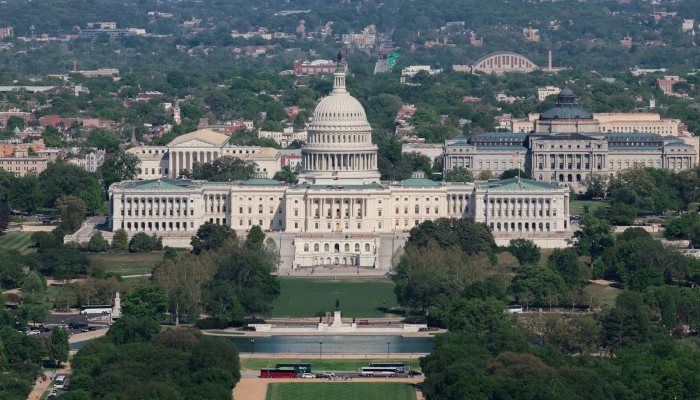
WASHINGTON: The battle for control of the US Congress entered its final six months on Sunday, with midterm elections in November that could reshape President Donald Trump’s second term and redefine the balance of power in Washington.
As ever, the midterms will be a referendum on the president, with Democrats hoping to capitalise on economic discontent and Trump’s sliding approval ratings to retake the House of Representatives and Senate — while Republicans fight to defy political headwinds.
At stake is not just legislative control but the trajectory of Trump´s agenda, with a Democratic-run Congress able to launch investigations, block nominees and generally complicate the remainder of his presidency.
Early indicators point to a challenging environment for Republicans, with Trump’s approval rating around 40% and economic dissatisfaction — particularly inflation and Iran war-related costs — eroding confidence.
Polling shows Democrats with a narrow edge on the generic ballot, while some surveys suggest voters now trust them more on the economy.
A Republican-aligned group, AFP Action, warned the party’s Senate majority was “at risk,” citing “structural headwinds” and disengaged voters.
In midterm elections, Americans vote to fill all 435 House seats, about one-third of the 100-member Senate and most governorships. Democrats need to flip three House seats and four in the Senate to take control.
“The Senate is on the table here,” Molly Murphy, of pollster Impact Research, told cable network MS NOW, pointing to Trump’s waning popularity and strong Democratic turnout in recent elections.
“When the president’s approval rating is at or below 40%, that is when you start to see these deeper pickups in much more Republican-heavy terrain.”
Still, the landscape remains fluid, with structural challenges for both parties.
‘Always tough’
Republicans benefit from a favourable Senate map, with Democrats needing to win in states Trump carried.
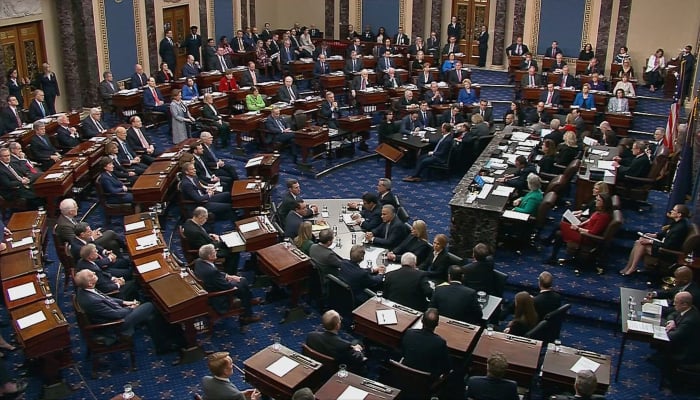
And heavily gerrymandered districts — as well as a shrinking number of competitive seats — limit how far a national swing can translate into House gains.
The campaign has been further complicated by a fierce redistricting battle, with states including Texas, California, North Carolina, Ohio, Florida, Missouri, Utah and Virginia pursuing new mid-decade voting maps.
The overall impact of the changes — alongside a Supreme Court ruling limiting race-based redistricting — remains unclear.
Republicans are banking on financial advantages and voter concerns over immigration and national security, while Democrats are focusing on cost-of-living pressures and framing the election as a defence of democratic norms.
Ahead of the six-month mark, Senate Democratic leader Chuck Schumer accused Republicans of undermining voting rights through pushes for over-zealous election security and immigration enforcement initiatives.
“Let’s call it what it is: an effort to rig the system,” he said.
For Republicans, the central challenge remains the president himself. Midterms typically punish the party in power, and Trump’s weak approval ratings have heightened concerns.
At the same time, even some of his supporters say his focus on foreign policy, particularly the war with Iran, has drawn attention away from domestic economic concerns that typically dominate midterm campaigns.
Even so, Republicans insist the race is far from settled, noting that political conditions can shift rapidly ahead of an election.
House Majority Leader Steve Scalise told CNBC that Republican prospects would depend on turnout and voters appreciating his party “delivering what we’ve delivered to finally start turning this mess around that we inherited a year and a half ago.”
“Midterms are always tough for the incumbent party, but this is not your father’s Democrat Party,” Scalise said.
- Iran submits 14-point proposal via Pakistan to end conflict.
- Dispute continues over Iran’s nuclear programme, enrichment rights.
- US hints at possible military action if Iran “misbehaves” again.
US President Donald Trump said Saturday he will review a new Iranian peace proposal, but cast doubt over its prospects as he left open the possibility of future attacks on Iran.
Negotiations between the two countries have been deadlocked since a ceasefire came into effect on April 8, with one round of peace talks to end the more than two-month war having failed in Pakistan.
The dour outlook came after Iran’s Tasnim and Fars news agencies reported Tehran submitted a 14-point proposal to mediator Islamabad. Details included ending the conflict on all fronts and enacting a new framework for the crucial Strait of Hormuz, Tasnim said.
“I will soon be reviewing the plan that Iran has just sent to us, but can’t imagine that it would be acceptable, in that they have not yet paid a big enough price for what they have done to Humanity and the World, over the last 47 years,” Trump said on his Truth Social platform.
In a brief interview with reporters in West Palm Beach, Florida, he declined to specify what could trigger new military action against the Islamic republic.
“If they misbehave, if they do something bad, but right now, we´ll see,” he said. “But it’s a possibility that could happen, certainly.”
On Saturday, Mohammad Jafar Asadi, a senior figure in the Iranian military’s central command, said “a renewed conflict between Iran and the United States is likely.”
“Evidence has shown that the United States is not committed to any promises or agreements,” he added, according to Fars news agency.
Deputy foreign minister Kazem Gharibabadi told diplomats in Tehran “the ball is in the United States’ court to choose the path of diplomacy or the continuation of a confrontational approach.”
Iran, he said, was “prepared for both paths.”
‘Hypocritical’
US news site Axios reported earlier in the week that Trump’s envoy Steve Witkoff had asked for Tehran’s nuclear program to be put back on the negotiating table.
Iran’s mission to the UN pointed to the massive US nuclear arsenal, accusing Washington on Saturday of “hypocritical behavior” towards Iran’s own atomic ambitions.
There was no legal “restriction on the level of uranium enrichment, so long as it is conducted under the IAEA’s supervision, as was the case with Iran,” it said, using the abbreviation for the UN nuclear watchdog.
Iran has maintained a stranglehold on the Strait of Hormuz since the war began, choking off major flows of oil, gas and fertiliser to the world economy, while the United States has imposed a counter-blockade on Iranian ports.
Oil prices are about 50 percent above pre-war levels.
The vice speaker of Iran’s parliament, Ali Nikzad, said that under draft legislation being considered for managing the waterway, 30 percent of tolls collected would go towards military infrastructure, with the rest earmarked for “economic development.”
“Managing the Strait of Hormuz is more important than acquiring nuclear weapons,” he said.
Fighting meanwhile continued Saturday in Lebanon, where Israel has carried out deadly strikes despite a separate truce with the Iran-backed armed group Hezbollah.
The Israeli military said it had struck dozens of Hezbollah targets across southern Lebanon following evacuation warnings for nine villages.
Lebanon’s state-run National News Agency reported three deaths in the attacks.
Hezbollah, for its part, claimed several attacks targeting Israeli troops.
The Israeli strikes included one in the village of Yaroun on what its military called a “religious building,” which was damaged.
The French Catholic charity L’Oeuvre d’Orient said the troops had “destroyed” a convent belonging to the Salvatorian Sisters, a Greek-Catholic religious order with which the charity is affiliated.
Iran’s economic toll
In Washington, lawmakers were wrestling over whether Trump had breached a deadline to seek congressional approval for the war.
Administration officials argue the ceasefire paused a 60-day clock, after which congressional authorisation would be required — a claim disputed by opposition Democrats.
In Iran, the war’s economic toll is deepening, with oil exports crimped and inflation surging past 50 percent.
“Everyone is trying to endure it, but… they are falling apart,” 40-year-old Amir, a Tehran resident, told an AFP reporter based outside the country.
“We still have not seen much of the economic effects because everyone had a bit of savings. They had some gold and dollars for a rainy day. When they run out, things will change.”


Royal Princesses narrowly escape shocking attack amid celebration

76ers’ Joel Embiid faces ‘flopping’ accusations after Philly’s Game 7 win over Celtics

The Asus Zenbook 16 Delivers Great Performance in an Otherwise Mediocre Laptop

-

 Tech6 days ago
A Brain Implant for Depression Is About to Be Tested in Humans
-
 Business6 days ago
‘I had £20,000 stolen and had to fight a 13-month fraud reporting rule to get it back’
-

 Tech6 days ago
Almost 90% of women leave tech industry within 10 years | Computer Weekly
-
 Business7 days ago
Pakistan’s oil market is fuelling the crisis | The Express Tribune
-

 Tech5 days ago
This Ambitious Laptop Doesn’t Leave Much Room for Your Hands
-

 Entertainment6 days ago
Melania Trump says ABC should ‘take a stand’ on late-night host Kimmel
-

 Sports5 days ago
Pro wrestling star Steph De Lander reveals how colleague’s advice helped lead her to title triumph at ACW
-

 Entertainment6 days ago
Norway joins Type 26 Frigate Programme to boost NATO naval power