

Business
HSBC sees shareholder pushback against chair at AGM amid climate action concerns

HSBC saw pushback against its new chairman at the company’s annual general meeting (AGM) amid concerns about the lender’s progress on climate action.
Nearly 8% of investor votes opposed the election of Brendan Nelson at the meeting in London on Friday – an unusual result for a new chairman, who would expect almost unanimous support in their first year.
Just over 8% of votes also went against the re-election of James Forese as an independent non-executive director and chair of the group risk committee.
In comparison, last year’s AGM saw former chairman Mark Tucker receive less than 2% opposition, and Mr Foreses was backed by almost 100% of votes.
While neither resolution received the 50% needed to fail or attracted a substantial shareholder rebellion, the dissenting votes this year can still be seen as a protest against the board.
It came after activists criticised HSBC over a series of recent decisions to soften its targets for reducing the planet-heating emissions driven by its lending to polluting firms.
ShareAction, which campaigns for responsible investment, recommended investors vote against Mr Nelson’s and Mr Forese’s elections to the board ahead of the AGM.
During the meeting, a representative of the group also read out a letter signed by 70 climate scientists, which said the bank’s decision to weaken its climate ambitions was irresponsible and dangerous.
Responding to the results on Friday, Jeanne Martin, head of banking programme at ShareAction, said: “Shareholders have sent a strong message of dissent at HSBC’s decision to weaken its approach to coal, oil and gas, undermining long-term financial resilience and feeding into climate impacts people are already facing, from flooded homes and towns to heat stress and rising costs impacting the UK economy.
“The board must take this vote seriously.”
During the meeting, Mr Nelson agreed to meet with ShareAction and investors to engage over the issue, with the group welcoming the move.
But Ms Martin warned the bank would only be able to rebuild confidence among investors with “decisive action to halt further climate backsliding”.
Last May, HSBC announced it was pushing back its ultimate target to cut emissions across its supply chain to net zero by 20 years, from 2030 to 2050.
The bank cited a “slower pace of the transition across the real economy” and a “slower than envisioned” pace of decarbonisation globally.
Later in the year, it then watered down its near-term goal by setting its targets for reducing its 2030 financed emissions for polluting sectors – such as oil and gas – as a range, rather than a single figure.
Following in the wake of several major US lenders, HSBC became the first British bank to leave the banking sector’s global alliance for setting climate target last year.
The changes come amid a wider trend of lenders softening their green commitments in the face of a global breakdown in political consensus over climate action.
Other British banks have also faced criticism from climate activists, with both Barclays and NatWest being targeted by protesters and shareholder criticism over climate action at their AGMs in recent days.
In a statement, HSBC said: “We welcome shareholders’ support at our Annual General Meeting and thank investors for their continued engagement.
“Our updated Net Zero Transition Plan sets out our commercially grounded sustainability strategy to become a net zero bank by 2050, which reflects the realities of an evolving global transition and supports customers in hard to abate sectors and growth markets to address challenges.
“Now more than ever, it is critical we support our valued customers in their energy transition to ensure strengthened resilience and energy security.
“HSBC is well positioned to support our customers in the transition journey, using our extensive global footprint and strategic presence in the world’s fastest growing economies, helping to drive meaningful impact where it matters most.”

NEW DELHI: The West Asia conflict is pushing govt to look at a faster transition towards renewable energy, including the possibility of increasing ethanol blending in petrol from 20-25%, although in a calibrated manner. This will come along with increased refining capacity within the country, so that there is a buffer in the system and greater domestic resilience, those familiar with the discussions said, pointing out that sustaining refineries at 100% capacity is not sustainable.While Barmer refinery has begun operations, expansion at Numaligarh is underway and work on integrated refineries on the west coast is also under focus. Apart from a mega refinery in Maharashtra, a new facility in Gujarat is also planned.Officials said rising use of renewables, biofuels and hydrogen in the energy mix was no longer just an environmental issue, but a strategic necessity in a situation like the present one, where the military conflict in West Asia has disrupted global energy supplies, triggering a supply crisis and a surge in oil and gas prices.According to officials, 20% ethanol blending has helped India save 4.5 crore barrels of crude annually and reduce foreign exchange outflow by around ₹1.5 lakh crore so far. Given the concerns over fuel efficiency and impact on vehicles, govt is expected to take a gradual approach that addresses the anxiety on ethanol blending. The third pillar on energy is expanding the strategic petroleum reserves.
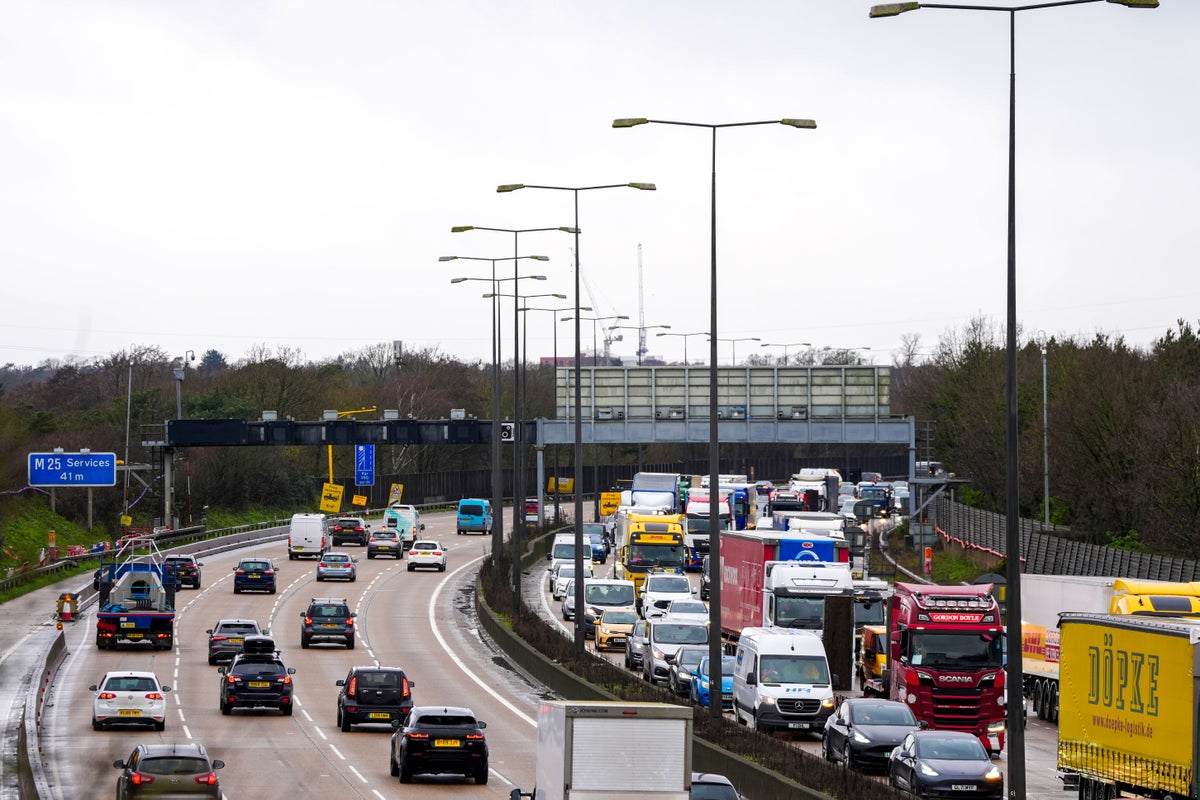
Millions of car finance payouts are in jeopardy after the UK’s financial watchdog indicated its compensation scheme faces significant delays, changes, or even collapse.
This uncertainty stems from four legal challenges against the Financial Conduct Authority (FCA).
The FCA has advised motor finance firms to prepare for the possibility that its redress scheme, which could see an average payout of £829, may not proceed.
The regulator stated that while a hearing date is unclear, these cases are unlikely to be heard before October.
In the meantime, it is in discussions about the “possibility of suspending some elements” of its compensation scheme, while still urging lenders to prepare for payouts.
But the regulator said it was also considering its options should parts of the scheme be quashed by the courts, including proceeding with a revised version or asking lenders to plan for a scenario where “there would be no scheme”.
This could mean lenders need to be ready to respond to complaints from car finance customers individually, rather than under the rules of an industry-wide programme set by the FCA.
“Many people will be frustrated that the legal action will delay payouts due to begin this year,” the FCA said.
“We remain committed to ensuring consumers receive any compensation owed as promptly as possible.”
The FCA set out the final details of its compensation scheme in March, which it estimated could cost the industry about £9.1 billion in total.
It had been expecting millions of claims to be paid out this year and the vast majority settled by the end of 2027.
The financial services arms of carmakers Volkswagen and Mercedes-Benz and the car finance arm of French bank Credit Agricole, as well as Consumer Voice, a group representing consumers, are asking the courts to quash the scheme, arguing the rules are unlawful.
“Between the four separate legal challenges, it is claimed in effect that the FCA’s approach to establishing the schemes has been both unduly favourable to consumers and unduly favourable to lenders,” the watchdog said.
At least one claim alleges that the FCA has breached the rights of lenders under the 1998 Human Rights Act, according to the watchdog.
Despite the uncertainty of the legal cases, the watchdog is still advising consumers to complain directly to their lender if they think they might be owed compensation, which they can do for free using a template letter on its website.
Business
Us Job Growth Data 2026: US adds stronger-than-expected 115,000 jobs in April despite Iran war impact – The Times of India
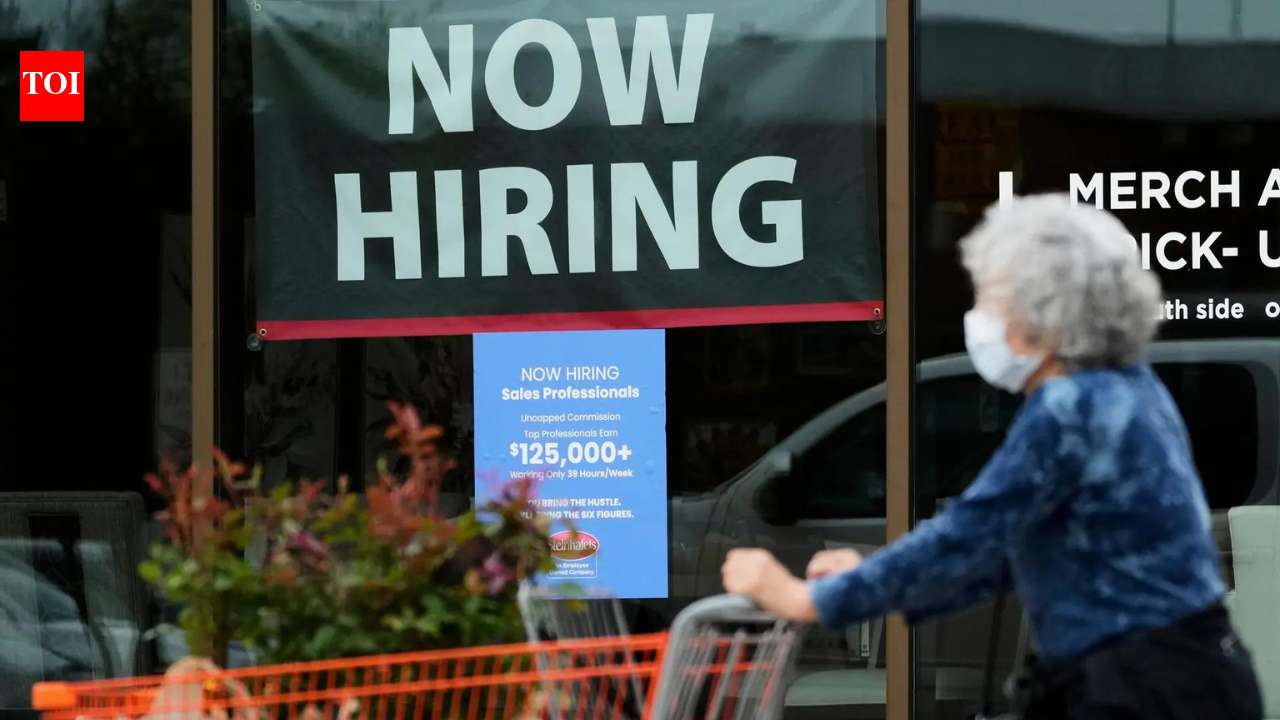
America’s employers added a stronger-than-expected 115,000 jobs in April despite economic uncertainty triggered by the Iran war, according to data released by the US labor department on Friday.The unemployment rate remained unchanged at 4.3 per cent, while hiring beat economists’ expectations of 65,000 new jobs, although it slowed from the revised 185,000 jobs added in March.The latest data suggests the US labour market has remained resilient even as the conflict in West Asia disrupted global oil supplies and pushed average US gasoline prices above $4.50 a gallon this week.“The labor market is not booming, but it is proving harder to break than many feared,” Olu Sonola, head of US economics at Fitch Ratings, said, as quoted by news agency AP.
Healthcare, transport sectors lead hiring
Healthcare companies added 37,000 jobs in April, while transportation and warehousing firms added 30,000 positions, according to the report.However, manufacturers cut 2,000 jobs during the month and have shed 66,000 jobs over the past year despite President Donald Trump’s protectionist trade policies aimed at boosting factory employment.Average hourly earnings rose 0.2 per cent from March and 3.6 per cent year-on-year, broadly aligning with the Federal Reserve’s inflation target.The labour force participation rate fell to 61.8 per cent, its lowest level since October 2021, as retirements and tighter immigration policies reduced the number of people seeking work.
Iran war and inflation concerns remain
Economists said the economy has so far weathered the impact of the Iran conflict better than expected, although risks remain if high energy prices persist.“Businesses to some extent are viewing the conflict in Iran as temporary,” Gus Faucher, chief economist at PNC, told AP. “We continue to see solid growth in consumer spending. And we’re seeing strong business investment, particularly around tech and AI.”However, Faucher warned that “the longer conflict in Iran lasts, the higher energy prices go, the longer they stay elevated the greater the drag on the economy.”The Iran war sharply disrupted shipping through the Strait of Hormuz after Iran closed the crucial route following US-Israeli strikes on February 28. The move caused oil prices to surge and raised fears of slower global economic growth.
Fed likely to hold rates steady
The stronger-than-expected jobs report is also expected to reduce pressure on the Federal Reserve to cut interest rates soon.Inflation climbed to 3.3 per cent in March, its highest level in two years, driven largely by rising fuel prices.Friday’s employment data “actually makes it less likely that we see a rate cut anytime soon,” Faucher said, adding that the Fed may prefer to focus on bringing inflation back towards its 2 per cent target before easing borrowing costs.


Renée Zellweger joins cast of ‘A Woman in the Sun’

Terrell Owens declares he ‘couldn’t care less’ about the Cowboys years after tumultuous exit
25% ethanol blending in petrol likely in calibrated manner – The Times of India

-

 Politics5 days ago
Iran weighs US reply delivered via Pakistan as Trump signals opposition to deal terms
-

 Tech1 week ago
Almost half of UK businesses hit by cyber attacks | Computer Weekly
-

 Tech1 week ago
This Indigenous Language Survived Russian Occupation. Can It Survive YouTube?
-

 Fashion7 days ago
US’ J.Jill, Inc. appoints Kimberly Wallengren as CMO
-

 Fashion1 week ago
Canada’s Lululemon appoints Esi Eggleston Bracey to board of directors
-
 Business1 week ago
Government hikes jet fuel prices by 5% for international airlines – The Times of India
-

 Entertainment1 week ago
David Allan Coe, country singer who wrote “Take This Job and Shove It,” dies at age 86
-

 Fashion1 week ago
US’ Gap partners with Victoria Beckham on timeless wardrobe essentials