

Entertainment
Rory McIlroy slams LIV golfers who don’t want to come back to PGA Tour—but why now?

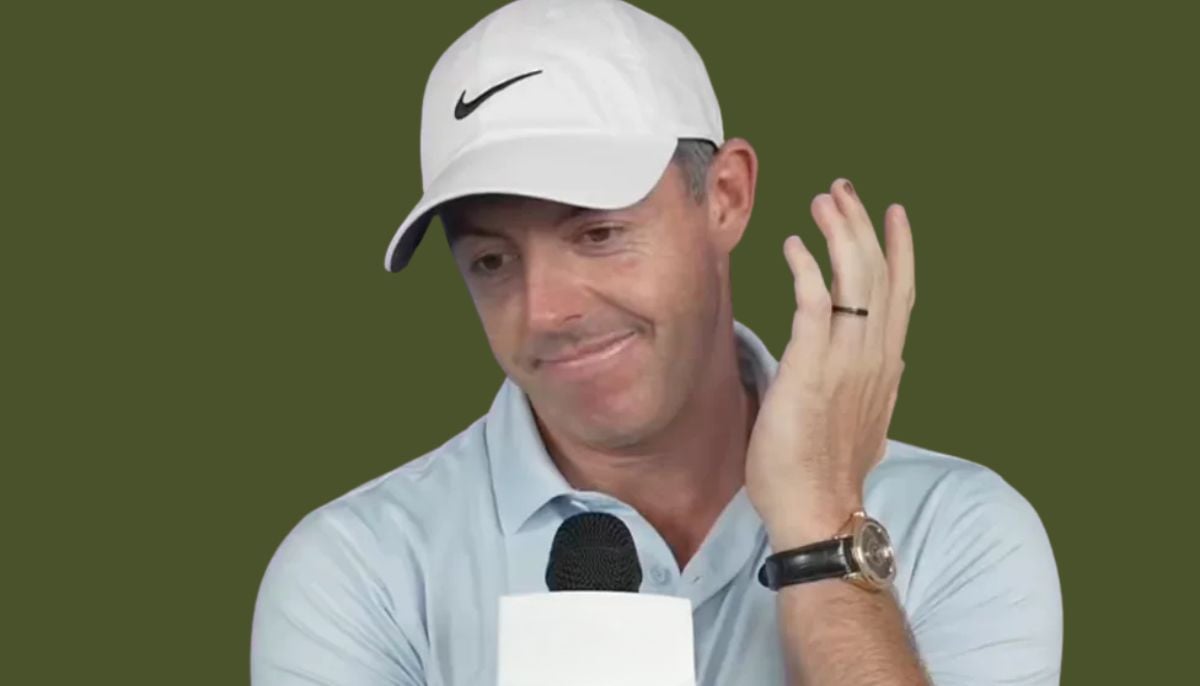
Rory McIlroy called out LIV golfers; why would they not want to come back to play on the PGA Tour amid rising doubts over LIV Golf.
Masters champion McIlroy lashed out, saying, “If you don’t want to play here, I think that says something about you.”
Speaking Friday, May 8, at the Truist Championship at Quail Hollow, McIlroy opened up when asked about his reaction to the LIV controversy.
McIlroy said, “It’s a question if they do want to come back.”
“Obviously we have seen the quotes over the last few days. And, you know, it seems like some of the guys, if… again, it all depends on what happens to LIV.”
“If it is a scenario where they have the option to comeback and play on the traditional tours, I think (PGA Tour CEO) Brian Rolapp has said anything that makes this tour stronger, anything that makes the DP World Tour stronger, I think everyone should be open to that.
“That’s just good business practice.”
McIlroy, 37, also takes a dig at LIV’s future survival under different platforms.
“It’s never been for me and, look, it doesn’t mean that LIV is going to go away.
They’re going to go and try and find alternative investment, whatever that may look like.”
McIlroy added, “But when one of the wealthiest sovereign wealth funds in the world thinks that you’re too expensive for them, that sort of says something.”
Saudi Public Investment Fund (PIF) confirmed last month that it will stop funding the LIV league at the end of this season.
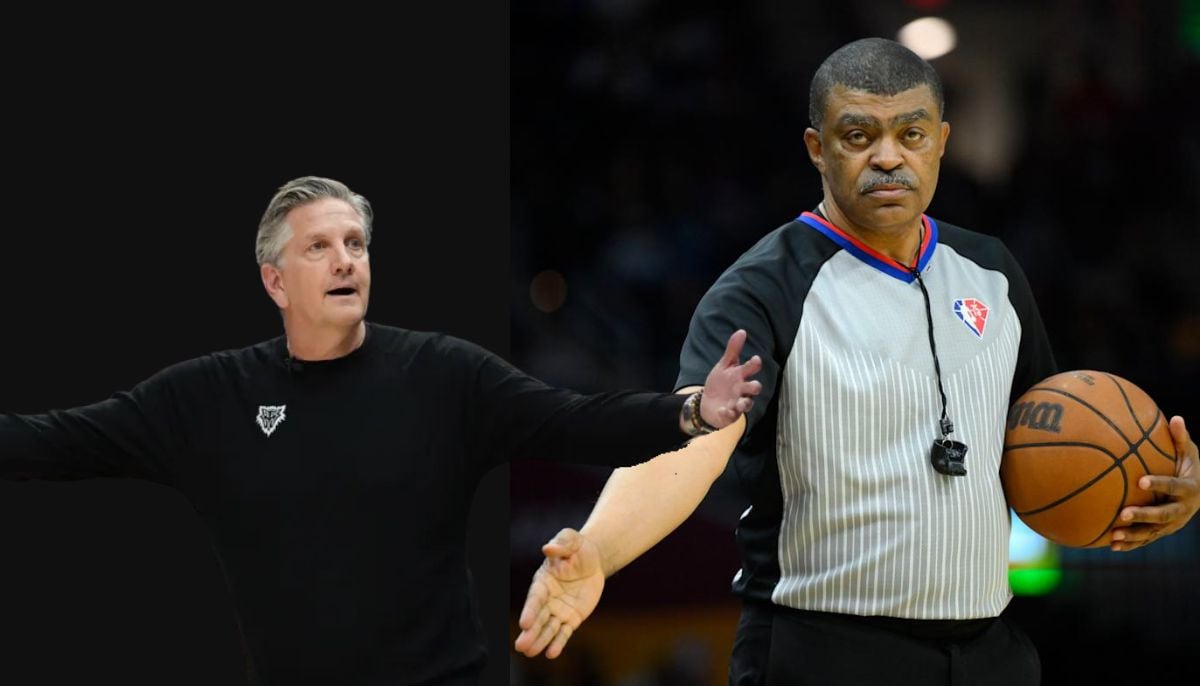
Timberwolves coach Chris Finch calls out at the referee Tony Brothers following his team’s Game 3 defeat to the Spurs.
Finch termed Brother’s conduct on-court as “completely unprofessional.”
Brothers, the veteran NBA referee, and Finch had a heated exchange during timeout.
Minnesota Timberwolves coach Finch, as players and staff separated the two, while Anthony Edwards pulled Finch away
After both clashed, a reporter asked Finch, saying, “I’m not sure I’ve seen players hold a referee back from their head coach before…,” to which Finch responded, “Pretty unprofessional, huh?”.
He then launched a verbal attack on Brothers.
Finch explained he got upset over what he perceived as an intended delay in being granted a timeout.
“I wanted the timeout. I had called it 3 seconds earlier and I wanted the timeout,” Finch said.
“I said ‘I want my 3 seconds back,’… because he clearly heard me. He looked my way, ignored me, went on with the play… almost cost us a turnover.
“So, and then you know, he lost it.”
“Then I went to ask him where the ball was going to be taken in and he screamed at me for that. So, completely unprofessional behavior by him.”
On the other hand, in a postgame interview, Edwards played down the incident after the game, saying it’s all part of “competition at the highest level.”
“We want to win. Finchy wants to win. Tony Brothers is Tony Brothers, we all love him, so it’s all good here,” added Edwards.
Timberwolves star Anthony Edwards posted 32 points, but Antonio Spurs star Victor Wembanyama scored 39 to guide the team to a 115-108 triumph with a 2-1 series lead.
Game 4 of the Western conference of the NBA playoffs is set to be played tomorrow, Sunday, May 10, 2026, at Minneapolis.

Romeo Beckham and his girlfriend Kim Turnbull appeared close than ever as they posed for a loved-up snap together on Friday.
As for the model’s personal life, he recently made his debut at the Met Gala, narrowly avoiding a run-in with his estranged brother Brooklyn.
The son of David and Victoria Beckham shared a sweet romantic moment with Kim as leaned in for a passionate kiss.
The couple had previously attended the Met Gala’s Saint Laurent after party together, while Romeo walked the red carpet for the event itself solo.
As far as their relationship is concerned, the duo began dating in late 2024, initially splitting in June 2025 after seven months, but they reconciled in October of last year.
It comes after Romeo’s mother Victoria addressed her estranged son Brooklyn’s explosive claims in a recent interview.
Brooklyn is said to have begun distancing himself from the Beckhams after his April 2022 wedding to Nicola Peltz, with Page Six reporting last summer that he had gone “no contact” with his family.
His January Instagram statement brought the feud fully into public view.
Brooklyn also alleged that his family values ‘public promotion and endorsements above all else’, adding that ‘Brand Beckham comes first’.
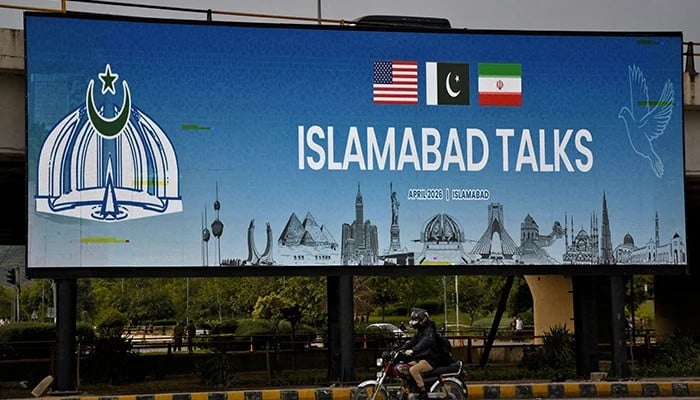
As the world waited with anticipation, and Islamabad was under siege with heightened security, Pakistan played a crucial role as a mediator. The prime minister and army chief shuttled between capitals, trying to build consensus and bring the parties to the negotiating table.
Although the first round of Islamabad Talks in April 2026 ended without a breakthrough and the second round of talks couldn’t take place as both Iran and the US couldn’t agree to come to a common point — with the US cancelling planned envoy visits and Iran showing reluctance — Islamabad nevertheless stood out as a strong diplomatic player.
Is Pakistan transitioning into a powerful middle power, or is it becoming a hard state? Being a hard state with increased military prowess is now perhaps a necessity of time and circumstances. The world is becoming increasingly hostile and militarised. And the price of not having that hard power might be too high to pay in the form of violation of territorial integrity and sovereignty.
During last year’s conflict with India in May 2025, Pakistan was able to defend itself through the sheer power of its air force, aided by Chinese technology. The Pakistan Air Force deployed Chinese-supplied Chengdu J-10C fighters armed with PL-15 long-range air-to-air missiles, achieving notable successes, including the downing of Indian jets, among them advanced Rafales.
Had it not had this capability, it might have suffered a major blow from its adversary. That episode served as a stark reminder: in moments of crisis, deterrence backed by modern technology can preserve sovereignty when diplomacy alone falls short
This growing military prowess is further evident in Pakistan’s expanding defence deals and weapons exports, which signal its rising influence as an arms supplier. In recent months, Pakistan has pursued major agreements, including a reported $4 billion deal with the Libyan National Army for JF-17 Thunder fighter jets and Super Mushshak trainers.
Negotiations have advanced with countries such as Bangladesh, Saudi Arabia, Sudan and Indonesia for the sale of dozens of JF-17 Block III aircraft, drones, and other systems — deals potentially worth billions more.
Building on earlier exports to Azerbaijan, Myanmar and Nigeria, these efforts show how the combat-tested reputation of Pakistani weapons, developed in partnership with China, is opening new markets across Africa, the Middle East, and Asia.
Such defence diplomacy and export push not only help offset the high costs of maintaining a strong military but also enhance Pakistan’s strategic leverage and influence in the Global South.
The current trajectory of the world, with rising authoritarianism and might-is-right, is one where those with power and force overpower the weak and vulnerable. International law is easily overlooked or broken with impunity. There is no regard for rules or principles. The rules-based order, after all, was always selectively applied in the interests of Western powers.
That, too, is now broken. Presidents are abducted from their countries, leaders are assassinated by drone and missile strikes in their own homes, embargos and sanctions are imposed, and entire populations are starved. And then we have fascist regimes committing genocide with the world watching and no one to hold them accountable.
So what happens in a world like that? For countries like Pakistan, the options are limited. Either you adapt and bolster your defences, or be ready to be at the receiving end of force. This is indeed a deplorable state of affairs.
The blind and ruthless quest for military might has few winners and many losers. For a country like Pakistan, keeping up with an arms race is hard to justify economically, but it simultaneously appears to be the only realistic pragmatic solution. And it is deeply unfortunate that the two South Asian neighbours remain locked in a zero-sum game of relentless pursuit.
But pursuing hard power and building a genuine hard state are not the same thing. The hard state model Pakistan is pursuing is incomplete.
A hard state has a resilient economy, strong institutions, rule of law, and effective governance. This is what makes a hard state efficient and internally strong. We have the example of China and Singapore — two hard states with strong, efficient systems and institutions and a robust economy.
This is the model that delivers for its citizens, even though it relies on authoritarianism. Hard states are hardly democratic, and hence I find it tough to be an ardent supporter. Given the lack of democracy and freedom of expression, they do, however, provide for the citizens through good governance and the rule of law.
Unfortunately, Pakistan is far from these traits of a hard state. The economy is under strain, and both the rule of law and governance are weak. And worryingly, there is democratic backsliding and a rollback of civil liberties.
Unless Pakistan consolidates itself internally with strong institutions, a healthy economy, and a system that delivers for the people, it will be a hard state in name — strong externally with military prowess and diplomatic clout but internally weak.
The writer is an independent analyst based in Islamabad.
Disclaimer: The viewpoints expressed in this piece are the writer’s own and don’t necessarily reflect Geo.tv’s editorial policy.
Originally published in The News


I Tried the Best Captioning Smart Glasses, and Only One Leads the Pack

Rory McIlroy slams LIV golfers who don’t want to come back to PGA Tour—but why now?

Iran could withstand blockade for four months, claims CIA report, as tensions flare

-
 Politics6 days ago
Iran weighs US reply delivered via Pakistan as Trump signals opposition to deal terms
-

 Tech1 week ago
This Indigenous Language Survived Russian Occupation. Can It Survive YouTube?
-

 Fashion1 week ago
Canada’s Lululemon appoints Esi Eggleston Bracey to board of directors
-

 Fashion1 week ago
US’ J.Jill, Inc. appoints Kimberly Wallengren as CMO
-
 Business1 week ago
Government hikes jet fuel prices by 5% for international airlines – The Times of India
-

 Fashion1 week ago
US’ Gap partners with Victoria Beckham on timeless wardrobe essentials
-
 Business1 week ago
Apollo Sports Capital and Tom Dundon make landmark $225 million investment in pickleball
-

 Sports1 week ago
Drake Maye voices support for Patriots coach Mike Vrabel as off-field controversy continues to swirl