

Politics
PM Shehbaz among 26 world leaders attending China’s biggest military parade

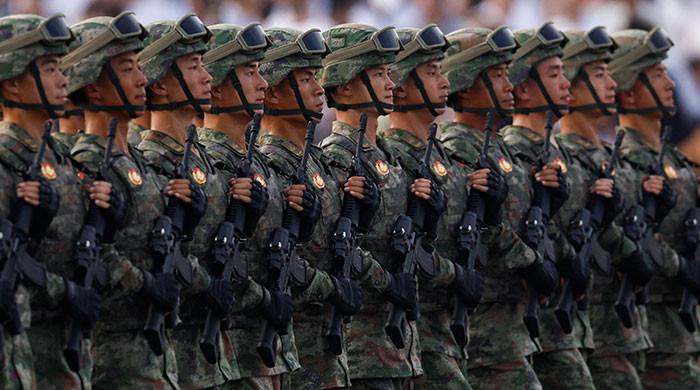
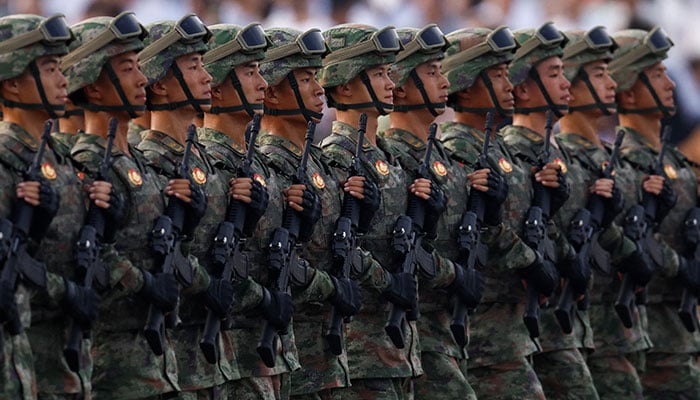
BEIJING: Pakistan’s Prime Minister Shehbaz Sharif is among 26 world leaders in China to witness on Wednesday the country’s biggest-ever military parade, a show of strength staged by President Xi Jinping to underline Beijing’s growing power on the global stage.
China kicked off its largest-ever military parade on Wednesday, a show of its growing firepower and geopolitical clout as President Xi Jinping seeks to cast Beijing as the custodian of a post-U.S. international order.
Flanked by Russia’s Vladimir Putin and North Korea’s Kim Jong Un, Xi was shown on television strolling up a red carpet to take his seat for the lavish event at Tiananmen Square to mark 80 years since Japan’s defeat at the end of World War Two.
Wearing a suit in the style of those worn by former leader Mao Zedong, Xi earlier greeted around two dozen largely non-western leaders in attendance, including Indonesia’s Prabowo Subianto, who made a surprise appearance despite widespread protests at home.
He was shown saying “Nice to meet you” and “Welcome to China” in English.
The highly choreographed “Victory Day” spectacle comes as US President Donald Trump’s “America First” stance and trade wars have strained Washington’s long-standing alliances.
Asked whether he sees the parade as a challenge to the United States on Tuesday, Trump said he didn’t and reiterated his “very good relationship” with Xi.
“China needs us much more than we need them,” he added.
More than 50,000 spectators at Tiananmen Square packed into stands in Tiananmen Square awaiting the 70-minute showcase of aerial displays, marching troops as well as cutting-edge military equipment such as hypersonic missiles, unmanned drones and outfitted tanks.
Major roads and schools have been closed in Beijing for the parade, the culmination of weeks of painstaking security preparations and midnight rehearsals.
Xi will review the troops lined up in formation before delivering a keynote speech atop the Gate of Heavenly Peace in Beijing, where a portrait of China’s late Chairman Mao Zedong overlooks Tiananmen Square.
Vision for new global order
Xi has described World War Two as a turning point in the “great rejuvenation of the Chinese nation”, in which it overcame Japanese invasion and humiliation to emerge as a rising global power.
He is expected to emphasise China and Soviet Russia’s role in defeating fascism and defending the postwar international order in his address.
Earlier this week, Xi outlined his vision of a new global order at a regional security summit, urging unity against “hegemonism and power politics” – widely seen as a swipe at the United States and Trump’s tariffs on both allies and rivals.
Putin has already used the occasion to sign deeper energy deals with China, while the gathering offers Kim an opportunity to gain tacit backing for his sanctioned nuclear programme.
Kim, attending his first major multilateral event, is the first North Korean leader to join a Chinese military parade in 66 years.
His daughter Ju Ae, viewed by South Korean intelligence as his likely successor, is making her first international appearance after years of being seen alongside him at domestic events.
Authorities have left nothing to chance for the high-profile event.
Local governments across China have mobilised tens of thousands of volunteers and Communist Party members to maintain security and prevent unrest ahead of the parade, according to online recruitment notices.
“President Xi will use this opportunity to demonstrate that the military is firmly behind him,” said Wen-Ti Sung, a fellow at the Atlantic Council’s Global China Hub.
- Netanyahu held a “secret” meeting with UAE president: PM Office.
- Netanyahu’s office says visit “marked a historic breakthrough”.
- Arab states and Iran ties “should not be based on confrontation”.
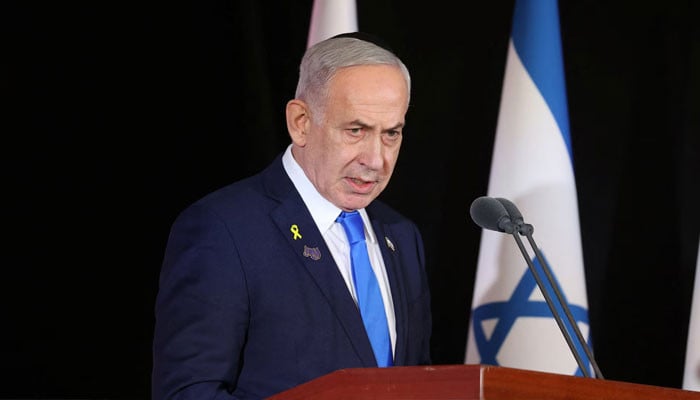
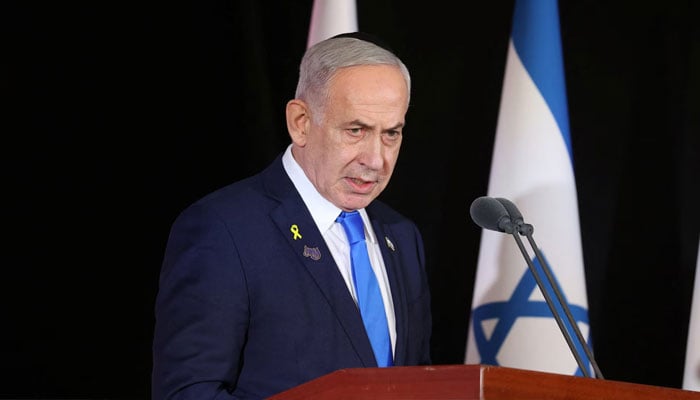
Israeli Prime Minister Benjamin Netanyahu held a “secret” meeting with the president of the United Arab Emirates during the war with Iran, his office said on Wednesday.
“During Operation ‘Lion’s Roar’, Prime Minister Benjamin Netanyahu paid a secret visit to the United Arab Emirates, where he met with UAE President Sheikh Mohammed bin Zayed Al Nahyan,” his office said in a statement.
Wednesday’s announcement comes a day after US ambassador to Israel Mike Huckabee announced that Israel had sent its Iron Dome air defence systems and personnel to operate them to the UAE during the war with Iran.
While stopping short of confirming Huckabee´s comments, Netanyahu´s office said the visit “marked a historic breakthrough in relations between Israel and the United Arab Emirates”.
Iran targeted the UAE more than any other country during the war, which was sparked by US-Israeli strikes on the Islamic republic at the end of February.
Despite a ceasefire that came into effect last month, the UAE has since reported multiple missile and drone attacks from Iran.
Meanwhile, Anwar Gargash, an adviser to the United Arab Emirates president, said earlier today that the UAE remained committed to political solutions and diplomacy amid regional tensions, while stressing the country’s right to defend its sovereignty.
UAE said it had not sought conflict and had worked to avoid it, adding that relations between the Arab states and Iran should not be based on confrontation.
- No immediate reports of casualties after melee.
- Interior minister says details on gunshots unclear.
- Military personnel deployed to assist Senate security.
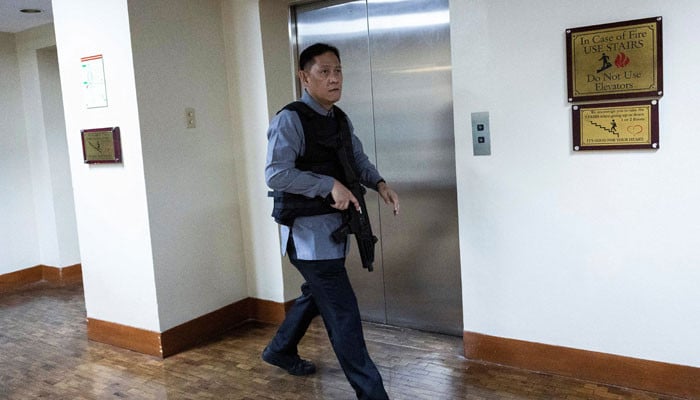
MANILA: Gunshots broke out at the Philippine Senate on Wednesday and people ran for cover after a top politician wanted by the International Criminal Court said his arrest was imminent and security forces entered the building.
There were no immediate reports of casualties, however, Senate Secretary Mark Llandro Mendoza told reporters following the chaos at the legislature in the capital Manila.
Senator Ronald dela Rosa, a former police chief who was the main enforcer of ex-Philippine President Rodrigo Duterte’s bloody “war on drugs”, had earlier urged people to mobilise to prevent his arrest and handover to the ICC.
The Hague-based court on Monday unsealed an arrest warrant for dela Rosa on charges of crimes against humanity, the same that 81-year-old Duterte is accused of as he awaits trial in the ICC following his transfer last year.
Dela Rosa, 64, has denied involvement in illegal killings.
“I am appealing to you, I hope you can help me. Do not allow another Filipino to be brought to The Hague,” he said in a video on Facebook from his Senate office, where he has taken refuge since Monday when placed under legislative protection.
Senate Secretary Mendoza said law enforcement officers believed to be from the National Bureau of Investigation had attempted to enter the Senate and fired as they retreated.
But NBI Director Melvin Matibag told GMA News that no agents had been deployed.
“I spoke with the (justice) minister and he told me to await instructions. We have no preparations whatsoever,” he said.
More than 10 military personnel in camouflage fatigues arrived, some carrying assault rifles, Reuters journalists saw.
The chief of the military’s public affairs office Xerxes Trinidad told Reuters the Senate had requested help to “assist them in securing the facility”.
Interior Minister Jonvic Remulla said it was unclear who fired shots and security footage would need to be checked. He said dela Rosa was safe and he assured him no arrest would be made.
Duterte’s top lieutenant
The office of the prosecutor at the ICC referred requests for comment to the court. The court’s press office did not immediately respond to a request for comment.
Dela Rosa was Duterte’s top lieutenant overseeing a fierce crackdown during which thousands of alleged drug dealers were slain, with human rights groups accusing police of systematic murders and cover-ups.
Police reject the allegations and say the more than 6,000 killed in anti-drugs operations were all armed and had resisted arrest.
Activists say the real death toll may never be known, with users and small-time peddlers gunned down almost daily in mysterious slumland killings blamed on vigilantes and turf wars.
The Senate was heavily guarded throughout Wednesday, with lines of police deployed to keep the peace as protesters gathered, some calling for the arrest of dela Rosa, better known in the Philippines as “Bato”, or “rock”.
His ally, Senate President Alan Peter Cayetano, said he had spoken to President Ferdinand Marcos Jr, who had assured him no government personnel had been involved in Wednesday’s incident.
Dela Rosa, who returned to the Senate on Monday for the first time since disappearing from public view in November, has appealed to Marcos not to hand him over to the ICC.
He has also filed an emergency petition with the Supreme Court urging it to block any attempt to transfer him to The Hague. The court in a statement on Wednesday gave all parties to the petition 72 hours to respond.
Dela Rosa insists any transfer to the ICC would be illegal, as the country is no longer a signatory to the Rome Statute.
Duterte unilaterally withdrew the Philippines from the ICC in 2018 when its prosecutor announced a preliminary examination into his anti-drugs campaign had started. The ICC says alleged crimes committed while a country was a member are under its jurisdiction.
Duterte is set to become the first Asian former head of state to go on trial at the ICC, a court he repeatedly dared to pursue him during a succession of public speeches, saying he was ready to “rot in jail” to protect his people from the drugs scourge.
He maintains his innocence, according to his legal team.
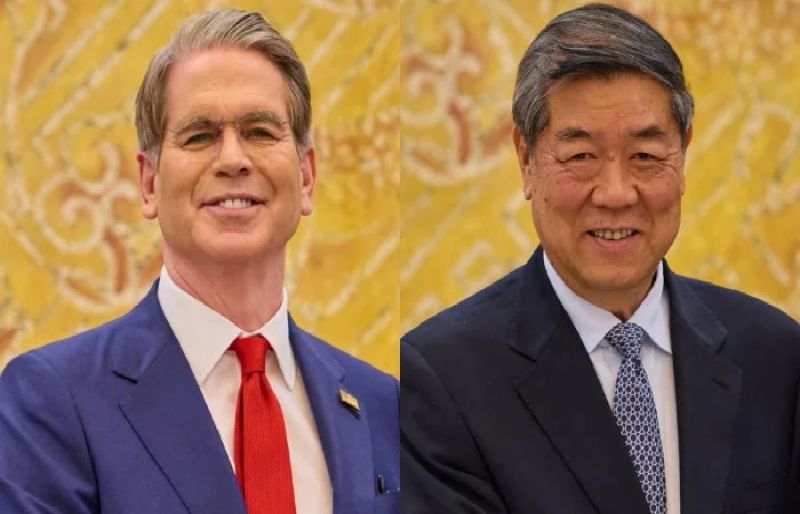
US Treasury Secretary Scott Bessent and Chinese Vice Premier He Lifeng started talks in South Korea on Wednesday to lay the groundwork ahead of this week’s summit of the leaders of the world’s two biggest economies in Beijing.
Bessent and He began the talks at Incheon airport after each met South Korean President Lee Jae Myung at the presidential Blue House, Reuters witnesses said.
The discussions are expected to cover a range of issues to prepare for talks in Beijing between US President Donald Trump and Chinese President Xi Jinping that are set to run from Thursday to Friday.
The talks between Bessent and He were likely to be exploratory with limited immediate outcomes, said Kim Tae-hwang, a professor of international trade at Myongji University in Seoul.
“Both sides are essentially in a holding pattern ahead of the summit, sounding each other out, rather than seeking breakthroughs,” he said.
China’s lead trade negotiator, Vice Commerce Minister Li Chenggang, and Vice Finance Minister Liao Min were among the officials accompanying He.
At the Beijing summit, the leaders are expected to agree to set up forums to ease mutual trade and investment, while China is expected to announce purchases related to Boeing aeroplanes, American agriculture and energy, US officials have said.
Beijing also wants the United States to relax curbs on exports of advanced semiconductors, and has raised concerns about a bill to keep critical chip-making equipment from China.
They are considering extending a truce on China’s export curbs on rare earths at the summit, but Chinese customs data shows Beijing is still throttling shipments of the materials vital for defence and manufacturing.
The summit talks may also encompass the Iran war, as China, which maintains ties with Iran, is a major buyer of its oil.
Trump said on Tuesday, however, he did not think he would need China’s help to end the conflict, even as hopes for a lasting peace deal dwindled and Tehran tightened its grip over the Strait of Hormuz.
Neither side has strong incentives to make early concessions, however, said Kim, the academic, adding that the United States is unlikely to ease curbs on key technologies such as semiconductors.
China, in turn, buoyed by relatively resilient growth and trade performance, is under less pressure to offer significant compromises, he said.


What It Will Take to Make AI Sustainable

Israel’s Netanyahu held meeting in UAE with president during Iran war: PM office

Army officer among five soldiers martyred, 7 terrorists killed in Balochistan operation

-

 Tech5 days ago
A new frontier: Identity stack evolves for agentic systems | Computer Weekly
-

 Tech5 days ago
‘Orbs,’ ‘Saucers,’ and ‘Flashes’ on the Moon: Pentagon Drops New UFO Files
-
 Tech5 days ago
Nick Bostrom Has a Plan for Humanity’s ‘Big Retirement’
-
 Tech6 days ago
What Microsoft Executives Really Thought About OpenAI in 2018
-
 Sports5 days ago
Shaheen Afridi achieves landmark feat during opening Test against Bangladesh
-

 Fashion5 days ago
New orders in German manufacturing up 5% MoM in Mar 2026: Destatis
-
 Business1 week ago
India among most resilient large EMs, better placed for future global shocks; policy reforms & strong buffers help: Moody’s – The Times of India
-
 Tech6 days ago
The Canvas Hack Is a New Kind of Ransomware Debacle