

Business
Shein takes rival Temu to court over alleged ‘industrial scale’ copyright breaches


A battle between online fast-fashion rivals Shein and Temu began at London‘s High Court on Monday.
Shein has accused Temu of “industrial scale” copyright infringement, while Temu countered that Shein is using litigation to stifle competition.
The case is part of a global legal battle between the fast-growing rivals, with potential implications for platform practices, supplier relationships and the enforcement of intellectual property rights across global e-commerce.
Shein alleges Temu used thousands of its photos to advertise copies of Shein’s own-brand clothing, to “piggy-back” on a more established competitor.
Shein’s lawyer Benet Brandreth said: “This was an attempt to steal a march on an existing participant in the market and Temu has sought to obtain, we say, an unfair advantage”.
Temu denies the allegations.
Brandreth told the court Temu has dropped its defence to Shein’s copyright claims over nearly 2,300 photos taken by Shein employees, likening it to “the defendant waiting to see if the witnesses will turn up, only to plead guilty”.
Temu – owned by PDD Holdings – has counter-claimed, seeking damages after it had to remove thousands of product listings when Shein obtained an injunction.
It also alleges Shein broke competition law by tying fast-fashion suppliers to exclusive agreements. That part of the case is due to go to trial next year.
Temu’s lawyers argue that Shein’s lawsuit is not a legitimate attempt to stop copyright infringement but is designed to secure a competitive advantage.
The two-week London trial is the latest legal battle between the two rivals, which have also sued each other in the U.S., and comes amid intensifying regulatory scrutiny.
Shein and Temu have expanded rapidly in international markets with low-cost clothing, accessories and gadgets. But the removal of a U.S. customs exemption on low-value e-commerce parcels last year – with the European Union set to follow in July – could weigh on growth.

Struggling retailers are hoping for a bumper World Cup to boost the high street and improve consumer confidence.
Footfall figures, which measure trips rather than expenditure, already suggested that many shoppers have all but abandoned the UK high street.
The latest sales figures from the British Retail Consortium (BRC) show that sales fell 3 per cent in April compared to growth of 7 per cent in the same month a year ago.
That’s partly because Easter was in March this year, but even adjusting for that, the figures are disappointing for retailers.
Food sales decreased by 2.5 per cent year-on-year in April, against a growth of 8.2 per cent in April 2025. This was below the 12-month average growth of 3.5 per cent.
Helen Dickinson, chief executive at the BRC, said: “April’s sales fall was largely driven by the Easter shift, with food hit hardest. But weak consumer confidence also played a role as fears about the Middle East conflict driving up living costs led shoppers to rein in.
“Big-ticket purchases fell, with the recent recovery in furniture losing steam, and uncertainty around summer holidays hitting discretionary spend. With the World Cup coming, retailers hope it will provide a lift, and early signs show demand for TVs and sound systems picking up.”
Retailers have already warned about the effects of the Iran war on consumer spending, as food and fuel prices are forced upwards.
The BRC has asked the government to delay various regulatory burdens, including energy policy levies and packaging taxes.
According to the British Beer and Pubs Association, the World Cup could give the pub trade a £275m boost if England make it to the final. An extra 55 million pints would be drunk, the trade body said.
Pubs are currently closing at the rate of two a day, putting the future of the British boozer at risk.
Linda Ellett, UK head of consumer, retail and leisure at KPMG, said: “It was a disappointing April for the retail sector, even factoring in an earlier Easter shifting some spending into March. Bar marginal growth for beauty, health and jewellery, retail sales fell across all other categories.
“Consumer confidence has been further dampened by rising prices due to the Iran conflict, with consumers cautious about potential ongoing effects. As a result, the retail sector is facing a challenging start to spring/summer, but there is hope that holiday demand and the World Cup still manage to unlock spending in the weeks and months ahead.”

NEW DELHI: India cannot afford to remain a passive consumer in the AI era and must urgently build its own frontier-scale artificial intelligence models if it wants to shape global technology rules, according to Pratyush Kumar, co-founder of Sarvam AI.Speaking at the CII Business Summit, Kumar said Sarvam is now preparing to train its first trillion-parameter AI model within next nine months, marking what could become a major milestone for the country’s indigenous AI ambitions.“We can rent it for now until we don’t have it, but you have to build it. You have to own the destiny around that,” Kumar said, arguing that India must move beyond debates around whether it should build its own AI models and instead focus on creating long-term strategic capability.Kumar said AI would become the defining intelligence layer across industries, governance, science and manufacturing, making ownership of foundational models critical for economic value creation. He warned that India risks repeating mistakes made during earlier technological revolutions.“What we saw with steam engine, steel making and the internet, in all these eras, we became users and frankly lost out on key value creation,” he said. “This is now the start of a new era, which is going to play out quarter by quarter.” The Sarvam AI co-founder revealed that the company has already demonstrated a proof of concept showing India can build large-scale AI systems end-to-end, using domestic capabilities across data, algorithms, research and infrastructure. He also stressed that India would need significantly larger investments in AI infrastructure and research talent to compete globally. “The intelligence layer will accrue the value,” he said. “It requires infrastructure, but it requires R&D talent to build these models.” Warning against policy drift, Kumar said India still lacks a clear national AI direction.

A total of 17 US executives are set to join the president on his visit, where he will meet his Chinese counterpart Xi Jinping.
Source link


Bangladesh needs logistics upgradation to turn competitive: Think tank

Meghan Markle shares delightful family update amid rift with dad Thomas

Epstein files on display at New York pop-up exhibit, all 3.5 million pages

-

 Politics1 week ago
Iran weighs US reply delivered via Pakistan as Trump signals opposition to deal terms
-

 Tech1 week ago
DHS Demanded Google Surrender Data on Canadian’s Activity, Location Over Anti-ICE Posts
-
 Business1 week ago
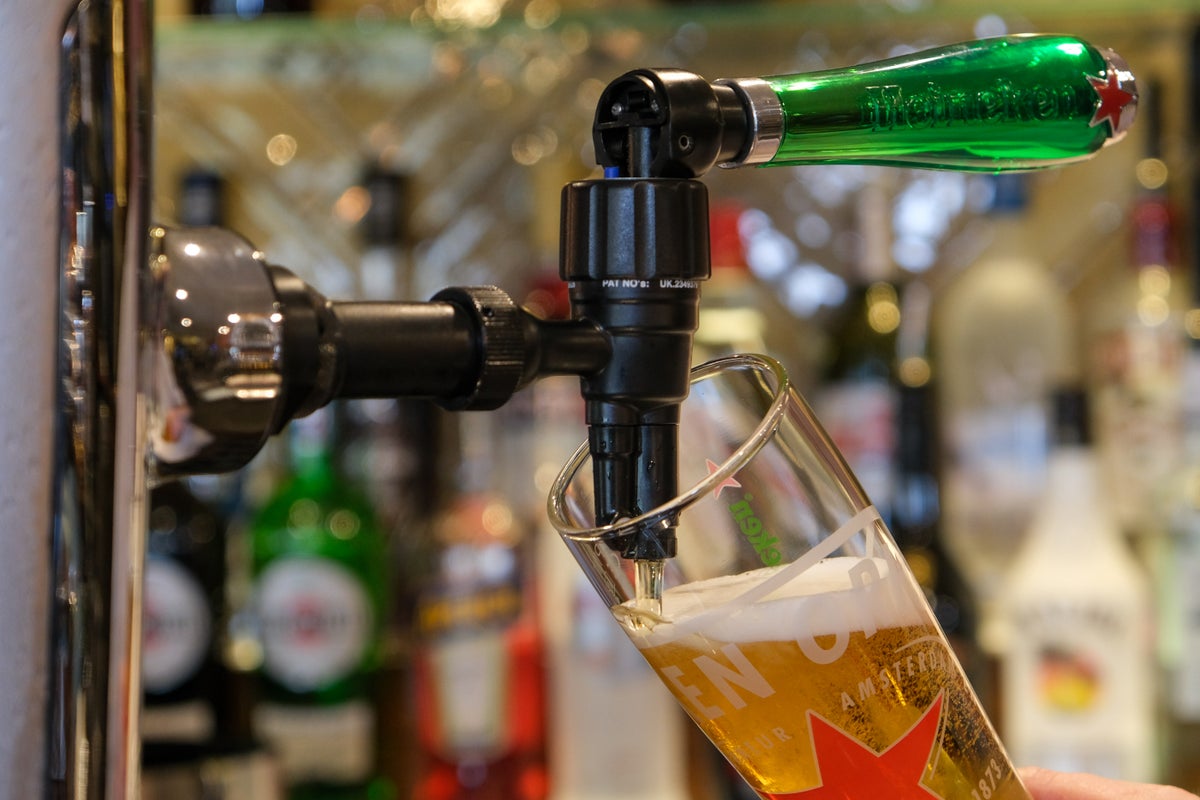
Heineken to invest £44.5m in hundreds of pubs creating 850 jobs
-

 Entertainment1 week ago
Jelly Roll reacts to daughter Bailee Ann’s major life milestone
-

 Tech1 week ago
I Lugged the Best Travel Totes on Work Trips, Weekends, and More
-

 Politics1 week ago
Two women die on migrant boat seeking to reach UK
-
 Business1 week ago
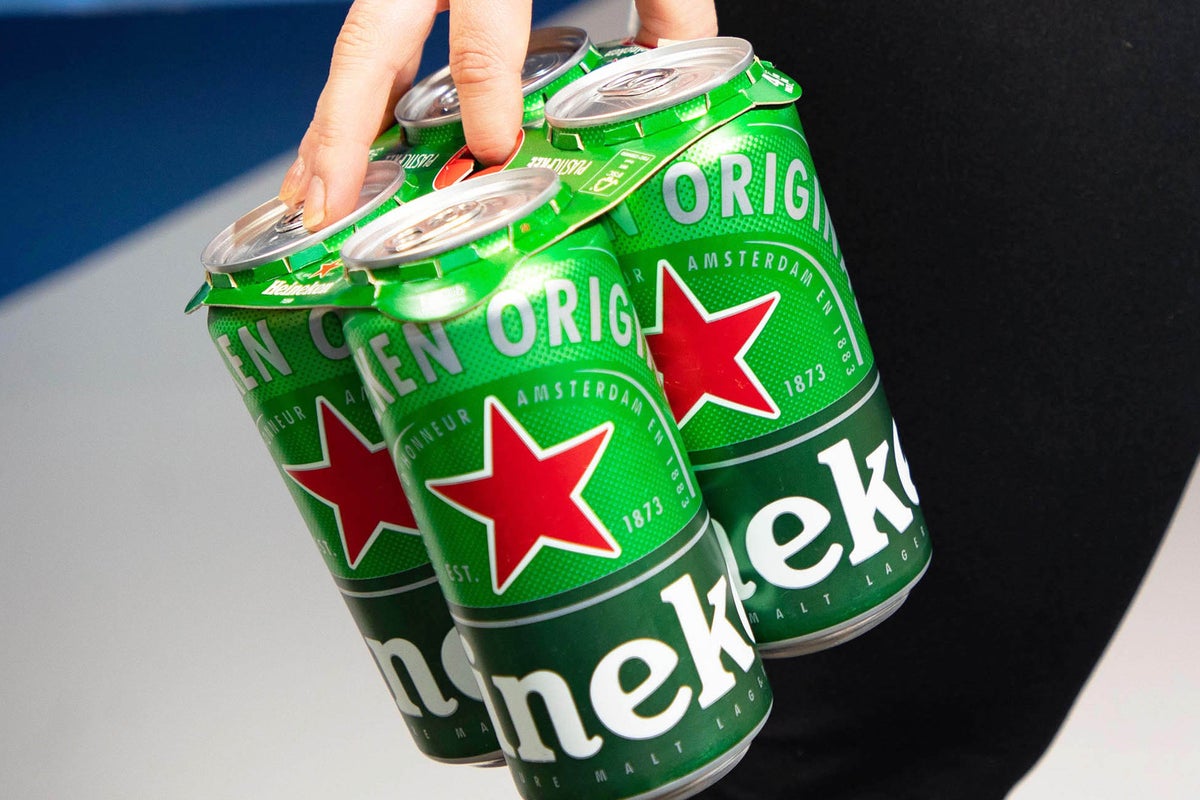
Heineken plans huge investment in hundreds of UK pubs ahead of World Cup
-

 Politics1 week ago
Iranian envoy reaffirms Pakistan’s ‘central role’ in ongoing talks with US