

Politics
Who could replace Keir Starmer as Britain’s prime minister?

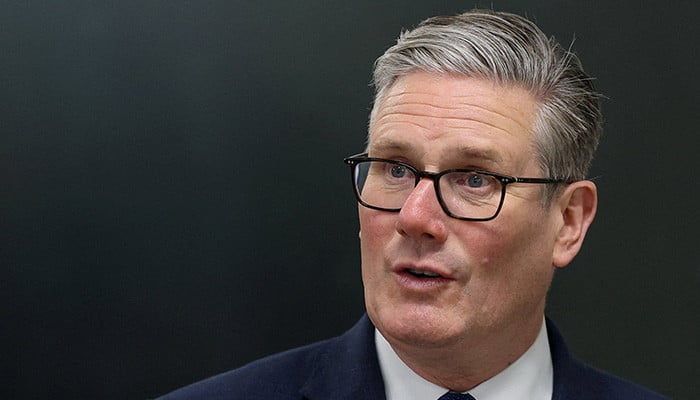
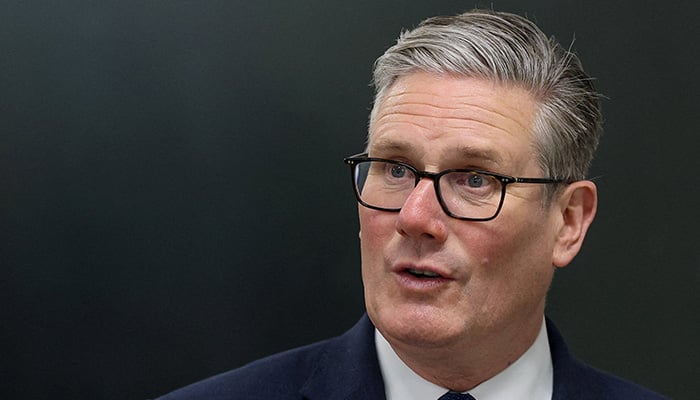
British Prime Minister Keir Starmer is under pressure to resign after more than 80 lawmakers in his Labour Party said he was not the right person to lead the country and win the next national election. He has vowed to stay on as no formal leadership challenge has yet been triggered.
If Labour were to choose a new leader, here is a list of those in the frame to replace Starmer:
Wes Streeting, 43
Streeting has served as health and social care minister since Labour came to power in July 2024 — a role that puts him in charge of the state-funded National Health Service with its budget of more than 200 billion pounds.
Streeting is seen as a centrist within the Labour Party, and has advocated fiscal restraint in line with the approach taken by Starmer. He has also supported the government’s policy to increase defence funding.
Streeting was seen as a protege of Peter Mandelson, the former UK ambassador to the US who was appointed by Starmer and then fired over his links to late sex offender Jeffrey Epstein. Streeting has said he’s embarrassed to have known Mandelson but denied that they were close friends.
In his first year as health minister, he approved a 22% pay rise for resident doctors over two years in a bid to end a standoff over pay. Doctors have since resumed striking.
Streeting has represented a constituency in east London since 2015. The seat is tightly contested and in 2024 he won by just 528 votes, making it vulnerable for the next election.
He describes his upbringing as working class, and he would be Britain’s first openly gay prime minister. Born to teenage parents, he has described how his grandfather and grandmother both spent time in jail, with his mum born while his grandmother was in prison.
He attended Cambridge University — an education he says he funded himself with retail jobs — and is a former president of the National Union of Students.
Andy Burnham, 56
Burnham is the mayor of Manchester in northern England, and one of Labour’s most high-profile politicians.
He is currently unable to stand in any leadership challenge because he is not a member of parliament, but he has made recent efforts to return.
In January, he was blocked from running for a seat in the House of Commons by Labour’s National Executive Committee. His supporters, who tend to come from the left of the party, accused Starmer and allies of keeping out a potential leadership rival.
Burnham was briefly Britain’s deputy finance minister in former Prime Minister Gordon Brown’s government in the 2000s, and has run twice to be the party’s leader, including losing heavily to left-wing veteran Jeremy Corbyn in 2015.
He became Manchester mayor in 2017 but has remained an influential figure for some centre-left groups within Labour, particularly those critical of Starmer’s more centrist stance.
He has tried to reassure investors that they would be safe under his economic vision after he was quoted as saying Britain needed to stop being “in hock to the bond market”. He said his comments were misinterpreted.
Angela Rayner, 46
One of the party’s most recognisable figures, Rayner stepped down from her role as deputy prime minister, deputy Labour Party leader and housing secretary in 2025 after admitting she had unintentionally underpaid taxes on a property purchase and was found to have breached the ministerial code of conduct.
The matter is yet to be fully resolved with authorities, hindering any potential leadership bid. Recently she has called for Burnham’s return to parliament, which may signal she will not run herself.
She is seen as closer to the party’s left-wing, trade union roots than the centrist Starmer. When in office she championed legislation that expanded workers’ rights, backed minimum wage increases and called for higher public investment.
While publicly falling in line with Labour’s calls for fiscal restraint, media reports in May 2025, when she was still a minister, said she had argued for higher taxes, and since leaving government has called for “bold action” to shield Britons from the effects of the Iran war.
Rayner grew up in relative poverty on a social housing estate in the town of Stockport, near Manchester. A teenage mother, she worked as a care worker and trade union official before entering parliament in 2015.
She credits this background for giving her authentic insight into the struggles faced by the poorest Britons, and is regarded by many in Labour as a strong communicator whose background means she can reach parts of the party that Starmer – a Londoner and former human rights lawyer – cannot.
Ed Miliband, 56
Energy Minister Miliband is one of Starmer’s most senior cabinet ministers who has been linked to a return to lead the party after an earlier 2010-2015 stint in opposition. He has said that experience “inoculated” him against wanting to do it again.
He has been the main proponent in government of pursuing net zero energy policies.
He previously served in government from 2006 to 2010 under Tony Blair and Gordon Brown, and defeated both his brother David and Burnham in the 2010 leadership election, offering a more centre-left vision for the party than his centrist brother.
Shabana Mahmood, 45
A lawmaker since 2010, Mahmood has risen rapidly through the ministerial ranks and was promoted to home secretary in September after serving as justice minister. She is the first Muslim woman to hold either role.
Seen as on the right of the party, she has driven a tougher stance on immigration which she says is key to facing down the right-wing Reform UK party and addressing voters’ concerns on immigration.
However, critics have said her tough stance means Labour is losing the support of progressives who traditionally backed it to left-wing alternatives such as the Greens. She is also unpopular with the left wing of the party.
Al Carns, 46
Newly elected in 2024, junior defence minister Al Carns has been rumoured as an outside candidate who could prove popular among other first-time lawmakers who want a fresh voice.
He served in the Royal Marines and is an Afghanistan veteran who advised several Conservative defence ministers on military matters before coming into politics.
Last year he was part of a team that climbed Mount Everest in less than seven days trialling the use of xenon gas to help speed up acclimatisation.
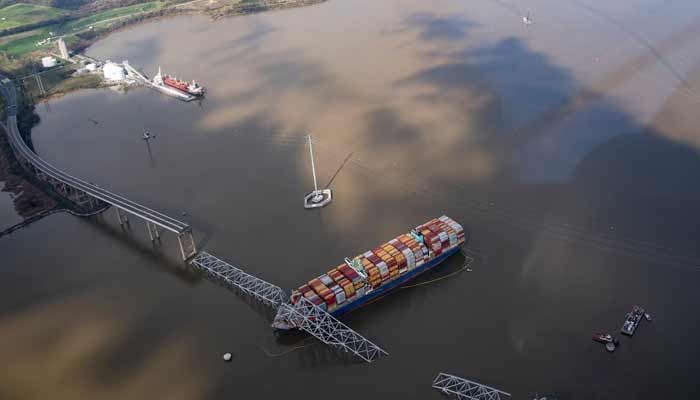
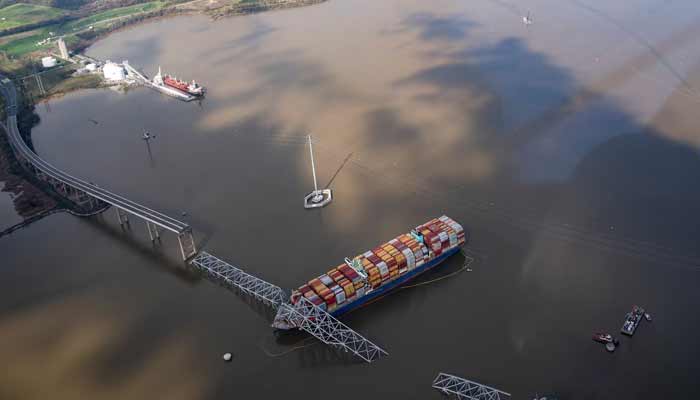
A Singapore-based company and another in India have been indicted on multiple criminal charges over a 2024 ship crash that destroyed a bridge in the US state of Maryland and left six people dead, officials said Tuesday.
Synergy Marine, based in Singapore, and Synergy Maritime, based in Chennai, India, are accused of conspiracy to defraud, making false statements to the National Transportation Safety Board (NTSB) and other charges.
An Indian national, Radhakrishnan Karthik Nair, 47, who worked for both companies as technical superintendent for the ship, the M/V Dali, is also named in the indictment unsealed on Tuesday.
US Attorney Kelly Hayes said Nair is not in custody and is believed to be in India.
The Dali, a 984-foot container ship, suffered a series of electrical problems in the early morning of March 26, 2024, and crashed into the Francis Scott Key Bridge over the Patapsco River, which collapsed like a house of cards, blocking the busy shipping channel for the port of Baltimore.
Six construction workers on the bridge, all Latin American immigrants, fell to their deaths.
The NTSB found that the probable cause of the disaster was a loss of electrical power due to a loose wire connection in a high-voltage switchboard, resulting in the vessel losing propulsion and steering as it approached the bridge.
“The collapse of the Francis Scott Key Bridge was a preventable tragedy of enormous consequence,” acting Attorney General Todd Blanche said in a statement. “This indictment is a critical step toward holding accountable those whose reckless disregard for maritime safety regulations caused this disaster.”
FBI special agent Jimmy Paul said the indictment “reveals a pattern of deception and egregious violations that led to the unsafe operation of the Dali which recklessly endangered the public and resulted in the ship striking the bridge.”
“Synergy and Radhakrishnan Karthik Nair repeatedly failed to document, investigate and report significant safety risks and hazards aboard the Dali,” Paul said. “They forged safety inspections and certifications.
“They falsely claimed the ship was in good working order and then lied to investigators about their actions when they were questioned.”
The US Justice Department announced in October 2024 that it had reached a $100 million settlement with Singapore’s Synergy Marine and another company, Grace Ocean, to recover costs incurred in responding to the disaster and for removing tons of bridge debris from the channel leading to the port of Baltimore.
Maryland authorities have said it will cost more than $5.2 billion to rebuild the bridge with completion envisioned in 2030.
Chinese emperors once prayed for bumper crops under the blue-tiled, triple-eaved roof of Beijing’s Hall of Prayer for Good Harvests, in sacred rites affirming their mandate to rule.
On Thursday, US President Donald Trump and Chinese President Xi Jinping will walk the same imperial ground within Beijing’s Temple of Heaven, as both leaders seek a different kind of harvest from a high-stakes summit.
For Xi, hosting Trump there offers a stage rich in messages about China’s endurance and civilisational depth. For Trump, the setting carries a more literal resonance: agriculture will be high on his list of priorities, with US farmers looking for bigger Chinese purchases of soybeans, other crops — and meat.
“As a Chinese leader, this is the perfect backdrop to show the depth of Chinese history and how long it is, how sophisticated it is,” said Lars Ulrik Thom, a Beijing-based historian and founder of historical walking tour company Beijing Postcards.
Trump is scheduled to arrive in Beijing on Wednesday ahead of his meetings on Thursday and Friday. The two leaders are due to visit the Temple of Heaven on Thursday, according to the White House.
Trump heads to China with his ambitions blunted by court rulings on tariffs, narrowing his goals to a few deals on beans, beef and Boeing jets, and enlisting China’s help to resolve his unpopular Iran war, analysts say.
Xi could out all the stops for pomp-loving Trump
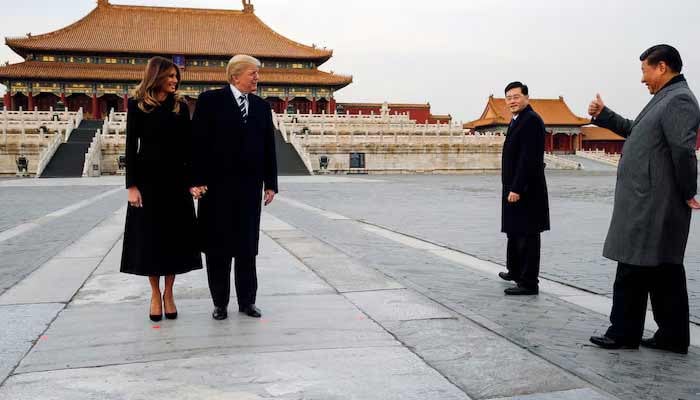
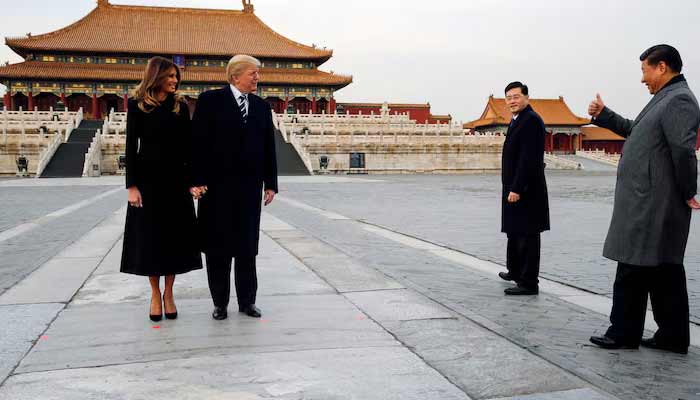
In 2017, Xi and his wife gave Trump and the first lady a rare private tour of the Forbidden City, the ancient home of China’s emperors.
Analysts are watching whether Xi, who enters the talks projecting more confidence than Trump, will once again pull out all the stops for the mercurial US leader known for his love of pomp and pageantry.
Located some 7km (4.35 miles) south of the Forbidden City, the temple was built in 1420 under the same Ming emperor responsible for the imperial palace construction.
Surrounded by ancient pine and cypress trees, it is today a popular tourist site and a park where Beijingers practice tai chi, play chess or dance.
During the dynastic rule, emperors would once a year process from the Forbidden City to the Temple of Heaven, with an entourage of thousands of men and elephant carriages, to perform a religious ceremony that affirmed their right to rule.
That right was not unconditional: poor harvests, famine or disorder could reflect poorly on an emperor’s standing.
The Hall of Prayer for Good Harvests, the Temple’s best-known landmark, was rebuilt in the late 1800s with tall redwood imported from the US, said Thom.
US farmers want China to buy more of their harvest
After the tour, Trump will be looking to score bigger commitments from Xi on purchases of soybeans, grains and meat.
China is the top market for US farmers, taking about $24 billion of their goods in 2024 before Trump took office. Beijing has frozen much of that trade and scaled back its need for US supplies, using it as a powerful lever against Trump’s tariffs.
Soybean farmers will be watching how China fulfils last year’s commitment to buy 25 million metric tons of soybeans annually until 2028. Bigger Chinese purchases could appease distressed US farmers, who are among Trump’s biggest electorate, ahead of November’s midterm elections.
For Xi, the venue offers more than imperial scenery.
“It’s a very good backdrop to telling Donald Trump and the world that China’s here and has been here for thousands of years,” said Thom.


Greg Abbott is planning his summer holiday with half an eye on the Iran war. He intends to stay closer to home in Europe and is lining up a plan B, wary of rising air fares and cancellations.
The 54-year-old Britain-based Australian is planning a cycling trip with friends in Austria, a festival in Barcelona and possibly a yoga retreat in France. But he doesn’t want to go too far and is keeping travel options open.
“We’ll almost certainly be doing short-haul Europe, and almost certainly be doing trains, because they run on electricity,” said Abbott, head of operations for a broadcasting company, adding cost was a key factor against longer trips.
“The prices are just crazy at the moment.”
Across Europe and beyond, tourists are reshaping plans in a world of $100 oil, tight jet fuel supply, higher costs and Middle East conflict disrupting popular routes. Many are booking later and building in flexibility.
“We observe travellers becoming more cautious and deliberate,” said Susanne Dickhardt, co-founder of camper van and motorhome hire firm Roadsurfer.
Most are adapting rather than cancelling, she said, staying nearer home, driving and choosing formats that keep costs down.
‘People get nervous’
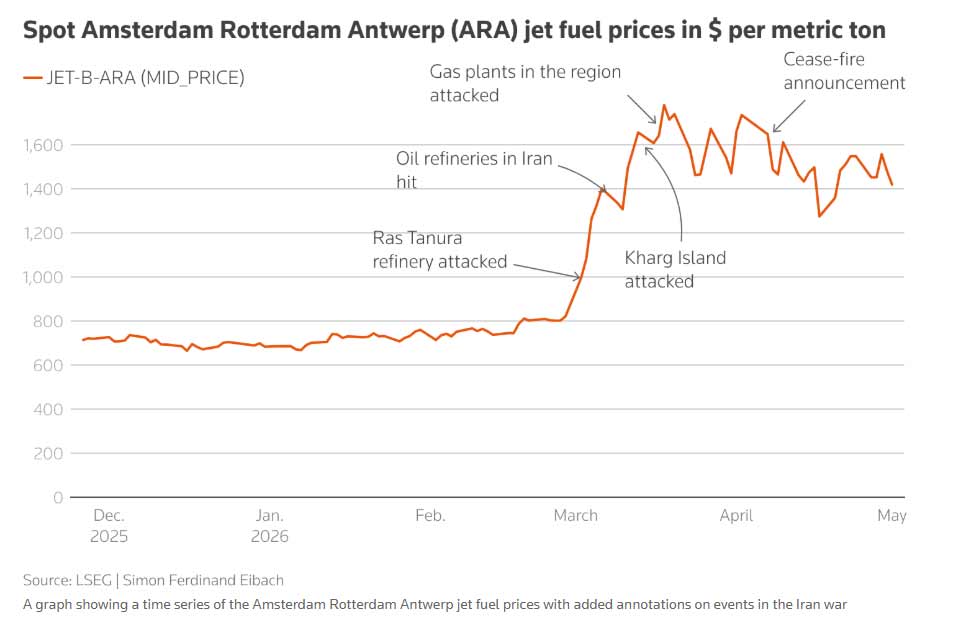
Tourism and aviation are among the sectors most exposed to the war. Slow-moving peace talks point to a prolonged stand-off, hitting Gulf airlines and popular hubs such as Dubai, while nearly doubling jet fuel prices.
“You’ve got a war happening — a major war,” said Jean-Francois Rial, CEO of tour operator Voyageurs du Monde, adding his firm had seen business drop around a quarter in March, easing to about a 10% decline in April.
“People get nervous; they don’t want to travel anymore.”
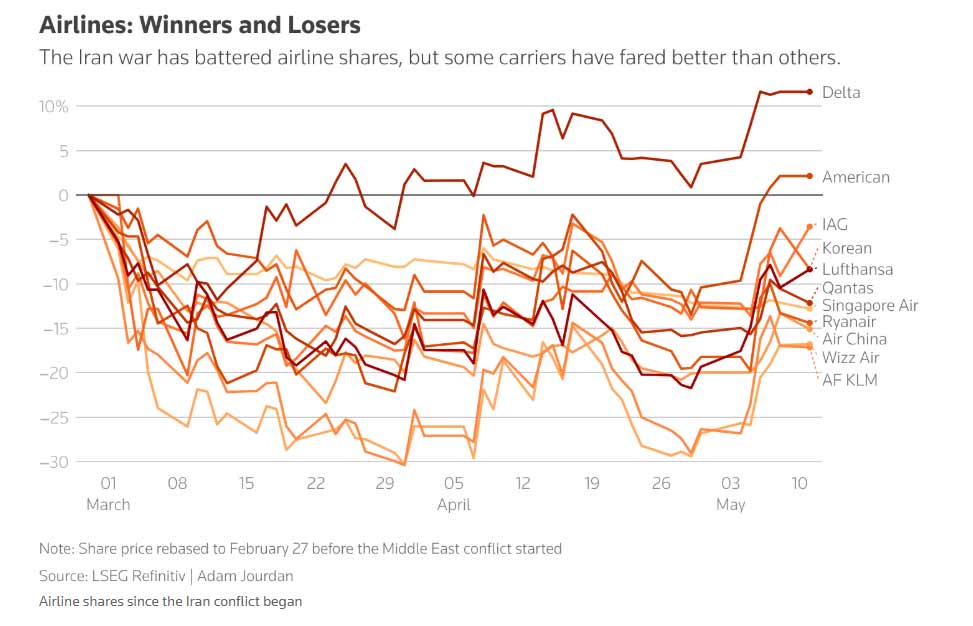
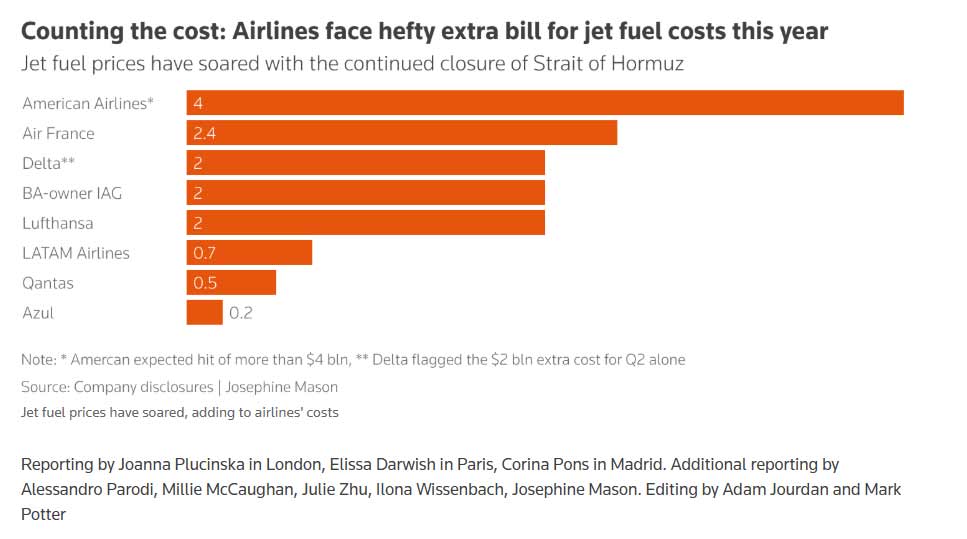
Airlines warn profits are under pressure. Air France-KLM, expects its jet fuel bill to jump by $2.4 billion this year, while Lufthansa and British Airways owner IAG see rises of about $2 billion.
US low-cost carrier Spirit went bust this month, stoking fears others could follow. European budget carriers with thin margins and limited fuel hedging, such as Wizz Air and airBaltic, face challenges, though are less vulnerable than Spirit, said Rohit Kumar, vice president of corporate ratings at Morningstar.
“Given that summer is the most profitable period for airlines, any disruption to volumes or costs during this peak season will have a material impact on earnings”, he said.
Last-minute bookings
Travellers are delaying decisions. Jerome Vayr, president of France-based Vacances Bleues, said plans are often made days before departure and trips are shorter.
“Last-minute bookings are rising significantly, by around 15%,” he said. “I think people are waiting to see what will happen with inflation, waiting to see whether or not they’ll be able to travel abroad.”
Demand overall remains resilient, airlines and officials say, but destinations are shifting, with domestic travel gaining.
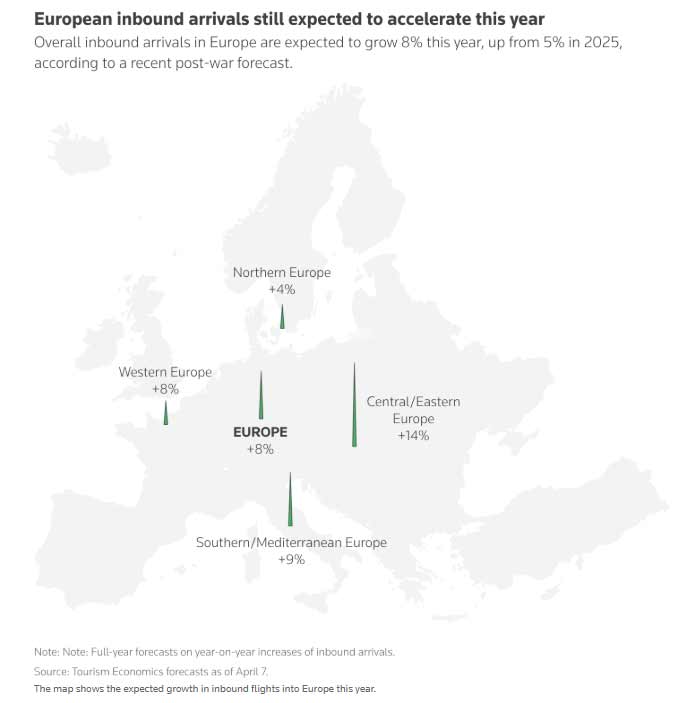
Ricardo Fernandez Flores, head of Spanish online travel agency Destinia, said Spain, Greece and Portugal were viewed as safer bets, with more self-drive holidays.
“What we’re seeing in the data is not a slowdown in travel demand, but a shift in where travellers are choosing to go,” said Jay Wardle, president at travel data group Sojern, highlighting well-connected, stable Mediterranean markets.
Gabriel Escarrer, CEO of Spain’s largest hotel chain Melia, expects strong bookings in “safe-haven” regions.
“Spain and the Caribbean are far away enough from conflict zones and close enough to key source markets to offer a sort of safe-haven destination this summer,” he said.
Waiting for things to ‘clear up’
Rail is gaining. Alvaro Ungurean, director of Trainpal, reported a 25% rise in Eurostar ticket sales, while nearly twice as many Britons are looking to travel by train in France this year.
Even business trips are shifting, with rail bookings rising, said Charlie Sultan, president of Concur Travel at German software maker SAP.
Alice Woodhouse, based in Hong Kong, plans to stay in Asia and offset soaring fares.
“With ticket prices so high, I’ve been looking at where I can use my airline miles. Southeast Asia or maybe Taiwan is most likely,” she said.
Others are holding off booking. Diego Dutra, who runs a corporate relocation firm from Portugal, is avoiding flying and may opt for a road trip instead of visiting family in Italy.
“We’re just going to postpone until things clear up a bit,” he said.


Taylor Swift spends quality time with family in New York City

OpenAI chief Altman says Elon Musk wanted control of ChatGPT maker, denies betrayal

United Airlines flight attendants ratify new contract with 31% raises this summer

-

 Tech1 week ago
DHS Demanded Google Surrender Data on Canadian’s Activity, Location Over Anti-ICE Posts
-
 Business1 week ago
Heineken to invest £44.5m in hundreds of pubs creating 850 jobs
-

 Entertainment1 week ago
Jelly Roll reacts to daughter Bailee Ann’s major life milestone
-
 Business1 week ago
Heineken plans huge investment in hundreds of UK pubs ahead of World Cup
-

 Tech4 days ago
A new frontier: Identity stack evolves for agentic systems | Computer Weekly
-

 Tech4 days ago
‘Orbs,’ ‘Saucers,’ and ‘Flashes’ on the Moon: Pentagon Drops New UFO Files
-
 Business1 week ago
India among most resilient large EMs, better placed for future global shocks; policy reforms & strong buffers help: Moody’s – The Times of India
-

 Tech5 days ago
What Microsoft Executives Really Thought About OpenAI in 2018