

Tech
Found: The Easiest Microgreens You’ll Ever Grow


InstaFarm’s patented 4-by-4-inch compostable trays come pre-filled with about a half-inch of soil (“sourced from Amish Country in Pennsylvania,” according to InstaFarm) and organic, non-GMO seeds, with the nutritional info for the final-product microgreens listed on top. They come in over a dozen varieties of nine-packs for $23, including individual cultivars, smoothie- and salad-specific blends, and even plain trays for growing your own greens or garden starts. It is worth noting that the trays are easily saturated paperboard designed for one-time use.
For comparison, Vego’s hydroponic microgreens planter, which I used last year, is just $60 for two units, while Gardyn’s is $100. Neither produces a volume of greens anywhere close to the InstaFarm, but again, $500 can buy a lot of store-bought microgreens.
InstaFarm has an app, but it doesn’t add much to the experience, other than the ability to activate night mode (which then turns off the light for up to 10 hours). More helpful is the button on the top of the unit that comes with a sticker describing how many presses are required for any function you’d need.
Every 90 minutes, a metal nozzle arm pops out and moves along each shelf, sensing each tray and its plants’ height, humidity, and temperature. Once the nozzle is done sensing, it dispenses an appropriate blast of water, much like the spray heads in the produce section of the grocery store. If you have cats, they may be very interested the first time they hear the nozzle whirring and moving slowly over the shelves. (The first quick, unexpected spray was an entertaining event in my house.) Sometimes, this sensing was more accurate in theory than in practice—for some reason, the sensor consistently overshot the watering volume for the red beet greens (but only the beet greens), causing the tray to overflow daily.
After a few weeks, I noticed the nozzle making a slight mechanical noise once it finished its rounds, as it slowly retracted back to its resting position. It wasn’t loud—it reminded me of the sound the bullwheel makes at the top of a ski lift—but because the InstaFarm was sitting on my dining room table, it was noticeable. And I should also note it was on my dining room table because, despite the website’s claims the unit can fit under most kitchen cabinets, it was just slightly too tall for mine. This made it difficult to site, as it does take up an approximate 6-by-18-inch footprint. Given how easy it is to clip the greens off for salads, smoothies, and other meals, its most natural habitat is probably the kitchen, so you may want to measure more than once to make sure it will fit your space.
Greens Aplenty
Photograph: Kat Merck
Just as the directions claimed would happen, I had lush, usable microgreens in about five days. For my first growing round (I’ve now been through four), I was overly excited and placed a tray on every slot. Unless you have a large family that eats microgreens for every meal, I don’t recommend this. I tried gamely to use them all, but after the traumatic experience of putting a tray’s worth of radish microgreens in a strawberry smoothie (so spicy, so radishy), I decided to share some of my first-grown trays with friends.









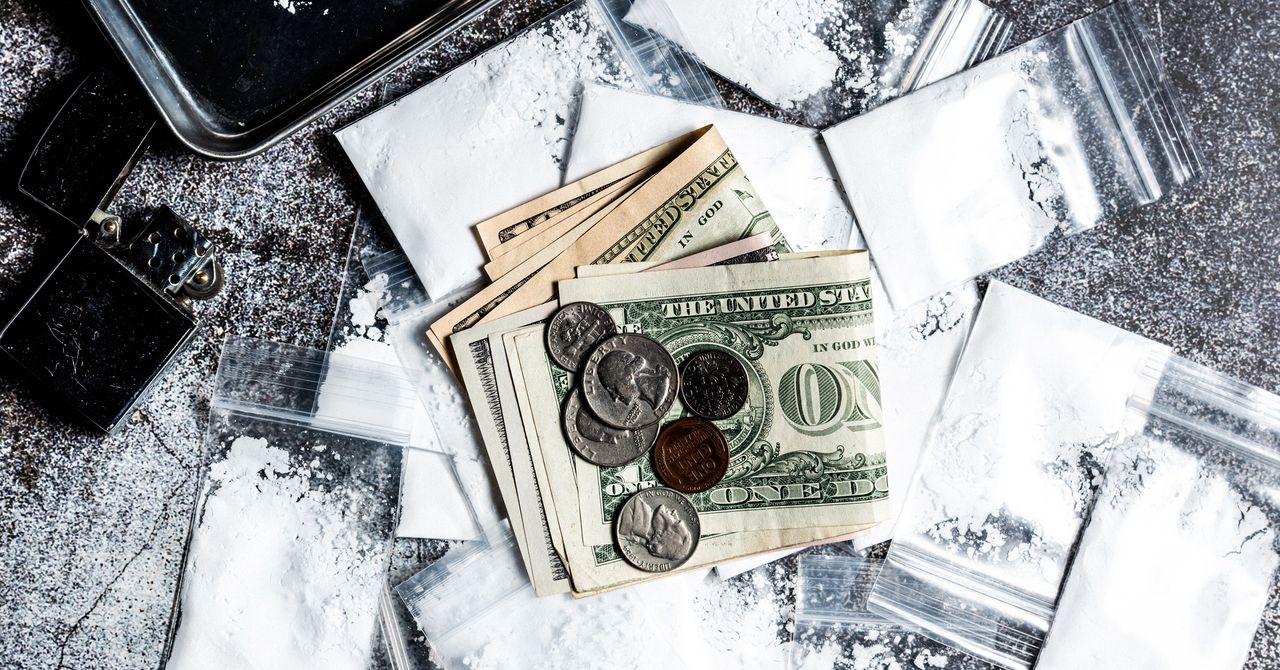
Big money and powerful interests have entirely rebranded drugs like cannabis, mushrooms, and ketamine in the 21st century.
Today, millions of Americans can buy their pot legally in places that resemble Apple Stores or take powerful psychoactive substances in plush therapeutic settings. Cocaine, however, has yet to see the kind of tech-fueled makeover that changed the public perception of those drugs—but these luxury products in my Instagram feed may just give it a glow-up.
Though you might not instantly see them as drug paraphernalia, on closer inspection, many of these products are offering to serve a need that no real person has ever had. Consider, for example, this video demonstrating use of a SLYD pouch, a small leather pocket with a magnetic clasp. The ad shows a person loading a small quantity of a powdered substance into the $39 pouch, and a caption exhorts the viewer: “Stop using that sketchy bag for your electrolytes.”
The visual comparison with a resealable plastic bag containing whitish electrolyte power should make it clear what is seemingly being suggested here. The custom inscription of the word “BAG,” common drug slang, on the leather sachet dispels any lingering uncertainty. Because while the world has never wanted for a convenient way to carry electrolytes around in one’s pocket, a miniature wallet for cocaine—or other powder drugs like ketamine and MDMA—does have some consumer appeal.
It turns out that such accessories are widely (albeit stealthily) marketed on Instagram. An online store called Magic Items sells its own take on the small magnetized leather pouch; it’s called a Wildcard, comes in various sizes priced from $60 to $100, and is stamped with the logo of a rabbit in a jester hat. The company’s Instagram page also features a demonstration with electrolyte powder, though some of the comments on the post give the game away: “Will a dog still be able to smell through it?” asked one prospective customer. Another post shows a Wildcard next to a plastic dime bag, advertising it as “anti clog” and “luxury,” whereas the more common means of carrying “electrolytes” is “hard to open” and “single use.”
“In 2022, something changed,” reads a page on Magic Items’ website explaining the invention of the Wildcard. “Everyone wanted to be out again—at parties, on rooftops, in the desert—feeling good with music thumping and friends nearby. The world was alive, and everything just wanted to work better. We all needed a water-tight container that was low profile and stylish, but there was no great option available.”
A similar brand, FattyPack, has drawn comments from Instagram users observing that its product is well-suited for holding drugs, and recently posted a demo on how to attach a key to the bag—a useful tool if you’re going to be scooping powder out of it.
The makers of the SLYD pouch did not respond to a request for comment. Via Instagram DM, a representative for Magic Items denied that the company is selling drug paraphernalia or promoting the use of illicit substances, both of which would violate Meta’s advertising policies and guidelines on restricted goods and services. “It is a multi-use bag for perishables,” the rep said of the Wildcard. In an Instagram DM, a FattyPack representative says: “Since we don’t promote our product for drug use, we’ve had zero issues with Meta ads. While some customers may use it that way, we leave that to individual interpretation.”
Meta spokesperson Erica Sackin tells WIRED that it is investigating a number of the brand accounts mentioned in this article. The company said it routinely conducts sweeps in order to crack down on users who violate their policies on illicit drugs.

The United States Golf Association (USGA) has renewed its partnership with Cisco to deploy artificial intelligence (AI-)ready infrastructure and advanced solutions that help ensure its network can support complex and dynamic environments.
The USGA is a non-profit mission-based golf organisation which aims to “unify the golf community through handicapping nonprofit association and grassroots programmes”. Stated missions include showcasing talent through: the US Open, US Women’s Open Presented by Ally and 13 other national championships and its museum; providing “unbiased global governance” with The R&A through the playing, equipment and Amateur Status rules; and advancing issues important to golf’s future, with a focus on driving sustainability, accessibility and inclusion.
The USGA also manages day-to-day operations for the US National Development Programme, the US’s first unified pathway for American talent; and the World Golf Hall of Fame, preserving and celebrating the legacies of the game’s greatest figures.
Cisco has served as the official technology partner of the USGA since 2018, offering its AI networking, cyber security and observability solutions to strengthen the USGA’s year-round operations as well as its marquee events, including the US Open and US Women’s Open.
Through its renewed partnership with Cisco, the USGA will look to collaborate to deploy AI-ready infrastructure and advanced solutions that help ensure its network can support current and future device loads, socially those from emerging AI applications. The world of golf has rapidly adopted AI-driven connected intelligence platforms to gain required real-time insights and intelligence that can support current and future device loads.
The two companies said that their extended and enhanced partnership is designed to pioneer a new chapter of innovation and technology for the USGA and its championships, setting the stage for the next decade and beyond.
Cisco believes that AI is unlocking new experiences across industries and that such technology will help the USGA continue to innovate and evolve its foundation by helping USGA officials monitor the health of venue infrastructure and networking equipment, as well as crowd management, identifying issues before they occur to ensure “seamless” event operations.
In the near term, USGA is also helping to make the game’s official rules more accessible to everyday golfers through an AI-powered experience that provides clear, timely answers to rules questions. Cisco AI Defense – built to provide protection for enterprise AI – is being deployed to secure the integrity and security of the underlying AI. It also offers visibility into AI usage, validating models for risk and integrity and safeguarding applications at runtime against emerging AI-specific threats.
Cisco’s technology will see initial use in connecting and protecting the forthcoming championships at Riviera Country Club (US Women’s Open Presented by Ally) from 4-7 June 2026, and the US Open at Shinnecock Hills Golf Club (US Open).
Both championships will bring a range of connectivity including Cisco Wi-Fi 7 access points and Cisco switching architecture, delivering wireless comms to more than 240,000 expected fans, media and operators across the championship weeks.
Cisco networking technology will also be deployed to deliver operational simplicity and prepare to defend against AI-powered threats, alongside physical security and secure firewall solutions that ensure the integrity of the entire digital ecosystem. This includes critical functions such as broadcast, scoring and on-site amenities.
Meraki cameras will operate to offer enhanced security to monitor crowd flow and provide data-driven insights that improve event management. Customised dashboards from Splunk Enterprise and Splunk Cloud Platform will offer end-to-end monitoring and analytics, giving event operators real-time insight into network health and performance.
USGA chief commercial officer Jon Podany said: “Cisco has been an essential partner in helping the USGA build a technology foundation worthy of the world’s greatest golf championships. This extended partnership ensures we’re not just ready for today’s demands, but well-positioned to push the boundaries of what’s possible at our championships and beyond to meet the changing needs of our fans and customers.”
As it was announced the new partnership, Cisco stressed that it had “a deep commitment” to growing the game of golf, shown through various ongoing initiatives, including Cisco’s support of the USGA’s Pathways Internship Program, designed to introduce college and graduate students to careers in the golf and sports industry. In addition, Cisco will continue to deploy Networking Academy Dream Teams at key championship events, creating opportunities for aspiring technology leaders to foster skill building and career development in a real-world environment.
“We’re proud to partner with the USGA as it enters a new era of AI-driven innovation,” said Rob McQueen, vice-president of global sponsorships at Cisco. “As AI becomes foundational to the future of golf, Cisco’s leadership in networking, security and digital infrastructure will help the USGA deliver smarter, more connected and more immersive experiences for fans around the world.”

The final stragglers testified on Wednesday in the Musk v. Altman trial. The witnesses generated few waves, aside from the revelation that Microsoft has so far spent over $100 billion on its partnership with OpenAI. Rather than focus on that, I wanted to bring you a candid observation that my colleague Maxwell Zeff and I can’t stop talking about after spending nearly three weeks watching the trial.
The courtroom is littered with butt cushions.
Several of the hard, wooden benches on the right side of US district Judge Yvonne Gonzalez Rogers’ courtroom are reserved for OpenAI and Microsoft’s attorneys, executives, and other members of the defense. About 10 people, including OpenAI CEO Sam Altman and general counsel Che Chang, have benefitted from thick black cushions—the plushest of them from the brand Purple; $120 from Target—that spare their butts from hours of sitting. Some cushions have rounded corners, while others are square. On Wednesday, Chang even put one behind his back, a less common but not unprecedented move in the courtroom.
OpenAI President Greg Brockman and his wife, Anna, have watched a considerable portion of the trial—and have both been prolific users of pristine white pillows. Judging from the tags bursting from the seams, the pillows seem to be from the sleeping goods brand Coop, which sells a two pack of alternative down-filled throw pillows for $35.
On Wednesday, an OpenAI bodyguard carried a purple handbag into the courtroom, with a pillow for each of the Brockmans. Anna gave her husband just a minute to suffer in pillow-less oblivion before she discreetly passed one to him and then situated her own. I felt bad for OpenAI chief futurist Joshua Achiam, who later took Brockman’s seat but wasn’t left with either of the pillows. (Achiam eventually did obtain one of the more standard black cushions.)
OpenAI did not immediately respond to WIRED’s request for comment.
One longtime technology lawyer told WIRED that using cushions or pillows isn’t exactly “customary,” but noted, “it’s not totally out of left field.” Personally, he said, he has never seen lawyers use pillows or cushions during his trials, but then again, he’s “never been involved in a trial that has lasted as many days as that one.”
The core litigators in this case sit in comparatively luxurious leather chairs, though a couple do show signs of fraying, so maybe the padding isn’t as robust as it appears.
My last time in this courtroom for an hours-long stretch was in 2021, covering portions of the Epic Games v. Apple trial. But capacity was limited back then because of Covid concerns, so I had plenty of room to stretch out. This time around, the courtroom has been filled nearly to its maximum capacity—about 150 people—including bench seats for up to 90.
I thought about bringing my own cushion roughly an hour into my first day of the trial at the end of April, because, well, these benches are deeply uncomfortable. But I didn’t want to come off as weak. None of the other two dozen or so reporters regularly in attendance—including one who is pregnant—seemed to bring cushions, at least, initially. So I went through a run of six days with my bottom and back getting sorer by the minute.
Last week, after a particularly brutal morning, I finally decided to bring in some help. I couldn’t find the well-padded seat cushion meant for stadium bleachers, so I settled for a “cooling” cushion passed out at the steaming-hot outdoor venues at the Tokyo Olympics. About two seconds into using it on Wednesday morning for the first time, I ruled it counterproductive. It was too small and too thin to offer any relief. My back got particularly stressed when furiously typing notes about the Musk-inspired jackass trophy, which reportedly once had its own pillow.
Four hours in, I gave up on the pillow entirely. But I noticed one New York Times reporter who eventually caved, as well as the courtroom artist—who has a particularly colorful cushion—remained seated on their pillows. Maybe I’ll find a better remedy for next week, when Gonzalez Rogers will hear arguments about potential penalties.
Maxwell Zeff contributed to this report.
This is an edition of Maxwell Zeff’s Model Behavior newsletter. Read previous newsletters here.


US’ Macy’s expands On 34th line with Molly Rogers collaboration
Tate & Lyle in talks over £2.7bn takeover tilt from US rival

India’s textile reset is here. The winners will be built, not picked.

-

 Tech6 days ago
A new frontier: Identity stack evolves for agentic systems | Computer Weekly
-

 Tech6 days ago
‘Orbs,’ ‘Saucers,’ and ‘Flashes’ on the Moon: Pentagon Drops New UFO Files
-

 Fashion6 days ago
New orders in German manufacturing up 5% MoM in Mar 2026: Destatis
-

 Tech6 days ago
Nick Bostrom Has a Plan for Humanity’s ‘Big Retirement’
-

 Sports6 days ago
Shaheen Afridi achieves landmark feat during opening Test against Bangladesh
-

 Entertainment6 days ago
Rihanna embraces new tattoo given by children
-

 Tech7 days ago
What Microsoft Executives Really Thought About OpenAI in 2018
-

 Tech6 days ago
The Canvas Hack Is a New Kind of Ransomware Debacle