

Entertainment
Transformers in real life? China unveils 500kg robot that can break through concrete walls


Transformers in real life? Is the question netizens are asking after a Chinese robotics company unveiled the world’s first manned transforming robot that can transition between bipedal and four-legged walking.
Developed by Unitree Robotics, the GD01 is operated by a pilot seated in a built in ‘cockpit,’ controlling the 500kg machine.
A demonstration video shows the immense strength with which it can power through a concrete wall, giving a feeling of the arrival of fictional Transformers characters in real life.
According to Unitree Robotics, the machine, standing at a 9 feet height, was built for civilian transport, marking the world’s first mass-produced “transformable mecha”.
The giant humanoid comes with a hefty price tag of $650,000. The price is preliminary and may get adjusted depending on performance optimization and production costs.
Experts say the development of GD01 has given China a major edge in the robotics race against the West. Robotics expert Lukas Ziegler expressed the West was building incredible humanoids; however, China was building them faster, cheaper and at a scale nobody else is close to matching.
According to a marketing staff member at Unitree, Huang Jiawei, the product is still in its first generation at this stage and there is indeed a lot of room for imagination.
The vice president of the Technology and Strategy Research Institute, Chen Jing, described the humanoid as more than just a proof-of-concept, adding, “It is a product with a clear price tag and commercialisation roadmap.”
Social media couldn’t have enough of the giant mecha as one netizen declared it to be “every boys’ dream.” Another chimed in, saying, “The world is now ready for a boxing match with aliens.”

The Federal Bureau of Investigation (FBI) has announced a reward of $200,000 for information regarding Monica Witt, a defected U.S. Air Force officer, accused of espionage for the Islamic Republic of Iran.
The special agent and counterintelligence specialist was charged in 2019 with espionage for allegedly leaking the classified U.S. intelligence information to Iran. The bureau said that the female officer has not been found since defecting in 2013.
Special agent in charge of the FBI Washington Field Office’s Counterintelligence and Cyber Division, Daniel Wierzbicki, said, “The FBI has not forgotten and believes that during this critical moment in Iran’s history, there is someone who knows something about her whereabouts.”
He added, “The FBI wants to hear from you so you can help us apprehend Witt and bring her to justice.”
Witt joined the USAF in 1997 and left in 2008; however, she remained a contractor for the Defence Department until 2010.
She travelled to Iran to attend a conference aimed at criticising American moral standards.
The FBI accused her of working with Iran’s Islamic Revolutionary Guard Corps (IRGC), the elite force formed after the revolution of 1979 to expand the country’s influence worldwide.
In addition to Witt, four Iranians were also charged in the same 2019 indictment for conspiracy and identity theft.
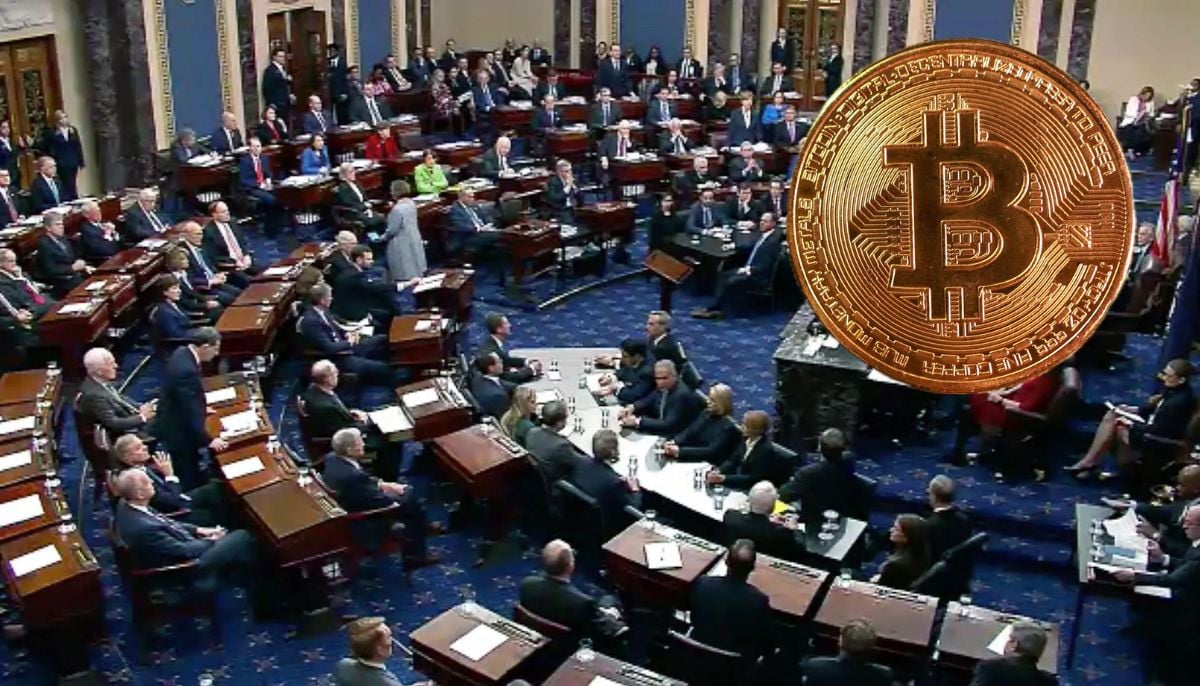
The Senate Banking Committee is set to start marking up the Digital Asset Market Clarity Act on Thursday, May 14.
This marks a pivotal moment for legislation that can establish the first comprehensive U.S. regulatory framework for cryptocurrencies.
The act distinguishes whether digital assets are securities or commodities, explaining whether the SEC or CFTC has jurisdiction, and establishes compliance rules for exchanges, brokers, and stablecoins.
According to this Act, the major aspects are:
- As per the bill, digital assets are categorised into three categories, including digital commodities, investment contract assets, and permitted payment stablecoins.
- Crypto exchanges, brokers, and dealers need to stay compliant with anti-money laundering and sanctions compliance, including the Bank Secrecy Act regulations.
- Bitcoin ATMs need to be registered with customer warnings, identification, and withdrawal limits.
- It protects software developers who publish code but do not control customer funds.
- The act bridges the gap left by previous regulations by setting regulations for stablecoin issuers and their ability to pay rewards.
Last year, the house passed the bill after facing delays due to criticism faced by banks and crypto companies.
More than 130 amendments have already been submitted in advance of the markup session on Thursday, including 44 amendments by Sen. Elizabeth Warren (D-Mass.), who claims the bill poses a threat to national security and fails to provide sufficient anti-money laundering protections.
It will take at least seven Democrats’ votes for the bill to pass the Senate. A party-line vote by the committee would mean very little chance of success, while bipartisan support would increase the bill’s chances.
Entertainment
Spoiler alert! “Survivor” contestants talk being voted off after another double elimination

Watch CBS News


Sugar exports banned till Sept 30 to check prices

FBI offers $200,000 reward for ex-USAF officer Monica Witt accused of spying for Iran

We Now Know How Many People the CDC Is Monitoring for Hantavirus

-

 Tech7 days ago
A new frontier: Identity stack evolves for agentic systems | Computer Weekly
-

 Tech6 days ago
‘Orbs,’ ‘Saucers,’ and ‘Flashes’ on the Moon: Pentagon Drops New UFO Files
-

 Fashion7 days ago
New orders in German manufacturing up 5% MoM in Mar 2026: Destatis
-

 Tech6 days ago
Nick Bostrom Has a Plan for Humanity’s ‘Big Retirement’
-

 Sports6 days ago
Shaheen Afridi achieves landmark feat during opening Test against Bangladesh
-

 Fashion6 days ago
US’ Carter’s taps retail veteran Sharon Price John as new CEO
-

 Entertainment6 days ago
Rihanna embraces new tattoo given by children
-

 Tech7 days ago
The Canvas Hack Is a New Kind of Ransomware Debacle