

Politics
Man jailed in UAE over video promoting marriage to underage girls in Morocco



ABU DHABI: An Emirati court has jailed a man for three years and fined him AED5 million for posting a social media video that authorities said encouraged marriage to minors in Morocco and spread false claims.
The Abu Dhabi Federal Court of Appeals’ State Security Chamber found Saif Salem Saif Ali Al Maqbali guilty, according to a statement reported by state news agency WAM.
The court also ordered the removal of the video, the closure of his social media accounts, and the seizure of the mobile phone used to publish the content.
Prosecutors said the case was sent for an urgent trial after investigations showed the defendant posted a video promoting marriage to underage girls in Morocco. He also falsely claimed that Moroccan law allows this.
Investigators said the video used language that could “promote hatred and social division” and harm relations between Emirati and Moroccan communities.
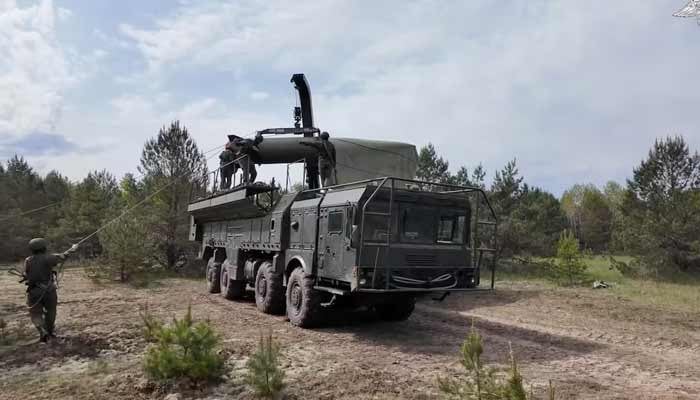
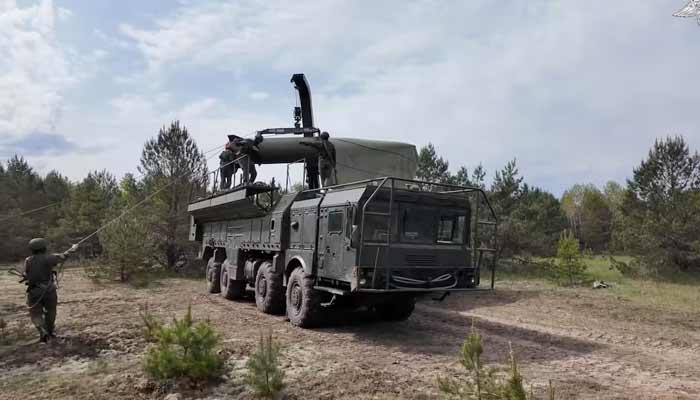
Russia on Thursday delivered nuclear munitions to field storage facilities in Belarus and showcased elements of its strategic nuclear forces, as tensions with European Nato members rose over the Ukraine war and drone activity in the Baltic.
Moscow is conducting some of its biggest nuclear exercises in years, involving 64,000 people to drill its forces in “the preparation and use of nuclear forces in the event of aggression”.
The three-day exercises, which began on Tuesday across Russia and Belarus, involve the Strategic Missile Forces, the Northern and Pacific fleets, long-range aviation, and units from the Leningrad and Central military districts.
As part of the drills, Russia displayed a Borei-class nuclear-powered ballistic missile submarine, Il-38 anti-submarine aircraft, a MiG-31 armed with a Kinzhal hypersonic missile and RS-24 Yars intercontinental ballistic missiles.
President Vladimir Putin described the use of nuclear weapons as a “last resort” but stressed the importance of maintaining the nuclear triad as a guarantor of sovereignty and strategic deterrence.
A missile unit in Belarus is training to receive special munitions for the mobile Iskander-M tactical missile system, including loading munitions onto launch vehicles, Russia said.
Russian nuclear exercises typically use dummy warheads. One video released by the defence ministry showed a tarp-backed military truck travelling with minimal security, while others showed nuclear submarines, aircraft and warships.
The drills come as Moscow says it is locked in an existential struggle with the West over Ukraine.
Throughout the war, Putin has issued reminders of Russia’s nuclear might as a warning to the West not to go too far in its support of Kyiv. Ukraine and some Western leaders have dismissed such moves as irresponsible sabre rattling.
Baltic tensions escalate
Moscow has accused Baltic countries of allowing Ukraine to fly over their territory to attack northern Russia, an accusation that Nato has denied.
The Baltic states, all strong backers of Ukraine, counter that Russia is redirecting Ukrainian drones into their airspace from their intended targets in Russia.
The Kremlin criticised remarks by Lithuania’s top diplomat as “verging on insanity” on Wednesday after Foreign Minister Kestutis Budrys said Nato had to show Moscow it was capable of penetrating the Russian exclave of Kaliningrad.
Kaliningrad is sandwiched between Nato members Lithuania and Poland on the Baltic coast. It has a population of around one million and is heavily militarised, serving as the headquarters of Russia’s Baltic Fleet.
- US wants Iran’s highly enriched uranium sent abroad.
- Trump told Israel this will happen: Israeli officials.
- Supreme Leader says uranium must stay in Iran: sources.
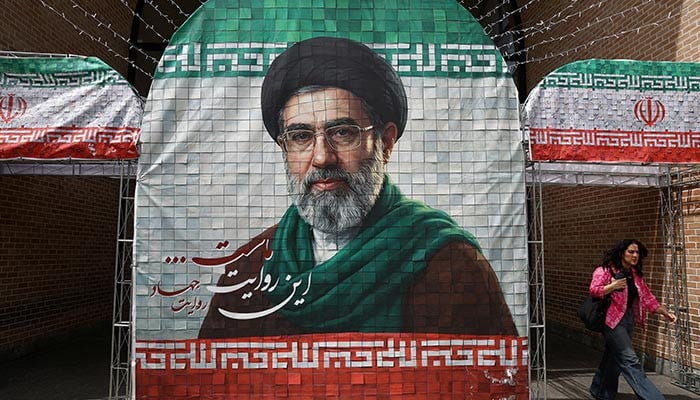
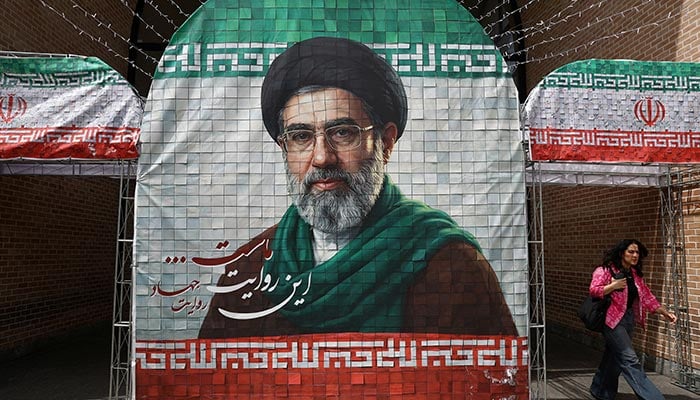
DUBAI: Iran’s Supreme Leader has issued a directive that the country’s near-weapons-grade uranium should not be sent abroad, two senior Iranian sources said, hardening Tehran’s stance on one of the main US demands at peace talks.
Ayatollah Mojtaba Khamenei’s order could further frustrate US President Donald Trump and complicate talks on ending the US-Israeli war on Iran.
Israeli officials have told Reuters that Trump has assured Israel that Iran’s stockpile of highly enriched uranium, needed to make an atomic weapon, will be sent out of Iran and that any peace deal must include a clause on this.
Israeli Prime Minister Benjamin Netanyahu has said he will not consider the war over until enriched uranium is removed from Iran, Tehran ends its support for proxy militias, and its ballistic missile capabilities are eliminated.
“The Supreme Leader’s directive, and the consensus within the establishment, is that the stockpile of enriched uranium should not leave the country,” said one of the two Iranian sources, who spoke on condition of anonymity because of the sensitivity of the matter.
Iran’s top officials, the sources said, believe that sending the material abroad would leave the country more vulnerable to future attacks by the United States and Israel. Khamenei has the last say on the most important state matters.
The White House and Iran’s foreign ministry did not respond to requests for comment.
Deep suspicion among top Iranian officials
A shaky ceasefire is in place in the war that began with US-Israeli strikes on Iran on February 28, after which Iran fired at Gulf states hosting US military bases and fighting broke out between Israel and Hezbollah in Lebanon.
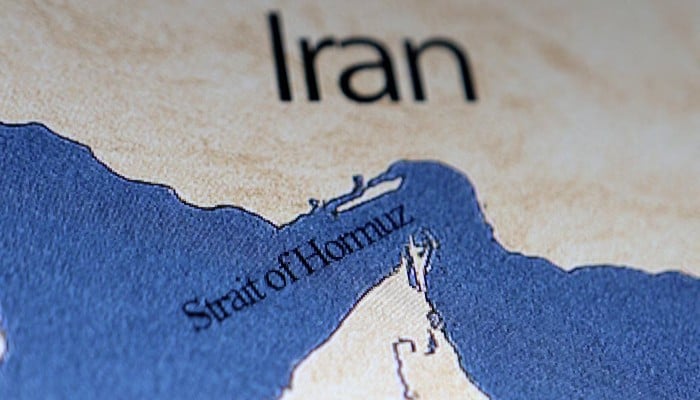
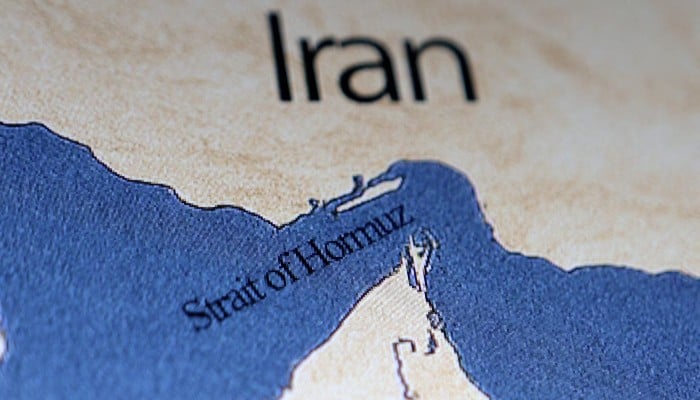
But there has been no big breakthrough in peace efforts, with a US blockade of Iranian ports and Tehran’s grip on the Strait of Hormuz, a vital global oil supply route, complicating negotiations mediated by Pakistan.
The two senior Iranian sources said there was deep suspicion in Iran that the pause in hostilities was a tactical deception by Washington to create a sense of security before it renews airstrikes.
Iran’s top peace negotiator, Mohammad Baqer Qalibaf, said on Wednesday that “obvious and hidden moves by the enemy” showed the Americans were preparing new attacks.
Trump said on Wednesday the US was ready to proceed with further attacks on Tehran if Iran did not agree to a peace deal, but suggested Washington could wait a few days to “get the right answers.”
The two sides have started to narrow some gaps, the sources said, but deeper splits remain over Tehran’s nuclear programme — including the fate of its enriched uranium stockpiles and Tehran’s demand for recognition of its right to enrichment.
Iran hardens stance on enriched uranium stockpile
Iranian officials have repeatedly said Tehran’s priority is to secure a permanent end to the war and credible guarantees that the US and Israel will not launch further attacks.
Only after such assurances are in place, they said, would Iran be prepared to engage in detailed negotiations over its nuclear programme. Tehran has long denied seeking a nuclear bomb.
Israel is widely believed to have an atomic arsenal but has never confirmed or denied it has nuclear weapons, maintaining a so-called policy of ambiguity on the issue for decades.
Before the war, Iran signalled willingness to ship out half of its stockpile of uranium, which has been enriched to 60%, a level far higher than what is needed for civilian uses.
But sources said that the position changed after repeated threats from Trump to strike Iran.
Israeli officials have told Reuters it is still unclear whether Trump will decide to attack and whether he would give Israel a green light to resume operations. Tehran has vowed a crushing response if attacked.
However, the source said there were “feasible formulas” to resolve the matter.
“There are solutions like diluting the stockpile under the supervision of the International Atomic Energy Agency,” one of the Iranian sources said.
The IAEA estimates that Iran had 440.9kg of uranium enriched to 60% when Israel and the US attacked Iranian nuclear facilities in June 2025. How much of that has survived is unclear.
IAEA chief Rafael Grossi said in March that what remained of that stock was “mainly” stored in a tunnel complex in its Isfahan nuclear facility, and that his agency believed slightly more than 200 kg of it was there. The IAEA also believes some is at the sprawling nuclear complex at Natanz, where Iran had two enrichment plants.
Iran says some highly enriched uranium is needed for medical purposes and for a research reactor in Tehran which runs on relatively small amounts of uranium enriched to around 20%.
- Claimed zone extends near UAE port.
- Ships told to seek Iranian approval.
- UAE fast-tracks Hormuz bypass pipeline.
DUBAI/TEHRAN: A top UAE official denounced Iran’s claim of control over Emirati waters in the blockaded Strait of Hormuz as a “pipe dream” on Thursday, following an announcement by an Iranian body overseeing the strait.
“The regime is trying to establish a new reality born from a clear military defeat, but attempts to control the Strait of Hormuz or infringe on the UAE’s maritime sovereignty are nothing but pipe dreams,” said the United Arab Emirates’ presidential adviser Anwar Gargash in a post on X.
Iran’s new body overseeing the Strait of Hormuz has said its claimed area of control extends to waters south of the United Arab Emirates’ port of Fujairah, which hosts oil infrastructure designed to bypass the strategic waterway.
Traffic through Hormuz — a vital global shipping conduit — has come under Iranian control since the outbreak of war with Israel and the United States on February 28.
Iran, which has effectively closed the strait since the war and is seeking to charge ships for passage, has insisted that vessels transiting the waterway must obtain permission from the Iranian armed forces.
In a post on X on Wednesday, accompanied by a map, the Persian Gulf Strait Authority said it had outlined “the regulatory jurisdiction for the management” of the strait.
It said this covered the area between the line extending from “Kuh-e Mubarak in Iran to the south of Fujairah in the UAE… to the line connecting the tip of Qeshm island in Iran to Umm Al-Quwain in the UAE”.
It added that “transit through this area for the purpose of passing through the Hormuz Strait requires coordination with, and authorisation from, the Persian Gulf Strait Authority”.
Relations between Iran and the United Arab Emirates have been severely strained since the war, after Tehran launched retaliatory missile and drone strikes against Gulf countries in response to US-Israeli attacks.
The UAE has strongly opposed Iran’s control of the strait and called for joint action to ensure freedom of navigation through the waterway.
On Friday, the UAE announced it was fast-tracking the construction of a new oil pipeline bypassing Hormuz through Fujairah port.
The Abu Dhabi Media Office said the West-East Pipeline would double state oil giant ADNOC’s export capacity through Fujairah, adding that it is expected to become operational next year.
Iran has repeatedly accused regional states of allowing US forces to carry out attacks from their territory.
Gulf nations have repeatedly denied the accusations, saying even before the conflict that they would not allow their territory or airspace to be used to attack Iran.
On Wednesday, Iran’s Revolutionary Guards said they had allowed 26 ships, including oil tankers and other vessels, to pass through the strait over the previous 24 hours.
Last week, Iran said “more than 30 ships” had been allowed to pass, including some Chinese vessels.

Full list of Quiz stores to close in UK as fashion retailer falls into administration

Russia flexes nuclear muscles as tensions rise with Nato

Trump administration says new EPA rules will save you money at the supermarket. It’s not clear they will

-

 Entertainment1 week ago
Conan O’Brien hat tricks as Oscar host
-

 Fashion1 week ago
Italy’s Zegna Group’s Q1 growth boosted by strong organic performance
-

 Entertainment5 days ago
Where Pete Davidson, Elsie Hewitt stand after breakup: Details revealed
-
 Business1 week ago
Tui issues update on summer jet fuel shortage fears
-
 Business1 week ago
Jersey Election 2026: Cost of living concern in St Helier Central
-

 Entertainment7 days ago
Emilia Clarke recalls near-death incident while filming ‘Game of Thrones’
-

 Sports1 week ago
Jacob Fatu chooses to acknowledge violence, AAA Mega Championship makes WWE history and more from Raw
-

 Entertainment1 week ago
OpenAI chief Altman says Elon Musk wanted control of ChatGPT maker, denies betrayal