

Politics
Airbus, Air France found guilty of manslaughter over 2009 Atlantic crash

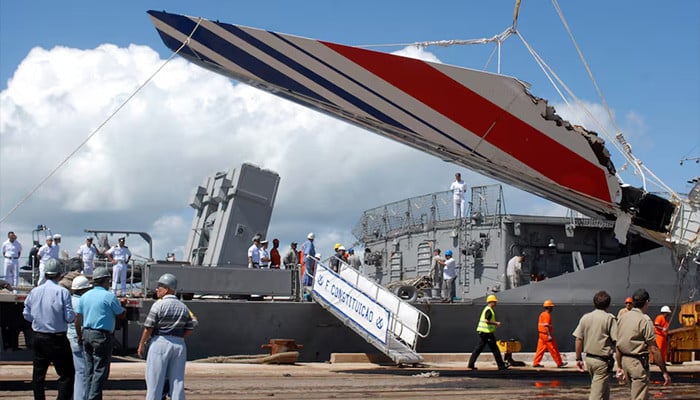
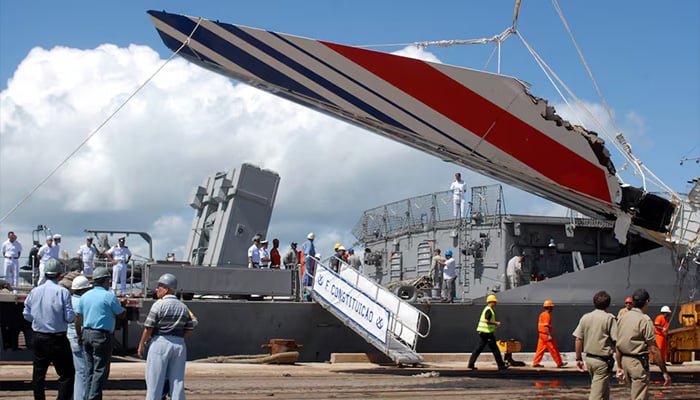
A French appeals court found Airbus and Air France guilty of corporate manslaughter on Thursday over the Rio-Paris plane crash, but a 17-year legal battle over the country’s worst aviation disaster is set to continue.
“Justice has absolutely been done,” Daniele Lamy, president of the AF447 victims’ association, whose son was one of 228 people who died in the crash, said outside the courtroom.
Relatives of some of those who died when the Airbus A330 plunged in pitch darkness into the Atlantic during an equatorial storm on June 1, 2009, listened to the verdict in silence.
A lower court had in 2023 cleared the two French companies, both of which have repeatedly denied the charges.
Thursday’s verdict is the latest milestone in a legal marathon involving relatives of the mainly French, Brazilian and German victims and two of France’s most emblematic companies.
The appeals court ordered them both to pay the maximum fine for corporate manslaughter, €225,000 ($261,720), following the request of prosecutors during last year’s eight-week trial.
The fines, amounting to just a few minutes of either company’s revenue, have been widely dismissed as a token penalty but families said corporate reputations were on the line.
Airbus and Air France both said they would appeal to France’s highest court, ignoring pleas from the relatives.
“There is no human, moral or legal justification in continuing this procedure,” said Lamy, who appealed to both companies to stop what she called “procedural harassment”.
Divisions over crash cause
Lawyers had predicted further appeals on legal points and warned these could potentially drag the process out for years.
Families’ lawyer Alain Jakubowicz told Reuters a second full re-trial, rehashing the evidence a third time, could not be ruled out if the Court of Cassation faulted Thursday’s verdict.
Relatives and lawyers sat in a high-windowed courtroom that has witnessed some of France’s most historic trials as a judge read out a list of victims, many sharing the same family names.
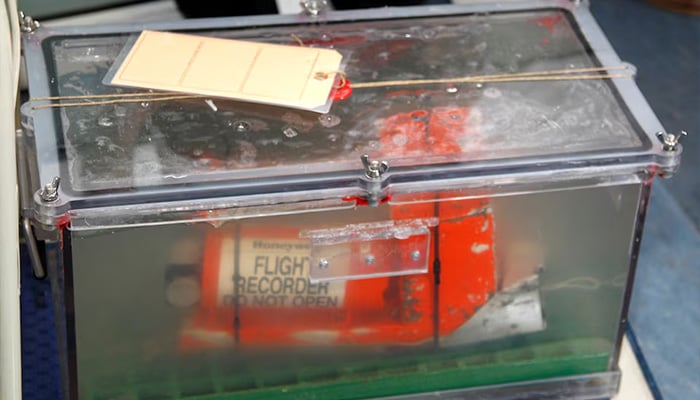
The black boxes from Flight 447 were retrieved in 2011, after a two-year deep-sea search that was almost called off.
The trial exposed bitter divisions between the airline and planemaker over the cause of the accident and a gulf between a civil crash report that focused mainly on the actions of pilots and a wider chain of cause and effect highlighted by the court.
Analysts said the ruling was unlikely to alter regulators’ views on the crash, which did not lead to major technical changes. France’s BEA crash investigators found the plane’s crew had pushed their jet into a stall, chopping lift from under the wings, after mishandling a problem to do with iced-up sensors.
Prosecutors, however, focused their attention on alleged failures inside both the planemaker and airline. Those included poor training and failing to follow up on earlier sensor flaws.
To prove manslaughter, prosecutors had to not only establish negligence but also pull the threads together to demonstrate how this caused the crash. Their failure to make that part of the argument stick had resulted in the earlier acquittal.
Lamy said the deceased pilots had been “rehabilitated”.
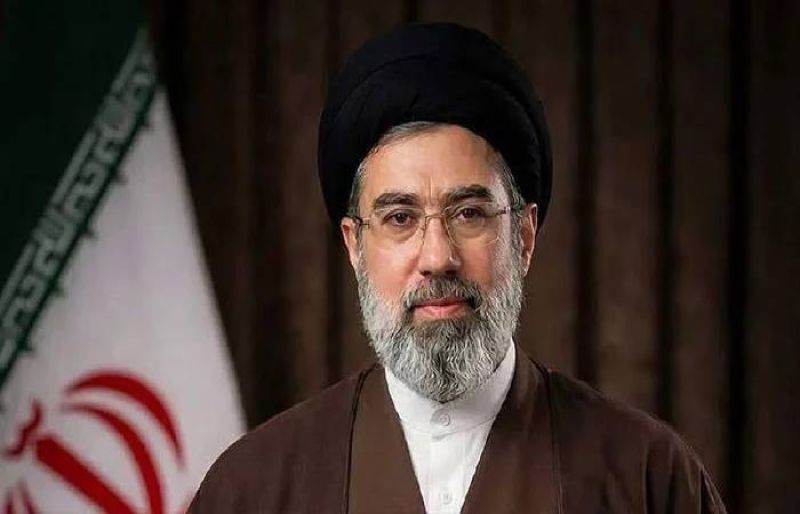
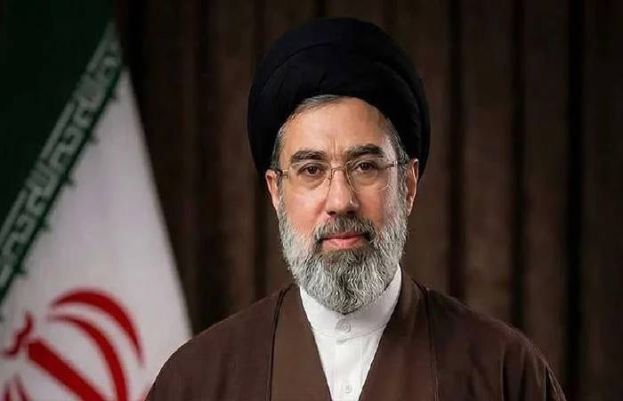
Iran’s Supreme Leader has issued a directive that the country’s near-weapons-grade uranium should not be sent abroad, two senior Iranian sources said, hardening Tehran’s stance on one of the main US demands at peace talks.
Ayatollah Mojtaba Khamenei’s order could further frustrate US President Donald Trump and complicate talks on ending the US-Israeli war on Iran.
Israeli officials have told Reuters that Trump has assured Israel that Iran’s stockpile of highly enriched uranium, needed to make an atomic weapon, will be sent out of Iran and that any peace deal must include a clause on this.
Israeli Prime Minister Benjamin Netanyahu has said he will not consider the war over until enriched uranium is removed from Iran, Tehran ends its support for proxy militias, and its ballistic missile capabilities are eliminated.
“The Supreme Leader’s directive, and the consensus within the establishment, is that the stockpile of enriched uranium should not leave the country,” said one of the two Iranian sources, who spoke on condition of anonymity because of the sensitivity of the matter.
Iran’s top officials, the sources said, believe that sending the material abroad would leave the country more vulnerable to future attacks by the United States and Israel. Khamenei has the last say on the most important state matters.
The White House and Iran’s foreign ministry did not respond to requests for comment.
Deep suspicion among top Iranian officials
A shaky ceasefire is in place in the war that began with US-Israeli strikes on Iran on February 28, after which Iran fired at Gulf states hosting US military bases and fighting broke out between Israel and Hezbollah in Lebanon.
But there has been no big breakthrough in peace efforts, with a US blockade of Iranian ports and Tehran’s grip on the Strait of Hormuz, a vital global oil supply route, complicating negotiations mediated by Pakistan.
The two senior Iranian sources said there was deep suspicion in Iran that the pause in hostilities was a tactical deception by Washington to create a sense of security before it renews airstrikes.
Iran’s top peace negotiator, Mohammad Baqer Qalibaf, said on Wednesday that “obvious and hidden moves by the enemy” showed the Americans were preparing new attacks.
Trump said on Wednesday the US was ready to proceed with further attacks on Tehran if Iran did not agree to a peace deal, but suggested Washington could wait a few days to “get the right answers.”
The two sides have started to narrow some gaps, the sources said, but deeper splits remain over Tehran’s nuclear programme — including the fate of its enriched uranium stockpiles and Tehran’s demand for recognition of its right to enrichment.
Iran hardens stance on enriched uranium stockpile
Iranian officials have repeatedly said Tehran’s priority is to secure a permanent end to the war and credible guarantees that the US and Israel will not launch further attacks.
Only after such assurances are in place, they said, would Iran be prepared to engage in detailed negotiations over its nuclear programme. Tehran has long denied seeking a nuclear bomb.
Israel is widely believed to have an atomic arsenal but has never confirmed or denied it has nuclear weapons, maintaining a so-called policy of ambiguity on the issue for decades.
Before the war, Iran signalled willingness to ship out half of its stockpile of uranium, which has been enriched to 60%, a level far higher than what is needed for civilian uses.
But sources said that the position changed after repeated threats from Trump to strike Iran.
Israeli officials have told Reuters it is still unclear whether Trump will decide to attack and whether he would give Israel a green light to resume operations. Tehran has vowed a crushing response if attacked.
However, the source said there were “feasible formulas” to resolve the matter.
“There are solutions like diluting the stockpile under the supervision of the International Atomic Energy Agency,” one of the Iranian sources said.
The IAEA estimates that Iran had 440.9kg of uranium enriched to 60% when Israel and the US attacked Iranian nuclear facilities in June 2025. How much of that has survived is unclear.
IAEA chief Rafael Grossi said in March that what remained of that stock was “mainly” stored in a tunnel complex in its Isfahan nuclear facility, and that his agency believed slightly more than 200 kg of it was there. The IAEA also believes some is at the sprawling nuclear complex at Natanz, where Iran had two enrichment plants.
Iran says some highly enriched uranium is needed for medical purposes and for a research reactor in Tehran which runs on relatively small amounts of uranium enriched to around 20%.
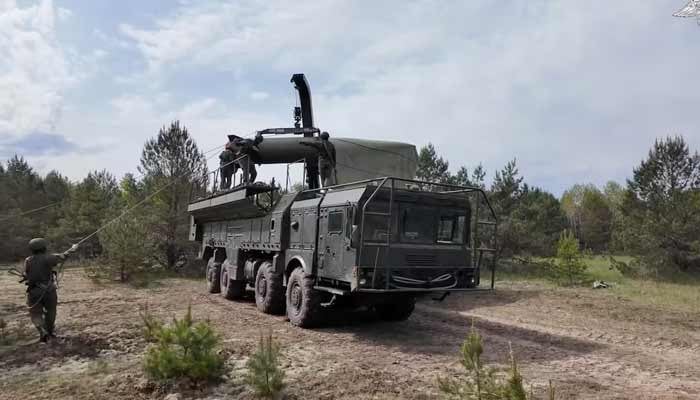
Russia on Thursday delivered nuclear munitions to field storage facilities in Belarus and showcased elements of its strategic nuclear forces, as tensions with European Nato members rose over the Ukraine war and drone activity in the Baltic.
Moscow is conducting some of its biggest nuclear exercises in years, involving 64,000 people to drill its forces in “the preparation and use of nuclear forces in the event of aggression”.
The three-day exercises, which began on Tuesday across Russia and Belarus, involve the Strategic Missile Forces, the Northern and Pacific fleets, long-range aviation, and units from the Leningrad and Central military districts.
As part of the drills, Russia displayed a Borei-class nuclear-powered ballistic missile submarine, Il-38 anti-submarine aircraft, a MiG-31 armed with a Kinzhal hypersonic missile and RS-24 Yars intercontinental ballistic missiles.
President Vladimir Putin described the use of nuclear weapons as a “last resort” but stressed the importance of maintaining the nuclear triad as a guarantor of sovereignty and strategic deterrence.
A missile unit in Belarus is training to receive special munitions for the mobile Iskander-M tactical missile system, including loading munitions onto launch vehicles, Russia said.
Russian nuclear exercises typically use dummy warheads. One video released by the defence ministry showed a tarp-backed military truck travelling with minimal security, while others showed nuclear submarines, aircraft and warships.
The drills come as Moscow says it is locked in an existential struggle with the West over Ukraine.
Throughout the war, Putin has issued reminders of Russia’s nuclear might as a warning to the West not to go too far in its support of Kyiv. Ukraine and some Western leaders have dismissed such moves as irresponsible sabre rattling.
Baltic tensions escalate
Moscow has accused Baltic countries of allowing Ukraine to fly over their territory to attack northern Russia, an accusation that Nato has denied.
The Baltic states, all strong backers of Ukraine, counter that Russia is redirecting Ukrainian drones into their airspace from their intended targets in Russia.
The Kremlin criticised remarks by Lithuania’s top diplomat as “verging on insanity” on Wednesday after Foreign Minister Kestutis Budrys said Nato had to show Moscow it was capable of penetrating the Russian exclave of Kaliningrad.
Kaliningrad is sandwiched between Nato members Lithuania and Poland on the Baltic coast. It has a population of around one million and is heavily militarised, serving as the headquarters of Russia’s Baltic Fleet.


ABU DHABI: An Emirati court has jailed a man for three years and fined him AED5 million for posting a social media video that authorities said encouraged marriage to minors in Morocco and spread false claims.
The Abu Dhabi Federal Court of Appeals’ State Security Chamber found Saif Salem Saif Ali Al Maqbali guilty, according to a statement reported by state news agency WAM.
The court also ordered the removal of the video, the closure of his social media accounts, and the seizure of the mobile phone used to publish the content.
Prosecutors said the case was sent for an urgent trial after investigations showed the defendant posted a video promoting marriage to underage girls in Morocco. He also falsely claimed that Moroccan law allows this.
Investigators said the video used language that could “promote hatred and social division” and harm relations between Emirati and Moroccan communities.


Big Sean reflects on Coachella mental health speech for Hailey, Justin Bieber

Logan Paul’s WWE success as an outsider ‘messed it up’ for everyone else, Austin Theory says

Can OpenAI’s ‘Master of Disaster’ Fix AI’s Reputation Crisis?

-

 Fashion1 week ago
Italy’s Zegna Group’s Q1 growth boosted by strong organic performance
-

 Entertainment6 days ago
Where Pete Davidson, Elsie Hewitt stand after breakup: Details revealed
-
 Business1 week ago
Tui issues update on summer jet fuel shortage fears
-
 Business1 week ago
Jersey Election 2026: Cost of living concern in St Helier Central
-

 Entertainment7 days ago
Emilia Clarke recalls near-death incident while filming ‘Game of Thrones’
-

 Fashion1 week ago
Global cotton production, stocks to fall; consumption to rise: WASDE
-

 Politics6 days ago
Rising diesel costs from Iran war strain US school budgets
-

 Fashion1 week ago
US’ Kontoor Brands’ posts strong Q1, plans Lee divestiture