

Fashion
How Bangladesh turned denim into enviable success story

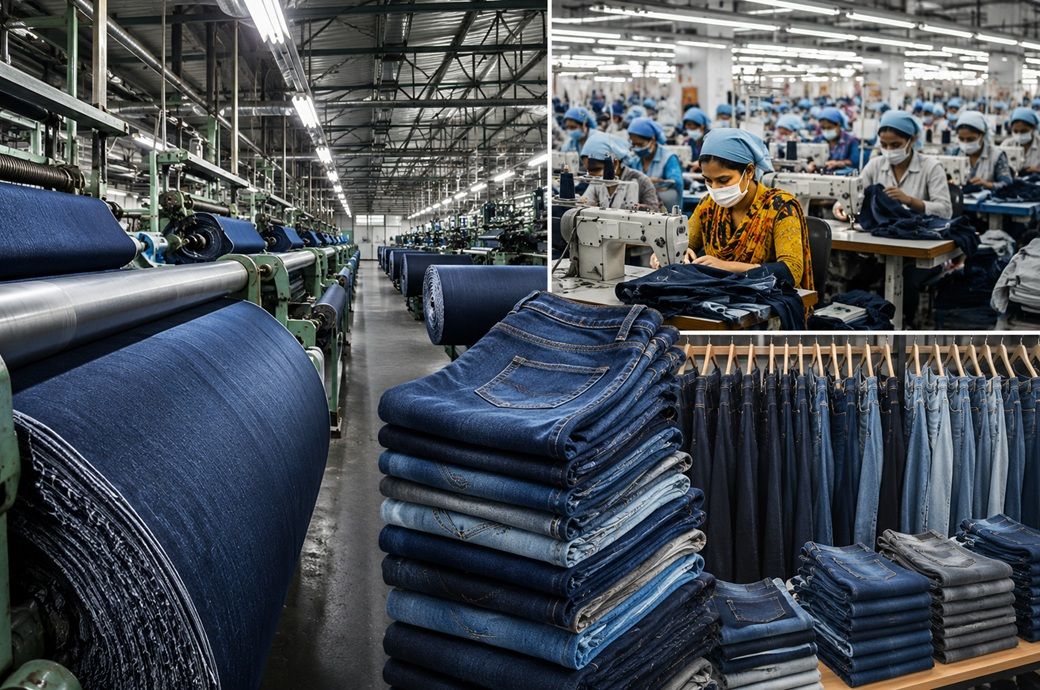
Bangladesh now ranks as the largest exporter of denim apparel to both the European Union and the United States, according to reports. This achievement reflects decades of strategic expansion, capacity-building, and a strong focus on denim as a product category.
One look at the infrastructure, and the scale of this transformation becomes clear! A little over a decade ago, Bangladesh reportedly had only about 10 to 12 denim fabric mills. That figure has since grown to nearly 50, reflecting sustained investment and long-term industry commitment.
Bangladesh’s denim journey began decades ago with a modest shipment and has evolved into a remarkable success story, establishing the country as the leading denim exporter to the EU and the USA.
The ascent has been driven by strategic expansion, robust local fabric supply base, cost-competitive workforce, and access to affordable resources.
Thanks to such efforts, the domestic mills now meet approximately 60 per cent of the country’s denim fabric requirement, and the remaining through imports. This has enabled denim apparel manufacturers to achieve a strategic balance that keeps them agile enough to serve diverse international buyers without compromising either on speed or quality.
Several structural advantages have also played a significant role in the country’s rise as a denim powerhouse. To start with, Bangladesh offers a large, cost-competitive workforce that continues to attract global sourcing decisions, and equally important is its growing reputation as a sustainability leader. Today, the country hosts the highest number of green-certified garment factories in the world, a credential that carries increasing weight as international brands tighten their environmental commitments.
Access to relatively affordable energy and water resources added another layer of competitive advantage.
Global sourcing shifts have further accelerated Bangladesh’s momentum. According to industry insiders, geopolitical uncertainty and supply chain diversification have encouraged brands to reduce reliance on China, with Bangladesh emerging as a beneficiary of this trend.
Denim’s year-round demand consistency, combined with ongoing investments in new fabric mills and advanced washing facilities, has further strengthened the sector, driving steady growth.
As per some estimates, Bangladesh shipped denim garments worth $2.6 billion to the EU and US markets last year, marking a sharp 25 per cent increase from $2.07 billion the year prior.
The United States alone accounted for $960 million of that figure, as per some estimates, a robust 34 per cent year-on-year growth, giving Bangladesh an estimated 26 per cent market share and the top position in American denim imports.
The European Union has been equally strong, with exports reaching $1.64 billion, up 21 per cent, as per some estimates, thereby cementing Bangladesh’s lead over key regional competitors, including Pakistan.
Looking ahead, the fundamentals remain firmly in Bangladesh’s favour. Denim’s enduring appeal, rooted in its comfort, durability, and versatility across casual fashion, shows no signs of fading among global consumers. And with expanding production capacity, a maturing manufacturing ecosystem, and a sustainability profile that increasingly aligns with buyer expectations, Bangladesh is well-positioned not just to defend its leadership in denim but extend it further in the days to come.
Fibre2Fashion News Desk (DR)











Tiruppur’s MMF and performancewear pivot remains strategically necessary, but 2026 cost shocks are testing its economics.
TexPro data shows knitted exports down 8.6 per cent in January-February 2026, while crude-linked polyester, dyeing, LPG and packaging costs have surged.
The cluster’s next advantage will depend on scale, backward linkages, contracts and cost pass-through discipline.
Source link
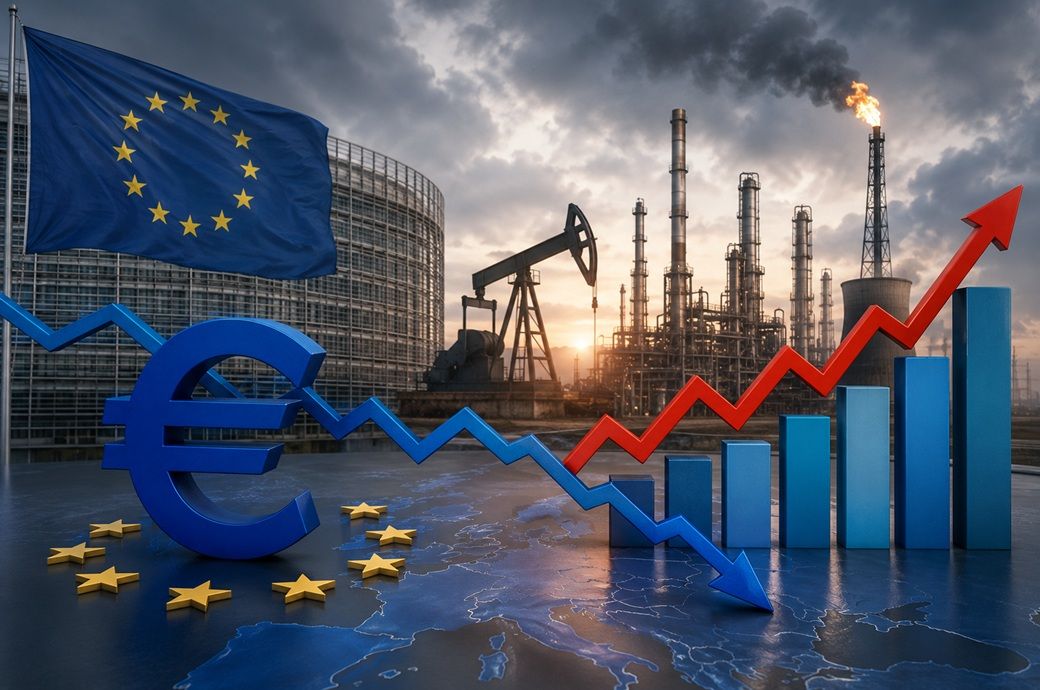
The impact of the energy shock is set to extend into 2027, with GDP growth picking up to a modest 1.4 per cent and inflation easing to 2.4 per cent—still some 0.3 pp higher than projected in autumn 2025.
The downward revision to growth in 2026 compared to autumn partly reflects slightly stronger-than-expected growth conditions at the beginning of 2026.
EU GDP growth is projected to slow down to 1.1 per cent this year, while inflation may rise to 3.1 per cent, the European Commission’s Spring 2026 Economic Forecast said.
The impact of the energy shock is set to extend into 2027.
The European Central Bank and most other EU central banks are expected to tighten their monetary policy stance or, at a minimum, delay previously anticipated easing measures.
Moreover, the inflation forecast for 2027 is influenced by the postponement of the roll-out of new EU Emissions Trading System, which, in the previous forecast round, was estimated to add 0.2 to 0.3 pp to inflation.
Futures energy prices point to a relatively swift, albeit partial, normalisation of supply conditions, with oil and gas prices expected to peak in the current quarter and decline to around 20 per cent above pre-war levels by end 2027.
Inflation data for March and April 2026 already point to a strong surge in energy prices. Energy inflation in the EU is expected to peak above 11 per cent in the second quarter (Q2) this year and remain above 10 per cent for the rest of the year, before declining in early 2027, and turning negative from Q2 2027.
In response to higher inflation, the European Central Bank (ECB) and most other EU central banks are expected to tighten their monetary policy stance or, at a minimum, delay previously anticipated easing measures.
Higher financing costs and weaker profits weigh on firms’ capacity to finance investment, while elevated uncertainty prompts many to postpone or scale back investment plans, a release from the commission said.
Despite a strong carryover from 2025, gross fixed capital formation is now expected to grow by only 2.2 per cent in 2026 and 2 per cent in 2027—a marked deceleration from the 2.8 per cent increase in 2025, and a downward revision compared to the Autumn 2025 Forecast.
With employment growth now projected to slow to 0.3 per cent in 2026 and 0.4 per cent in 2027, the unemployment rate is expected to stabilise at around 6 per cent. Nominal wages are set to decelerate less than previously expected in 2026, and remain sustained, growing by around 3.5 per cent in 2027, as they adjust with a lag to higher inflation.
Productivity growth is expected to slow to 0.7 per cent in 2026, as firms retain labour in a context of uncertain demand prospects, before recovering to 1 per cent in 2027.
EU merchandise balance is expected to decline to 1.2 per cent of GDP in 2026 and 1.1 per cent in 2027.
Overall, the current account surplus is projected to fall from 2.4 per cent of GDP in 2025 to 1.7 per cent in 2026 and 1.6 per cent in 2027.
The EU aggregate general government deficit is projected to gradually widen over the forecast horizon, rising from 3.1 per cent of GDP in 2025 to 3.6 per cent in 2027. This deterioration reflects a combination of subdued economic activity, higher interest expenditure, rising defence spending and new fiscal measures that aim to shield consumers and firms from high energy prices, the Commission said.
Risks to the outlook are primarily linked to the evolution of the conflict in the Middle East and its implications for global energy markets, it added.
Fibre2Fashion News Desk (DS)

The April figure was far below market forecasts of a 15,000 gain.
Full-time jobs dropped by 10,700 in April after a sharp rise in March.
Australia’s net employment fell by 18,600 month on month in April.
The April figure was far below market forecasts of a 15,000 gain.
Full-time jobs dropped by 10,700 in April after a sharp rise in March.
The unemployment rate rose to 4.5 per cent in April, the highest since November 2021, while the labour force participation rate eased to 66.7 per cent.
The unemployment rate rose to 4.5 per cent in April, the highest since November 2021. The labour force participation rate eased to 66.7 per cent.
The official statistical agency observed that a drop in female employment—the first since August 2025—drove the overall fall.
Fibre2Fashion News Desk (DS)


How Bangladesh turned denim into enviable success story

King Charles orders new safety measures after shocking incident

A Probe Took Incredible Pictures of Mars on Its Way to a Far-Off Asteroid

-

 Entertainment1 week ago
Where Pete Davidson, Elsie Hewitt stand after breakup: Details revealed
-

 Politics1 week ago
Rising diesel costs from Iran war strain US school budgets
-

 Tech1 week ago
Why Is Your Grill So Dumb? The Best Grills Set Temp Like an Oven
-

 Tech1 week ago
This Solar-Powered Smart Sprinkler Keeps My Lawn Watered Without Any Power Cables
-

 Fashion7 days ago
Turkiye’s current account deficit expected to widen in 2026: Minister
-

 Entertainment1 week ago
Princess of Wales praised as ‘step ahead’ of royal family
-

 Fashion1 week ago
India’s Pearl Global’s FY26 revenue crosses $521 mn milestone
-
 Fashion6 days ago
Nigeria Kwara Garment Factory, KWS Garment Production Village ink pact