

Politics
Thailand’s Anutin Charnvirakul elected PM after rout of ruling party rival

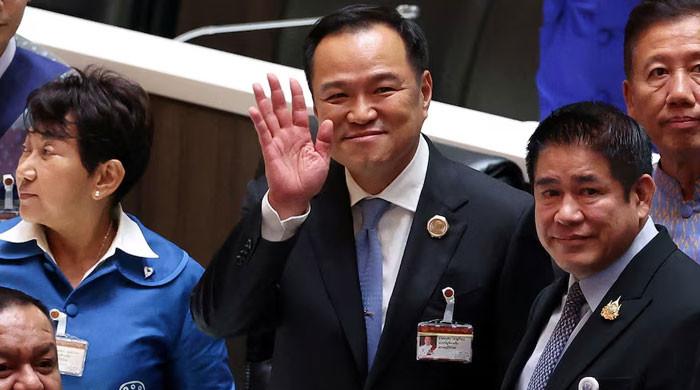
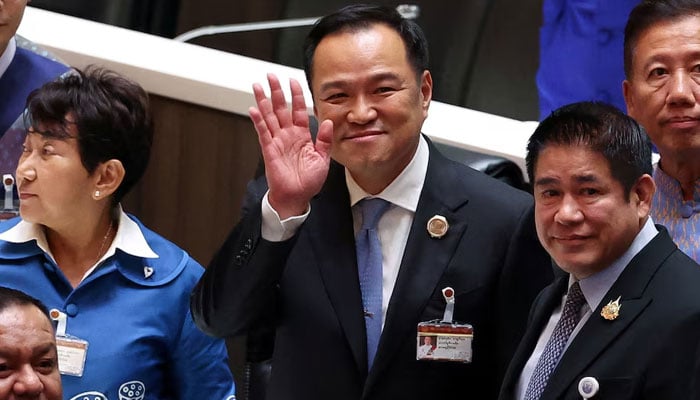
Thailand’s Anutin Charnvirakul was elected prime minister on Friday after breezing through a parliamentary vote, trouncing the candidate of the Shinawatra family’s once-dominant ruling party to end a week of chaos and political deadlock.
With decisive opposition backing, Anutin easily passed the threshold of more than half of the lower house votes required to become premier, capping off days of drama and a scramble for power during which he outmanoeuvred the most successful political party in Thailand’s history.
Shrewd dealmaker Anutin has been a mainstay in Thai politics throughout years of turmoil, positioning his Bhumjaithai party strategically between warring elites embroiled in an intractable power struggle and guaranteeing its place in a succession of coalition governments.
His rout of rival contender Chaikasem Nitisiri was a humiliation for the ruling Pheu Thai party, the once unstoppable populist juggernaut of influential billionaire Thaksin Shinawatra, who left Thailand late on Thursday for Dubai, where he spent the bulk of his 15 years in self-imposed exile.
Anutin led from the start and won 63% of the votes, with double the tally of Chaikasem.
He was mobbed by a phalanx of media as he left the chamber, his aides fending off a scrum of journalists who jostled and shouted as he edged slowly towards a waiting car.
“I will work my hardest, every day, no holidays, because there is not a lot of time,” Anutin said, his face lit up by bursts of camera flashes.
“We have to ease problems quickly.”
Pheu Thai’s crisis was triggered in June by Anutin’s withdrawal from its alliance, which left the coalition government clinging to power with a razor-thin majority amid protests and plummeting popularity.
The hammer blow was last week’s dismissal by a court of Thaksin’s daughter and protege Paetongtarn Shinawatra, the sixth prime minister from or backed by the Shinawatra family to be removed by the military or judiciary.
Anutin’s victory came as a result of a pact with the progressive opposition People’s Party, the largest force in parliament, which he seduced with promises to hold a referendum on amending the constitution and call an election within four months.
‘We will return’
A political veteran and son of a former cabinet minister who once ran his family’s construction firm, 58-year-old Anutin is a former deputy premier, interior minister and health minister who served as Thailand’s COVID-19 tsar.
As a staunch royalist, Anutin is considered a conservative, although he made a name for himself by leading a successful campaign to decriminalise cannabis in Thailand, which led to an explosion of thousands of marijuana retailers.
Anutin will lead a minority government, which the People’s Party will not join, and take the helm of a country with an economy struggling from weak consumption, tight lending and soaring levels of household debt.
His expedited rise to the premiership was tied to the political reckoning of powerbroker Thaksin and decline of Pheu Thai, which won five of the past six elections but has haemorrhaged support among the working classes once wooed by its raft of populist giveaways.
Despite the heavy defeat, Pheu Thai vowed to come back to power and deliver on its agenda.
“We will return to finish the job for all the Thai people,” it said.
Thaksin’s unannounced departure from Thailand on his private jet came after his party failed in desperate bids to dissolve the house and undermine Anutin’s bloc. A court ruling that could see Thaksin jailed is set for next week.
The tycoon made a vaunted homecoming from Dubai in 2023 to serve an eight-year sentence for abuse of power and conflicts of interest, but on his first night in prison he was transferred to the VIP wing of a hospital on medical grounds.
His sentence was commuted to a year by the king and he was released on parole after six months in detention. The Supreme Court will decide on Tuesday if Thaksin’s hospital stint counts as time served. If not, it could send him back to jail.
In a post on X, Thaksin said he was in Dubai for a medical checkup and to see old friends.
“I will be back in Thailand by September 8 to personally attend court,” he said.
NEW YORK: Two men were charged Monday with “terrorist” offences for throwing a nail bomb near a weekend protest, after which the pair told police they were aligned with terrorist group Daesh, charging documents showed.
The two men, both US citizens, are in custody after allegedly being involved in tossing the bomb packed with explosives.
This is being investigated as an act of Daesh-inspired terrorism, said NYPD Commissioner Jessica Tisch.
She said it was not thought to be linked to the ongoing conflict in Iran. No one was hurt during the incident.
Two suspicious devices were thrown by a man identified by police as Emir Balat near the protest Saturday, led by a far-right influencer.
According to the charging document, the men “referred to Daesh in recorded post-arrest statements… More specifically, Balat wrote on a piece of paper that he pledge(d) allegience (sic) to the Daesh.”
The men were charged with five counts including attempted support of a “foreign terrorist organisation” and “use of a weapon of mass destruction.”
On Sunday, the police bomb squad inspected a car connected to the men near the scene. Tisch said a suspicious device found in the vehicle tested negative for explosives.
‘Flames and smoke’
Police had said Saturday that the devices were jars wrapped in tape and containing nuts, bolts and screws. Also arrested was Ibrahim Kayumi.
The events unfolded after the far-right influencer, Jake Lang, staged a demonstration outside Gracie Mansion, the official residence of New York Mayor Zohran Mamdani.
His protest drew around 20 people, while a counter-protest drew about 125. Mamdani was not home during the incident.
Lang returned to the scene of the incident Monday and was outside Mamdani’s official residence.
AFP correspondents at the scene on Saturday saw a man wearing a dark hooded sweatshirt and beige cargo pants — later identified as Balat —being handed a device wrapped in tape and billowing smoke by another man, named by police as Kayumi.
Balat dropped the device near a line of police before vaulting a barrier.
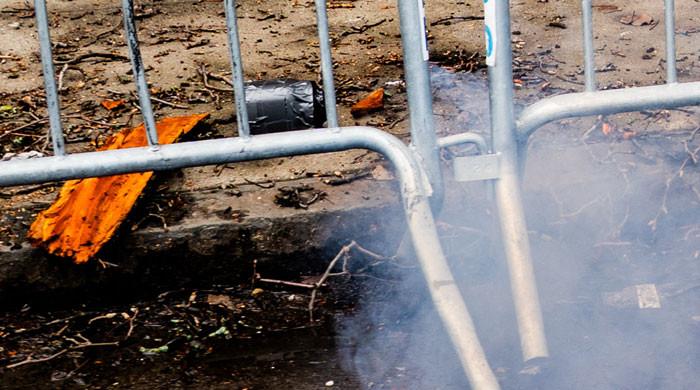
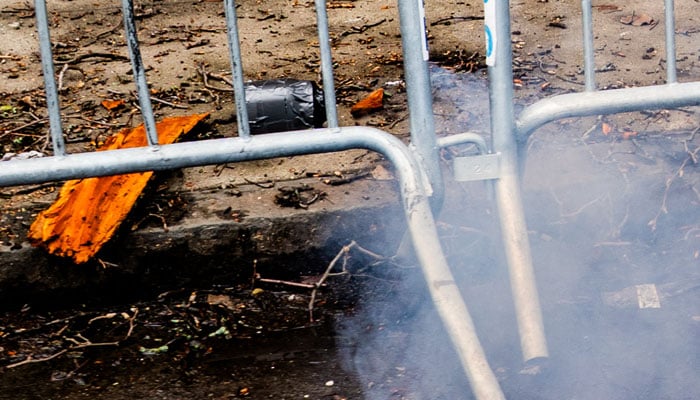
“Witnesses reported seeing flames and smoke as it travelled through the air before it struck a barrier a few feet from police officers,” Tisch said Saturday.
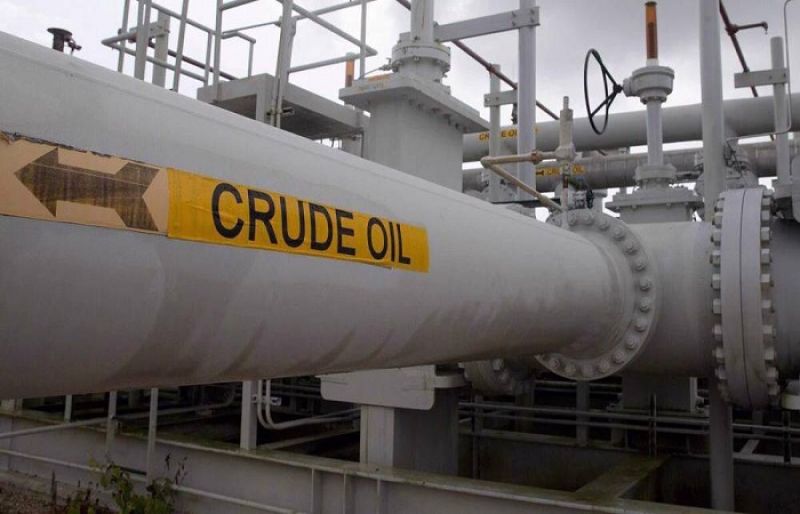
Crude oil prices have soared past $100 a barrel amid a large-scale and unprovoked US-Israeli war on Iran.
The international benchmark of Brent crude jumped more than 20 percent on Sunday, and at one point hit $115 as concerns increased over prolonged disruptions to global energy supplies.
The benchmark was being traded at around $107.50 as of 0230 GMT on Monday following a slight moderation. The uptick marked the first time oil prices climbed over $100 per barrel since the onset of Russia’s operations in Ukraine in 2022.
US President Donald Trump, who campaigned heavily on cost-of-living concerns in the 2024 vote, sought to downplay the rise in prices.
“Short term oil prices, which will drop rapidly when the destruction of the Iran nuclear threat is over, is a very small price to pay for the USA, and World, Safety and Peace,” Trump asserted in a post on Truth Social.
US Secretary of Energy Chris Wright also tried to brush off the prospect of soaring energy prices earlier on Sunday.
He told CBS News’ Face the Nation program that any increase in prices at the petrol pump would be “temporary.”Crude oil prices have spiked by about 50 percent since the US and Israel launched joint strikes on Iran on February 28.
Iran, in retaliation, has effectively brought shipping in the Strait of Hormuz to halt.
Iraq, the United Arab Emirates and Kuwait — three of the major producers in the Organization of the Petroleum Exporting Countries (OPEC) — have slashed production amid an accumulating backlog of barrels with no destination to go due to the effective closure of the strategic waterway.
Meanwhile, stocks in Asia tumbled drastically on Monday morning, as investors prepared for the fallout of soaring energy prices.
Japan’s 225 index fell more than 7 percent in early trading, while South Korea’s KOSPI plunged more than 8 percent.The Hang Seng Index in Hong Kong also fell by nearly 3 percent.
US stocks futures, which are regularly traded outside of usual market hours, also experienced significant losses.
Futures tied to Wall Street’s benchmark S&P 500 fell by 1.7 percent, while those for the tech-heavy Nasdaq Composite dropped by 1.90 percent.
The International Monetary Fund (IMF) has predicted that energy sustained 10 percent rise in oil prices brings about a 0.5 rise in inflation and a 0.15 percent reduction in global economic growth.
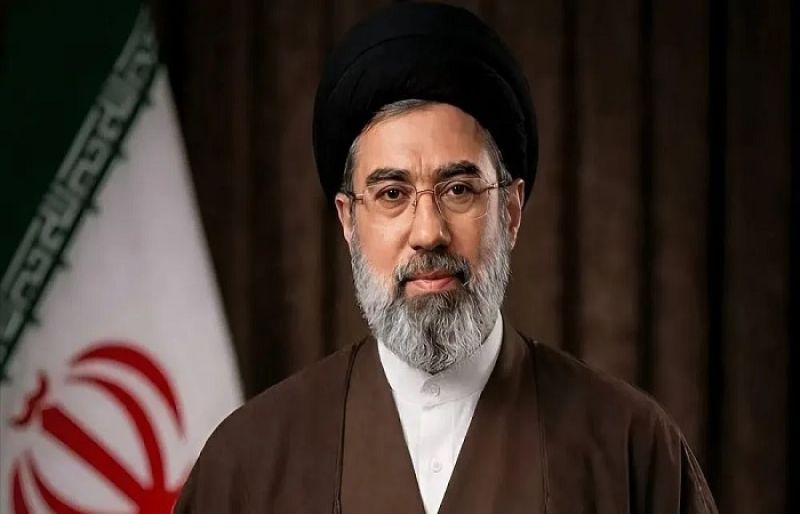

Ayatollah Seyyed Mojtaba Hosseini Khamenei has been elected the new Supreme Leader of the Islamic Revolution and the Islamic Republic of Iran.
Iran’s Assembly of Experts, a body of 88 clerics, on Sunday night officially appointed Mojtaba Khamenei, 56 years old, as the new Leader of the Islamic Revolution and the third Supreme Leader of the Islamic Republic of Iran. Mojtaba Khamenei is the son of martyred Supreme Leader Ayatollah Seyyed Ali Khamenei.
“By a decisive vote, the Assembly of Experts appointed Ayatollah Seyyed Mojtaba Hosseini Khamenei as the third Leader of the sacred system of the Islamic Republic of Iran,” the assembly said in a statement.
The announcement, issued by the Secretariat of the Assembly of Experts, begins with invocations in the name of Allah, the Most Gracious, the Most Merciful, and extends heartfelt condolences to the noble and free nation of Islamic Iran.
It honors the martyrdom of Ayatollah Seyyed Ali Khamenei, whose heavenly ascension marks the end of an era of wise and steadfast leadership. Ayatollah Khamenei was martyred on February 28 in a terrorist US and Israeli strike.
The statement also pays tribute to other exalted martyrs, including high-ranking commanders of the armed forces and the innocent students of the Shajra Tayyiba School in Minab City, all victims of the barbaric assaults by criminal America and the Zionist regime.
The statement reveres the exalted institution of Wilayat al-Faqih (Guardianship of the Islamic Jurist) during the occultation of the Imam of the Age (may Allah hasten his reappearance), emphasizing its pivotal role in the Islamic Republic’s system.
It celebrates the 47 years of exemplary governance by the Imams of the Revolution, rooted in dignity, independence, and divine authority.
Following meticulous studies and a decisive vote by the respected representatives, guided by religious duty and accountability before God Almighty, Ayatollah Seyyed Mojtaba Hosseini Khamenei (may Allah protect him) was introduced as the new Leader.
The statement expresses gratitude to the members of the provisional council under Article 111 for their interim service and calls upon the entire noble nation of Iran –especially the elites, intellectuals, scholars of the seminaries, and university communities — to pledge unwavering allegiance to the new leadership.
It urges unity around the axis of Wilayat al-Faqih, a bulwark against the plots of arrogant powers.
In closing, the Assembly of Experts statement invokes Almighty God’s continued grace and mercy upon Iran and its resilient people, affirming that the Islamic Revolution remains an indomitable force for justice and independence.


Milan’s big derby win; Arsenal’s FA Cup scare; Yamal stars again; more

Steve Carell shares ‘favorite part’ of ‘life’: ‘Aww’

Nvidia Is Planning to Launch an Open-Source AI Agent Platform

-

 Sports3 days ago
Pakistan set for FIH Pro League debut | The Express Tribune
-

 Politics3 days ago
India let Iran warship dock the day US sank another off Sri Lanka, say officials
-

 Entertainment3 days ago
Harry Styles kicks off new era with ‘One Night Only’ comeback show
-
 Business1 week ago
Labour parliamentarians urge UK Government to oppose Rosebank oil field
-
 Business3 days ago
Home heating oil: ‘Most of my pension has gone on home heating oil’
-

 Sports1 week ago
Michigan loses L.J. Cason for rest of season with torn ACL
-
 Business3 days ago
Restaurant group changes name after bid to buys pubs across the UK
-
 Entertainment1 week ago
King Charles returns to Norfolk with no plans to see Andrew