

Business
Tata Motors To Pass On Full GST Cut, Commercial Vehicles To Get Cheaper From Sep 22

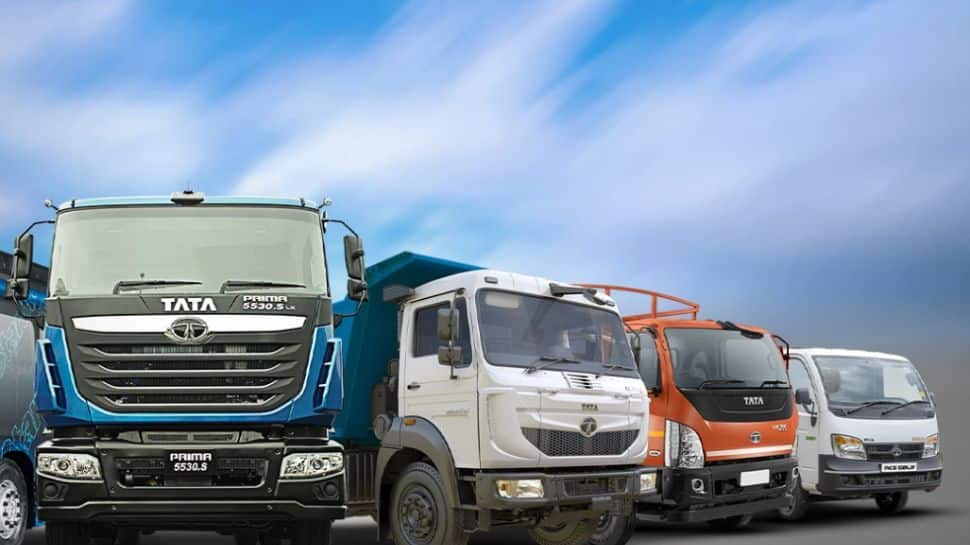
Tata Motors Vehicles Price In India: Tata Motors on Sunday announced that it will pass on the entire benefit of the recent GST rate cut to its commercial vehicle customers. The new prices will be effective from September 22, the day the revised GST rates come into force.
“Tata Motors will pass on the full benefit of the recent GST reduction on its entire commercial vehicle range to customers, effective September 22, the date the revised GST rates come into effect,” the company said in a statement.
The price cuts will vary across different vehicle categories. Heavy commercial vehicles (HCVs) will see a reduction ranging between Rs 2.8 lakh and Rs 4.65 lakh. Intermediate, light, and medium commercial vehicles (ILMCVs) will become cheaper by Rs 1 lakh to Rs 3 lakh.
Buses and vans will see reductions between Rs 1.2 lakh and Rs 4.35 lakh. Small commercial passenger vehicles (SCVs) will get price cuts between Rs 52,000 and Rs 66,000, while SCVs and pickups will become cheaper by Rs 30,000 to Rs 1.1 lakh. The company said the GST on commercial vehicles has been reduced to 18 per cent, a move that it believes will help revive India’s transport and logistics sector.
Girish Wagh, Executive Director of Tata Motors, said the decision reflects the government’s commitment to strengthening the country’s economic backbone. He added that Tata Motors is proud to extend the full GST benefit to customers, ensuring lower costs and better access to modern vehicles.
Tata Motors highlighted that commercial vehicles play a crucial role in India’s growth by driving logistics, trade, and connectivity. With the GST reduction, the company expects the total cost of ownership for transporters, fleet operators, and small businesses to come down.
This will encourage faster fleet modernisation and wider adoption of advanced, cleaner mobility solutions, helping operators cut costs, improve efficiency, and boost profits. The company has also encouraged customers to book vehicles early to take advantage of the reduced prices during the upcoming festive season.





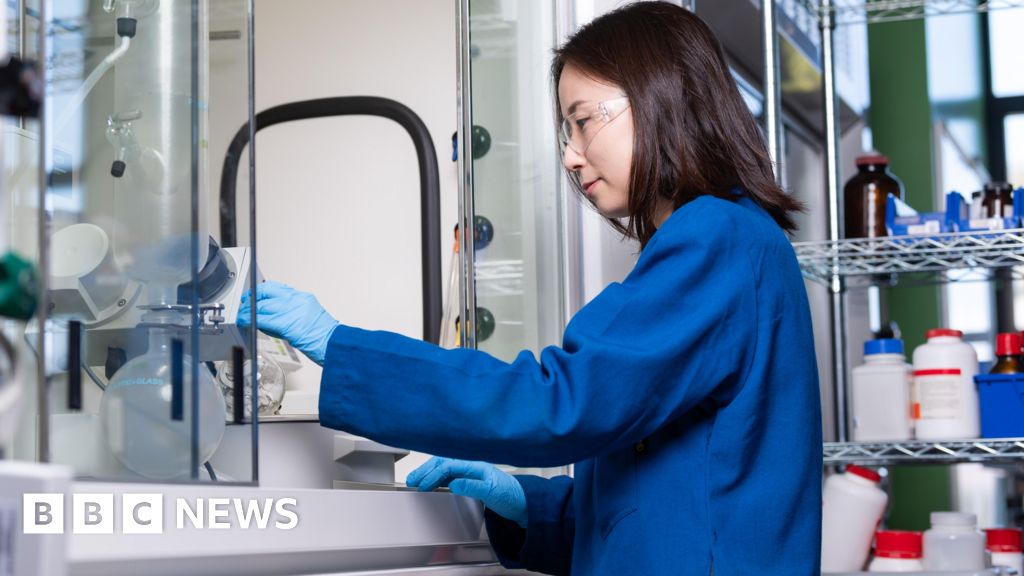
Molecules that can capture heat could be a useful technology to decarbonise heating.
Source link

NEW DELHI: The West Asia conflict is pushing govt to look at a faster transition towards renewable energy, including the possibility of increasing ethanol blending in petrol from 20-25%, although in a calibrated manner. This will come along with increased refining capacity within the country, so that there is a buffer in the system and greater domestic resilience, those familiar with the discussions said, pointing out that sustaining refineries at 100% capacity is not sustainable.While Barmer refinery has begun operations, expansion at Numaligarh is underway and work on integrated refineries on the west coast is also under focus. Apart from a mega refinery in Maharashtra, a new facility in Gujarat is also planned.Officials said rising use of renewables, biofuels and hydrogen in the energy mix was no longer just an environmental issue, but a strategic necessity in a situation like the present one, where the military conflict in West Asia has disrupted global energy supplies, triggering a supply crisis and a surge in oil and gas prices.According to officials, 20% ethanol blending has helped India save 4.5 crore barrels of crude annually and reduce foreign exchange outflow by around ₹1.5 lakh crore so far. Given the concerns over fuel efficiency and impact on vehicles, govt is expected to take a gradual approach that addresses the anxiety on ethanol blending. The third pillar on energy is expanding the strategic petroleum reserves.

A cup of coffee and strawberry frosted donut with sprinkles at a Dunkin’ Donuts location in Los Angeles, Sept. 6, 2017.
Patrick T. Fallon | Bloomberg | Getty Images
Dunkin’ and Buffalo Wild Wings owner Inspire Brands has confidentially filed for an initial public offering, the company announced on Friday.
If Inspire goes public, it will be one of the biggest-ever restaurant offerings. Private equity firm Roark Capital, which backs Inspire, is reportedly seeking a valuation of roughly $20 billion.
Inspire was founded in 2018 through a merger between Arby’s and Buffalo Wild Wings. Acquisitions followed: Sonic Drive-In later in 2018 and Jimmy John’s in 2019. And in 2020, Inspire took Dunkin’ and its sister chain Baskin Robbins private in an $11 billion deal.
Across those six chains, Inspire has more than 33,300 restaurants worldwide and $33.4 billion in annual sales, according to the company’s website.
Inspire isn’t the only restaurant company pursuing an IPO. Last month, Jersey Mike’s also announced that it had confidentially filed with the Securities and Exchange Commission.
The market for initial public offerings has been tepid, although that could change later this year. Market volatility, economic uncertainty and recent poor performance among IPO stocks has led to a backlog of listings.
However, several blockbuster IPOs, such as the SpaceX offering that could value the company at more than $1 trillion, are anticipated in the coming months.


Rory McIlroy slams LIV golfers who don’t want to come back to PGA Tour—but why now?

Iran could withstand blockade for four months, claims CIA report, as tensions flare
[CinePlex360] Please moderate: “Texas orders im

-

 Politics6 days ago
Iran weighs US reply delivered via Pakistan as Trump signals opposition to deal terms
-

 Tech1 week ago
Almost half of UK businesses hit by cyber attacks | Computer Weekly
-

 Tech1 week ago
This Indigenous Language Survived Russian Occupation. Can It Survive YouTube?
-

 Fashion1 week ago
Canada’s Lululemon appoints Esi Eggleston Bracey to board of directors
-

 Fashion1 week ago
US’ J.Jill, Inc. appoints Kimberly Wallengren as CMO
-

 Entertainment1 week ago
David Allan Coe, country singer who wrote “Take This Job and Shove It,” dies at age 86
-
 Business1 week ago
Government hikes jet fuel prices by 5% for international airlines – The Times of India
-
 Business1 week ago
Apollo Sports Capital and Tom Dundon make landmark $225 million investment in pickleball