

Politics
Is SCO transforming into a new military-economic bloc?

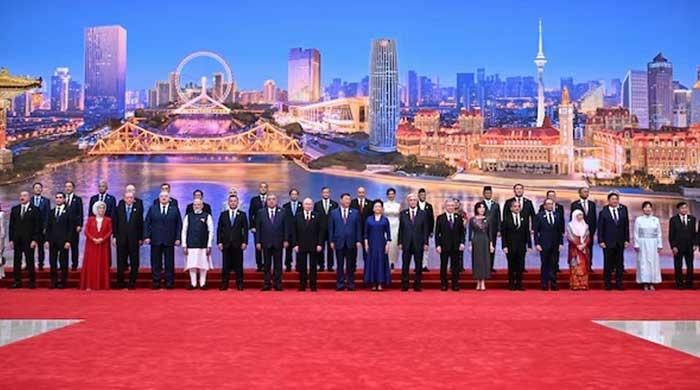
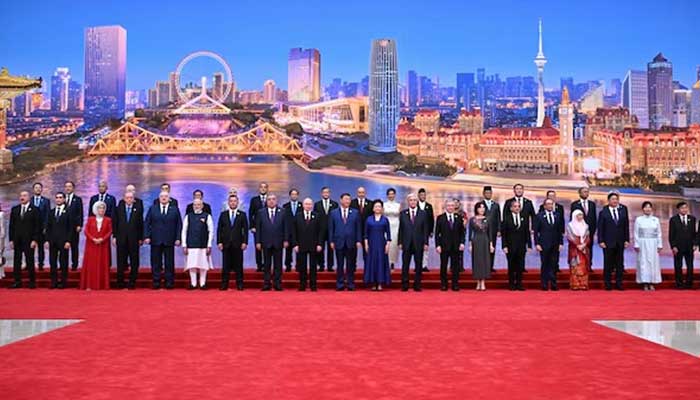
The Shanghai Cooperation Organisation (SCO) summit has raised many eyebrows in Europe and alerted the United States of America. There were strong reasons for that.
First and foremost, without naming any adversary, President Xi Jinping had made obvious remarks against the US. And by stressing security, SCO warned the West that this forum may one day have its own IMF and a military alliance.
To grasp the significance of the summit and the victory parade against Japanese aggression, I put a few direct questions to His Excellency Yang Yundong, Consul General of the People’s Republic of China in Karachi.
Q: Last week, China held the SCO summit, where it hosted a unique group of leaders and celebrated people’s historic victory over fascism and the Japanese aggression. What message did this gathering give to the West, especially to the United States of America?
A: The SCO Summit in Tianjin was an important meeting hosted by China as the presidency. It was attended by leaders and representatives of more than 20 countries and 10 international organisations. The summit adopted the Tianjin Declaration. President Xi Jinping put forward important proposals: upholding unity in diversity, mutual benefit and win-win outcomes, openness and inclusiveness, fairness and justice, as well as pragmatic and efficient cooperation, while also advancing the Global Governance Initiative (GGI).
He stressed that the SCO should play a leading role, remain a stabilising force in a turbulent world, promote global openness and cooperation, steer economic globalisation toward a more inclusive and beneficial direction, and continue to foster exchanges and mutual learning among civilisations.
President Xi made it clear that the SCO must firmly oppose hegemony and power politics, practice genuine multilateralism, and serve as a mainstay in advancing multi-polarity and democracy in international relations. The proposals were welcomed and supported by leaders of participating countries and received broad recognition and positive response from the international community.
Q: During the victory parade, the world also witnessed the most sophisticated and stunning weaponry. President Xi Jinping said, “China will not be intimidated by any bully; it will always move forward.’’ Were these gestures meant for Washington?
A: China held a grand military parade in solemn commemoration of the 80th anniversary of the victory of the Chinese People’s War of Resistance Against Japanese Aggression and the World Anti-Fascist War. Our purpose is to remember history, honour fallen heroes, cherish peace, and create a better future. History cautions us that humanity rises and falls together.
Only when all countries and nations treat each other as equals, coexist in peace, and support each other can we uphold common security, eradicate the root cause of war, and prevent the recurrence of historical tragedies. Today, humanity again must choose between peace and war, dialogue and confrontation, win-win cooperation and zero-sum game.
China will firmly stand on the right side of history and the progress of human civilisation and remain committed to the path of peaceful development. China will speed up the building of a world-class military and firmly safeguard China’s sovereignty, unity, and territorial integrity.
All service members will provide strategic support for the great rejuvenation of the Chinese nation and make greater contributions to the peace and development of the world.
Q: President Xi explained his vision for the new global order by mentioning “Global Governance Initiative” and saying that Global governance has reached a new crossroads. In his own words, “We must continue to take a clear stand against hegemonism and power politics, and practice true multilateralism.” Is it the first step towards a probable SCO military alliance?
A: Currently, the world is undergoing frequent regional turmoil, impeded economic development, backlash against globalisation, gaps in rules and the rule of law, and an intensifying deficit in governance. Against this backdrop, questions of what kind of global governance system to build and how to reform and improve the existing global governance system have increasingly become major topics of high concern to the international community.
President Xi Jinping clearly articulated the core concepts of the GGI, namely, adhere to sovereign equality, abide by international law, practice multilateralism, advocate the people-centred approach, and focus on taking real actions. The GGI is another important global public good that President Xi Jinping has contributed to the world following the three major global initiatives.
Each of the four global initiatives has its own focus, yet they are mutually reinforcing, addressing development, security, civilisation, and governance respectively. Together, they inject stability and certainty into a turbulent world, showcasing China’s responsibility and actions in international affairs.
China has unwaveringly pursued an independent foreign policy of peace based on the principle of “partnership over alliance”, while extensively establishing partnerships with various countries to deepen friendly cooperation and safeguard world peace and common development.
Q: President of the Russian Federation, Vladimir Putin, believes that the SCO has revived genuine multilateralism. To him, this summit has laid the groundwork for a new political and socio-economic system in Eurasia. In President Putin’s own words, “This security system, unlike Euro-centric and Euro-Atlantic models, would genuinely consider the interests of a broad range of countries, be truly balanced, and would not allow one country to ensure its own security at the expense of others.”
A: Since its establishment 24 years ago, the SCO has consistently adhered to the principles of openness, transparency, and not targeting third parties. It emphasises partnership over alliance among member states, does not seek to establish military-political blocs, and firmly opposes Cold War mentality and power politics, making it an important force in maintaining regional stability.
The SCO advocates a new vision of common, comprehensive, cooperative, and sustainable security, emphasising that security should be universal — it is unacceptable to have security for one country at the expense of others, or for some nations to enjoy security while others remain insecure, let alone pursuing so-called “absolute security” by sacrificing the security of other countries.
It is essential to abide by the fundamental norms of international relations, such as respecting sovereignty, independence, and territorial integrity, and non-interference in internal affairs, while respecting the social systems and development paths independently chosen by each country. The reasonable security concerns of all parties should be acknowledged and accommodated. The SCO is committed to maintaining global strategic stability and achieving common and universal security.
Q: At the SCO summit, President Xi also proposed the creation of a new SCO Development Bank. China has shown willingness to provide $280 million in free aid to SCO members this year and $1400 million in loans to the SCO banking consortium. Is China trying to build an IMF or World Bank for SCO and curtailing the power of the US dollar and US sanctions or conditions imposed on the debtors?
A: The SCO, as a regional cooperative body dedicated to maintaining regional security and promoting common development, has continuously expanded the depth and breadth of its cooperation. China’s proposal to establish an SCO development bank is based on the shared aspirations and practical needs of its member states.
It aims to provide stable financial support for regional infrastructure construction, connectivity projects, and other cooperation initiatives that benefit people’s livelihoods. This is entirely a normal, mutually beneficial, and win-win cooperative arrangement among SCO member states, as well as an independent practice of regional cooperation.
China has always believed that the international financial system should be more just and equitable, better reflecting the voices of emerging markets and developing countries. Financial cooperation among SCO member states is intended to better serve the well-being of the people in the region and has nothing to do with any geopolitical games.
Q: After this summit, the US president has claimed that ‘India and Russia appear lost to deepest and darkest China’. Is China a Deep State and Dark State, as labelled by President Donald Trump?
A: Under the leadership of the Communist Party of China, China is vigorously advancing Chinese-style modernisation to realise the great rejuvenation of the Chinese nation and to fulfil our people’s aspirations for a better life.
At the same time, China is actively making its due contributions to global peace and development. China will always be a force for peace, stability, and progress in the world. We consistently adhere to an independent foreign policy of peace and are committed to building a community with a shared future for mankind. Our actions are open and upright, capable of standing the test of history and fact.
Q: With reference to the same statement by the US President, we see that Russia and China have had good relations for decades, but can India be bracketed in the same place? After all, Delhi is sailing in two boats. It is an active member of the Quad in the Indo-Pacific region and at the same time, participates in the SCO.
A: Some countries always view interstate relations through the lens of zero-sum game thinking. In fact, the world today is multi-polar, and it is entirely natural for a country to develop friendly and cooperative relations with different nations and organisations based on its own interests.
Guided by the Shanghai Spirit of mutual trust, mutual benefit, equality, consultation, respect for diversity of civilisations, and pursuit of common development, the SCO adheres to openness and inclusiveness and does not target any third party. We welcome India’s active participation in various cooperation initiatives within the SCO and also hope that India can play a constructive role in maintaining regional peace and stability.
Q: According to the office of the United States Trade Representative, US goods and services trade with India totalled an estimated $212.3 billion in 2024, up 8.3% ($16.3 billion) from 2023. Based on this fact, don’t you think New Delhi is using newfound love for Beijing as a bargaining chip against Washington?
A: China and India are both major developing countries and important members of the Global South. We stand ready to work with India to act on the important common understandings reached by leaders of our two countries, maintain the momentum of high-level exchanges, cement political mutual trust, enhance practical cooperation, properly handle differences, and promote the sustained, sound, and steady development of China-India ties. We believe that the development of bilateral relations is not targeted at any third party, nor should it be interfered with by any third party.
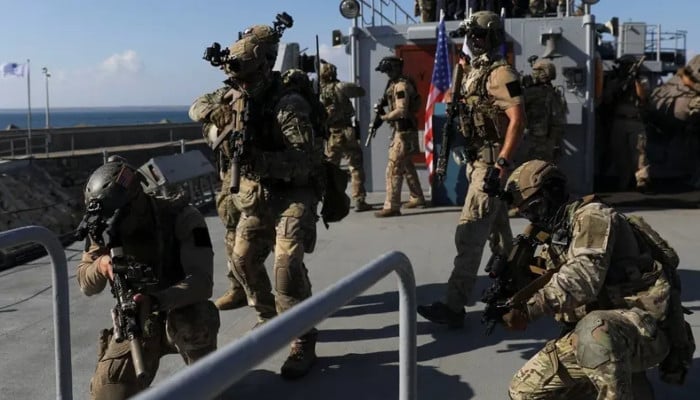
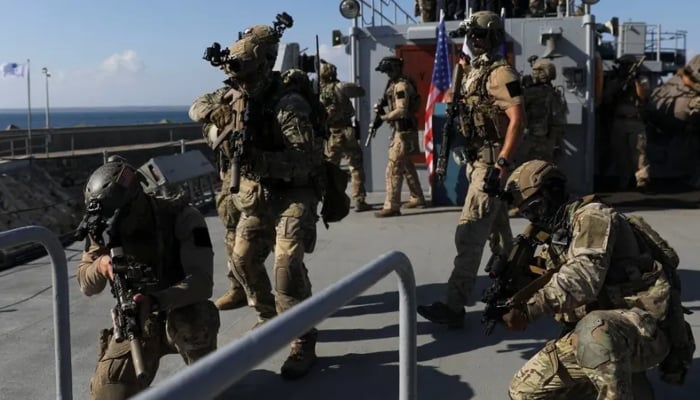
WASHINGTON: American commandos deployed deep into Iranian territory to rescue a downed airman, US news outlets reported on Sunday, hours after President Donald Trump announced that the crew member had been recovered “safe and sound.”
Tehran said this week it had shot down an F-15 warplane, the first US fighter jet to go down inside Iran since the start of the war. Washington has not confirmed the details of how the fighter went down.
Trump said early on Sunday the US military had “pulled off one of the most daring Search and Rescue Operations in U.S. [US] History, for one of our incredible Crew Member Officers, who also happens to be a highly respected Colonel, and who I am thrilled to let you know is now SAFE and SOUND!”
Navy Seal Team 6 commandos were tasked with extracting the airman, while US attack aircraft dropped bombs and opened fire on Iranian convoys to keep them away, the New York Times reported, citing an unidentified official.
The airman, a weapon systems officer, was wounded after the ejection but could still walk, evading capture in the mountains for more than a day, according to news outlet Axios, which cited a US official.
The unidentified airman was equipped with a pistol, a beacon and a secure communications device to coordinate with rescuers, the New York Times reported.
American commandos converging on the officer fired their weapons to keep Iranian forces away from the rescue site, the Times said.
Trump wrote on his Truth Social platform that he had directed the US military to send “dozens of aircraft, armed with the most lethal weapons in the World, to retrieve” him.
“He sustained injuries, but he will be just fine,” Trump wrote.
Two of the planes meant to transport the airman and his rescuers to safety were stuck in a remote base in Iran and had to be destroyed to prevent them from falling into Iranian hands, the New York Times and CBS reported.
US forces then used three other transport planes to carry the airman and his rescuers out of Iran.
The Iranian military said on Sunday the US operation to rescue the airman had used an abandoned airport in southern Isfahan province.
“The so-called US military rescue operation, planned as a deception and escape mission at an abandoned airport in southern Isfahan under the pretext of recovering the pilot of a downed aircraft, was completely foiled,” said Ebrahim Zolfaghari, spokesman for the Iranian military´s central command.
Zolfaghari also said two US “C-130 military transport planes and two Black Hawk helicopters were destroyed”.
The CIA reportedly launched a deception campaign to spread word inside Iran that US forces were moving the airman out of the country on the ground.
In his post, Trump also confirmed the “successful rescue of another brave Pilot, yesterday,” adding it was not disclosed to avoid jeopardising the second rescue mission.
“This is the first time in military memory that two U.S.[US] Pilots have been rescued, separately, deep in Enemy Territory,” he wrote, adding that both operations were concluded “without a SINGLE American killed, or even wounded.”
AFP has contacted the White House and the Pentagon for comment.
Politics
‘Humiliating defeat’: Iran destroys several US warplanes on mission to retrieve missing pilot
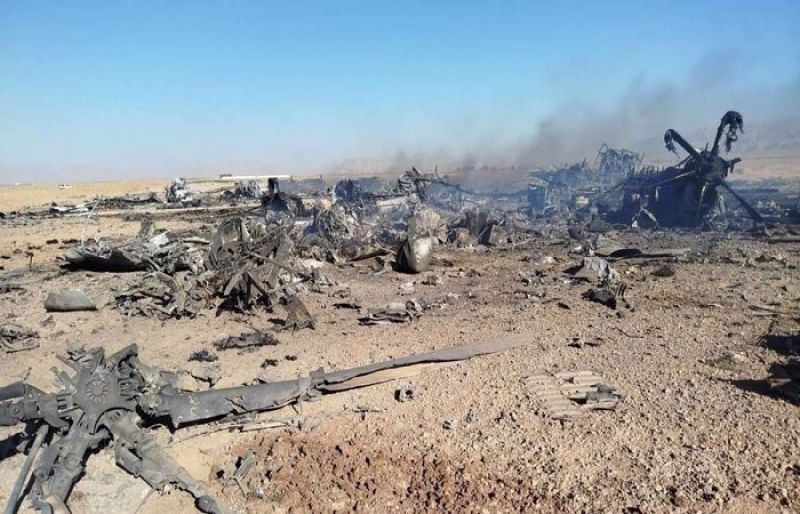
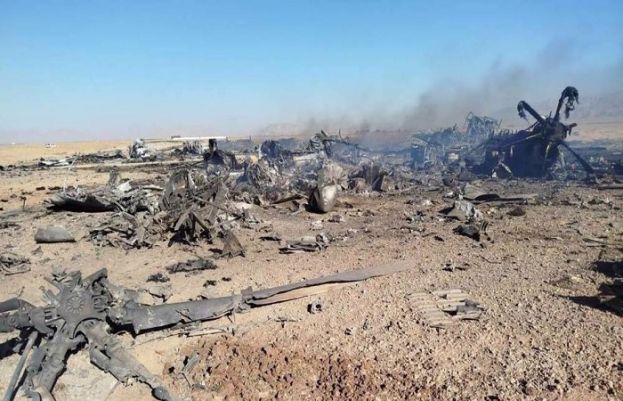
The Islamic Revolution Guards Corps (IRGC) says Iranian forces have managed to destroy several US warplanes that were conducting a mission to retrieve the pilot of a downed American fighter jet.
“Following desperate US moves to rescue the pilot of the downed fighter jet and the entry of flying objects to the country’s central parts, the enemy’s flying objects were destroyed and the US once again suffered a humiliating defeat during a joint operation (involving Aerospace, Ground forces as well as public, Basij and police units),” the IRGC’s Public relations Department said on Sunday.
The announcement came after US President Donald Trump claimed in a social media post that his country’s military “got” the pilot during an operation, one day after rescuing another pilot.
Enemy ‘failed’ to rescue pilot in Iran
Meanwhile, the spokesman for the Khatam al-Anbiya Central Headquarters said that the enemy’s desperate efforts to rescue the pilot of the downed jet “failed” with the grace of God, divine providence, as well as the timing measures and the joint operation of the fighters of the IRGC, the Army, Basij and police.
He added that the enemy flying objects, including two Black Hawk helicopters and a C-130 transport plane, are burning in fire.
Additionally on Sunday, two intruding drones, including an MQ-9 and a Hermers-900, were destroyed in the skies over Isfahan Province by Iran’s air defense systems operating under the country’s integrated air defense network.
The criminal US-Israeli aggression on Iran began on February 28 with airstrikes that assassinated senior Iranian officials and commanders.
The Iranian armed forces have responded by launching almost daily missile and drone operations targeting locations in the Israeli occupied territories as well as US military bases and assets across the region.
They have also shot down several hostile fighter jets, missiles and drones, reflecting Iran’s readiness to defend its airspace.
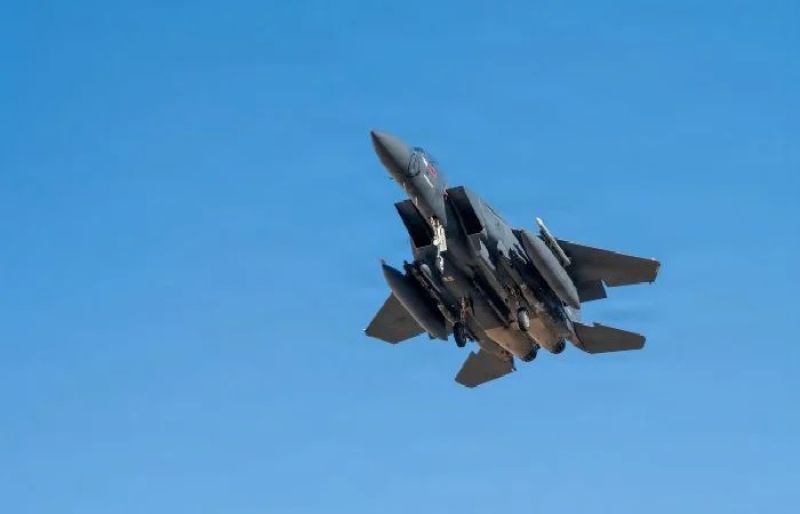
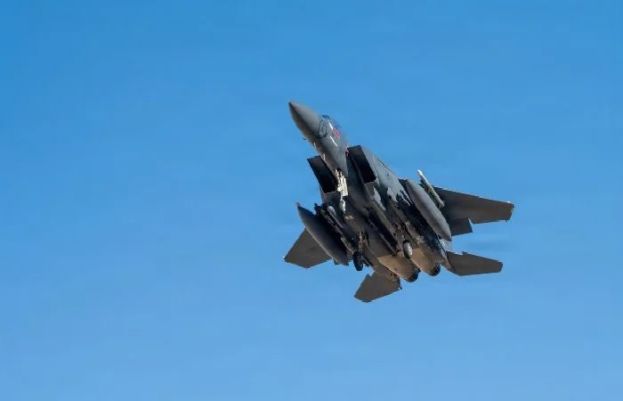
US forces staged the audacious rescue of an airman behind enemy lines after Iran downed his fighter jet, officials said on Sunday, resolving a crisis for President Donald Trump as he weighs escalating the war, now in its sixth week.
The airman rescued by special operations forces, who Trump said was a colonel, was the weapons-systems officer on the downed F-15, a US official told Reuters.
“Over the past several hours, the United States Military pulled off one of the most daring Search and Rescue Operations in US History,” Trump said in a statement, adding that the airman was injured but “he will be just fine.”
The officer was the second of two crew members on the warplane that Iran said on Friday had been brought down by its air defences. Iran’s Revolutionary Guards said several aircraft were destroyed during the US rescue mission, Tasnim news agency reported.
Reuters reported on Friday that the first crew member had been retrieved, triggering a high-profile search by both Iran and the United States for the remaining airman.
Iranian officials had urged citizens to help find him, hoping to gain leverage against Washington in the war Trump and Israel launched on February 28.
Trump has threatened to escalate the conflict in the coming days with attacks on Iran’s energy infrastructure.
Had Iran captured the airman, the ensuing hostage crisis could have shifted American public perception of a conflict that opinion polls show was already unpopular.
Trump said the airman was rescued “in the treacherous mountains of Iran” in what he said was the first time in military memory that two US pilots had been rescued, separately, deep in enemy territory.
The official told Reuters that as the weapons-systems officer was moved from near a mountain to a transport aircraft parked within Iran, US forces had to destroy at least one of the aircraft because it had malfunctioned.
US aircraft hit
The rescue effort, involving dozens of military aircraft, encountered fierce resistance from Iran.
Reuters reported on Friday that two Black Hawk helicopters involved in the search were hit by Iranian fire but escaped from Iranian airspace.
Separately, a pilot ejected from an A-10 Warthog fighter aircraft after it was hit over Kuwait and crashed, the officials said, though the extent of crew injuries was unclear.
“The fact that we were able to pull off both of these operations, without a SINGLE American killed, or even wounded, just proves once again, that we have achieved overwhelming Air Dominance and Superiority over the Iranian skies,” he said in his statement.
US air crews are trained in what to do if they go down behind enemy lines, measures known as Survival, Evasion, Resistance and Escape, but few are fluent in Persian and face a challenge in staying undetected while seeking rescue.
The conflict has killed 13 US military service members, with more than 300 wounded, US Central Command said, adding no US troops have been taken prisoner by Iran.
While Trump has repeatedly sought to portray the Iranian military as being in tatters, they have repeatedly been able to hit US aircraft.
Reuters reported on US intelligence showing that Iran retains large amounts of missile and drone capability. Until just over a week ago, the US could only determine with certainty that it had destroyed about one-third of Iran’s missile arsenal.
The status of about another third was less clear, but bombings probably damaged, destroyed or buried those missiles in underground tunnels and bunkers, Reuters sources said.
The US and Israeli war on Iran has spread across the Middle East, killing thousands and hitting the global economy with soaring energy prices that are fueling fears of inflation.


Inside the origin story of ‘One Shining Moment’ — the highlight of March Madness

Duke star Cam Boozer says he suffered fractures around eye

‘It’s a massive help’: Benefits and pensions rise as two-child cap ends

-

 Sports1 week ago
USMNT handed reality check by Doku, Belgium ahead of World Cup
-

 Sports1 week ago
2026 NCAA men’s hockey tournament: Schedule, results
-

 Fashion1 week ago
EU apparel imports slump 15.48% YoY in Jan; Bangladesh hardest hit
-
Uncategorized3 days ago
[CinePlex360] Please moderate: “Trump signals p
-

 Tech2 days ago
Our Favorite iPad Is $50 Off
-
Uncategorized7 days ago
[CinePlex360] Please moderate: “Further tariff
-
 Entertainment1 week ago
The Avett Brothers’ bassist explains why he wrote a book about John Quincy Adams
-

 Sports1 week ago
Man City show why they are worthy WSL title winners as tired United wilt