

Fashion
World Cup effect and running shoes: the trends Intersport is backing for 2026

By
DPA
Published
December 29, 2025
The sluggish economic environment is dampening consumer sentiment: many people are holding on to their money rather than shopping extensively. Germany’s largest sports retail group, Intersport, is feeling the effects too and plans to focus on specific themes and trends in the coming year- from football and running to outdoor sports.
The men’s World Cup will take place from June 11 to July 19 in the US, Canada, and Mexico- a major event that Intersport is also counting on. “In 2025, what we lacked were major sporting events like the European Football Championship and the Olympics the year before,” said Alexander von Preen, chief executive of Intersport Germany. The DFB team’s matches are scheduled so that they can be watched in the evening in Germany. “These are really favourable conditions for the World Cup.”
All major sporting events are beneficial and encourage people to do more sport. “But football just does it; it stimulates society as a whole in a positive way,” said von Preen. He expects the World Cup to revive interest in team sports. Because “then we will see even more people, more young people in sports clubs.” This area’s share of sales at Intersport had recently dipped slightly.
There is also a strong focus on the sale of shirts: at the home European Championship in 2024, Intersport retailers sold half a million shirts. The DFB team’s pink away shirt in particular struck a chord with customers and was temporarily sold out.
Intersport is banking on this effect again next year. The national team’s home shirt is already available in stores. “The feedback from our retailers when it came to ordering was very, very positive, and the launch of the latest Adidas home shirt has already far exceeded our expectations,” said Intersport executive board member Henriette Tesch, who is responsible for purchasing, among other areas. The same is expected of the away shirt, which Adidas plans to unveil in March.
Intersport’s biggest sales driver is the outdoor category. This includes clothing, shoes, and equipment for activities such as hiking, trekking, and camping. “Outdoor is our most important category- and it’s growing again at a very high, post-pandemic level,” said Tesch. In addition to multifunctional clothing, products that offer protection against UV rays and insects represent a notable innovation in outdoor apparel.
“This is all about health. Many people are no longer interested in achieving the maximum tan, but in protecting their bodies,” said Tesch. Some brands have recognised this and launched corresponding collections. Another continuing trend is that multifunctional jackets, for example, are increasingly visible on the streets.
According to Intersport, running is currently experiencing a boom- driven above all by running communities. “People are going running together- and it’s not about high performance,” said Tesch. It’s more about organising runs as social events and exercising together in groups of like-minded people.
“We benefit from that.” Every year, there are more than 3,000 such running events across Germany. This is reflected in Intersport’s sales- not only through running shoes and clothing, but also through equipment such as hydration systems. “We are currently seeing double-digit growth.” Trends such as Hyrox- an indoor competition in which participants run 1,000 metres eight times and complete workout stations in between- are also positive.
What’s more, Intersport has long observed a convergence of sport and fashion. Sports-inspired clothing such as trainers and leggings has become an integral part of many people’s everyday lives. Now there is another trend: according to Intersport, the classic running shoe is gradually replacing the trainer on the streets. “Take a closer look at people’s feet. In business settings, the white trainer is still firmly established, but you increasingly see running shoes,” said von Preen. With their substantial cushioning and higher soles, they help even non-athletes get through the day comfortably.
“This will support us significantly, especially in the sports shoe business,” said the Intersport boss. “It’s a huge trend. I would say that, compared with the trainer boom, we will now experience this running shoe boom.”
By its own account, Intersport is Germany’s largest sports retail group. It recently had around 700 retailers with more than 1,400 stores nationwide. More than 400 of these also operate under the Intersport name. The group aims to increase its turnover to around six billion euros by 2030- delivering an expected market share of just over 30%.
In 2023/24, retailers’ turnover fell slightly to 3.46 billion euros, partly due to subdued consumer sentiment. However, it said it had gained market share. For the financial year ending in September, von Preen recently anticipated slightly better trading. The retail co-operative generally does not disclose profit figures.
This article is an automatic translation.
Click here to read the original article.





Current account excluding gold and energy indicated net deficit of $3.9 billion, while goods saw a deficit of $9.5 billion.
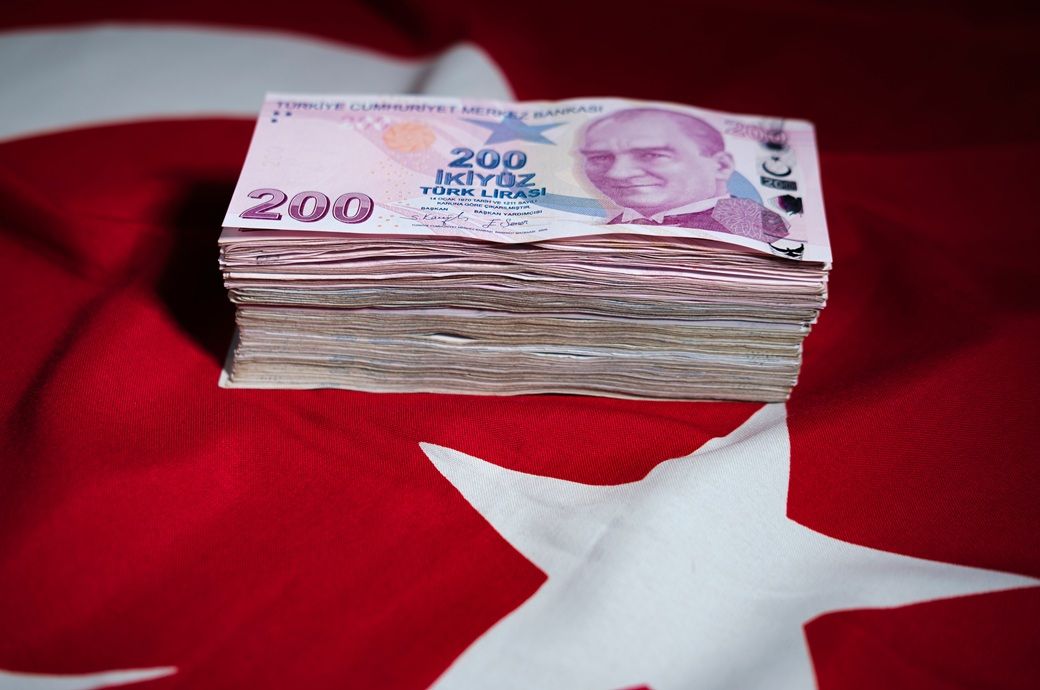
Turkiye recorded a current account deficit (CAD) of $9.6 billion in March, the country’s central bank said.
Treasury and Finance Minister Mehmet Simsek said the CAD is expected to widen this year, due to high energy and non-energy commodity prices.
Simsek said the deterioration is likely to remain temporary and manageable, thanks to stronger macroeconomic fundamentals and policy gains.
According to annualised data, current account deficit recorded as $39.7 billion (2.6 per cent of gross domestic product) in March, while the goods deficit recorded as $77.8 billion.
Simsek said the deterioration is likely to remain temporary and manageable thanks to stronger macroeconomic fundamentals and policy gains, domestic media outlets reported.
Turkiye is heavily reliant on imported energy, whose prices spiralled due to the Middle East conflict.
Simsek said elevated global commodity prices would put pressure on the external balance, but emphasised that the government’s economic programme had improved resilience against such shocks.
He said foreign direct investment (FDI) inflows totalled $1 billion in March, bringing annualised foreign direct investment to $12.6 billion.
The new investment incentive package under discussion in parliament now is expected to strengthen the country’s financing structure and support long-term capital inflows, he added.
Fibre2Fashion News Desk (DS)
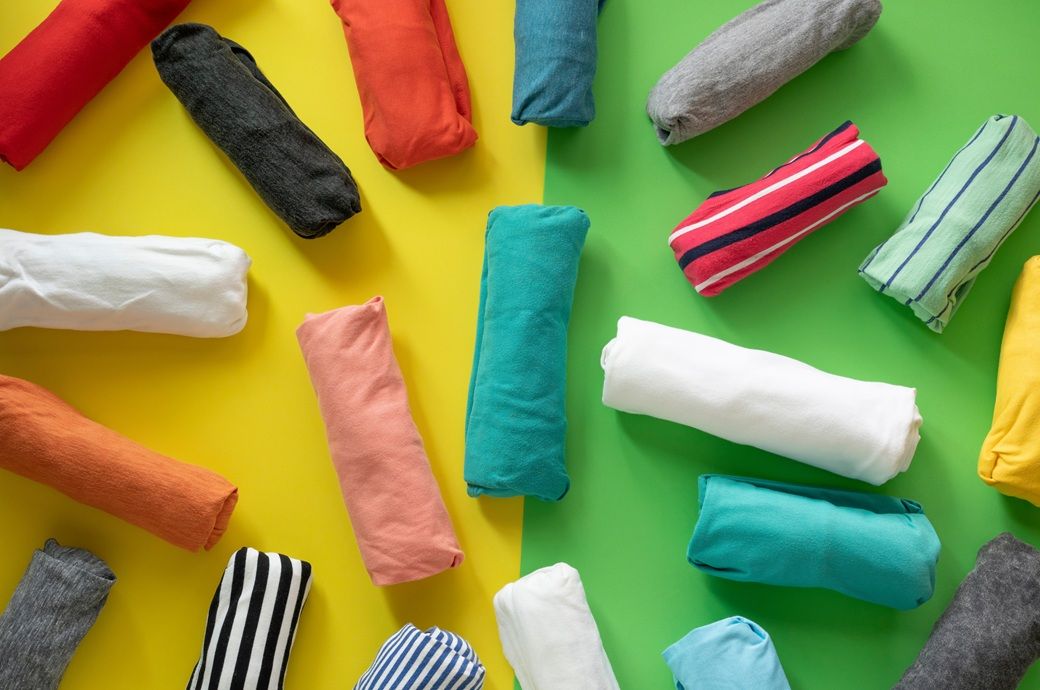
During the first quarter of ****, the UK’s imports of textile fabrics eased down *.** to £*,*** million (~$*,*** million), against £*,*** million in January-March **** but slightly higher from £*,*** million in the fourth quarter of ****. Its imports of fibre were noted at £** million (~$***.** million) steady as £** million in Q*, **** but slightly lower than £** million in Q*, ****.
During the third month of this year, the country’s clothing imports declined *.** per cent to £*.*** billion (~$*.*** billion), compared with £*.*** billion in March ****. But the inbound shipment was slightly higher month on month compared with £*.*** billion in February ****.
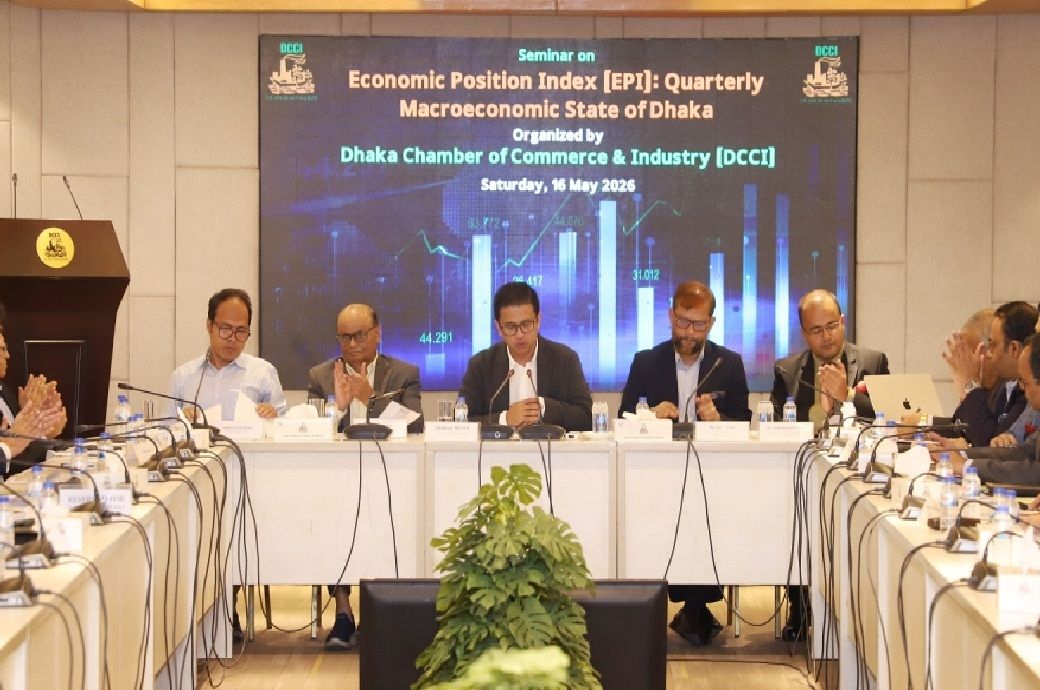
Higher rents, utility bills and fuel prices are eating away at already thin profit margins, it found.
High inflation is cutting deep into Bangladesh consumer spending, with weak demand turning one of the biggest concerns for businesses, DCCI said.
Higher rents, utility bills and fuel prices are eating away at already thin profit margins.
DCCI’s economic position index revealed that consumers have sharply reduced spending as the cost of living continues to rise.
SMEs are feeling the pressure the most.
The chamber’s economic position index (EPI) revealed that consumers have sharply reduced spending as the cost of living continues to rise, putting pressure on retailers, transport operators and other service providers.
Small and medium enterprises (SMEs) are feeling the pressure the most as they struggle to manage higher operating costs without losing customers.
Businesses also cited difficulties in obtaining bank loans, while delays in licensing and other regulatory procedures are adding to costs.
The DCCI report identified a shortage of skilled workers, particularly in technical and customer service roles, as another challenge for the sector.
The country’s inflation rose to 9.04 per cent in April from 8.71 per cent in March, according to official statistics.
Fibre2Fashion News Desk (DS)


Turkiye’s current account deficit expected to widen in 2026: Minister

UK’s clothing imports fall 3% in Q1, sharply lower than Q4 2025
RBI sees no signs of excess credit risk, keeps countercyclical capital buffer inactive

-

 Entertainment6 days ago
Conan O’Brien hat tricks as Oscar host
-

 Tech1 week ago
Could Contact-Tracing Apps Help With the Hantavirus? Not Really
-

 Fashion5 days ago
Italy’s Zegna Group’s Q1 growth boosted by strong organic performance
-

 Sports1 week ago
Bobby Cox, legendary Atlanta Braves manager who led 1995 World Series champions, dead at 84
-

 Entertainment1 week ago
Martin Short: Facing tragedy with joy
-

 Entertainment1 week ago
Tom Brady gets back at Kevin Hart during Netflix roast
-
 Sports1 week ago
Jacob Fatu unleashes vicious assault on Roman Reigns after World Heavyweight Championship loss at WWE Backlash
-

 Entertainment1 week ago
Martha Stewart: How to make an omelet