

Sports
Projecting the CFP top 12 after Week 3

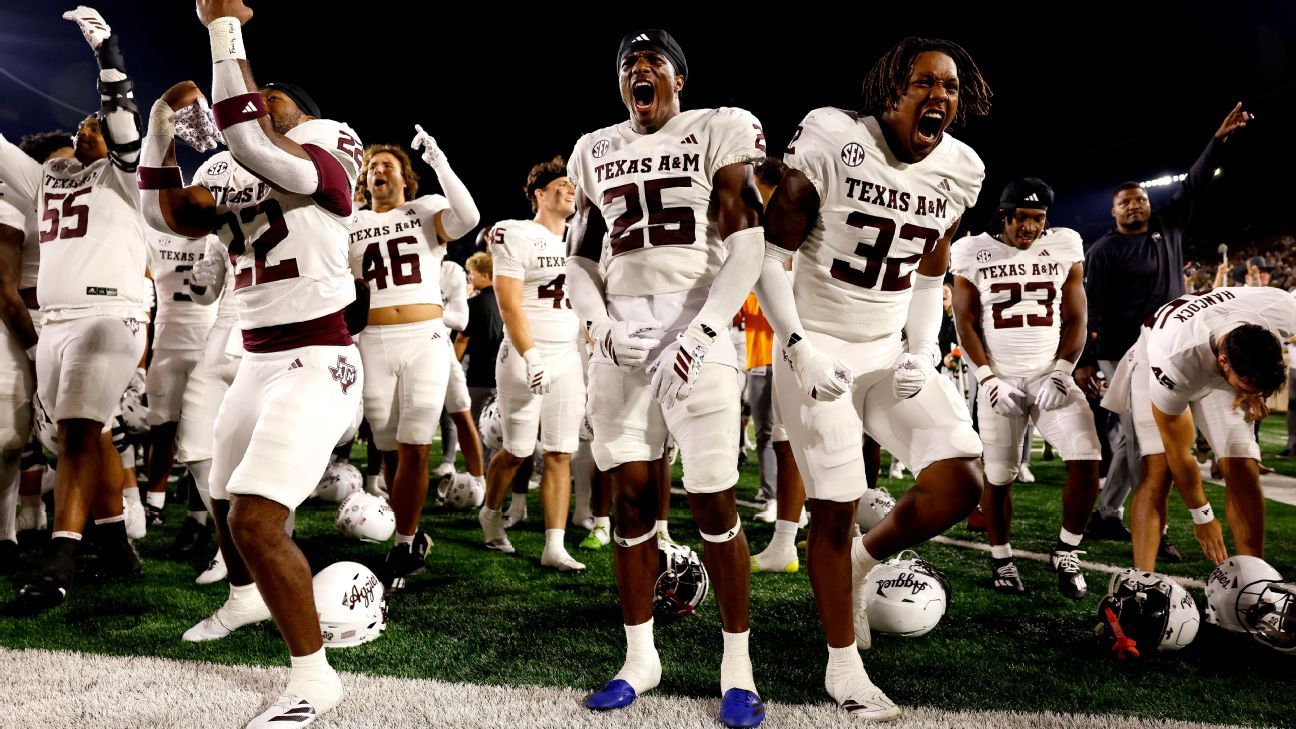
It’s three weeks into the season and Notre Dame has dropped out of the playoff conversation with an 0-2 start following its home loss to Texas A&M on Saturday.
In what was a wild, entertaining evening of college football. Georgia’s overtime win at Tennessee was overshadowed by what unfolded later in South Bend because the Aggies’ win had the bigger, more immediate impact on the playoff race.
And it’s gonna last all season for the Irish, who no longer have any margin for error and have lost all control on their path to the playoff.
“The future’s uncertain,” Notre Dame coach Marcus Freeman said. “I don’t know what’s the playoff number, and it doesn’t matter. We need to focus on getting better.”
So what does it mean for Texas A&M?
This list is fluid — and will continue to be early in the season. Like the selection committee, it is a ranking based on what each team has done to-date — not last year or what it might do in the coming weeks. Here’s the latest prediction of what the selection committee’s top 12 would look like if it were released today.
Projecting the top 12

Why they could be here: The season-opening win against Texas remains one of the best nonconference wins in the country, but the Longhorns continue to have questions on offense against far less elite defenses. The Buckeyes entered this week No. 1 in ESPN’s Strength of Record metric and are ranked in the top 10 in both offensive and defensive efficiency — traits of past top-four playoff teams.
Why they could be lower: The committee does track when teams play FCS teams, and the 70-0 drubbing of Grambling doesn’t help Ohio State’s résumé. Saturday’s win against Ohio also doesn’t do much for the Buckeyes during a week in which Miami, Georgia and LSU all played tougher teams.
Need to know: Even if Texas doesn’t live up to the preseason hype and ranking, the selection committee will continue to respect Ohio State’s win against the Longhorns all season — as long as Texas doesn’t come unraveled. It will be a moot point if Ohio State locks up a CFP spot by winning the Big Ten, but it would enter the conversation and help the Buckeyes when it comes to how high they can be seeded for an at-large bid. The top four teams now get the top four seeds — regardless of if they are a conference champion.
Toughest remaining game: Nov. 1 vs. Penn State. ESPN’s FPI gives the Buckeyes a 64.8% chance to win.

Why they could be here: The Canes added to their résumé with a win against South Florida, which should still be the Group of 5’s top contender for a playoff spot. Coupled with the season-opening win against Notre Dame, Miami has one of the best combinations of eye test and résumé in the country.
Why they could be lower: The committee could be more impressed with the SEC wins, period. Georgia’s overtime road win against Tennessee could trump Miami’s home win against the Irish, and LSU’s two Power 4 wins against Clemson and now Florida could also usurp the Canes in a debate.
Need to know: Saturday’s win against the Bulls was a critical head-to-head tiebreaker that would be used in the committee meeting room if both teams finish with similar records. Even if they lock up spots as their respective conference champions, Miami would keep the edge — and the higher seed — on Selection Day, which could mean the difference in hosting a first-round home game.
Toughest remaining game: Oct. 4 at Florida State. ESPN’s FPI gives the Canes a 54.3% chance to beat their rival.

Why they could be here: The win against Tennessee in the SEC opener was the Bulldogs’ first statement victory, and it now lifts them above other contenders who have played well but against weaker teams. Ohio State’s defense, though, continues to keep the Buckeyes at the top, and Miami’s two wins against ranked teams — Notre Dame and South Florida — gives them an edge in ESPN’s Strength of Record metric, which is similar to what the committee uses.
Why they could be higher: The committee considers the difficulty of playing overtime games on the road, and the former coaches and players in the room would also recognize the growth of quarterback Gunner Stockton in that unforgiving environment. Stockton completed 23 of 31 attempts for 304 yards with two touchdowns and no interceptions. He also ran for a score.
Need to know: It’s possible this instant classic could get a replay — either in the SEC championship game, the playoff — or both. The selection committee doesn’t try to avoid rematches when it’s ranking the teams, so it’s possible for Georgia and Tennessee to play as many as three times.
Toughest remaining game: Sept. 27 vs. Alabama. This game is at home, and the Bulldogs have bye week to prepare for it, but the Tide has shown continuous improvement since its season-opening loss to Florida State.

Why they could be here: The Tigers’ season-opening win at Clemson took another hit after the Tigers lost to Georgia Tech on Saturday, and the true value of beating a beleaguered Florida team at home is yet to be determined. Still, those combined wins outweigh what most of the contenders below them have accomplished. LSU’s defense has been a highlight, as the Tigers were No. 11 in the country in defensive efficiency heading into Week 3. They shut the Gators out in the second half and quarterback DJ Lagway threw five interceptions.
Why they could be lower: The Tigers still haven’t flashed that wow factor, continuing to do just enough to win while overcoming mistakes. LSU only had 10 first downs (compared to 22 by Florida), was held under 100 yards rushing, and was 4-of-14 on third downs. LSU ranks behind several other contenders listed below in ESPN’s game control metric.
Need to know: LSU should be undefeated heading into its Sept. 27 game at Ole Miss, which will be one of three critical road trip that will define the Tigers’ season. LSU also travels to Alabama and Oklahoma. The win against the Gators gives them a much-needed cushion, but they can’t go 0-3 on the road against those teams — and that doesn’t count the Oct. 18 trip to Vandy, which just beat South Carolina.
Toughest remaining game: Nov. 8 at Alabama. ESPN’s FPI gives the Tide a 77.6% chance to win.

Why they could be here: The road win at Notre Dame was the first statement playoff win under coach Mike Elko, and it gives the Aggies one of the best nonconference wins of the season. It’s arguably better than the Canes’ win against the Irish because Texas A&M did it on the road. It certainly wasn’t a flawless performance, but it was enough to boost the Aggies into the conversation.
Why they could be lower: It’s hard to tell how good a win against Notre Dame is this year, considering they’re 0-2. Texas A&M’s other two wins were against UTSA and Utah State, which won’t help their résumé.
Need to know: The selection committee compares results against common opponents. While it’s not an overriding factor, the group would at least consider how Miami and Texas A&M both looked in their wins against the Irish if they were comparing the Aggies and Canes side-by-side during the ranking process.
Toughest remaining game: Oct. 25 at LSU. The Aggies also have a very difficult trip to rival Texas in the regular-season finale, but right now the Tigers look like a tougher out on the road.

Why they could be here: With wins against Montana State, Oklahoma State and Northwestern, the Ducks have yet to be tested against ranked competition, but they haven’t had any scares along the way. They shut out Northwestern for the first three quarters of their Big Ten opener and continued to look dominant even when scoring fewer than 60 points. Most of the teams ranked above them, though, have a more impressive win.
Why they could be higher: The Ducks are passing the eye test, albeit against weaker competition. They didn’t have any penalties in the win against Northwestern, and quarterback Dante Moore has only thrown one interception this season.
Need to know: Oregon doesn’t play Ohio State or Michigan during the regular season, so Penn State and Indiana (maybe USC?) will be the Ducks biggest obstacles to returning to the Big Ten title game. Even if the Ducks lose at Penn State, though, they could see the Nittany Lions again in the Big Ten championship (if Penn State can knock Ohio State out of it).
Toughest remaining game: Sept. 27 at Penn State. ESPN’s FPI gives the Nittany Lions a 50.8% chance to win — and it’s the only game on the Ducks’ schedule they’re not favored to win.

Why they could be here: The Noles had a bye, and the committee typically doesn’t shift teams that don’t play — unless it results from movement around them. The season-opening win against Alabama continues to shine, as the Tide has rebounded with back-to-back convincing wins. It also helps separate FSU from other contenders who didn’t earn a nonconference win against a top-25 opponent.
Why they could be lower: The win against Bama is all they’ve got right now. The 77-3 blowout of FCS East Texas A&M won’t help them, and while the bye week isn’t a penalty, other teams had an opportunity to enhance their strength of record.
Need to know: Florida State doesn’t play Georgia Tech during the regular season, but it has a tricky trio against Miami, Clemson and at rival Florida. If the Noles can go 2-0 against the SEC, it would be a significant boost to their at-large hopes if they don’t win the ACC — assuming both the Gators and Tide finish above .500 and have respectable seasons.
Toughest remaining game: Oct. 4 vs. Miami. The Nov. 8 trip to Clemson looks less daunting now that the Tigers have lost a second game.

Why they could be here: The preseason rankings and hype are irrelevant in the committee meeting room but the weak nonconference schedule is not. Wins against Nevada, Florida International and Villanova are keeping the Nittany Lions behind teams who have played against better opponents. The offense found a groove during a dominant second half against the Wildcats and the defense did not allow a touchdown until the final play of the game.
Why they could be lower: Penn State’s nonconference win doesn’t include a Power 4 opponent, and questions linger about whether the offense is productive enough to beat Oregon. Expectations for quarterback Drew Allar were high entering this season, but he only has four passing touchdowns in three games against weaker opponents. He’s completed less than 60% of his passes in each of the past two games. The Nittany Lions rank No. 65 in offensive efficiency — and the selection committee will expect more.
Need to know: The Nittany Lions have a bye week before hosting Oregon on Sept. 27.
Toughest remaining game: Nov. 1 at Ohio State. It’s the only game on the schedule that ESPN’s FPI doesn’t favor the Nittany Lions, as Ohio State has a 64.8% chance to win.

Why they could be here: There was no hint of a letdown at Temple a week after beating Michigan. The committee has always shown an appreciation for starpower, and OU has it in quarterback John Mateer, who has resurrected the Sooners’ offense. Oklahoma’s lopsided win against an overmatched Temple team won’t do anything to boost its résumé, but it assured the Sooners of a 3-0 start heading into Saturday’s SEC opener against Auburn.
Why they could be higher: Mateer has changed the outlook of this team, and the win against Michigan is one of the better nonconference wins in the country. The Wolverines rebounded and whalloped Central Michigan 63-3, reiterating the potential of freshman quarterback Bryce Underwood, who was smothered by OU’s defense.
Need to know: Oklahoma started 3-0 last year with a win against Temple, too, but then lost four of its next five games. The win against Michigan and play of Mateer so far indicates this season could be different, but the season-defining stretch begins against rival Texas on Oct. 11. The back half of the Sooners’ schedule is loaded with seven straight games against opponents that entered Week 3 ranked.
Toughest remaining game: Nov. 1 at Tennessee. Given how tough the Vols played in their overtime loss to Georgia, this should be another slugfest between two talented teams. ESPN’s FPI gives the Vols a 74.6% chance to win.

Why they could be here: The Vols’ game was so close that Georgia coach Kirby Smart said afterward he almost felt like he should apologize: “I don’t think we should have won that game. I thought they outplayed us in a lot of ways.” The committee isn’t going to penalize the Vols for losing an overtime game at home to one of the SEC’s best teams, but it will wonder about allowing 44 points, 502 yards, and having 10 penalties and two turnovers. The committee will still respect the season-opening win against Syracuse, which has won each of its past two games against weaker opponents.
Why they could be lower: The lack of a true statement win plus the loss could drop them behind the Illini. Considering the offensive showing, though, it’s hard to make a case for Texas ahead of Tennessee. The committee would consider that the Vols lost at home, while Texas lost at Ohio State. Tennessee’s win against Syracuse, though, is better than anything on the Longhorns’ résumé so far.
Need to know: The Vols still have a realistic path to the SEC championship, where they could meet Georgia again. Tennessee doesn’t play LSU or Texas. It can’t go 0-2 against Alabama and Oklahoma, but the Vols get the Sooners at home.
Toughest remaining game: Oct. 18 at Alabama. ESPN’s FPI gives the Tide a 63.6% chance to win, but it’s the only other game on the schedule that the Vols aren’t projected to win.

Why they could be here: The Illini are 3-0 heading into their Big Ten opener at Indiana, including a road win at Duke. Illinois had no trouble with winless Western Michigan, but that’s not going to change its status in the committee meeting room this week. It didn’t help Illinois that Duke lost to Tulane, which somewhat devalues that win — at least for now.
Why they could be higher: Illinois is a legitimately talented, veteran team that continues to take care of business with a veteran quarterback in Luke Altmyer. The Illini entered the week ranked No. 12 in offensive efficiency, another stat that would jump out at the committee.
Need to know: Saturday’s game at Indiana will be an under-the-radar game that could impact the CFP because both teams could be competing with each other for an at-large bid. The winner could ultimately knock the loser out with the head-to-head tiebreaker. It’s possible for them both to get in, but it’s hard to imagine the Big Ten getting five teams in the 12-team field (Ohio State, Penn State, Oregon, Indiana and Illinois).
Toughest remaining game: Oct. 11 vs. Ohio State. Illinois gets the Buckeyes at home, but ESPN’s FPI gives Ohio State a 74.5% chance to win.

Why they could be here: The Longhorns have won back-to-back games since their season-opening loss at Ohio State, but questions about the offense remain. Running backs CJ Baxter and Quintrevion Wisner missed all or parts of the game with injuries, and quarterback Arch Manning had another underwhelming passing performance with one touchdown and an interception. He did account for two rushing touchdowns, but this was hardly a smooth performance. Texas was just 5-of-16 on third downs and 2-of-5 on fourth downs. Meanwhile, rival Oklahoma is soaring offensively with quarterback John Mateer, and the Sooners’ win against Michigan is better than anything Texas has earned.
Why they could be lower: It’s been Arch Maddening for Texas fans, who booed their quarterback after an interception in the red zone. That throw was part of 10 straight incompletions at one point. Manning completed just 5 of 16 passes (31%) in the first half for 69 yards.
Need to know: The Longhorns have one more tune-up game, on Saturday against Sam Houston, before opening SEC play on Oct. 4 at Florida.
Toughest remaining game: Nov. 15 at Georgia.

Bracket
Based on the rankings above, the seeding would be:
First-round byes
No. 1 Ohio State (Big Ten champ)
No. 2 Miami (ACC champ)
No. 3 Georgia (SEC champ)
No. 4 LSU
First-round games
On campus, Dec. 19 and 20
No. 12 South Florida (American champ) at No. 5 Texas A&M
No. 11 Iowa State (Big 12 champ) at No. 6 Oregon
No. 10 Tennessee at No. 7 Florida State
No. 9 Oklahoma at No. 8 Penn State
Quarterfinal games
At the Goodyear Cotton Bowl, Capital One Orange Bowl, Rose Bowl Presented by Prudential and Allstate Sugar Bowl on Dec. 31 and Jan. 1.
No. 12 South Florida/No. 5 Texas A&M winner vs. No. 4 LSU
No. 11 Iowa State/No. 6 Oregon winner vs. No. 3 Georgia
No. 10 Tennessee/No. 7 Florida State winner vs. No. 2 Miami
No. 9 Oklahoma/No. 8 Penn State winner vs. No. 1 Ohio State
NEWYou can now listen to Fox News articles!
The beauty of each World Cup is the attention to detail and how each edition weaves in the traditions and characteristics of the host nations.
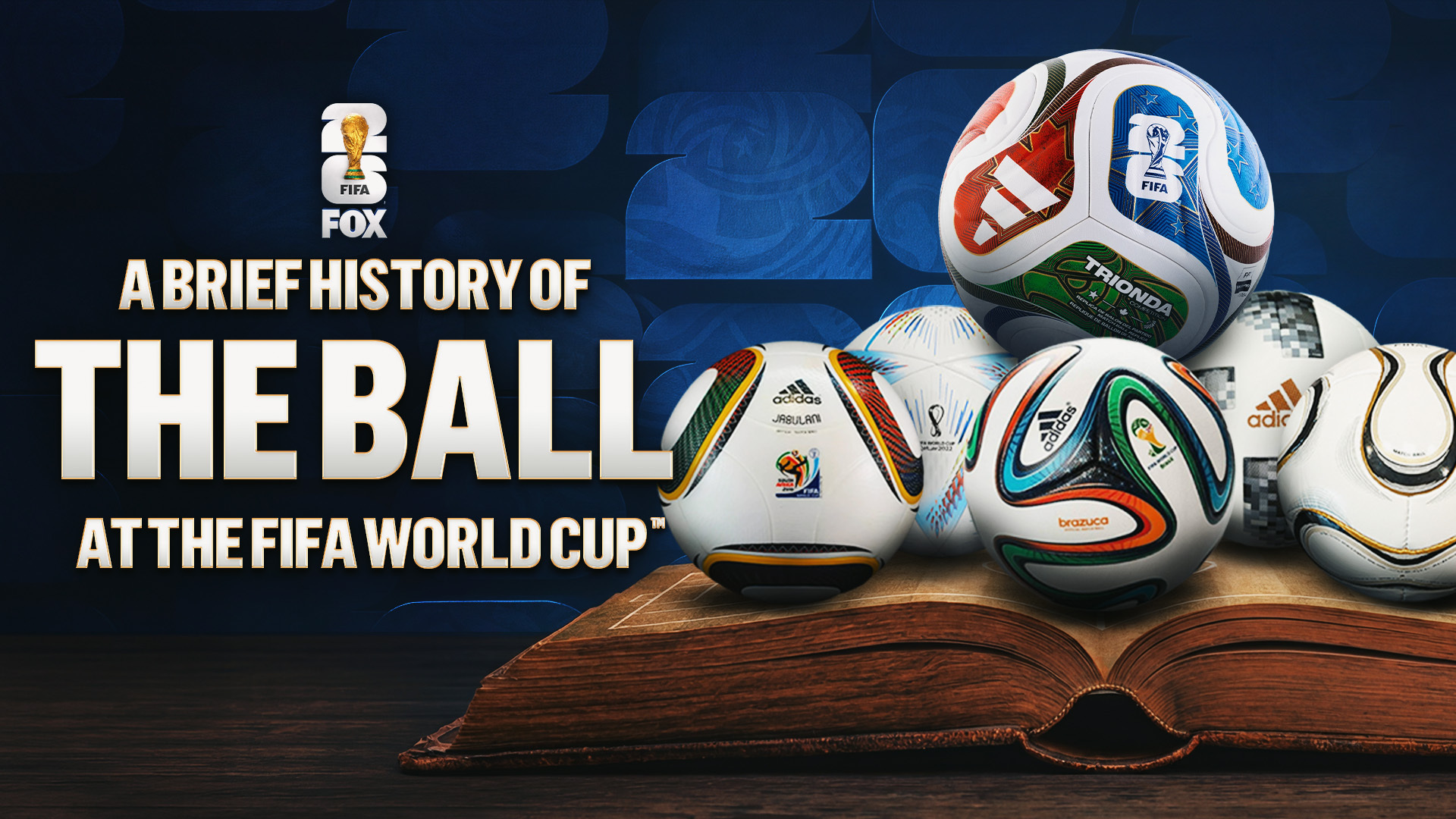
And that’s especially true with the official match ball. Take for instance the recently released TRIONDA ball, which all eyes will be on next year at the 2026 FIFA World Cup, which will be hosted in three nations – Canada, Mexico, and the United States.
Since 1970, adidas has supplied the official match ball for the World Cup. Before then, the match balls were provided by manufacturers from the host countries. Get a low down on each ball from 1930.
Let’s take a deeper dive into each World Cup ball, including how they got their names and what made them stand out, starting with the earliest version at the inaugural tournament:
1930 – Tiento/T-Model (Uruguay)
(Photo by KARIM JAAFAR/AFP via Getty Images)
The tournament had no official ball as multiple ones were used throughout the games. And the final itself between the neighboring rivals of Uruguay and Argentina included an argument over which ball to use. The compromise? Argentina’s “Tiento” for the first half and Uruguay’s heavier “T-Model” for the second half. Argentina were 2-1 up before Uruguay scored three goals with their larger ball to win 4-2.
1934 – Federale 102 (Italy)

The Italian ECAS (Ente Centrale Approvvigionamento Sportivi, the government’s bureau for sport supplies) produced the ball that had 12 hand-stitched leather panels with visible laces. It also marked FIFA’s first standardized World Cup ball. The laces were made of softer material to make them lighter and more manageable, especially for headers.
1938 – Allen (France)

Produced by a French manufacturer, the Allen ball used 13 leather panels hand-stitched with cotton laces and a visible seam. It also had to be hand-stitched and hand-inflated to get the spherical finish.
1950 – Superball Duplo T (Brazil)

The return of the World Cup tournament after a 12-year absence due to World War II featured a ball that had 12 hand-stitched panels – but introduced hidden laces with a rubber valve that could be inflated with a single hand pump. It was the first World Cup ball that did not require reinflation through an external seam during play.
1954 – Swiss World Champion (Switzerland)

This 18-panel ball made by Kost Sport removed laces entirely, featuring interlocking panels for a truer, more consistent shape. FIFA approved it as an official match standard, setting the stage for the modern, seamless football era to come.
1958 – Top Star (Sweden)

Selected from over 100 submissions, the Top Star (made by machine manufacturer Sydlader AB) was made of high-grade leather with 18 panels and no laces. Its consistent bounce and lighter feel allowed for faster, more precise play – fitting the tournament that introduced Pelé to the world. But France forward Just Fontaine is more synonymous with this ball, having scored 13 goals in six matches, a record for a single tournament that still stands.
1962 – Crack (Chile)

The Crack featured 18 panels with a deeper seam pattern to help aerodynamics. It was golden-brown in color and locally manufactured by Señor Custodio Zamora of San Miguel, but the inconsistent quality of each ball led to complaints.
1966 – Slazenger Challenge 4-Star (England)

Made by Slazenger, this 25-panel hand-stitched leather ball had no laces with a bright orange version used for visibility on television and for the final. It utilized a latex valve and was selected by tournament officials in a blind test before the tournament.
1970 – Telstar (Mexico)

Named after a U.S. satellite, this ball was the first that featured the now-iconic black-and-white “truncated icosahedron” panel design, which helped it stand out on televisions. The 32-panel Telstar combined leather with revolutionary visibility and became the most recognizable ball design globally.
1974 – Telstar Durlast (West Germany)

The Durlast featured a new coating to protect against water absorption. The design remained black-and-white for visibility on TV and marked a leap forward in ball technology from the tournament four years prior.
1978 – Tango (Argentina)

One of the most iconic balls in all sport, the Tango (named after the traditional dance in the host nation) introduced a bold, elegant design with interconnected triads, giving the illusion of 12 identical circles across 20 panels. It became adidas’ flagship look for decades and also helped improve the visibility of the ball for players.
1982 – Tango España (Spain)

Building on 1978’s Tango, the España featured stronger waterproofing and polyurethane coating, enhancing performance in variable Spanish conditions. It was also the last ball to be fully leather before synthetic materials became the norm.
1986 – Azteca (Mexico)

The first fully synthetic World Cup ball, Azteca incorporated polyurethane for consistent touch, durability, and reduced water absorption. Its 32-panel design drew inspiration from Aztec murals and architecture, paying tribute to Mexico’s heritage.
1990 – Etrusco Unico (Italy)

The first ball with an internal layer of black polyurethane foam for greater responsiveness and durability. Its design paid homage to Italy’s Etruscan history, featuring lions’ heads in classical motifs across its 20 triangular panels.
1994 – Questra (United States)

The Questra utilized a space-themed design that celebrated the quest for stardom by being inspired by NASA’s Apollo missions and America’s space legacy. It also followed the “Tango” design that had been used in previous editions and utilized pentagonal designs.
1998 – Tricolore (France)

The first multicolored World Cup ball, Tricolore integrated France’s national blue, white, and red. It also symbolized modernity, national pride, and a willingness to depart from traditional monochrome styles. It was also the last of the “Tango” designs that had been in use for the World Cup since 1978.
2002 – Fevernova (Japan/South Korea)

Breaking away from previous patterns, Fevernova introduced a radical triangular flame design in gold and red that ws inspired by a Japanese “tomoe” symbol. It also included red streaks meant to resemble the ancient art of calligraphy.
2006 – Teamgeist (Germany)

The ball (German for “team spirit”) revolutionized ball construction with just 14 curved panels, creating a rounder, more seamless surface for consistency. Its white design with black-and-gold accents fit the host nation’s aesthetic. It was the first ball to have a different version used for the knockout stages.
2010 – Jabulani (South Africa)

The Jabulani ball had only eight thermally bonded panels but was noted for some of its aerodynamic quirks when in flight. Decorated with African-inspired designs with the name from a Zulu phrase of “be happy,” it symbolized South Africa’s culture and remains among the most iconic. A special gold-accented version was introduced for the final in Johannesburg.
2014 – Brazuca (Brazil)

The Brazuca (the name was decided by a public vote) was made from six bonded panels and was inspired by Bahia lembrança bands, the traditional Brazilian good luck bracelets composed as colorful pieces of cloth and given as gifts. A special version was used in the final with the green, red and blue accents replaced by green, gold and black.
2018 – Telstar 18 (Russia)

A modern homage to the 1970 Telstar, it featured pixelated black graphics referencing Russia’s digital era. Equipped with a chip inside, it was the first smart World Cup ball. It was composed of six panels that provided for a smoother surface, with a differently designed “Mechta” version of the ball utilized during the knockout rounds.
2022 – Al Rihla (Qatar)

Meaning “The Journey” in Arabic, Al Rihla included 20 panels and featured a suspended chip inside the ball that tracked in-game data. Its design drew inspiration from Qatari culture and maritime traditions, with the bonded bails hearkening to the Dhow boats found in the Persian Gulf waters. It also was the first official ball produced entirely with water-based inks.
2026 – Trionda (Canada/Mexico/USA)
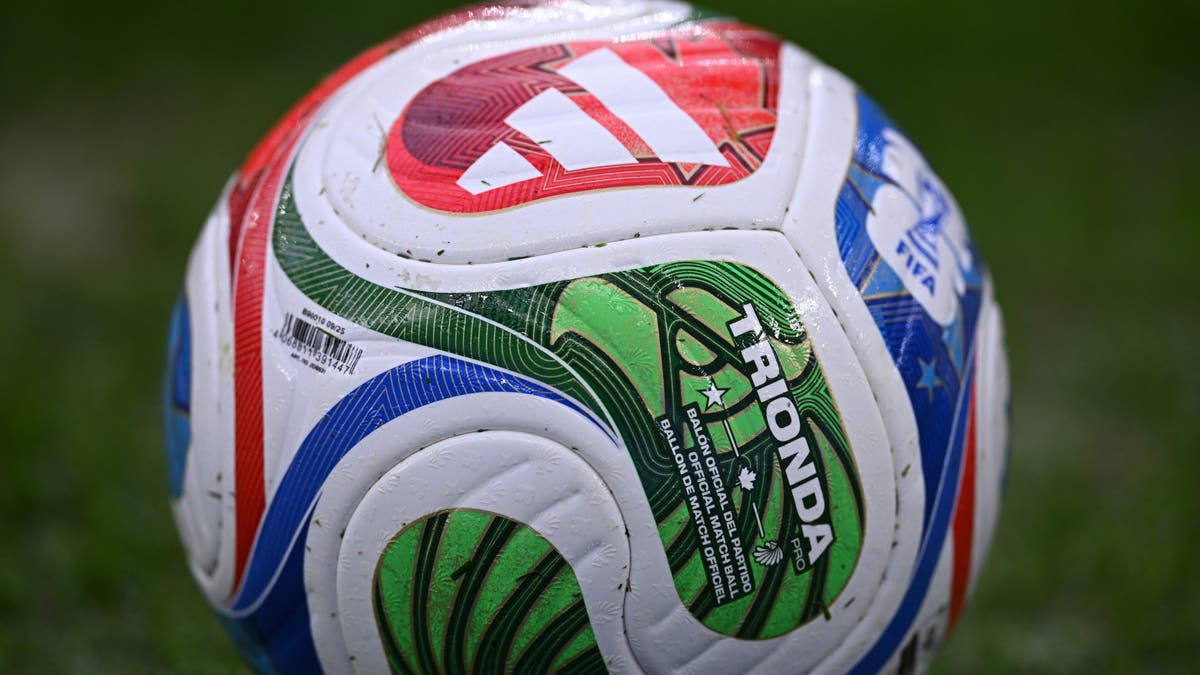
(Photo by Ben Roberts – Danehouse/Getty images)
The official match ball highlights and features the three nations – Canada, Mexico, and the U.S. – that will host the tournament. The colors on the ball’s panels (red, green, and blue) coincide with the three host nations, while being accented with gold to represent the FIFA World Cup trophy. The ball’s graphics also represent the three nations (a star for the U.S., an eagle for Mexico, and a maple leaf for Canada), which are used in embossed symbols across the surface. The name is an amalgamation of the term “tri-” (for the co-hosts) and the Spanish word onda, meaning wave or vibe.
NEWYou can now listen to Fox News articles!
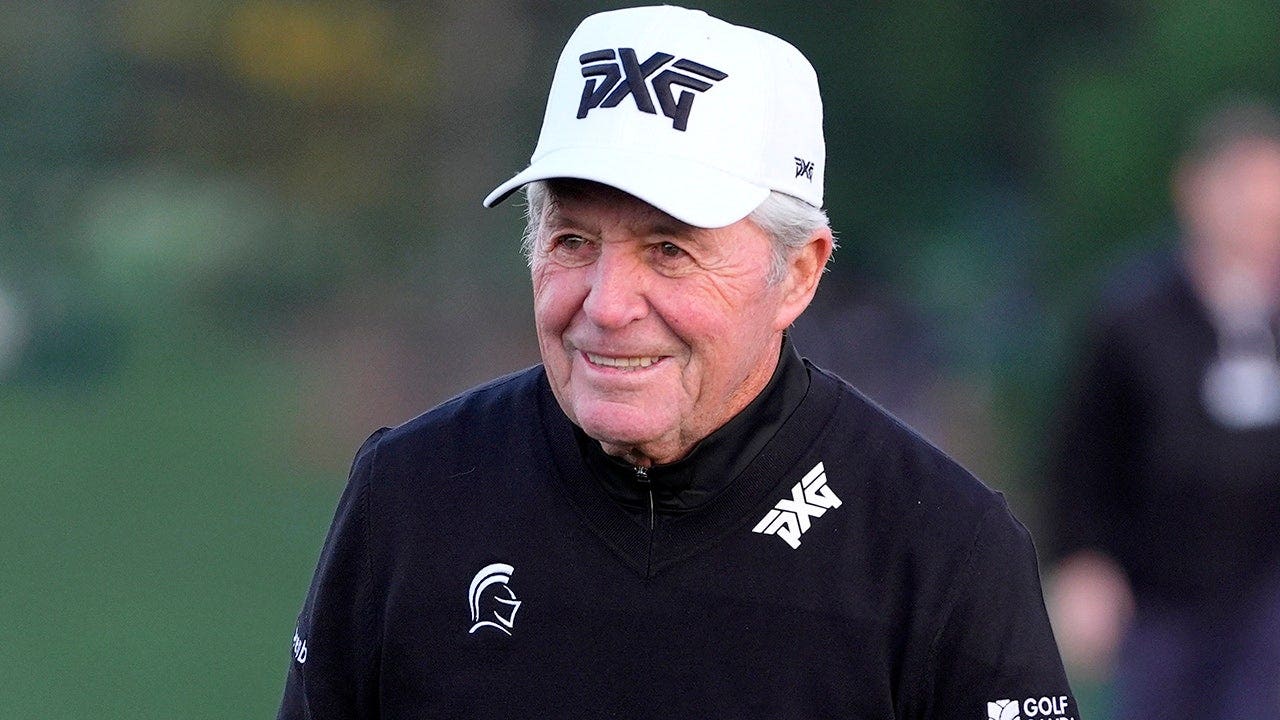
LIV Golf star Bryson DeChambeau would probably beat most 90-year-olds handily in a push-up contest, but not Gary Player.
Player, 90, took on DeChambeau in a push-up contest on the White House lawn as President Trump watched Tuesday.
The nine-time major champion got down and went push-up for push-up with the 32-year-old.
CLICK HERE FOR MORE SPORTS COVERAGE ON FOXNEWS.COM
Honorary starter Gary Player reacts after teeing off on the first hole during the first round of the Masters Tournament at Augusta National Golf Club in Augusta, Georgia, on April 9, 2026. (Katie Goodale/Imagn Images)
Player and DeChambeau were at the White House on Tuesday as Trump signed a presidential memorandum that restored the Presidential Fitness Test Award, which revives a competitive school-based fitness program that was phased out in the Obama administration.
The move echoed the Trump administration’s broader “Make America Healthy Again” push.
Player certainly looked healthy during The Masters, when he piped his ceremonial tee shot right down the middle of the fairway last month. Player had a message for the youth while speaking at the Oval Office on Tuesday.
“I say to the young people, just love this country because you don’t realize what’s going on around the world,” Player said.
ZERO BS. JUST DAKICH. TAKE THE DON’T @ ME PODCAST ON THE ROAD. DOWNLOAD NOW!
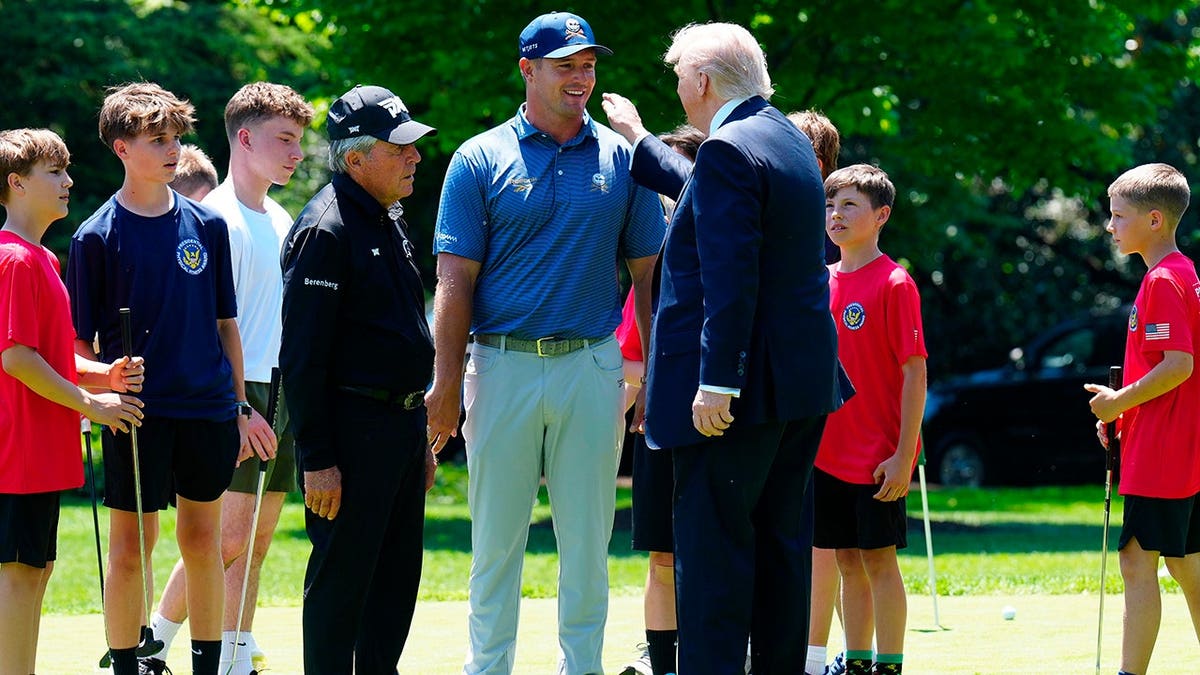
Golfers Bryson DeChambeau and Gary Player speak with President Donald Trump as children observe on the South Lawn of the White House in Washington, District of Columbia, on May 5, 2026. (Jacquelyn Martin/AP Photo)
“There is a silent war taking place against America today, and what we’ve got to do is make these kids realize that freedom, exercise and education start with reading some books.
“What you put in your body is so important. What a wonderful job [Trump] has done. And to all your Cabinet members, I say thank you for maintaining this great word — this cherished word: freedom.”
Player, who is in tremendous shape, said his body is that of a 60-year-old.
CLICK HERE TO DOWNLOAD THE FOX NEWS APP
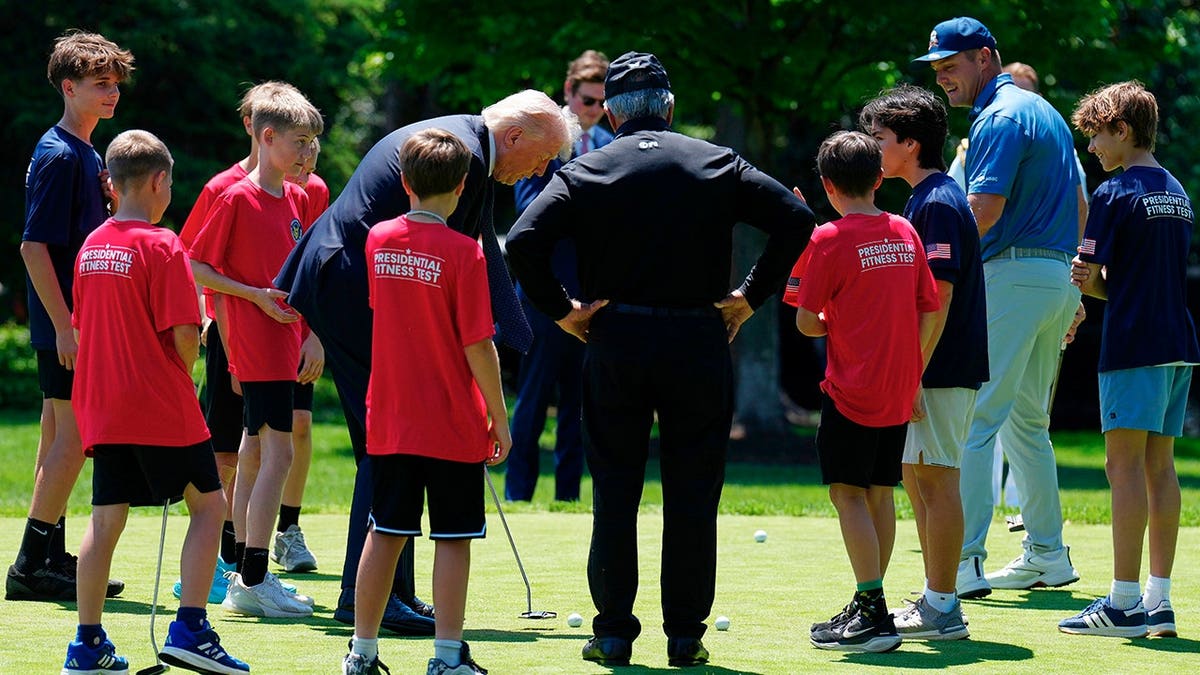
President Donald Trump gives children putting lessons on the South Lawn of the White House in Washington, District of Columbia, on May 5, 2026, as golfers Bryson DeChambeau and Gary Player watch. (Jacquelyn Martin/AP Photo)
“I don’t think of 90,” Player told The Palm Beach Post last year. “I am 90! But really, my body is a man of, I’d say 60.”
Player said he hopes to live until he is 100-years-old and stays active by playing or working out as many days as possible.
With his impressive showing against DeChambeau in a push-up contest, Player looked like someone who has spent a lot of his days working out.
Fox News’ Ashley J. DiMella contributed to this report.
Follow Fox News Digital’s sports coverage on X, and subscribe to the Fox News Sports Huddle newsletter.
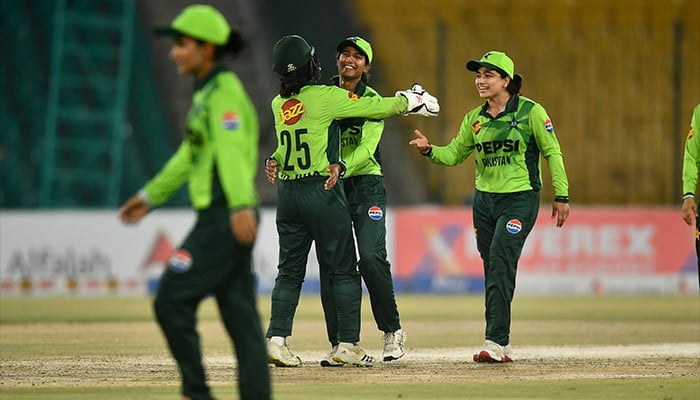
Pakistan women produced a dominant all-round performance to defeat Zimbabwe by 206 runs in the second ODI, sealing an unassailable 2-0 lead in the three-match series at Karachi’s National Bank Stadium on Wednesday.
Chasing 344, Zimbabwe were bowled out for 137 in 39 overs, courtesy of an exceptional bowling performance from the national team’s attack.
Runyararo Pasipanodya top-scored for her side and remained unbeaten with 33 runs from 62 deliveries, striking five fours, while opener Kelis Ndhlovu made 32 off 51 balls, hitting six boundaries.
Beloved Biza scored 29 off 51 deliveries, including four boundaries, while Lindokuhle Mabhero added 20 runs as well.
Fatima Sana led the Pakistan bowling attack, finishing with figures of 3/15 in eight overs. Syeda Aroob Shah, Rameen Shamim and Momina Riasat claimed two wickets each, while Diana Baig also chipped in with a wicket.
Batting first, the Women in Green posted a formidable total in their 50 overs, driven by outstanding centuries from openers Sadaf Shamas and Gull Feroza.
The opening pair set the tone from the outset, piling on runs with an aggressive yet controlled approach to propel Pakistan to a massive score.
Both batters crossed the 150-run partnership mark, with Gull Feroza bringing up her maiden ODI century, while Sadaf Shamas also registered a well-crafted ton in the 50-over format.
The 189-run opening stand was eventually broken when Lindokuhle Mabhero dismissed Feroza for a brilliant 100 off 95 deliveries, an innings featuring 13 boundaries. The partnership also marked the second-highest opening stand in Pakistan Women’s ODI history.
Shamas continued the momentum, reaching her maiden ODI century before falling shortly after for 101 off 112 balls, striking 10 fours and a six.
Sidra Amin and captain Fatima Sana then stabilised the innings with a composed partnership.
Amin recorded her 15th ODI half-century and remained unbeaten on 59 off 58 deliveries, including six boundaries. Fatima contributed a quick 25 off 13 balls, hitting one four and two sixes, before being dismissed by Nomvelo Sibanda.
Aliya Riaz added a brisk 27 off 14 deliveries, striking five boundaries before being removed by Christine Mutasa, while Ayesha Zafar finished unbeaten on 18 off eight balls, hitting three fours to push the total further.
For Zimbabwe, Nomvelo Sibanda, Lindokuhle Mabhero, Christine Mutasa and Olinder Chare claimed one wicket each.


Brazil’s apparel imports double in 5 years, momentum persists

India updates rules to clear FDI proposals within 12 weeks

Justin Baldoni on settlement with Blake Lively: ‘Very pleased’

-

 Sports1 week ago
Pro wrestling star Steph De Lander reveals how colleague’s advice helped lead her to title triumph at ACW
-

 Tech1 week ago
This Ambitious Laptop Doesn’t Leave Much Room for Your Hands
-
 Business1 week ago
PSX plunges over 4,800 points | The Express Tribune
-
Uncategorized1 week ago
[CinePlex360] Some plugins have failed to updat
-
 Fashion6 days ago
Canada’s Lululemon appoints Esi Eggleston Bracey to board of directors
-

 Tech7 days ago
Almost half of UK businesses hit by cyber attacks | Computer Weekly
-

 Tech6 days ago
Musk v. Altman Kicks Off, DOJ Guts Voting Rights Unit, and Is the AI Job Apocalypse Overhyped?
-
 Fashion1 week ago
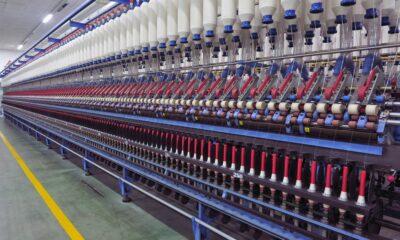
Egypt’s SCZONE signs $8-mn Turkish textile project in Qantara West