

Fashion
US apparel and footwear deals surge to record $21B as brands react to tariff pressure

By
Reuters
Published
September 18, 2025
U.S. President Donald Trump’s trade war is helping push U.S. clothing and footwear acquisitions to all-time highs this year, with some companies merging to help offset tariff costs while others go private to weather the next 3-1/2 years of his presidency outside the public market, dealmakers say.
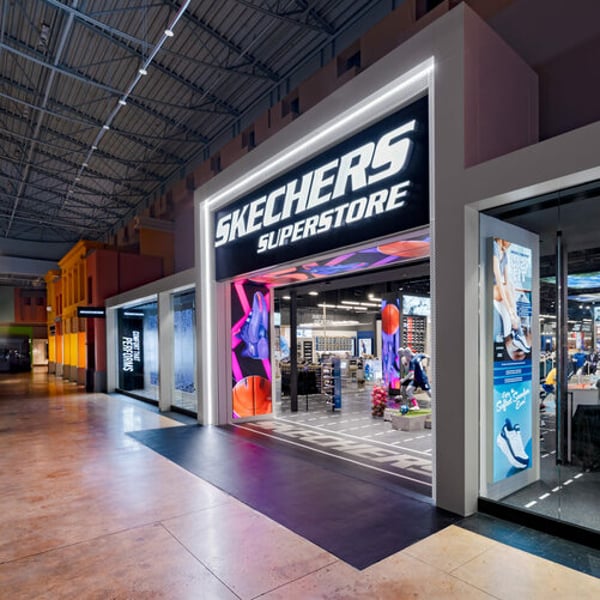
Popular sneaker company Skechers announced a $9.42 billion deal in early May to go private, days after it withdrew its annual earnings forecasts and sent a letter — along with 75 other footwear companies — to Trump, stating that the tariffs were an “existential threat” to the industry.
Sneaker seller Foot Locker, which also signed the letter to Trump, in May accelerated its $2.4 billion sale to Dick’s Sporting Goods. While both deals were in the works for months, bankers and analysts said Trump’s tariffs are creating both chaos and opportunity for retailers and brands to explore tie-ups. This has driven dealmaking in the U.S. footwear and apparel sectors to roughly $21 billion in announced deals year-to-date.
With more than three months left in the year, that figure is already a record, according to LSEG data dating back to the 1970s — particularly surprising for an industry where valuations are not nearly as lofty as those in tech or financial services. The previous record for U.S. apparel and footwear M&A was last year’s $16.1 billion, and before that, 2021’s $15.6 billion, according to LSEG.
“Scale is more important in a tariff-rich environment because you can negotiate better terms across a larger base with many of your counterparties,” said Carmen Molinos, Morgan Stanley’s global co-head of consumer retail investment banking.
Morgan Stanley advised Canadian apparel maker Gildan Activewear on its acquisition last month of U.S. underwear maker Hanesbrands for $2.2 billion.
Both companies produce more in Central America and the Caribbean than in Asia, and primarily use U.S.-grown cotton, which provides them with some protection from tariffs. The combination insulates them more from fluctuating geopolitics, and Gildan was one company looking to get bigger amid the chaos.
“We think that we’re really well aligned to take advantage, actually, of this near-shoring opportunity,” Gildan’s CEO and co-founder Glenn Chamandy said on an August investor call about the deal.
Tariffs were a shock to the system that showed retailers just how quickly their businesses could get disrupted, highlighting the importance of scale, several bankers said.
“In moments of turmoil and change, those who are in a position of strength are looking to build up on those strengths, and if they see the right strategic fit, they’re taking advantage (and buying),” said JPMorgan’s Jonathan Dunlop, co-head of North America consumer and retail investment banking.
This year, JPMorgan advised 3G Capital on Skechers and brand management firm Authentic Brands Group’s $1.4 billion deal last month for Guess. Authentic also picked up Dockers from Levi Strauss, while another brand management firm, Bluestar Alliance, announced a deal to buy Dickies from VF Corp this week.
Brand management firms typically buy a brand’s IP and then license it to operating partners that handle manufacturing, design, and sales.
“The brand management companies have been some of the most prolific acquirers of both middle-market and a handful of multi-billion-dollar retail brands,” said David Shiffman, partner and head of consumer retail at Solomon Partners. The bank advised the special committee of Guess.
Navigating the uncertainty
Going private, as in Skechers’ case, is becoming an increasingly attractive option to navigate the uncertainty without the pressure of public quarterly reporting — especially if companies feel the public market is not valuing them appropriately.
Foot Locker, meanwhile, had been in discussions about a sale since Dick’s Executive Chairman Edward Stack first reached out to rival CEO Mary Dillon in January 2024.
Trump’s April 2 self-styled “Liberation Day,” when he announced sweeping new global tariffs, helped seal the deal earlier than expected, according to an SEC filing. Foot Locker said tariffs were causing the company’s stock to drop and that it was headed for a weaker-than-expected first-quarter earnings report — a development executives feared would further depress shares.
The board decided on May 10 to try to bring “negotiations to a close quickly,” it said in a securities filing. The next four days were a flurry of paperwork and legal meetings before the companies announced their deal — with two weeks to spare before reporting earnings.
Bankers advise watching for more tie-ups later this year as stronger retailers seek deals and struggling companies look for partners.
Private equity firm Bain Capital is trying to offload its stake in Canada Goose, and Lands’ End has received offers from brand management firms.
© Thomson Reuters 2025 All rights reserved.







The increase was driven primarily by higher reinvested earnings and intra-company loans, indicating continued engagement by existing investors with Bangladesh.
Reinvested earnings rose by 318.25 per cent, from $103.79 million in 2024 to $434.10 million in 2025, while intra-company loans increased by 25.68 per cent, from $621.96 million to $781.68 million.
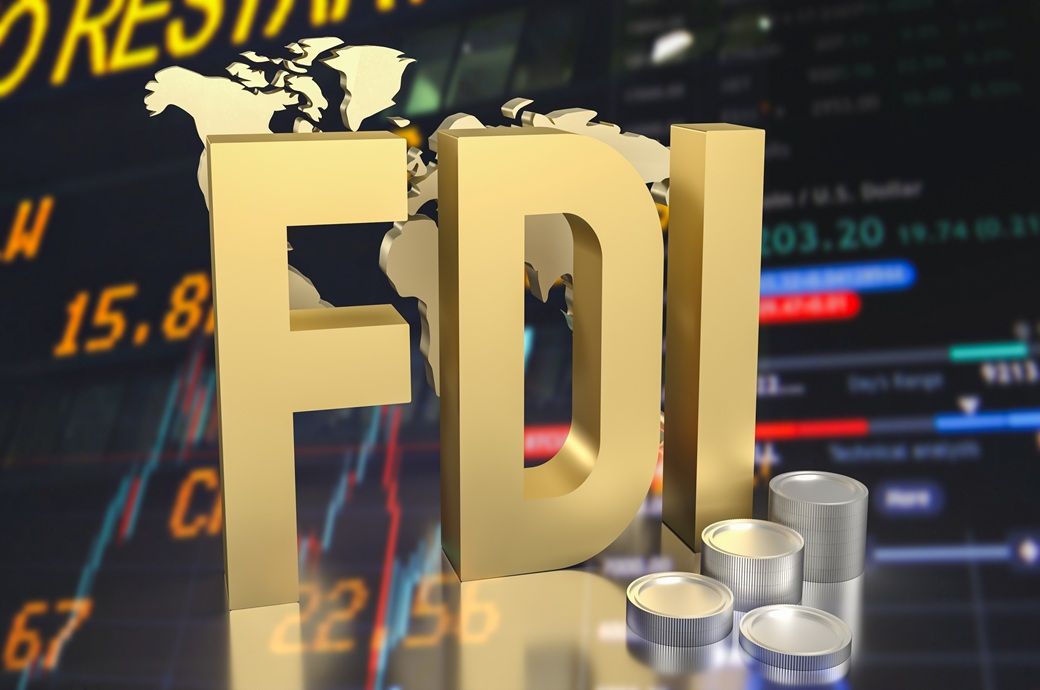
Bangladesh’s net FDI inflows increased by 39.36 per cent last year to $1,770.42 million compared with $1,270.39 million in 2024, the Bangladesh Bank said.
The increase was driven primarily by higher reinvested earnings and intra-company loans.
Reinvested earnings rose by 318.25 per cent, from $103.79 million in 2024 to $434.10 million in 2025, while intra-company loans rose by 25.68 per cent.
Equity capital remained broadly stable, rising by 1.84 per cent, from $544.64 million to $554.64 million in 2025, a release from Bangladesh Investment Development Authority said.
Greenfield project announcements declined by 16 per cent in 2025.
Fibre2Fashion News Desk (DS)
The company’s adjusted EBITDA, excluding Employee Stock Option Plan (ESOP) expenses, rose around 14 per cent YoY to ₹468 crore, while EBITDA margin improved by 20 basis points to around 9.3 per cent. Excluding the reciprocal tariff impact of around ₹36 crore and incremental losses of around ₹13 crore in Bihar and Guatemala, adjusted EBITDA margin stood at around 10.3 per cent.
Pallab Banerjee, managing director, Pearl Global Industries, said: “FY26 marked the company’s second consecutive year of double-digit growth and improved profitability. This performance further solidifies the position of Pearl Global’s diversified operating model and disciplined execution across geographies.”
Pearl Global Industries has reported its highest-ever FY26 revenue of ₹5,025 crore (~$523.93 million), up 11.5 per cent YoY, driven by volume growth and value-added products.
PAT rose 17 per cent to ₹270 crore (~$28.15 million), while Q4 revenue hit ₹1,314 crore (~$137 million).
The company shipped 78.1 million pieces.
Its net worth stands at ₹1,438 crore (~$149.93 million).
He said that geopolitical shifts and Gulf conflicts could lead to energy cost escalation, affecting raw material and logistics costs. However, the company remains prepared to manage these headwinds, supported by its diversified manufacturing base, strong order book, and broad market presence.
The profit after tax (PAT) increased 17 per cent YoY to ₹270 crore (~$28.15 million), the company said in a press release.
On a standalone basis, FY26 revenue stood at ₹1,081 crore, while adjusted EBITDA was ₹67 crore, with EBITDA margin improving by 60 basis points to 6.2 per cent, mainly due to cost restructuring. Standalone PAT rose to ₹69 crore from ₹55 crore in the previous year.
The company’s net worth stood at ₹1,438 crore (~$149.93 million) as of March 31, 2026, compared with ₹1,146 crore a year earlier.
“In FY26, Group delivered another year of resilient performance against a complex geopolitical backdrop. Group achieved, among others, two major milestones this year: revenue crossed INR 5,000 crore mark and installed capacity surpassed 100 million pieces per annum,” said Pulkit Seth, vice-chairman and non-executive director, PGIL.
Seth added that the global apparel industry faced tariff-related disruptions during FY26, with the company’s India operations impacted by tariffs and penal duties imposed by the US. However, he added that Pearl Global leveraged its diversified, multi-country manufacturing presence to mitigate these challenges and deliver double-digit growth.
For the fourth quarter (Q4) of FY26, PGIL posted its highest-ever quarterly revenue of ₹1,314 crore (~$137 million), up 6.9 per cent YoY. Adjusted EBITDA rose 13.7 per cent to ₹135 crore, with margin at 10.3 per cent, the highest EBITDA margin recorded by the company in any quarter. PAT for the quarter stood at ₹81 crore, up 24.6 per cent YoY, PGIL said in a press release.
Standalone revenue during the quarter stood at ₹304 crore, adjusted EBITDA at ₹24 crore, and PAT at ₹14 crore.
PGIL shipped its highest-ever volumes in Q4 FY26 and FY26, at 22 million pieces and 78.1 million pieces respectively. Its annual installed capacity crossed 100 million pieces, reaching around 101 million pieces.
The ongoing capex in Bangladesh is expected to be completed by the first half of FY27 and will add around 6-7 million pieces of capacity during the year.
Fibre2Fashion News Desk (SG)
PTA prices recorded notable declines across key Asian benchmarks, tracking crude oil weakness rooted in evolving geopolitical signals. The correction was broad-based, spanning China, Southeast Asia, and South Korea, while India**;s CIF price held steady reflecting the lag in import contract structures and limited spot availability in the domestic market on the day.
The *** per cent Polyester Yarn market witnessed a slightly negative trend during the assessed period, with mild price corrections observed across both yarn grades in the Asia Free on Board (FOB) China market. Prices for **s (*** per cent polyester yarn) declined from around $*.***/kg to nearly $*.***/kg, registering a decrease of approximately *.** per cent.


Bangladesh net FDI inflows up 39.36% in 2025

US weighs drone threat from Cuba: report

India’s Pearl Global’s FY26 revenue crosses $521 mn milestone

-

 Entertainment5 days ago
Conan O’Brien hat tricks as Oscar host
-

 Tech1 week ago
Could Contact-Tracing Apps Help With the Hantavirus? Not Really
-

 Tech1 week ago
I Tried the Best Captioning Smart Glasses, and Only One Leads the Pack
-
 Fashion5 days ago
Italy’s Zegna Group’s Q1 growth boosted by strong organic performance
-

 Sports1 week ago
Bobby Cox, legendary Atlanta Braves manager who led 1995 World Series champions, dead at 84
-

 Entertainment1 week ago
Martin Short: Facing tragedy with joy
-

 Entertainment1 week ago
Tom Brady gets back at Kevin Hart during Netflix roast
-

 Entertainment1 week ago
Martha Stewart: How to make an omelet