

Politics
Majority of UN members back recognition of Palestinian statehood

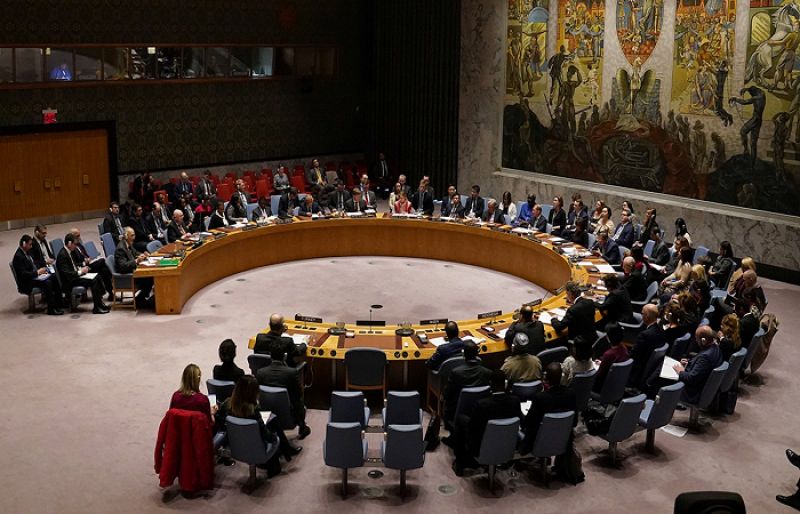

Nearly three-quarters of UN member states have either recognised or announced plans to recognise Palestinian statehood, with Australia becoming the latest on Monday to pledge support ahead of the UN General Assembly session in September.
The ongoing Israel-Hamas conflict in Gaza triggered by the Palestinian militant group’s October 7, 2023 attack has reignited global momentum for granting Palestinians an independent state.
This marks a departure from the long-standing position that Palestinian statehood should come only through a negotiated peace settlement with Israel.
An AFP count shows that at least 145 of the UN’s 193 members now recognise or intend to recognise a Palestinian state, among them France, Canada, and Britain.
A brief timeline of the Palestinian statehood bid:
1988 – Arafat’s declaration:
On November 15, 1988, during the first Palestinian intifada against Israeli rule, Palestinian leader Yasser Arafat unilaterally declared an independent Palestinian state, naming Jerusalem as its capital.
He made the announcement in Algiers at a meeting of the exiled Palestinian National Council, which adopted the two-state solution as a goal, with independent Israeli and Palestinian states existing side-by-side.
Minutes later, Algeria became the first country to officially recognise an independent Palestinian state.
Within a week, dozens of other countries, including much of the Arab world, India, Turkey, most of Africa and several central and eastern European countries followed suit.
The next wave of recognitions came in late 2010 and early 2011, at a time of crisis for the Middle East peace process.
South American countries, including Argentina, Brazil and Chile, answered calls by the Palestinians to endorse their statehood claims.
This came in response to Israel’s decision to end a temporary ban on Jewish settlement-building in the occupied West Bank.
2011-2012: UN recognition
In 2011, with peace talks at a standstill, the Palestinians pushed ahead with a campaign for full UN membership.
The quest failed, but in a groundbreaking move on October 31 of that year, the UN cultural agency UNESCO voted to accept the Palestinians as a full member, much to the dismay of Israel and the United States.
In November 2012, the Palestinian flag was raised for the first time at the United Nations in New York after the General Assembly overwhelmingly voted to upgrade the status of the Palestinians to “non-member observer state”.
Three years later, the International Criminal Court also accepted the Palestinians as a state party.
2024-2025 new push
Israel’s offensive in Gaza after the October 7, 2023 attack has boosted support for Palestinian statehood.
Four Caribbean countries (Jamaica, Trinidad and Tobago, Barbados and the Bahamas) and Armenia took the diplomatic step in 2024.
So did four European countries: Norway, Spain, Ireland and Slovenia, the latter three EU members.
Within the European Union, this was a first in 10 years since Sweden’s move in 2014, which resulted in years of strained relations with Israel.
Other member states, such as Poland, Bulgaria and Romania, had already done so in 1988, long before joining the EU.
On the other hand, some former Eastern bloc countries, such as Hungary and the Czech Republic, do not or no longer recognise a state of Palestine.
Australian Prime Minister Anthony Albanese said Monday that “Australia will recognise the right of the Palestinian people to a state of their own” at the UN General Assembly.
France said last month it intends to recognise a Palestinian state come September, while Britain said it would do the same unless Israel takes “substantive steps”, including agreeing to a ceasefire in Gaza.
Canada also plans to recognise a Palestinian state in September, Prime Minister Mark Carney said, marking a dramatic policy shift that was immediately rejected by Israel.
Among other countries that could also formally express recognition, Malta, Finland and Portugal have raised the possibility.
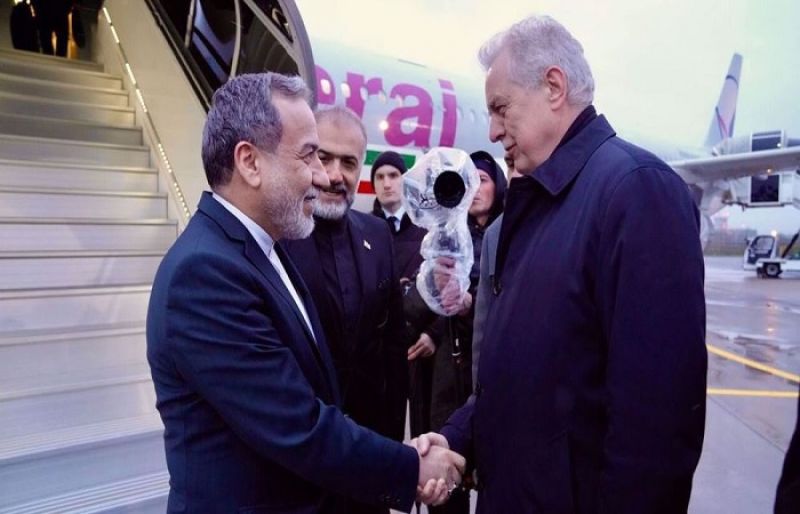
Iran’s Foreign Minister Abbas Araghchi has arrived in Russia to continue close consultations between Tehran and Moscow on regional and international issues, and to enhance bilateral relations.
Speaking upon arrival at Pulkovo International Airport in St. Petersburg on Monday, Araghchi noted that due to the recent US-Israeli aggression against the country, there had been a gap in meetings with Russian counterparts.
“We have tried to use the available opportunity, following our trips to Pakistan and Oman, to travel to Russia,” he said.
Araghchi added that Monday’s meeting would be a good opportunity to discuss developments in the war and review the latest situation, expressing confidence that consultations and coordination between the two countries would be of particular importance.
Constructive consultations held in Pakistan
Regarding his trips to Islamabad and Oman over the past three days, the foreign minister emphasized the bilateral nature of the visits.
Pointing to Pakistan’s role as a mediator in Iran-US negotiations, Araghchi said it was necessary to review the latest situation with Pakistani officials.
“Previous negotiations, despite some progress, did not achieve their goals due to American approaches, their excessive demands, and their wrong policies. Therefore, we needed to hold consultations with our friends in Pakistan to review the latest developments,” Araghchi explained.
He stressed that Iran’s position in the negotiations is very important.
“We must secure the rights of the Iranian people after 40 days of resistance and protect the country’s interests,” he added.
Iran-Oman expert-level consultations on Strait of Hormuz to continue
Referring to his meetings with senior Omani officials, Araghchi noted that Iran and Oman are both littoral states of the Strait of Hormuz, and it is necessary for them to consult each other, especially as safe passage through the strait has become a globally significant issue.
“It is natural that as two coastal countries of this strait, we must talk to each other to secure our common interests and coordinate any action taken in this regard, because the interests of Iran and Oman are directly involved in this matter,” Araghchi said.
He confirmed that there is a broad consensus between Iran and Oman, and it was agreed during the visit that consultations would continue at the expert level.
Iran closed the waterway to the enemies and their allies following the launch of the US-Israeli aggression against Iran on February 28, with the assassination of the Leader of the Islamic Revolution, Ayatollah Seyyed Ali Khamenei, and several top military commanders.
On April 8, forty days into the war, a temporary Pakistan-brokered ceasefire took effect. Talks ensued in Islamabad but stopped short of an agreement amid the United States’ maximalist demands and insistence on unreasonable positions.
Iran announced the reopening of the chokehold to commercial traffic following the announcement of a ceasefire by US President Donald Trump on April 7.
The country, however, imposed a total closure on the waterway on April 18 after Trump said the US was continuing an unlawful blockade it had imposed on Iran in continuation of unlawful aggression towards the country.
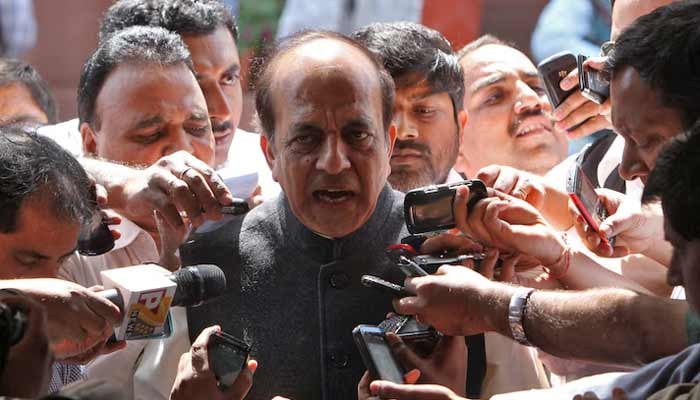
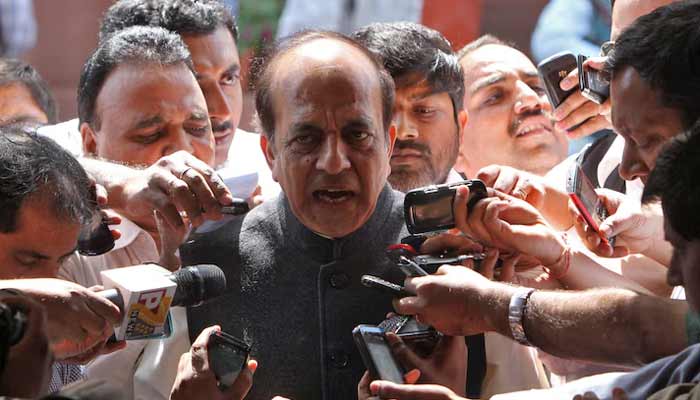
India named veteran politician Dinesh Trivedi as its next high commissioner to Bangladesh on Monday, in a rare appointment of a non–foreign service officer as New Delhi seeks to reset ties with its eastern neighbour.
Ties between the countries soured after a popular uprising forced Bangladesh’s long‑serving Prime Minister Sheikh Hasina to flee to New Delhi in 2024, where she remains. Trivedi’s appointment highlights India’s push to rebuild trust with Bangladesh as it faces stiff competition from China for influence and business.
Trivedi, 75, a former railways and health minister, joined Prime Minister Narendra Modi’s Bharatiya Janata Party in 2021 from a regional party in West Bengal, a border state that plays a key role in India’s ties with Bangladesh and where Modi has been seeking to expand his party’s influence in ongoing local elections.
“He is expected to take up the assignment shortly,” India’s Ministry of External Affairs said in a statement about Trivedi.
Relations between the two countries began improving only after an election in February brought Tarique Rahman of the Bangladesh Nationalist Party to power, replacing an interim government that had veered strongly towards China.
Bangladesh’s foreign minister visited Delhi this month seeking increased fuel and fertiliser supplies, closer energy cooperation and eased travel restrictions, but one of the biggest sticking points remains India’s refusal so far to extradite Hasina.
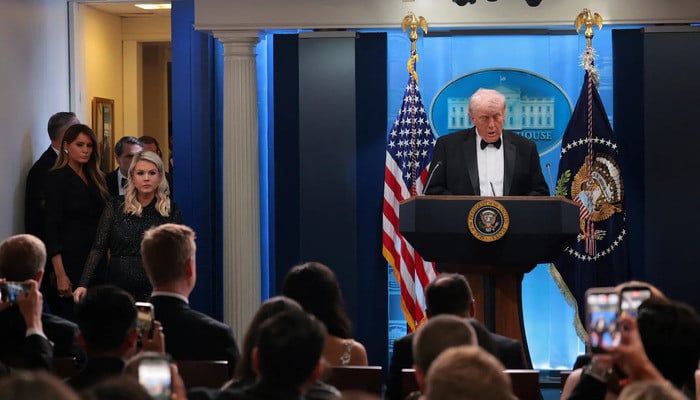
US President Donald Trump has said that the suspect accused of trying to attack administration officials at a black-tie gala on Saturday night was a “pretty sick guy” who had been flagged to law enforcement by family members.
Trump said in TV interviews on Sunday that the suspect, whom an official identified as 31-year-old Cole Tomas Allen, of Torrance, California, had posted what Trump described as an “anti-Christian” manifesto.
“He was a Christian, believer, and then he became an anti-Christian, and he had a lot of change,” Trump told CBS‘ “60 Minutes” programme. “He was probably a pretty sick guy.”
In the manifesto, Allen calls himself the “Friendly Federal Assassin” and said he planned to attack Trump administration officials, prioritising them from highest-ranking to lowest but excluding FBI Director Kash Patel, a law enforcement official told Reuters. Allen cited Christian theology as he said he was trying to protect those harmed by the administration’s policies.
“Turning the other cheek when ‘someone else’ is oppressed is not Christian behaviour; it is complicity in the oppressor’s crimes,” the manifesto read, according to the official.
The manifesto, which was sent to members of Allen’s family shortly before the attack, mocked the “insane” lack of security at the Washington Hilton, where the White House Correspondents’ Association dinner was held, the official added. Allen was arrested at the scene.
“Like, the one thing that I immediately noticed walking into the hotel is the sense of arrogance,” the manifesto’s author reportedly wrote. “I walk in with multiple weapons and not a single person there considers the possibility that I could be a threat.”
The chaotic events raised fresh questions about the security of top US officials, many of whom were gathered in the hotel’s expansive ballroom. Trump seized on the attention brought by the incident to promote his planned White House ballroom as a safer venue for such events.
“This event would never have happened with the Militarily Top Secret Ballroom currently under construction at the White House. It cannot be built fast enough!” Trump wrote on Truth Social.
The suspect travelled by Amtrak train from Los Angeles to Chicago and then to Washington, checking into the Hilton on Friday, acting US Attorney General Todd Blanche said on multiple Sunday talk shows, adding that Trump and top members of his administration were the likely targets. Train passengers in the United States are not required to pass through airport-style metal detectors.
Amtrak said it is cooperating with the investigation.
Political violence
Officials have said the suspect fired a shotgun at a Secret Service agent at a security checkpoint in the Washington Hilton hotel before being tackled and arrested.
Trump, first lady Melania Trump, Vice President JD Vance and Cabinet officials were rushed out as the incident unfolded. The Secret Service agent who was shot escaped serious injury because the bullet struck his protective vest, Trump said.
Trump, who had boycotted the media gala in the past, has requested that the dinner be rescheduled within 30 days. White House Correspondents’ Association President Weijia Jiang of CBS said the group’s board would determine their next steps.
The suspect will be charged in federal court on Monday with assault of a federal officer, discharging a firearm and attempting to kill a federal officer, Blanche said, adding he did not know if there was an Iran connection to the attack. Further federal indictments will be coming later, Blanche said.
Saturday’s incident was another reminder of a rising tide of political violence in the United States in recent years. Conservative political activist Charlie Kirk was shot dead at a rally last September, just months after the June 2025 slaying of Democratic Minnesota State Representative Melissa Hortman and her husband and the wounding of a Minnesota state senator.
A Reuters/Ipsos poll, opens new tab conducted in the days following Kirk’s murder found Americans believe increasingly harsh rhetoric surrounding politics is encouraging violence in the US.
A White House official said law enforcement officials who interviewed Allen’s sister were told he had a tendency to make radical statements, had attended an anti-Trump “No Kings” protest and referred to a plan to do “something” to fix issues with today’s world.
Trump suggested the protest might have spurred the suspect to action. “Part of the reason you have people like that is you have people doing No Kings,” he told CBS. “I’m not a king.”
Around the world, leaders condemned the attack and expressed relief that Trump and all present were safe.
A planned US visit by King Charles of Britain scheduled to start on Monday will proceed, Trump and British officials said.
Little was immediately known about the alleged shooter’s background, but social media posts indicated he had worked at C2 Education, a national private test preparation and tutoring service. C2 Education said in a statement that it was cooperating with law enforcement investigators.
Washington Interim Police Chief Jeffery Carroll said the suspect was armed with a shotgun, a handgun and multiple knives.
Allen had purchased two handguns and a shotgun and stored them at his parents’ home, the White House official said.
The suspect lived with his parents in a two-story house on a tree-lined street with picket fences and craftsman-style homes in the historic district of Torrance, a seaside town in the South Bay area of greater Los Angeles.
Neighbours in the middle-class neighbourhood on Sunday said they were only casually acquainted with him and his parents, with most saying they never spoke to him beyond a brief hello or waving to them as they gave Halloween candy to trick-or-treaters.


The Man Behind AlphaGo Thinks AI Is Taking the Wrong Path

This bank CEO let his AI clone handle an earnings call — now he’s signing an OpenAI deal

TNA wrestling star Xia Brookside gets baptized: ‘A new chapter’

-

 Sports1 week ago
WWE WrestleMania 42 Night 2: Live match results and analysis
-

 Sports1 week ago
NCAA men’s gymnastics championship: All-time winners list
-

 Fashion1 week ago
UK’s Sosandar returns to profitability amid robust FY26 performance
-

 Politics6 days ago
UK’s Starmer seeks to deflect blame over Mandelson appointment
-
 Business1 week ago
No fuel shortage: Govt assures 100% domestic LPG, PNG, CNG supply amid Hormuz energy crunch – The Times of India
-
 Business7 days ago
How Trump’s psychedelics executive order could unlock stalled cannabis reform
-

 Entertainment7 days ago
Lee Anderson, Zarah Sultana kicked out of UK Parliament for calling PM ‘liar’
-
 Business1 week ago
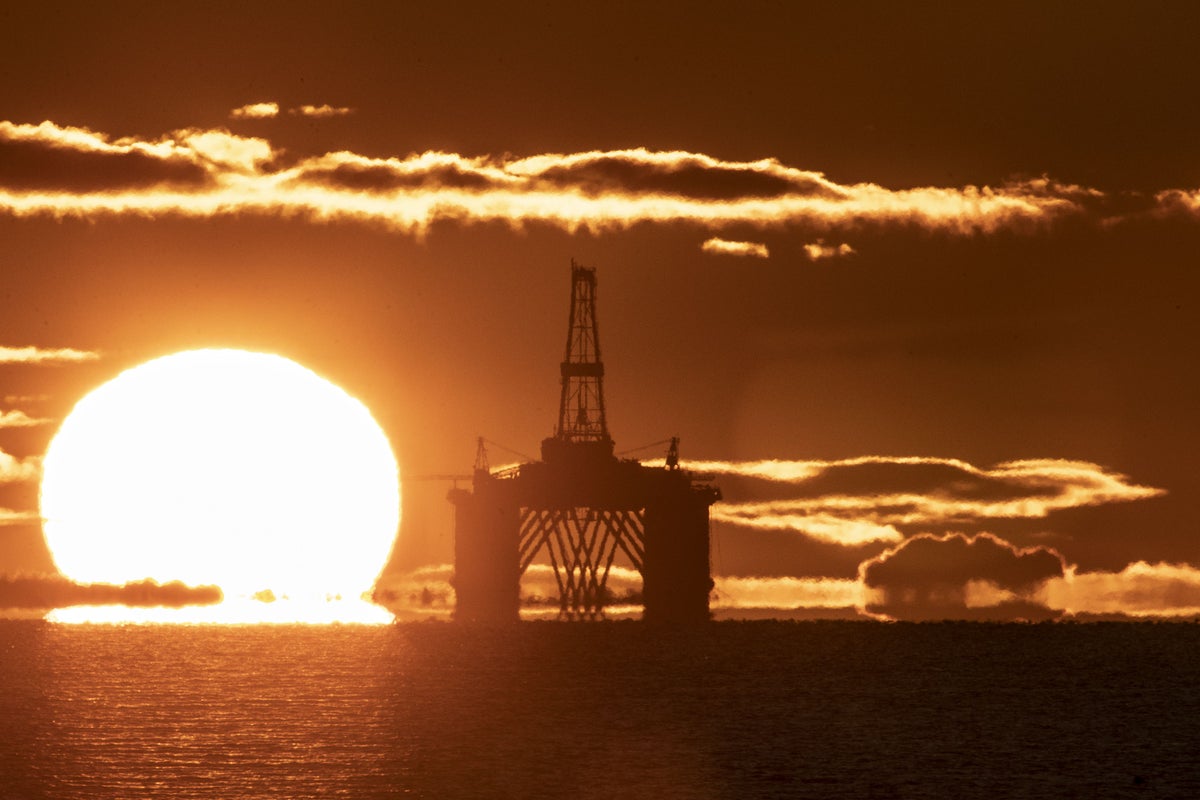
Exercise to test response to offshore energy threat involving vessels and drones