

Tech
The 24 Best Movies on Amazon Prime Right Now

In Recent years, Netflix and Apple TV+ have been duking it out to have the most prestigious film offerings, but some of the best movies are on Amazon Prime Video. The streamer was one of the first to go around picking up film festival darlings and other lovable favorites, and those movies are all still there in the library, so if they flew under your radar the first time, now is the perfect time to catch up.
Our picks for the best movies on Amazon Prime are below. All the films in our guide are included in your Prime subscription—no renting here. Once you’ve watched your fill, check out our lists for the best shows on Netflix and best movies on Disney+ if you’re looking for something else to watch. We also have a guide to the best shows on Amazon, if that’s what you’re in the mood for.
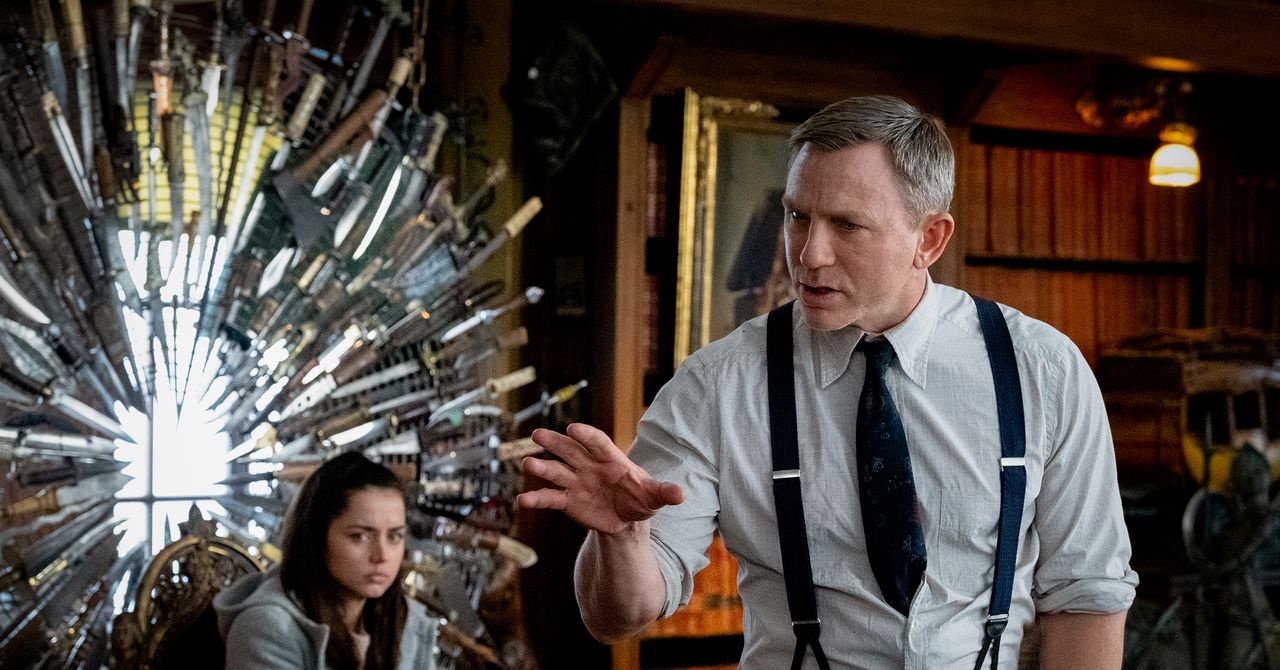
Knives Out
The debut outing of Benoit Blanc (Daniel Craig) finds the master detective investigating the suspicious death of famed crime novelist Harlan Thrombey (Christopher Plummer). It’s a case complicated by the deceased’s expansive, dysfunctional family, all of whom appear to have a motive for killing their supposedly-beloved patriarch. Boasting a murderers’ row of acting talent, including Chris Evans, Jamie Lee Curtis, Toni Collette, LaKeith Stanfield, and Ana de Armas as Thrombey’s attentive nurse Marta—director Rian Johnson’s Knives Out remains a masterful modern updating of the classic whodunit, packed full of meta twists that almost single-handedly reenergized the genre.
Air
Sure, nowadays Michael Jordan is a bona fide sports god, and Nike Air Jordans are still arguably the cool sneaker—but that wasn’t the case back in 1984. Jordan was a rookie, and Nike was about to close down its basketball shoe division. Enter Sonny Vaccaro (Matt Damon), a talent scout for the footwear maker who’s spotted a rising star in North Carolina who could turn everything around—he just needs to convince everyone else that Jordan is worth betting the company on. We all know how that panned out, so thankfully Air is more than a two-hour advert for gym shoes. Damon, Jason Bateman, Chris Tucker, and director Ben Affleck all deliver strong performances—only to be utterly eclipsed by Viola Davis in a magnetic and powerful, if somewhat under-utilized, turn as matriarch Deloris Jordan—while Alex Convery’s script keeps the drama on the people and personalities involved, rather than the boardroom. In an age of franchises and endless blockbusters, Air is the sort of character-focused film that rarely gets made anymore, and is all the more enjoyable for it.
American Fiction
Thelonious “Monk” Ellison (Jeffrey Wright) is a successful professor of literature, but a struggling author, his books constantly rejected for not being “Black enough.” After seeing fellow novelist Sintara Golden (Issa Rae) lauded for her pandering, stereotypical work, Monk pseudonymously pens a novel filled with every lazy trope and cliché he can imagine to lampoon the situation—but is horrified when it becomes an instant success. As a massive advance turns into a multimillion-dollar movie deal, Monk spirals as everyone from the public to his own family seems to love the deliberately offensive work. Based on Percival Everett’s novel Erasure, American Fiction is a darkly satirical work with a wicked sense of humor—an all-too-rare modern comedy with something to say, fronted by one of the finest performances of Wright’s career.
Heads of State
Grumpy British prime minister Sam Clarke (Idris Elba) and action-movie star turned US President Will Derringer (John Cena) can’t stand each other—so teaming up to survive after Air Force One is shot down over the Belarusian wilderness is going to put a real strain on the Special Relationship. Luckily for viewers, though, it also makes for one of the most hilarious and brilliantly choreographed action comedies in years. Priyanka Chopra Jonas is astounding as hard-nosed senior MI6 agent Noel Bisset, out to protect the combative world leaders from each other as much as a mounting terrorist threat, but it’s the spiky chemistry between the leads that really carries the film. Cena is so perfectly obnoxious throughout that you can’t help but feel Elba might actually hate him. A throwback of an action flick in the best way.
Deep Cover
When London police detective Billings (Sean Bean) hits a brick wall infiltrating criminal organizations, he turns to the only people he can trust: struggling improv actors. This ludicrous concept is played for maximum laughs by Bryce Dallas Howard as Kat, a comedian desperate for her big break, and Orlando Bloom as the intractably method-acting Marlon. But it’s Ted Lasso‘s Nick Mohammed who steals every scene as meek and awkward Hugh—an IT nerd who can’t act but “yes, ands … ” every increasingly farcical scenario the trio find themselves in. A bizarre blend of slapstick and Guy Ritchie-esque grit, Deep Cover fully commits.
The Adventures of Buckaroo Banzai Across the 8th Dimension
One of the absolute wildest films you’ve probably never seen, 1984’s The Adventures of Buckaroo Banzai is … almost impossible to describe. Centered on Peter Weller’s Dr. Buckaroo Banzai—a super-genius physicist, skilled neurosurgeon, high-flying test pilot, and beloved rock star—the film follows his battle with the evil Dr. Emilio Lizardo (John Lithgow) over the advanced “oscillation overthruster” that allows travel between dimensions. It’s so much stranger than that though. Expect alien invaders, identical twins of long-lost lovers, Orville Welles, and mid-1980s nuclear war paranoia, and that’s just scratching the surface. The highest of high concept sci-fi flicks, it absolutely bombed on release (despite a phenomenal cast including Jeff Goldblum and Christopher Lloyd) but has since more than earned its standing as a cult favorite. Even Weller himself can’t explain the film, but it is undeniably an experience.
Conclave
Arriving on Prime Video with divine timing, this parable of the election of a new pope makes for powerful viewing. When the pope passes, Cardinal Thomas Lawrence (Ralph Fiennes) starts the process of hosting the papal conclave to choose his successor—but given that the supreme pontiff is one of the most powerful positions on Earth, the election makes for anything but dry Catholic procedure. As the choice narrows to four candidates, and no one is allowed in or out until a new pope is elected, tension mounts while power plays, blackmail, and long-buried secrets rock the Holy See. Based on the novel by Robert Harris and directed by Edward Berger (2022’s All Quiet on the Western Front), Conclave is a meticulously researched and exquisitely shot drama, driven by magnetic performances from a cast including Stanley Tucci, John Lithgow, and Isabella Rossellini.
Evangelion 3.0+1.0: Thrice Upon a Time
Fair warning: As the culmination of 15 years of work for creator and director Hideaki Anno, and serving as a follow-up to his classic 1995 TV anime Neon Genesis Evangelion, this is hardly what you’d call a jumping on point for the notoriously complex mecha franchise. (Thankfully, Prime Video has the whole movie saga available, starting with Evangelion 1.11.) Nevertheless, snagging the international rights for this long-awaited film from Japan’s Studio Khara was a genuine coup for Amazon. Thrice Upon a Time brings to a close the decades-long tale of traumatized teenage robot pilots forced to fight biblically accurate angels—and worse, the twisted machinations of lead character Shinji’s abusive father, Gendo. With bewilderingly beautiful animation, plenty of emotional clout, and an ending that surprised even longtime fans, this is a textbook example of how to send a series out with a bang.
Challengers
Directed by Luca Guadagnino (Call Me by Your Name), Challengers follows the complicated three-way relationship between tennis aces Tashi (Zendaya), Patrick (Josh O’Connor), and Art (Mike Faist). Told nonlinearly, it volleys between the trio’s disaffected present and their more optimistic, exciting past. It’s an energetic and inventively shot sports movie, but the real match tension is in how the promise of Grand Slam glory (and no shortage of raging hormones—it is a Guadagnino film, after all) in the trio’s youth lead to choices that ricochet into the present. Tashi has been forced to abandon the court after a horrific injury, her now-husband Art is stuck in a competitive rut, and Patrick hustles low-stakes games to get by—but none of them have really moved on.
My Old Ass
The unstoppable rise of Aubrey Plaza continues in this smart, modern take on the coming-of-age dramedy. Written and directed by The Fallout’s Megan Park, My Old Ass follows 18-year old Elliott (Maisy Stella) who, on the cusp of college and major life changes, celebrates her birthday by taking mushrooms with her friends. Mid-trip, she meets … Elliott, age 39 (Plaza). It’s when she’s sobered up that things get really trippy, though. Elliott starts receiving text messages from the future—warning her to avoid a boy named Chad. Equal parts hopeful and melancholic, and with powerful performances from both actors playing an Elliott, this film beautifully captures the messy, joyful potential of youth and the nagging, wistful “what ifs?” that come with age. A delight however old you are.
Brittany Runs a Marathon
When Brittany (Jillian Bell) is told by her doctor to lose weight, she uses it as a reason to take control of her life. She starts by putting on a pair of trainers and challenging herself to run one block, which quickly escalates into deciding to run the New York City Marathon. First-time director Paul Downs Colaizzo based the story on the experiences of his friend, and highlights not only the benefits of running but also the pain. This film shows that no matter how bad things get, you can still get back up.
The Idea of You
The best rom-coms tend to succeed thanks to how unrealistic they are—the improbable meet-cute, the heightened emotions, the exaggerated gestures of affection, the dizzying spin of falling head over heels for someone. It’s something The Idea of You perfectly nails as it charts the relationship between successful gallery owner Solène Marchand (Anne Hathaway) and global music superstar Hayes Campbell (Nicholas Galitzine)—who also happens to be 16 years her junior. It could so easily have been cheap scandal fodder—and that’s how it’s played in-universe when the paparazzi get wind of Hayes’ relationship with the “older woman”—but as the pair embark on a globe-trotting romance, the charismatic leads serve up enough genuine chemistry to sweep the audience up in the whirlwind of it all. It’s ultimately less “will they, won’t they?” and more “should they, shouldn’t they?” thanks to a well-handled awareness of the age gap (already narrowed from the source novel by Robinne Lee), but for fans of the genre, it’s a delight.
Saltburn
Oxford student Oliver Quick (Barry Keoghan) is having trouble fitting in at the prestigious British university—until he befriends the popular Felix Catton (Jacob Elordi). Handsome, rich, and born to the landed gentry, Felix brings the awkward, socially invisible Oliver into his circle, eventually inviting him to spend summer at the family estate, Saltburn. But as Oliver works his way into the family’s graces, his obsession with Felix takes increasingly dark and deranged turns. Oscillating between black comedy and psychological thriller, writer and director Emerald Fennel (Promising Young Woman) frames the film in 4:3 aspect ratio for a tighter, almost voyeuristic viewing experience that makes its frequently unsettling moments even more uncomfortable. Having attracted plenty of debate since its 2023 release—not least for how it questionably navigates its themes of class and social inclusion—Saltburn was one of the year’s most divisive films, but one that demands your attention.
The Burial
Courtroom dramas are rarely laugh riots, but this tale of funeral home director Jeremiah O’Keefe (Tommy Lee Jones) and his flashy lawyer Willie Gary (Jamie Foxx) taking on a major player in America’s “death care” system brings a dark sense of humor to already grim proceedings. This is no comedy though. Based on true events, director Maggie Betts’ (The Novitiate) latest drama retells a real-life legal case that exposed massive inequality in funereal care and the way Black communities were being regularly overcharged. Foxx and Jones are in top form throughout, but it’s Jurnee Smollett as Mame Downes, Gary’s rival attorney who threatens to outpace him at every turn, whose performance threatens to steal the whole movie. For a film about death, The Burial proves warmly life-affirming.
A Million Miles Away
Charting the life of José Hernández, this biopic—based on Hernández’s own book—mixes the aspirational with the inspirational as it follows its central figure’s rise from, in his own words, migrant farm worker to the first Mexican-American astronaut. Michael Peña is in fine form as Hernández, painting a picture of a man almost myopically driven to reach space, no matter the cost, while Rosa Salazar impresses as his wife Adela, refusing to fade into the background even as she puts her own dreams on pause for José to chase the stars. In lesser hands, this could all be cloying—a twee tale of hard work and achieving the American Dream, with a dash of NASA promo material on the side, but director Alejandra Márquez Abella has her lens as focused on the small beauties of life here on Earth as the splendor and sheer potential of space. A rare delight.
Red, White, and Royal Blue
Look, this is clearly a “best film” by a highly specific metric—and that metric is “gloriously cheesy trash.” Adapted from Casey McQuinston’s best-selling novel, this intercontinental rom-com charts the relationship between First Son Alex Claremont-Diaz (Taylor Zakhar Perez) and Prince Henry (Nicholas Galitzine), the “spare” to the British throne, going from rivals through to grudging respect, and ultimately groundbreaking romance. It’s often ludicrous, including an inciting incident seeing the pair falling into a wedding cake, a tabloid-worthy tryst in a hotel room, and political intrigue surrounding Alex’s mother, President Ellen Claremont (Uma Thurman, vamping scenes with a bizarre “Texan” accent), but it’s all just irresistibly wholesome and upbeat. Red, White, and Royal Blue is the movie equivalent of pizza—not good for you, but still delicious.
Shin Masked Rider
If you’re sick of cookie-cutter Hollywood superhero movies, then this ground-up reboot of one of Japan’s most beloved heroes deserves your attention. Helmed by Hideaki Anno (Evangelion, Shin Godzilla, Shin Ultraman—“shin” meaning “new” or “true” in Japanese), this revamps the 1971 TV series Kamen Rider. Like that show, it follows motorcyclist Takeshi Hongo (Sosuke Ikematsu). Kidnapped by the terrorist organization S.H.O.C.K.E.R. and forcibly converted into a powerful cyborg, Hongo escapes before being reprogrammed as an agent of the group, instead using his newfound powers to take down its forces. However, unlike the original, Anno’s approach taps into the body horror of the core concept, while also challenging his characters—and audience—to hang onto their intrinsic humanity in the face of a world trying to dehumanize them. It’s more violent than you’d probably expect, often showing the grisly outcome of regular people getting punched by superpowered cyborgs and monsters, but never gratuitous. While those with some understanding of the source material will get more out of Shin Masked Rider, it’s an exciting outing for anyone looking for something a bit fresher from their hero movies.
Borat Subsequent Moviefilm
Sacha Baron Cohen’s “Kazakh” TV reporter (even if he speaks Hebrew) travels back to the US, 14 years after his last feature-long escapade. This time Baron Cohen has brought his (Bulgarian-speaking) teenage daughter along, with the mission of giving her “as a gift” to some powerful American politicians—initially Mike Pence, then Rudy Giuliani. In classic Boratic fashion, the mockumentary follows the wacky duo on a cavalcade across Trump’s America, filming candid performances by unsuspecting characters ranging from QAnon believers to Republican activists to prim debutantes, all the way to Giuliani himself. Even the coronavirus pandemic, which struck America as the film was being shot, is subverted as a comedic plot point. Baron Cohen delivers, with the expected repertoire of shock gags and deadpanned verbal enormities, and he manages to land some punches at the expense of bigots. In contrast to its 2006 predecessor, many of the pranks and stunts here seem more aimed at eliciting the audience’s nervous laughter than at exposing America’s heart of darkness, but it remains a worthy—and funny—watch.
Nanny
Aisha (Anna Diop) is a Senegalese woman working as a nanny for a rich couple in New York City, hoping to earn enough to bring her son and cousin to join her in America. However, her future is at the mercy of her employers, who seem content to leave Aisha to raise their daughter, Rose, while often withholding her pay. As the stress of the power imbalance weighs on her, Aisha begins having strange dreams of drowning, worsened by her fears of abandoning her own child. The feature debut of director Nikyatu Jusu, Nanny contrasts the horror of the immigrant experience in modern America with something darker, while swapping the expected tropes of hope and opportunity for a palpable sadness for culture and community left behind. Nanny takes a slow-burn, psychological approach to its scares, but Diop is phenomenal throughout, and the meticulous pacing and gorgeous cinematography means every frame lingers.
Coming 2 America
Relying on nostalgia to carry new entries in long-dormant series can be risky business, but Eddie Murphy’s return to the role of Prince—now King—Akeem of Zamunda more than three decades after 1988’s Coming to America shows how to do it right. Drawn back to the US in search of a son he never knew he had, Akeem—and the audience—gets to reunite with familiar faces from the first film, before director Craig Brewer (Hustle and Flow) reverses the formula and tests the American characters with a trip to Zamunda. With a sharper, smarter, and more globally aware script than the original, Coming 2 America defies the odds to be a comedy sequel that stands up to the reputation of its predecessor.
Thirteen Lives
Director Ron Howard’s latest gathers a top-notch cast—including Viggo Mortensen, Colin Farrell, and Joel Edgerton—for a dramatization of the 2018 Tham Luang cave rescue, where a Thai junior soccer team and their assistant coach were trapped in the flooded cave system. As an international effort mounts to save the children, the challenges of navigating miles of underwater caverns become ever more dangerous, and Howard masterfully captures every perilously claustrophobic moment of it. A nail-bitingly tense movie with some ingeniously shot aquatic scenes, Thirteen Lives is a testament to one of the most difficult rescues ever performed.
One Night in Miami …
Based on the play of same name, One Night in Miami follows four icons of culture, music, and sports—Malcolm X, Jim Brown, Sam Cooke, and Muhammad Ali—at the height of the Civil Rights Movement, a converging and pivotal point in their lives and careers. Meeting in a motel room in the wake of Ali’s—then still Cassius Clay—heavyweight victory over Sonny Liston in 1964, the four men discuss their roles in the movement and society as a whole, all while the audience knows the weight of history is bearing down on them. The close confines of much of the film reflect its theatrical roots, but this feature directorial debut from Regina King perfectly portrays the larger-than-life personalities of its cast. Kingsley Ben-Adir is on fire as Malcolm X, with Aldis Hodge, Leslie Odom Jr., and Eli Goree—as Brown, Cooke, and Ali—all utterly magnetic.
The Report
Produced by Amazon, The Report is an engrossing depiction of the US Senate’s investigation into the CIA’s “enhanced interrogation” program—how it came to be, who knew about it, and how the CIA massaged the facts to support its efficacy. Adam Driver stars as Daniel Jones, the lead investigator who plowed an increasingly lonely path to the truth, battling against political resistance and CIA interference all the way. Driver is, as is his habit these days, superb, and the film’s 82 percent “fresh” rating on Rotten Tomatoes is well earned.
Sound of Metal
Punk-rock drummer and recovering addict Ruben starts experiencing hearing loss, and it threatens to upend his entire life. Faced with an impossible choice between giving up his hearing or giving up his career, Ruben begins to spiral, until his girlfriend Lou checks him into a rehab center for the deaf, forcing him to confront his own behavior as much as the future he faces. Riz Ahmed is in spectacular form as the troubled Ruben, while Olivia Cooke’s turn as Lou, who suffers with her own demons, including self-harm, is riveting. Fittingly enough, Sound of Metal also features incredibly nuanced use of sound—and its absence—as director Darius Marder crafts one of the finest dramas in recent years.











Three months ago, OpenAI cofounder Greg Brockman told me his concerns about a mounting public relations crisis facing artificial intelligence companies: Despite the popularity of tools like ChatGPT, an increasingly large share of the population said they viewed AI negatively. Since then, the backlash has only intensified.
College commencement speakers are now getting booed for talking about AI in optimistic terms. Last month, someone threw a Molotov cocktail at OpenAI CEO Sam Altman’s San Francisco home and wrote a manifesto advocating for crimes against AI executives. No one has more to lose from this reputation crisis than OpenAI.
The person tasked with trying to fix it is Chris Lehane, OpenAI’s chief of global affairs and a veteran political operative. I sat down with him this week to discuss what I’d argue are his two biggest challenges yet: convincing the world to embrace OpenAI’s technology, while at the same time persuading lawmakers to adopt regulations that won’t hamper the company’s growth. Lehane views these goals as one in the same.
“When I was in the White House, we always used to talk about how good policy equals good politics,” says Lehane. “You have to think about both of these things moving in concert.”
After working on crisis communications in Bill Clinton’s White House, Lehane gave himself the nickname “master of disaster.” He later helped Airbnb fend off regulators in cities that viewed short-term home rentals as existing in a legal gray area, or as he puts it, “ahead of the law.” Lehane also played an instrumental role in the formation of Fairshake, a powerful crypto industry super PAC that worked to legitimize digital currencies in Washington. Since joining OpenAI in 2024, he’s quickly become one of the company’s most influential executives and now oversees its communications and policy teams.
Lehane tells me public narratives about how AI will change society are often “artificially binary.” On one side is the “Bob Ross view of the world” that predicts a future where nobody has to work anymore and everyone lives in “beachside homes painting in watercolors all day.” On the other is a dystopian future in which AI has become so powerful that only a small group of elites have the ability to control it. Neither scenario, in Lehane’s opinion, is very realistic.
OpenAI is guilty of promoting this kind of polarizing speech in the past. CEO Sam Altman warned last year that “whole classes of jobs” will go away when the singularity arrives. More recently he has softened his tone, declaring that “jobs doomerism is likely long-term wrong.”
Lehane wants OpenAI to start conveying a more “calibrated” message about the promises of AI that avoids either of these extremes. He says the company needs to put forward real solutions to the problems people are worried about, such as potential widespread job loss and the negative impacts of chatbots on children. As an example of this work, Lehane pointed to a list of policy proposals that OpenAI recently published, which include creating a four-day work week, expanding access to health care, and passing a tax on AI-powered labor.
“If you’re going to go out and say that there are challenges here, you also then have an obligation—particularly if you’re building this stuff—to actually come up with the ideas to solve those things,” Lehane says.
Some former OpenAI employees, however, have accused the company of downplaying the potential downsides of AI adoption. WIRED previously reported that members of OpenAI’s economic research unit quit after they became concerned that it was morphing into an advocacy arm for the company. The former employees argued that their warnings about AI’s economic impacts may have been inconvenient for OpenAI, but they honestly reflected what the company’s research found.
Packing Punches
With public skepticism toward AI growing, politicians are under pressure to prove to voters they can rein in tech companies. To combat this, the AI industry has stood up a new group of super PACs that are boosting pro-AI political candidates and trying to influence public opinion about the technology. Critics say the move backfired, and some candidates have started campaigning on the fact that AI super PACS are opposing them.
Lehane helped set up one of the biggest pro-AI super PACs, Leading the Future, which launched last summer with more than $100 million in funding commitments from tech industry figures, including Brockman. The group has opposed Alex Bores, the author of New York’s strongest AI safety law who is running for Congress in the state’s 12th district.
Leah Feiger: Let’s invest.
Zoë Schiffer: They have that going for a while.
Leah Feiger: It wasn’t full Google, but it—
Zoë Schiffer: Somewhat there.
Leah Feiger: —had that vibe. To me, someone so on the outside of this in every single way, I know about these layoffs because they’ve been, A) so chaotic, but B) in some ways, needlessly so. Not to say that other tech companies aren’t firing scores of workers all the time. That feels like something we discuss on this podcast frequently, but this is happening with such a large runway and in a way that’s making employees feel so terrible about themselves.
Brian Barrett: Well, because it’s not just the layoffs, right? It’s also, even if you stay there, if you’re not culled from the herd, you are going to have to deal with this world in which you’ve got spyware on your laptops training AI to probably take your job at some point, right?
Zoë Schiffer: Explain that a little bit.
Brian Barrett: Meta announced, and this was more public, that they were going to put software on employee laptops that would monitor their keystrokes and how they move their cursors and basically how they do their job as Meta engineers and use that as training data for their own internal models to try to make their AI models better because they’re running out of other sources.
Zoë Schiffer: And could you opt out of that, Brian?
Brian Barrett: That’s a great question. I’m so glad you asked. You could not opt out.
Zoë Schiffer: I felt you didn’t know the answer to that one.
Brian Barrett: In fact, when an employee asked in a very public forum within Meta, “Hey, could we not do this?” Zoë, the response was?
Zoë Schiffer: Oh, absolutely you’re going to do this and shame on you for asking. And some of the employees who are staying, actually thousands of the employees who are staying, are getting drafted into the AI ranks. We published a piece today that was kind of about the morale inside the company, but also how there’s been this mad dash to use up perks and stipends that employees have. But one of the things that’s said at the end was that remaining employees are being asked to join AI teams. So whatever your job was previously, they’re internally getting drafted. You’re getting drafted into the AI ranks, now your job is going to look quite different.
Brian Barrett: That’s like 7,000 people.
Zoë Schiffer: Yes.
Leah Feiger: I’ve actually heard people use the word raptured.
Zoë Schiffer: Oh, my gosh.
Leah Feiger: Isn’t that—
Zoë Schiffer: And I wish we had that in the story.
Leah Feiger: I’m so sorry, but raptured into other teams. All of a sudden one day they’ve just disappeared. After this layoff, has Zuckerberg and co proposed a sort of coherent leadership plan or proposal? What happens after this?

Atlantic hurricane season is almost upon us, and the early signs indicate it might be less active than usual. But that’s no reason to delete your weather app and ignore the forecast.
The National Oceanic and Atmospheric Administration is predicting eight to 14 named tropical systems, of which three to six will become hurricanes and one to three will be Category 3 or higher.
“What’s driving this forecast is largely an El Niño event,” said NOAA administrator Neil Jacobs.
Characterized by a tongue of hot water stretching across the Pacific, El Niño is likely to emerge this summer. That stretch of warm ocean rearranges weather patterns around the world. In the case of the tropical Atlantic, El Niño stirs up winds that make it hard for hurricanes to spin up. Those that do can sometimes be torn apart by what’s going on in the upper atmosphere. (The opposite is true in the Pacific, and NOAA is predicting a very active season in that ocean basin.)
During the three past super El Niños, accumulated cyclone energy—a metric that factors in storms’ strength and longevity—was well below normal.
That said, El Niño, even an extremely strong one, is only one of many factors that impact hurricane season. Hot local ocean temperatures can help storms form and gain strength, and the Atlantic is currently warmer than normal.
At the same time, Sahara dust can gum up the atmosphere and inhibit storms from forming. It’s also notoriously hard to predict when plumes of it will kick up. That’s what happened last year, when a below-average number of named storms formed despite an active forecast. Despite the lower-than-expected activity, last year still spawned Hurricane Melissa, one of the strongest storms to ever make landfall in the Atlantic basin.
All of which is to say that the seasonal forecast is a handy guide for what to expect, and it’s great for federal and state agencies to preposition supplies and resources. But it’s what happens with individual storms that ultimately matters.
“Even though we’re expecting a below average season in the Atlantic, it’s important to understand it only takes one,” Jacobs said, noting that even in quiet years, Category 5 storms have still made landfall.
The Trump administration has slashed staffing at NOAA and reduced the collection of some data, such as weather balloons, that can impact forecasts. Jacobs touted the value of new observations, including aerial drones that will be deployed operationally for the first time.
NOAA has also ramped up the use of artificial intelligence weather models trained on historical data. During the 2025 hurricane season, the agency tested an experimental hurricane model developed with Google DeepMind. Late last year, it also rolled out a suite of AI weather models to use in operational forecasting, in addition to traditional weather models that use equations to forecast the weather.
The agency says that the AI version of its flagship model provides better prediction of the tracks of tropical cyclones—the generic name for hurricanes—though it lags traditional weather models in predicting their intensity.


Big Sean reflects on Coachella mental health speech for Hailey, Justin Bieber

Can OpenAI’s ‘Master of Disaster’ Fix AI’s Reputation Crisis?

Airbus, Air France found guilty of manslaughter over 2009 Atlantic crash

-

 Entertainment1 week ago
Conan O’Brien hat tricks as Oscar host
-

 Fashion1 week ago
Italy’s Zegna Group’s Q1 growth boosted by strong organic performance
-

 Entertainment6 days ago
Where Pete Davidson, Elsie Hewitt stand after breakup: Details revealed
-
 Business1 week ago
Tui issues update on summer jet fuel shortage fears
-
 Business1 week ago
Jersey Election 2026: Cost of living concern in St Helier Central
-

 Entertainment7 days ago
Emilia Clarke recalls near-death incident while filming ‘Game of Thrones’
-

 Fashion1 week ago
Global cotton production, stocks to fall; consumption to rise: WASDE
-

 Politics6 days ago
Rising diesel costs from Iran war strain US school budgets