

Business
Government to guarantee £1.5bn loan to JLR after cyber shutdown

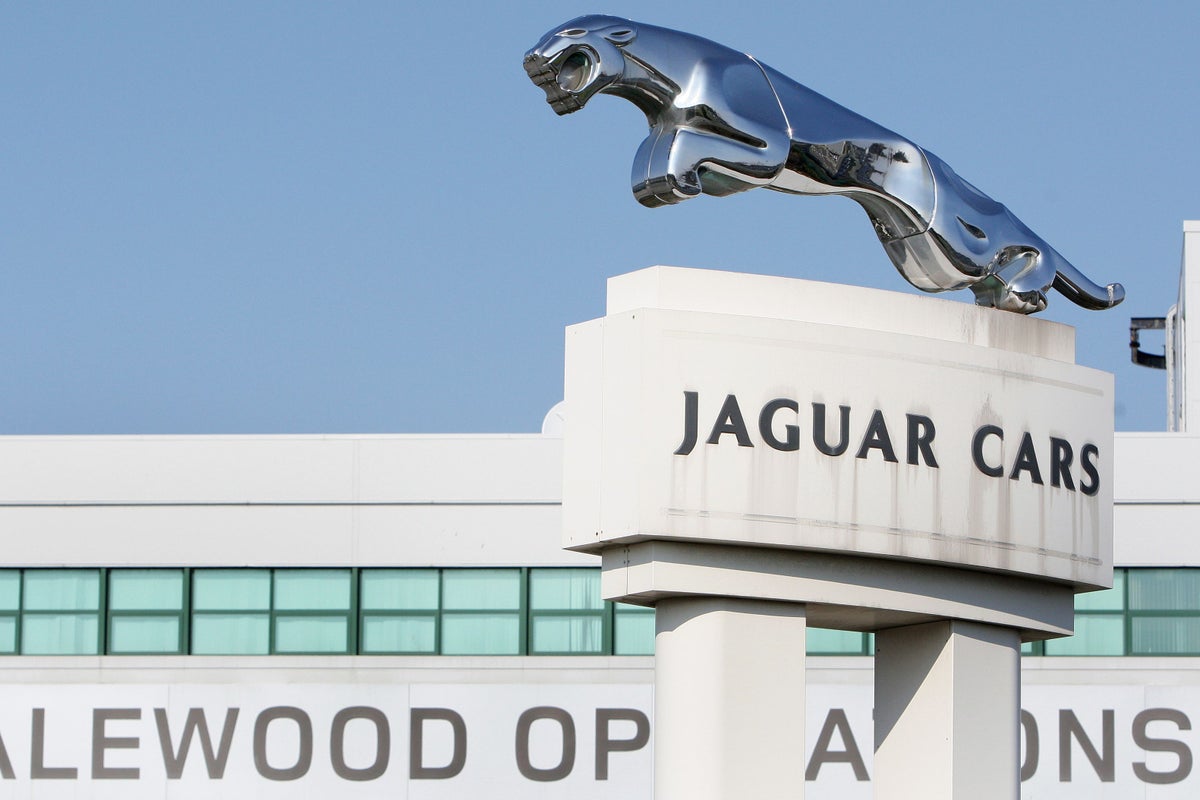
The Government will underwrite a £1.5 billion loan guarantee to Jaguar Land Rover (JLR) as it continues to face a shutdown following a mass cyber attack.
The British carmaker has been forced to suspend production at its UK factories for several weeks after being targeted by hackers.
The shutdown is expected to last until October 1 at the earliest, leaving the company’s suppliers in limbo.
The loan, from a commercial bank, is expected to give those suppliers some certainty amid the continued shutdown.
The Government will give its backing to the loan through the Export Development Guarantee (EDG), a financial support mechanism aimed at helping UK companies who sell their goods overseas.
It will be paid back over five years, and will help to bolster JLR’s cash reserves as it pays back companies in its supply chain, who have been majorly impacted by the shutdown.
Business Secretary Peter Kyle said: “This cyber attack was not only an assault on an iconic British brand, but on our world-leading automotive sector and the men and women whose livelihoods depend on it.
“Following our decisive action, this loan guarantee will help support the supply chain and protect skilled jobs in the West Midlands, Merseyside and throughout the UK.
“We’re backing our automotive sector for the long term through our modern industrial strategy and the landmark trade deals we’ve signed to boost exports, as part of our Plan for Change.”
The UK’s largest carmaker, JLR was hit by a cyber attack on August 31.
Unions and politicians have warned since that small suppliers producing parts for the car giant could collapse without urgent financial support.
Mr Kyle this week met workers and bosses at Webasto, which makes sunroofs for JLR.
The brand has the largest supply chain in the UK automotive sector, which employs around 120,000 people and is largely made up of small and medium-sized businesses.
Chancellor Rachel Reeves said: “Jaguar Land Rover is an iconic British company which employs tens of thousands of people – a jewel in the crown of our economy.
“Today we are protecting thousands of those jobs with up to £1.5 billion in additional private finance, helping them support their supply chain and protect a vital part of the British car industry.”
In the aftermath of the attack, ministers have been in contact daily with JLR and cyber experts, as the company attempts to restart production.
Shadow business secretary Andrew Griffith said: “It is welcome to see that the Jaguar Land Rover supply chain – an important capability in our country that creates and supports thousands of automotive jobs – is finally being supported by the Government with loan guarantees in precisely the way we suggested.
“Ministers have got to the right place but took too long to get there. Labour must also pick up our suggestion of a cyber reinsurance scheme to protect British businesses from state-backed actors in an increasingly dangerous world.
“Britain’s firms and manufacturers deserve a government that is not distracted by scandals and infighting and that understands business.”
Liberal Democrat business spokesperson Sarah Olney said: “The Government and JLR must urgently clarify whether this emergency loan is going to be enough to properly protect tens of thousands of jobs and companies in the supply chain.
“This move is of course welcome – and hopefully not too late – but the Government has been too slow to act.
“The Government must be prepared to provide further support, including a furlough scheme for affected workers, if needed.
“We must also see a plan for ensuring cyber security standards are improved so that situations like this aren’t repeated. Liberal Democrats will continue to hold the Government’s feet to the fire so our car industry is protected.”
Unite general secretary Sharon Graham meanwhile said the loan was “an important first step and demonstrates that the Government has listened to the concerns raised in meetings with Unite over recent days”.
She added: “This is exactly what the Government should be doing, taking action to protect jobs.
“The money provided must now be used to ensure job guarantees and to also protect skills and pay in JLR and its supply chain.”
Business
Rs 20,000 crore gold, silver rush: What will people buy this Akshaya Tritiya? – The Times of India
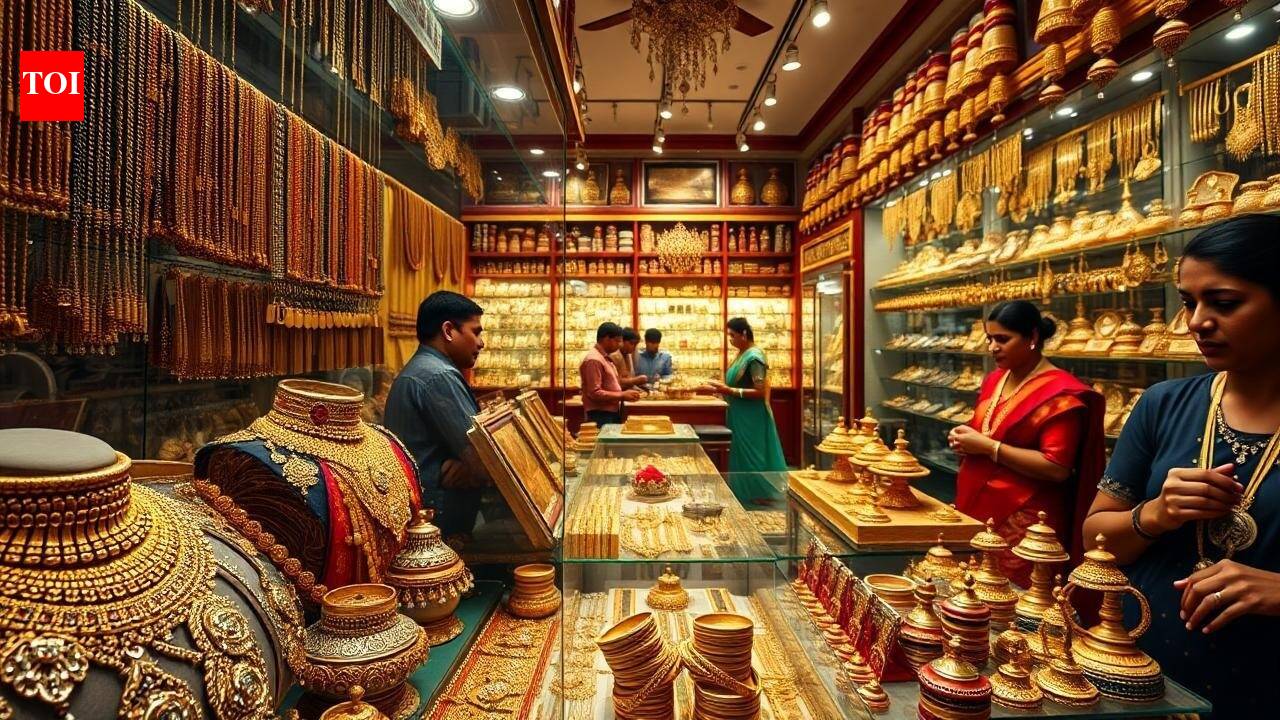
This Akshaya Tritiya, India’s gold and silver markets are heading for bumper purchases, with overall trade likely to cross Rs 20,000 crore even as record-high prices reshape buying patterns. The estimate, shared by the Confederation of All India Traders (CAIT), is higher than last year’s Rs 16,000 crore, signalling growth in value despite a sharp rise in bullion rates.Prices for the yellow metal have surged sharply over the past year, going from Rs 1,00,000 per 10 grams, to Rs 1.58 lakh. Meanwhile, silver has shown a steeper rally, jumping from Rs 85,000 per kilogram to Rs 2.55 lakh per kilogram. According to CAIT, this sharp escalation has not weakened demand, but is instead prompting consumers to make more deliberate and value-oriented purchases.Praveen Khandelwal, member of parliament from Chandni Chowk and secretary general of CAIT told ANI, “Akshaya Tritiya has traditionally been one of India’s most auspicious occasions for purchasing gold… While gold continues to dominate, the nature of purchasing is evolving significantly in response to steep price escalation.”Commenting on customer preference, CAIT national president BC Bhartia highlighted, “There is a clear shift towards lightweight, wearable jewellery, alongside a stronger focus on silver and diamond products. Attractive incentives such as reduced making charges and complimentary gold coins are also helping sustain consumer interest.”Despite the increase in overall trade value, the quantity of metals being sold tells a different story. Pankaj Arora, National President of the All India Jewellers and Goldsmith Federation (AIJGF), an associate of CAIT, explained that the projected Rs 16,000 crore gold trade amounts to nearly 10,000 kilograms (10 tonnes) at current rates. The value, spread across an estimated 2 to 4 lakh jewellers, translates to average sales of only 25 to 50 grams per jeweller, “clearly indicating a sharp decline in volume”.Meanwhile for silver, the estimated Rs 4,000 crore trade corresponds to around 1,56,800 kilograms (157 tonnes), resulting in average sales of about 400 to 800 grams per jeweller during the festival period. “These figures underline a critical shift: while the value of business is expanding due to rising prices, actual consumption is contracting,” Khandelwal said.This gap between value and volume is also reshaping consumer’s buying pattern, with smaller items and lightweight jewellery gaining popularity. At the same time, jewellers are facing challenges due to fluctuating prices, especially when it comes to managing inventory.Even so, festive demand remains steady, with markets witnessing healthy footfall. “Consumers are now adopting a more cautious and pragmatic approach, balancing traditional beliefs with financial discipline,” Khandelwal added.At the same time, it’s not just about physical gold anymore as consumers are increasingly exploring alternatives like digital gold, Sovereign Gold Bonds and gold ETFs, drawn by the promise of liquidity, safety and flexibility when prices are volatile.CAIT and AIJGF have urged jewellers to comply with mandatory hallmarking standards, including HUID certification, and advised buyers to verify the purity and authenticity of their purchases.

Lauren Elcock is among the young Londoners who say rising rents are forcing them to quit the capital.
Source link
As governments across the world restricted the movements of their citizens during Covid lockdowns from 2020, people spent more time online. We bought more online and socialised more online, and this brought us closer to the people who want to scam us. At the same time, realistic video impersonations, voices, websites, and texts became more commonplace, and scammers increased their use of social media including WhatsApp.

Rs 20,000 crore gold, silver rush: What will people buy this Akshaya Tritiya? – The Times of India

Prince Harry corrects blunder before peace with King Charles suffers again
The cost of rising rents: Working four jobs and pushed on to benefits

-

 Entertainment6 days ago
Palace left in shock as Prince William cancels grand ceremony
-

 Sports6 days ago
The case for Man United’s Fernandes as Premier League’s best
-

 Politics1 week ago
Chinese, Taiwanese will unite, Xi tells Taiwan opposition leader
-

 Entertainment1 week ago
Dua Lipa hits major career high ahead of wedding with Callum Turner
-
 Business1 week ago
100% road tax waiver for electric cars, new rules for 2, 3 and 4 wheelers – what Delhi govt’s draft EV policy says – The Times of India
-
 Business6 days ago
UK could adopt EU single market rules under new legislation
-
 Business1 week ago
The FAA wants gamers to apply for air traffic control jobs
-

 Sports1 week ago
Lamar Jackson hits back at critics with faithful message on social media