

Business
Government to guarantee £1.5bn Jaguar Land Rover loan after cyber shutdown

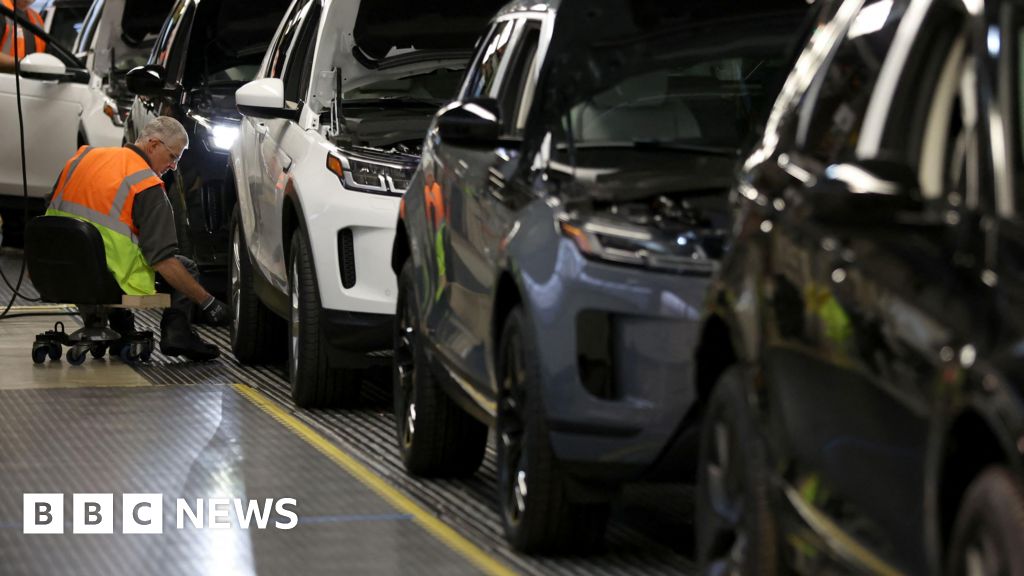
The government will underwrite a £1.5bn loan guarantee to Jaguar Land Rover (JLR) in a bid to support its suppliers as a cyber attack continues to halt production at the car maker.
Business Secretary Peter Kyle said the loan, from a commercial bank, would protect jobs in the West Midlands, Merseyside and across the UK.
The manufacturer has been forced to suspend production for weeks after being targeted by hackers at the end of August.
There have been growing concerns some suppliers, mostly small businesses, could go bust due to the prolonged shutdown. The company operates the largest supply chain in the UK automotive sector, employing around 150,000 people.
It is hoped the loan will give suppliers some certainty as the shutdown continues.
The government will underwrite the loan through the Export Development Guarantee (EDG), a financial support mechanism aimed at helping UK companies who sell overseas.
The loan will be paid back by JLR over five years, in an effort to boost the firm’s cash reserves as it makes a “backlog of payments” to its suppliers.
No cars have been built this month, and the company has stopped placing orders with its 700 suppliers.
A parliamentary committee said some small suppliers had told them they had, at most, one week left before they ran out of cash.
The halt in operations is thought to be costing JLR itself at least £50m per week.
The manufacturer, owned by India’s Tata Motors, typically builds about 1,000 cars a day at its three factories in Solihull and Wolverhampton in the West Midlands, and Halewood in Merseyside.
Kyle said: “Following our decisive action, this loan guarantee will help support the supply chain and protect skilled jobs in the West Midlands, Merseyside and throughout the UK.”
Chancellor Rachel Reeves said: “Today we are protecting thousands of those jobs with up to £1.5bn in additional private finance, helping them support their supply chain and protect a vital part of the British car industry.”
Shadow business secretary Andrew Griffith welcomed the government’s support but said it “took too long to get there” and called on Labour to form a cyber reinsurance scheme to protect British businesses from state-backed actors.
Liberal Democrat business spokesperson Sarah Olney also praised the move but said the government had been “too slow to act”, adding it should also be prepared to provide a furlough scheme for affected workers if required.
Union Unite, representing thousands at JLR and in the supply chain, described the government support as an “important first step”.
“The money provided must now be used to ensure job guarantees and to also protect skills and pay in JLR and its supply chain,” said general secretary Sharon Graham.
JLR was hit by a cyber-attack on 31 August. A group calling itself Scattered Lapsus$ Hunters has claimed responsibility for the hack.
It was also behind a number of high-profile attacks on retailers earlier this year, including Marks & Spencer and Co-op.
JLR workers have been told to stay home since 1 September, with no firm return date provided.
About 30,000 people are directly employed at the company’s plants.
A JLR spokesperson said: “Our teams continue to work around the clock alongside cybersecurity specialists, the NCSC and law enforcement to ensure we restart in a safe and secure manner.
“The foundational work of our recovery programme is firmly underway, and we will continue to provide regular updates to our colleagues, retailers and suppliers.”
Brent crude sinks by a tenth after Iran says the key waterway is open for commercial ships for the rest of the ceasefire.
Source link
Oil prices tumbled on Friday after Iranian officials said they would allow commercial traffic to resume in the Strait of Hormuz. This lifted equity markets in Europe and New York, where major indices hit new records.
Citing the ceasefire between Israel and Lebanon, Iran’s Foreign Minister Abbas Araghchi said Tehran would lift its blockade on shipping through the key Gulf energy trade route.
“In line with the ceasefire in Lebanon, the passage for all commercial vessels through Strait of Hormuz is declared completely open for the remaining period of ceasefire,” Araghchi said.
Traffic in the strategic waterway, through which one-fifth of the world’s crude oil normally flows, has been disrupted by Iran since the US-Israeli offensive began on Feb. 28. At one point, this sent oil prices to a peak of nearly $120 a barrel and roiled the global economy.
Both Brent, the benchmark international contract, and its US equivalent WTI fell below $90 per barrel following Tehran’s announcement. Brent later cut its losses and finished at $90.38 a barrel, down 9.1%.
‘Immediate impact’
“This news is having an immediate impact on markets,” said Kathleen Brooks, research director at XTB.
The move also sent a jolt through equity markets, extending a rally in New York. There, equities have pushed ever higher since late March in anticipation of a breakthrough in the Middle East crisis.
“We had seen a big move the last two weeks, and now it’s just really pricing completely out the worst-case scenario, said Angelo Kourkafas, from Edward Jones.
Kourkafas also pointed to underlying strength in the US economy that should get more attention in the coming period as geopolitical concerns ebb.
“Geopolitical developments are moving in the right direction, and at the same time, the earning strength is hard to ignore,” Kourkafas said.
The broad-based S&P 500 finished at 7,126.06, up 1.2% for the day and 4.5% for the week.
‘Good news’
Earlier, European stocks closed higher, with both Frankfurt and Paris gaining 2%.
US President Donald Trump cheered the reopening of the Strait of Hormuz in an interview with AFP.
“We’re very close to having a deal,” Trump said in a brief telephone call with AFP from Las Vegas. He added there were “no sticking points at all” left with Tehran.
But Iran quickly pushed back on one key point.
Iran’s foreign ministry said Friday that its stockpile of enriched uranium would not be transferred “anywhere.” It rejected an earlier claim by Trump that the Islamic Republic had agreed to hand it over.
Shipping industry figures, meanwhile, gave a cautious welcome to Iran’s announcement.
A spokesman for German transportation giant Hapag-Lloyd, which has ships stuck in the Gulf, told AFP by phone that the reopening was “in general… good news.”
But he cautioned that shippers still needed details of what route vessels could take and in what order, citing fears of mines.
“One thousand ships cannot just go now to the entrance of the strait, that will be chaos. They (the Iranians) need to give clear orders,” said the spokesman, Nils Haupt.
“We would be ready to go very soon if some of these open questions can be solved within the weekend.”
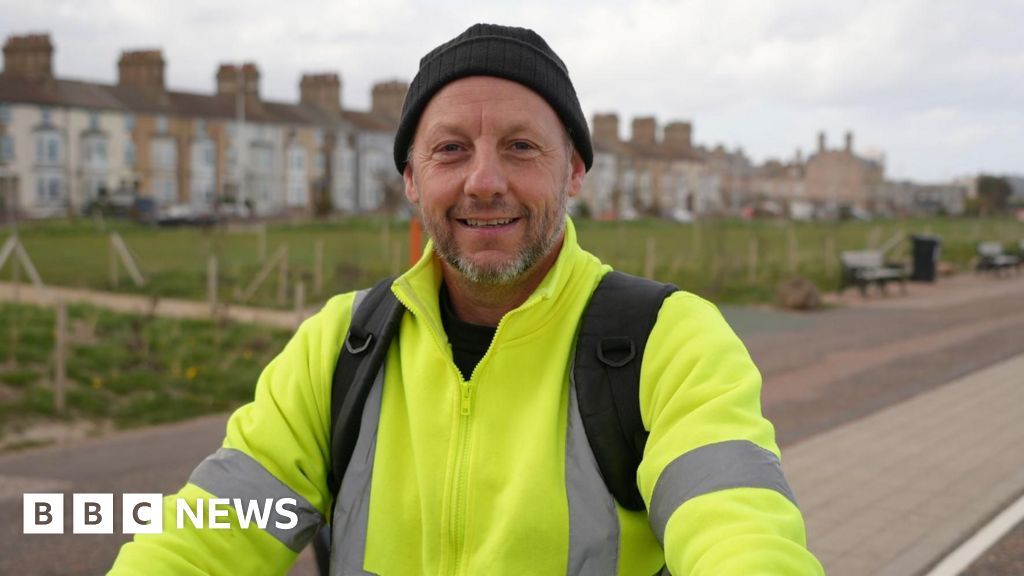
One man says he cancelled his holiday to Spain due to the rising costs and uncertainty.
Source link


Nathalie Baye, low-key legend of French cinema, dies aged 77

Transfer rumors, news: Liverpool eye Wharton amid Man United, Real Madrid interest

The Best Movies to Stream This Month

-
 Politics1 week ago
Indian airlines hit hardest after Dubai limits foreign flights until May 31
-

 Entertainment5 days ago
Palace left in shock as Prince William cancels grand ceremony
-

 Sports5 days ago
The case for Man United’s Fernandes as Premier League’s best
-

 Politics1 week ago
Chinese, Taiwanese will unite, Xi tells Taiwan opposition leader
-

 Sports1 week ago
Documents: NC State trainer initiated ‘unwelcome,’ ‘sexual’ contact
-

 Entertainment1 week ago
Dua Lipa hits major career high ahead of wedding with Callum Turner
-
 Business5 days ago
UK could adopt EU single market rules under new legislation
-
 Business1 week ago
He paid $248 in illegal tariffs for this coat. Will he ever get it back?