

Business
Government to guarantee £1.5bn loan to JLR after cyber shutdown

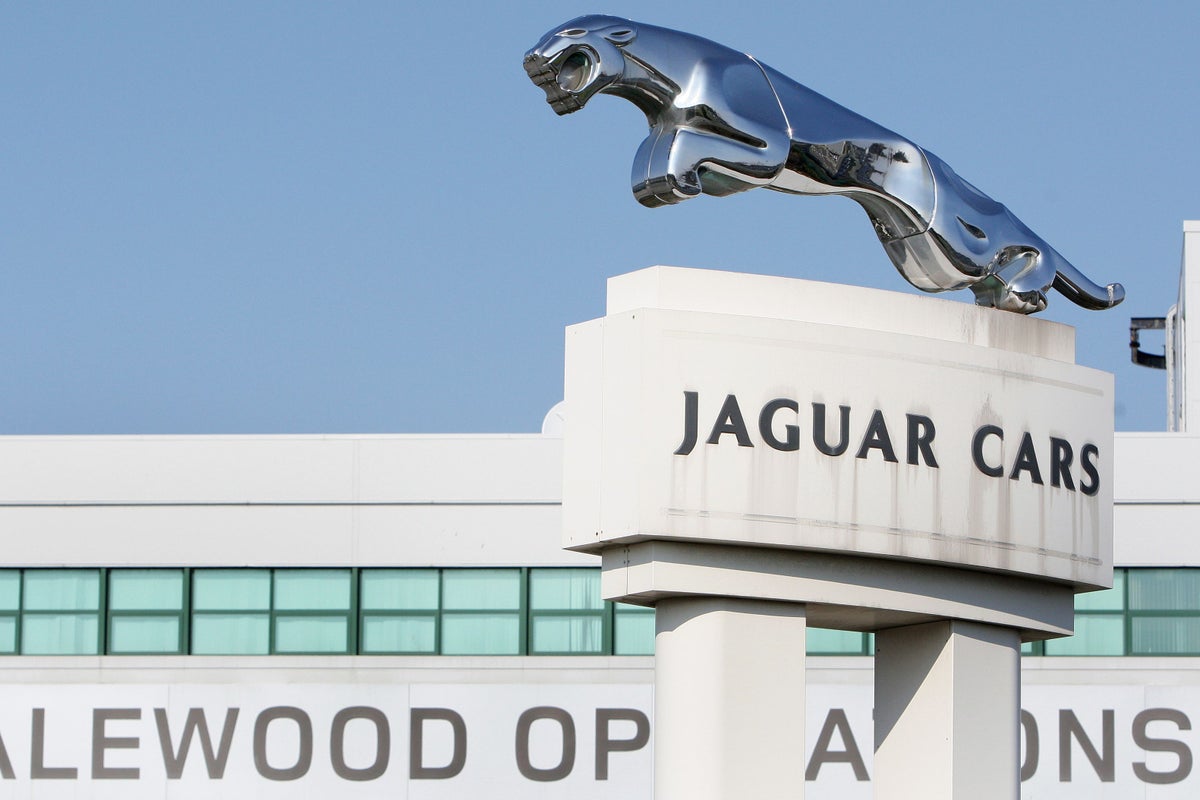
The Government will underwrite a £1.5 billion loan guarantee to Jaguar Land Rover (JLR) as it continues to face a shutdown following a mass cyber attack.
The British carmaker has been forced to suspend production at its UK factories for several weeks after being targeted by hackers.
The shutdown is expected to last until October 1 at the earliest, leaving the company’s suppliers in limbo.
The loan, from a commercial bank, is expected to give those suppliers some certainty amid the continued shutdown.
The Government will give its backing to the loan through the Export Development Guarantee (EDG), a financial support mechanism aimed at helping UK companies who sell their goods overseas.
It will be paid back over five years, and will help to bolster JLR’s cash reserves as it pays back companies in its supply chain, who have been majorly impacted by the shutdown.
Business Secretary Peter Kyle said: “This cyber attack was not only an assault on an iconic British brand, but on our world-leading automotive sector and the men and women whose livelihoods depend on it.
“Following our decisive action, this loan guarantee will help support the supply chain and protect skilled jobs in the West Midlands, Merseyside and throughout the UK.
“We’re backing our automotive sector for the long term through our modern industrial strategy and the landmark trade deals we’ve signed to boost exports, as part of our Plan for Change.”
The UK’s largest carmaker, JLR was hit by a cyber attack on August 31.
Unions and politicians have warned since that small suppliers producing parts for the car giant could collapse without urgent financial support.
Mr Kyle this week met workers and bosses at Webasto, which makes sunroofs for JLR.
The brand has the largest supply chain in the UK automotive sector, which employs around 120,000 people and is largely made up of small and medium-sized businesses.
Chancellor Rachel Reeves said: “Jaguar Land Rover is an iconic British company which employs tens of thousands of people – a jewel in the crown of our economy.
“Today we are protecting thousands of those jobs with up to £1.5 billion in additional private finance, helping them support their supply chain and protect a vital part of the British car industry.”
In the aftermath of the attack, ministers have been in contact daily with JLR and cyber experts, as the company attempts to restart production.
Shadow business secretary Andrew Griffith said: “It is welcome to see that the Jaguar Land Rover supply chain – an important capability in our country that creates and supports thousands of automotive jobs – is finally being supported by the Government with loan guarantees in precisely the way we suggested.
“Ministers have got to the right place but took too long to get there. Labour must also pick up our suggestion of a cyber reinsurance scheme to protect British businesses from state-backed actors in an increasingly dangerous world.
“Britain’s firms and manufacturers deserve a government that is not distracted by scandals and infighting and that understands business.”
Liberal Democrat business spokesperson Sarah Olney said: “The Government and JLR must urgently clarify whether this emergency loan is going to be enough to properly protect tens of thousands of jobs and companies in the supply chain.
“This move is of course welcome – and hopefully not too late – but the Government has been too slow to act.
“The Government must be prepared to provide further support, including a furlough scheme for affected workers, if needed.
“We must also see a plan for ensuring cyber security standards are improved so that situations like this aren’t repeated. Liberal Democrats will continue to hold the Government’s feet to the fire so our car industry is protected.”
Unite general secretary Sharon Graham meanwhile said the loan was “an important first step and demonstrates that the Government has listened to the concerns raised in meetings with Unite over recent days”.
She added: “This is exactly what the Government should be doing, taking action to protect jobs.
“The money provided must now be used to ensure job guarantees and to also protect skills and pay in JLR and its supply chain.”
Last Updated:
Vellayan Subbiah, a scion of the Murugappa family, has reached a settlement with other promoter branches to realign ownership




Cholamandalam Investment Finance
Vellayan Subbiah, a scion of the Murugappa family, has reached a settlement with other promoter branches to realign ownership across key group companies, according to a report by Moneycontrol.com, citing people familiar with the matter. The agreement is expected to see Subbiah give up stake exposure linked to Cholamandalam Investment and Finance Company while consolidating his position in Tube Investments of India and CG Power and Industrial Solutions.
The arrangement, finalised after more than two years of negotiations, forms part of a broader plan by the Murugappa Group to separate ownership of the century-old conglomerate among three promoter factions while ensuring business continuity. Under the settlement, Subbiah is expected to relinquish exposure to Cholamandalam Investment — the group’s flagship lending arm — and instead retain and strengthen his alignment with Tube Investments and CG Power, including taking over or retaining stakes tied to those companies within the extended promoter structure, the report said. Emails sent to Subbiah and the Murugappa Group did not receive a response until publication.
The realignment follows prolonged internal discussions over the division of the diversified business empire, which reported revenue of more than $9 billion in FY23, after five generations of joint ownership through the family holding company Ambadi Investments.
Negotiations had earlier faced hurdles due to significant valuation divergences across group companies. As previously reported by The Economic Times on August 19, 2024, the turnaround of businesses overseen by Subbiah — particularly CG Power, Tube Investments and Cholamandalam Finance — had emerged as a sticking point in share-swap discussions among family factions.
The revival of CG Power proved especially pivotal. Since Tube Investments acquired control in 2020, CG Power has deleveraged, restored profitability and benefited from investor interest in domestic manufacturing, railways, power equipment and electronics supply chains. Its stock has surged since the takeover, making it one of the group’s most valuable listed assets. Tube Investments has also diversified beyond its legacy engineering base into green mobility, contract manufacturing and specialised industrial segments, strengthening its market position.
Cholamandalam Investment, meanwhile, has grown into one of India’s most valuable non-bank lenders, with a market capitalisation exceeding Rs 1 lakh crore. The uneven appreciation in these businesses complicated efforts to carve out three equal promoter blocs, with one faction seeking revisions to earlier share-swap assumptions and another resisting reopening agreed terms, people cited by Moneycontrol.com said.
Promoter ownership across Murugappa companies is largely routed through holding vehicles rather than direct individual shareholdings, but the concentration of value highlights why these firms were central to negotiations. The promoter group’s roughly 51–52 percent stake in Cholamandalam Investment is estimated to be worth about Rs 55,000–60,000 crore at current market levels. In Tube Investments, promoter ownership of around 45–46 percent translates into holdings valued at approximately Rs 20,000–22,000 crore. Through Tube Investments’ controlling position in CG Power, the promoter group effectively holds about 58–59 percent of that company, valued at roughly Rs 45,000–50,000 crore.
Beyond these, the family controls about 56–57 percent in Coromandel International, worth around Rs 18,000–20,000 crore; 42–43 percent in Carborundum Universal, valued near Rs 9,000–10,000 crore; and 44–45 percent in EID Parry, worth roughly Rs 3,500–4,000 crore. Tube Investments also indirectly controls about 70 percent of Shanti Gears, valued at approximately Rs 2,500–3,000 crore.
The final arrangement appears to align ownership more closely with operational leadership. Subbiah, a fourth-generation member of the family, is widely credited within the group for steering the revival of CG Power and expanding Tube Investments into new manufacturing and mobility segments, making these businesses natural anchors for his promoter bloc under the new structure.
The Murugappa Group, which comprises nearly 30 companies across fertilisers, engineering, financial services, abrasives, sugar and mobility solutions, operates under a long-standing governance charter that separates ownership from management, the Moneycontrol.com report noted.
 Click here to add News18 as your preferred news source on Google.
Follow News18 on Google. Join the fun, play games on News18. Stay updated with all the latest business news, including market trends, stock updates, tax, IPO, banking finance, real estate, savings and investments. To Get in-depth analysis, expert opinions, and real-time updates. Also Download the News18 App to stay updated.
February 26, 2026, 10:51 IST
Read More
Last Updated:
RBI has summoned senior officials of Yes Bank following a major data breach involving the Yes Bank–BookMyForex multi-currency forex card
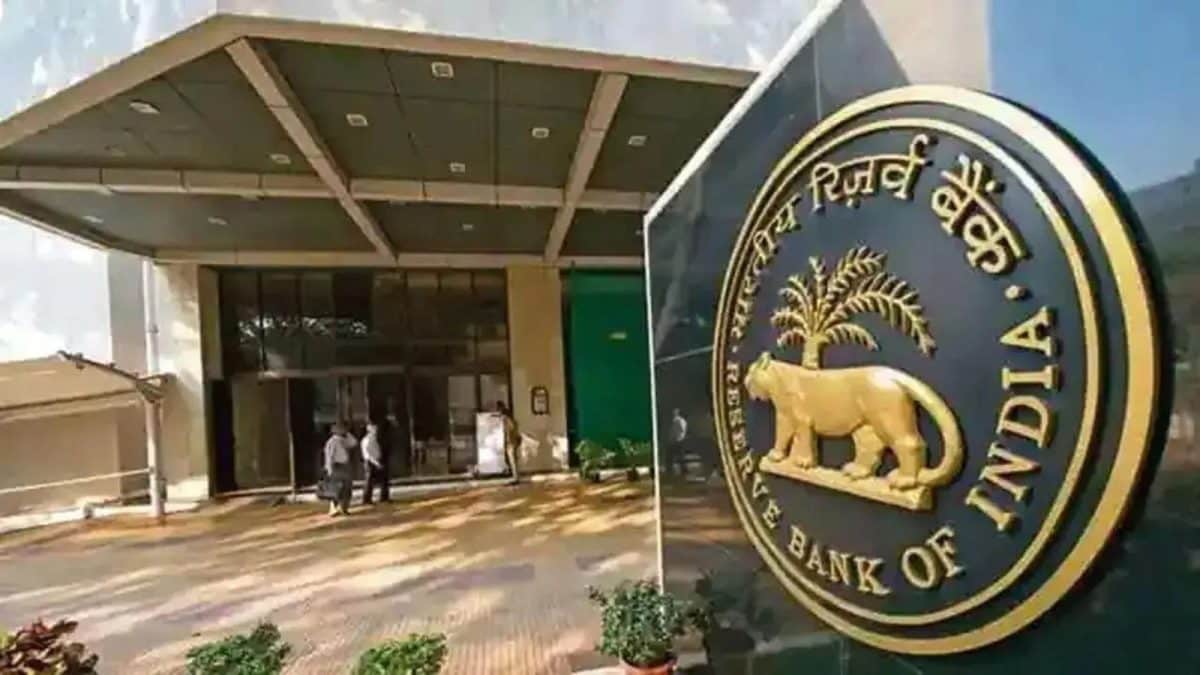
Reserve Bank of India headquarters in Mumbai.
The Reserve Bank of India (RBI) has summoned senior officials of Yes Bank following a major data breach involving the Yes Bank–BookMyForex multi-currency forex card, two people aware of the development told The Economic Times (ET).
According to the report, card details and CVV numbers of several users were allegedly compromised. The central bank has sought a detailed explanation from the bank on how its systems may have been breached and the sequence of events that led to the exposure of sensitive customer data.
“The RBI has sought a comprehensive briefing from Yes Bank’s senior management on the root cause of the breach, the timeline of events, and the adequacy of the bank’s cybersecurity framework,” one of the persons cited by ET said. “The regulator wants clarity on how sensitive card data, including CVV numbers, may have been exposed and what immediate containment measures have been implemented.”
Yes Bank declined to comment on the RBI’s queries but said an internal investigation had identified fraudulent transactions involving 15 merchants in a Latin American country on February 24. Transactions worth Rs 2.54 crore were approved across 5,000 customers, while 688 unauthorised attempts amounting to around Rs 90 lakh were blocked. The bank said it is working with the card network to initiate chargebacks and ensure that affected customers do not face financial losses.
Separately, BookMyForex said it does not store customers’ sensitive card information and that its systems were neither breached nor compromised during the period in question.
The RBI has also sought details on how sensitive card data—particularly CVVs—was stored and protected, whether encryption and prescribed security protocols were followed, and why existing cyber controls failed to prevent the breach. In addition, the regulator is reviewing the timeline of detection and reporting, the robustness of third-party risk management and oversight, the number of customers impacted, and the steps taken to block cards, prevent misuse and mitigate losses. It has also asked for clarity on internal accountability, supervisory lapses and remedial measures to prevent a recurrence, ET reported.
Click here to add News18 as your preferred news source on Google.
Follow News18 on Google. Join the fun, play games on News18. Stay updated with all the latest business news, including market trends, stock updates, tax, IPO, banking finance, real estate, savings and investments. To Get in-depth analysis, expert opinions, and real-time updates. Also Download the News18 App to stay updated.
February 26, 2026, 07:53 IST
Read More

Soft drinks company Twig’s Beverage has a loyal following for its old-fashioned approach.
Source link

Vellayan Subbiah To Exit Cholamandalam Investment Finance Under Murugappa Family Pact

India-Israel FTA talks begin to deepen bilateral trade ties

US-Iran nuclear talks to resume in Geneva against backdrop of military threat

-

 Entertainment1 week ago
Queen Camilla reveals her sister’s connection to Princess Diana
-

 Tech1 week ago
Rakuten Mobile proposal selected for Jaxa space strategy | Computer Weekly
-

 Politics1 week ago
Ramadan moon sighted in Saudi Arabia, other Gulf countries
-

 Entertainment1 week ago
Robert Duvall, known for his roles in "The Godfather" and "Apocalypse Now," dies at 95
-

 Politics1 week ago
Tarique Rahman Takes Oath as Bangladesh’s Prime Minister Following Decisive BNP Triumph
-
 Business1 week ago
Tax Saving FD: This Simple Investment Can Help You Earn And Save More
-

 Tech1 week ago
Businesses may be caught by government proposals to restrict VPN use | Computer Weekly
-

 Sports1 week ago
Usman Tariq backs Babar and Shaheen ahead of do-or-die Namibia clash