

Entertainment
A bud opens in NYC

Overall, you may agree, the New Year has not brought good tidings. It has not lifted our spirits. Soothsayers have warned us that it will likely be a violent, chaotic year. That also seems to be the legacy that 2025 has left behind.
And so, I was all set to write a column to project this sense of gloom. If you have read and heard the year-end reviews in the mainstream media, you will have evidence to make a similar assessment. Even this wedding season allows guests to grumble together amid all that glamour and glitter.
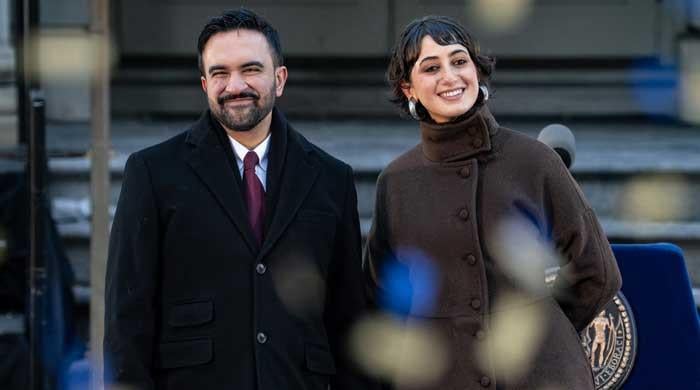
But after midnight on Thursday, while waiting for the live coverage of Zohran Mamdani’s inauguration as the new mayor of New York City, I changed my mind. How could I have ignored this moment of history? Isn’t 2026 now the year of Mamdani?
We have already experienced the thrill and magic of how a 34-year-old Muslim of South Asian parents was elected the mayor of the foremost city of the world in a country that had elected Donald Trump as its president a year earlier. First, it was the nomination of Mamdani in the Democratic primary and then the election itself. The world has witnessed a new kind of revolution in a democratic setting.
I would want to say that while rejoicing in the glory of Mamdani, we can leave the world behind for the time being. However, there was an uncanny reminder that the world cannot be left behind. It so happened that details about the tragedy in which around 40 people were killed when fire ripped through a bar in a Swiss ski resort had emerged at about the same time that the media was reporting the inauguration being held in New York.
Anyhow, anywhere in the world and particularly in the US, the beginning of a new era in New York was the news that mattered. For many, there still would be a sense of disbelief that such a young man who was a proclaimed socialist and a Muslim was taking charge of the richest city in the world. This is how miracles happen.
I am sure there will be millions in distant corners of the world who watched that ceremony and were overwhelmed with emotion — like me. It is really rare to have this experience, to feel that you are an observer of history in the making. Yes, Sadiq Khan had also made history when he was elected the mayor of London, the greatest city in the world before New York — and I will come to that in a while.
I need a pause to say something about my fascination with New York, the ultimate city. Reading about it in literature and watching its awe-inspiring grandeur in Hollywood movies in my youth had stirred a deep longing to visit the city and walk its streets. Now that I have come to know the city through my intermittent visits, the allure and the mystery of what it really is persist. I continue to read about it, mostly in memoirs and biographies. New York, New York.
What will Mamdani do with his promises? Let me go back to the inauguration. Actually, before the midday public event, which was attended by thousands of shivering supporters, in sub-zero temperatures, a modest swearing-in ceremony was held just after midnight.
In his first speech as mayor, he spoke these headline-making words: “Beginning today, we will govern expansively and audaciously”. He assured New Yorkers that he intended to carry out his affordability agenda and would refuse to “reset expectations” for what government can and should do for the working class and the unprotected. “I was elected as a democratic socialist and I will govern as a democratic socialist”, he said.
Separate reports in American and foreign media say he took his oath on a Quran. Senator Bernie Sanders administered the oath of office with Mamdani resting his hand on two Qurans held by his wife Rama Duwaji.
There are stories about where those two Qurans came from.
As I said, history was also made when Sadiq Khan, son of a Pakistani bus driver, was elected mayor of London. He had taken his oath on a Quran and this was widely noted and commented upon. By the way, he again made history when he was elected mayor for the third term in 2024.
The occasion when he first took his oath on a Quran had occurred earlier, when he became a member of the Queen’s Privy Council in 2009. An anecdote about it was reported by the BBC and it became well-known. Buckingham Palace called Sadiq Khan to ask if he would be sworn in before the Queen and what sort of Bible he would like.
Sadiq Khan, as quoted by BBC, said: “I swear on the Quran. I’m a Muslim”. They said they did not have a Quran. Could he bring his own? In Sadiq’s words: “So I went to Buckingham Palace with my Quran and afterwards they returned it and I said, ‘No, can I leave it here for the next person’?”.
On Thursday, after Mamdani, two other senior officials took oath. One of them said: “How remarkable it is that on these steps today, we have three swearings-in. One by a leader using a Quran, one by a leader using a Christian Bible and one by a leader using a Chumash, or Hebrew Bible. I am proud to live in a city where this is possible”.
Sure. But so many of us who are not New Yorkers will be closely watching what these leaders do and how it will impact the rest of the country. What is already obvious is that the Left is ascendant in New York. In his speech, Bernie Sanders thanked New York “for inspiring our nation” from coast to coast. Wish he could say this for the rest of the world.
The writer is a senior journalist. He can be reached at: [email protected]
Disclaimer: The viewpoints expressed in this piece are the writer’s own and don’t necessarily reflect Geo.tv’s editorial policy.
Originally published in The News

As The Pitt marks it return to the TV screens, fans are in to witness their favourite doctors work through hectic hospital shifts following July 4 celebrations.
HBO Max medical drama premiered January 8, 2026, a year after the freshman season aired.
The series which quickly gained critical recognition will have 15 episodes in the new season too, just like the previous one.
The previous season earned multiple Emmy accolades including Outstanding Lead Actor in a Drama Series for Wyle, and Outstanding Drama Series.
The brand-new season is back with emergencies due to ‘fireworks, alcohol-related accidents, bad judgements, celebrations gone awry’ as Wyle hinted to Entertainment Weekly in December 2025.
Ahead of season 2’s first episode aired, announcement came for the next installment of the award-winning drama.
HBO CEO Casey Bloys broke the news during the premiere in Los Angeles, January 7.
The Pitt season 2 release schedule:
Here’s what you need to know about the schedule of the season
In total, there will be 15 episodes with each episode featuring an hour of a 15-hour workday at the hospital.
Every week new episode will air till the finale on April 16.
Jan. 8: Episode 1
Jan. 15: Episode 2
Jan. 22: Episode 3
Jan. 29: Episode 4
Feb. 5: Episode 5
Feb. 12: Episode 6
Feb. 19: Episode 7
Feb. 26: Episode 8
Mar. 5: Episode 9
Mar. 12: Episode 10
Mar. 19: Episode 11
Mar. 26: Episode 12
Apr. 2: Episode 13
Apr. 9: Episode 14
Apr. 16: Episode 15
Fans can stream the episodes on HBO Max where all the 15 episodes of the previous season are also available.
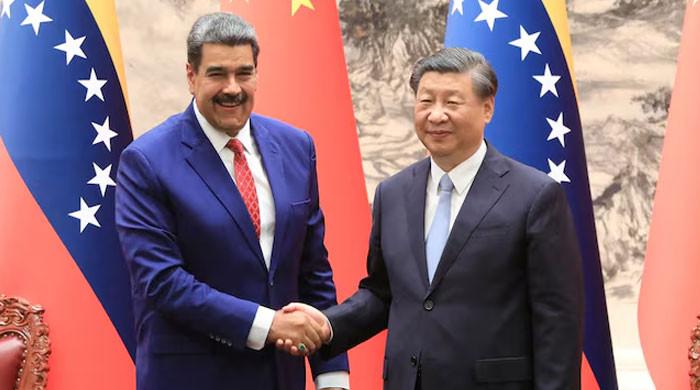
The recent US action in Venezuela, in which President Nicolas Maduro was abducted to the US to face criminal charges, has triggered a dramatic rupture not only in Western Hemisphere geopolitics but also in the assumptions that have underpinned global sovereign lending for decades.
In Washington, the action was cast as a criminal law enforcement action; in Beijing and much of the Global South, it has been seen as an illegal overreach and a weaponisation of US power.
China’s reaction has been especially significant: rather than threatening military escalation, Beijing has framed its response in legal and diplomatic terms, signalling an aggressive defence of contracts, sovereign debt instruments and investment treaties. In doing so, China is asserting that the future of geopolitical competition may be defined as much by law firms and arbitral tribunals as by aircraft carriers.
To understand why this matters, it is necessary to situate the current standoff within the broader context of Chinese overseas lending and the legal frameworks on which it relies. Over the last two decades, China has become the largest lender to developing countries, largely through state policy banks and under the Belt and Road Initiative, which spans infrastructure, mining, energy and other strategic sectors across Asia, Africa, Latin America and beyond.
While authoritative global estimates vary, independent research has documented that Chinese sovereign lending totals well into the hundreds of billions and, by some accounts, over $1 trillion across more than 100 countries. This debt is structured through bilateral agreements, commercial contracts, and in some cases, formal bilateral investment treaties (BITs).
Underlying these arrangements is a foundational legal assumption: when a sovereign borrows money or grants concessions for projects, be it for a railway in Africa, a port in Southeast Asia or energy infrastructure in Latin America, successor governments will honour the obligations undertaken by their predecessors.
This assumption is not merely a matter of bookkeeping; it is a cornerstone of modern sovereign lending and investment. Creditors price risk, investors commit capital, and contractors deploy resources based on the expectation that contracts and treaties will be respected through shifts in political power. International financial institutions, private creditors and commercial lawyers alike depend on this continuity. When that assumption breaks down, the entire edifice of cross-border investment is thrown into question.
That is why China’s response to the operation in Venezuela is so revealing. Rather than responding with threats of force, which would be widely understood as an escalation, Beijing’s public statements have emphasised the illegality of the US action under international law, principles of sovereignty and basic norms of state conduct.
China’s foreign ministry condemned the operation as a violation of the UN Charter and basic norms of international relations, and called on the US to respect Venezuela’s sovereignty, release its president and resolve disputes through negotiation and dialogue. These statements reflect a deliberate framing of the issue in legal terms.
Crucially, recent developments show that China and Venezuela had already been deepening their legal and economic ties. In late 2024, Venezuela ratified a bilateral investment treaty with China, establishing protections such as fair and equitable treatment, full protection and security and most-favoured-nation treatment for covered investments.
The treaty also prescribes mechanisms for resolving disputes, including by arbitration under specified international frameworks. Though China has not yet ratified the treaty, its existence illustrates a legal architecture that both parties have been building around their economic relationship.
This legal framework assumes a functioning sovereign Venezuelan government to which obligations can attach. What happens, though, when that sovereign is violently removed from office at the behest of a rival power and subjected to external legal processes unrelated to the underlying investments?
This is the scenario that motivates the more dramatic claim circulating in some analytical circles that China is prepared to wage “lawyer war” by invoking investment treaties, international arbitration, and global legal institutions to defend its interests and to impose legal costs on governments that fail to honour commitments to Chinese creditors. In other words, Chinese strategy may embrace law itself as a geopolitical instrument.
At first glance, this might sound hyperbolic: how could legal claims match the strategic weight of military force? The answer lies in the nature of China’s global exposure. Unlike traditional Western creditors whose sovereign bonds are often issued under New York or London law with clear enforcement mechanisms, China’s lending is far more diffuse, spread across jurisdictions with varying legal capacities and often backed by project revenues, commodity deliveries, or bilateral conventions.
The enforceability of these obligations has always been uncertain.
If those obligations were suddenly disavowed by successor governments, particularly those aligned with US policy preferences after regime change, the economic consequences for China’s creditors could be devastating. Defaults would accumulate, infrastructure deals would unravel, and Chinese capital would be at risk of losses on a scale that dwarfs any single bilateral dispute. Legal action is one lever to prevent that outcome.
Viewed through this lens, China’s emphasis on legal norms and international adjudication is not merely about Venezuela; it is about protecting the institutional underpinnings of its global lending model. Treaty protections, arbitral forums and bilateral investment agreements are mechanisms through which sovereign obligations can be enforced or at least negotiated when disputes arise.
If China can successfully bring claims against a post-Maduro Venezuelan government or secure recognition of its rights on the basis of existing treaties, it would establish a precedent affirming that sovereign debt and contracts cannot be rendered null by external intervention. That would reinforce the confidence of Chinese creditors and investors in the durability of their claims, mitigating the political risk that now seems existential.
This legal strategy also aligns with broader developments in China’s approach to dispute resolution. The country has been cultivating a network of domestic and international arbitration institutions capable of handling commercial and investment disputes involving Chinese parties.
From the China International Economic and Trade Arbitration Commission (CIETAC) to the China International Commercial Court (CICC) and related bodies, these institutions provide venues for resolving transnational disputes involving China. Although their global reach and acceptance are still evolving, they represent an expanding toolkit for legal statecraft under the Belt and Road Initiative.
Yet, there are limitations and countervailing forces worth acknowledging. International arbitration and investment treaty enforcement are highly contested domains. Western legal institutions, such as those found in The Hague or under the auspices of the International Centre for Settlement of Investment Disputes (ICSID), have historically been viewed with scepticism in China and other emerging powers, leading to alternative arrangements and hybrid mechanisms.
Enforcement of arbitral awards against sovereign states often depends on reciprocal legal frameworks and political will, rather than simple juridical determination. In other words, securing a legal victory is one thing; implementing it is another. The political dimensions of this standoff cannot be separated from the legal arguments too.
China’s official posture of non-intervention and respect for sovereignty is itself a strategic narrative that resonates across much of the Global South, where memories of colonialism and unilateral interventionism remain potent.
By framing its challenge to American behaviour in terms of international law, China portrays itself as a defender of a rules-based world order, even as it simultaneously pursues a network of bilateral arrangements that serve its own strategic interests. This duality complicates Western efforts to paint China’s expanding influence solely in terms of debt dependency or coercive economics.
For the US, the focus has been on immediate security and criminal justice concerns related to narcotics trafficking and international law enforcement. But Washington’s actions, unprecedented in their direct seizure of a sitting head of state from foreign soil, challenge longstanding assumptions about sovereign conduct and invite pushback from countries that see their own investments and legal claims jeopardised. If American policy endorses the notion that external intervention can reset a country’s legal obligations, the implications for global sovereign contracts could be profound.
The narrative that China is “declaring war with lawyers” is more than a rhetorical flourish; it captures a deeper shift in the tools of global competition. Military power and traditional geopolitics matter, but so do legal norms, treaty rights and the enforceability of agreements that bind sovereign states to external obligations. China’s response to the Venezuela crisis illustrates how law has become an arena of strategic contestation, an arena where contracts, arbitration and investment protection may shape the calculus of power in the twenty-first century.
As geopolitical rivalry intensifies, the question of who writes the rules and who can enforce them will be at the heart of global order. And in that contest, legal strategy may indeed be one of the most consequential instruments of statecraft.
The writer is a trade facilitation expert, working with the federal government of Pakistan.
Disclaimer: The viewpoints expressed in this piece are the writer’s own and don’t necessarily reflect Geo.tv’s editorial policy.
Originally published in The News
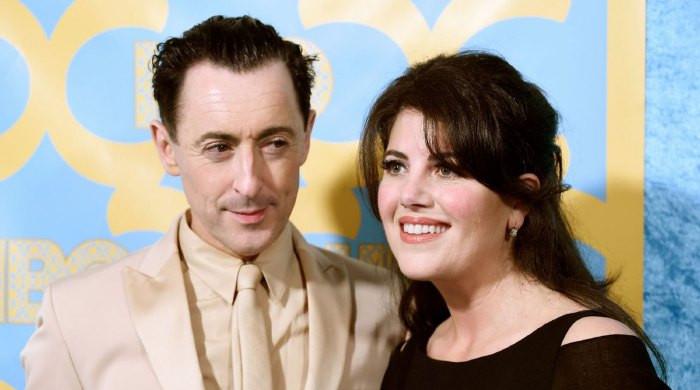
Alan Cumming’s moment on the Hollywood Walk of Fame turned into an unexpected talking point when a very familiar face showed up to support him.
As the Scottish actor received his star, fans quickly noticed that Monica Lewinsky was right there by his side, proudly backing him during the ceremony.
Cumming, 60, looked every bit the star in a bright turquoise suit jacket paired with matching shorts as he celebrated the milestone.
But it was Lewinsky, 52, who surprised many by attending as one of his closest supporters.
Dressed in a striking red pantsuit, she joined him on stage, shared a warm kiss with him in front of the crowd and delivered a heartfelt speech that made it clear their friendship runs deep.
While the pairing may have caught some fans off guard, Cumming has spoken openly about his bond with Lewinsky for years.
Back in 2016, he explained just how important she is in his life during an appearance on Watch What Happens Live.
“She is really one of the kindest, most loyal, loving, tender, funny girls I’ve ever known. I mean, I think she’s really one of my best friends,” he said at the time. “Yeah. And she’s been at my wedding. She knows my family.”
Cumming has previously shared that he met Lewinsky around 16 years ago at a Marie Claire party, and the two have remained close ever since.
While promoting his memoir Not My Father’s Son, he again praised her character, saying, “She’s absolutely one of the most loving, fun, clever, tender people.”
He added, “The fact that she’s been able to remain such an amazing person with all that horrible bile that was heaped upon her as a young woman is testament to the person she is.”
Decades after Lewinsky became a household name due to her past with former US President Bill Clinton, her presence at Cumming’s ceremony highlighted a genuine friendship built away from headlines.
On this day, the focus stayed firmly on loyalty, support and celebrating a career milestone together.


Will shoot first, ask questions later, Denmark tells US
SIP Inflows At New Record High Of Rs 31,002 Crore In Dec: AMFI Data

Here’s the schedule of new season

-

 Sports4 days ago
VAR review: Why was Wirtz onside in Premier League, offside in Europe?
-

 Politics4 days ago
China’s birth-rate push sputters as couples stay child-free
-
 Business4 days ago
Aldi’s Christmas sales rise to £1.65bn
-
 Business4 days ago
8th Pay Commission: From Policy Review, Cabinet Approval To Implementation –Key Stages Explained
-
 Entertainment4 days ago
Minnesota Governor Tim Walz to drop out of 2026 race, official confirmation expected soon
-
 Sports4 days ago
FACI invites applications for 2026 chess development project | The Express Tribune
-

 Fashion4 days ago
Jacquemus hires new COO from Parisian label Lemaire
-
Sports1 week ago
Tom Wilson’s New Year’s Eve: Two goals, a fight, a win and an Olympic nod