

Business
A Paramount-Warner Bros. movie slate could rule the 2027 box office, but is it sustainable?


Paramount Skydance CEO David Ellison speaks during the Bloomberg Screentime conference in Los Angeles on October 9, 2025.
Patrick T. Fallon | Afp | Getty Images
Hollywood could soon have a new king of the box office.
With Paramount Skydance set to take over Warner Bros. Discovery, the combined film studios could dominate the theatrical slate.
Paramount CEO David Ellison has repeatedly promised not to pull back on production from either studio, with the goal of making 30 movies a year — 15 from Paramount and 15 from Warner Bros. The pending transaction, with an enterprise value of $111 billion, must still win regulatory approval both in the U.S. and in Europe.
As the current 2027 slate stands, the combination of WBD and Paramount would result in 26 theatrical releases. However, additions to that calendar could come as soon as April at the annual CinemaCon conference in Las Vegas.
This behemoth of a slate is dominated by Warner Bros. titles, and it’s likely that those films would account for the bulk of ticket sales.
The studio is set to release films from major franchises including Godzilla-Kong, Superman, Batman, Minecraft, The Conjuring universe, Gremlins and Lord of the Rings.
Meanwhile, Paramount will have new entries for Sonic the Hedgehog, Paranormal Activity, A Quiet Place and its animated Teenage Mutant Ninja Turtles franchises.
Still from Paramount’s “Sonic the Hedgehog 2.”
Paramount
While Paramount’s franchises are popular and have generated solid ticket sales at the box office, its major releases in 2027 are smaller budget features. In fact, no film in any of those four franchises has generated more than $350 million globally, according to data from Comscore. But with smaller budgets, they don’t have to in order to be profitable.
Warner Bros.’ part of the slate, on the other hand, has bigger budget features that in the past have generated bigger box office returns. The most recent Godzilla-Kong film generated $572 million globally, 2025’s “The Conjuring: Last Rites” tallied nearly $500 million, “The Batman” took in $772 million and “A Minecraft Movie” nearly hit $1 billion.
“When you look at the films on the horizon from the PAR/WBD combo it is most impressive,” Paul Dergarabedian, head of marketplace trends at Comscore, told CNBC. “And it may not be an overstatement to say that that slate could indeed have the potential to generate the biggest single studio box office in 2027.”
The Warner Bros. movie studio is a big part of why Ellison was so committed to winning over WBD’s board and its shareholders in a bidding war against Comcast and Netflix. Last year, Warner Bros. was the second-highest grossing studio at the domestic and global box office. Paramount was fifth.
Disney has long held the box office heavyweight title, although it was briefly overthrown in 2023 by Universal. Warner and Universal have jockeyed between second and third position, with Sony, Lionsgate and Paramount falling in line behind them.
A tricky feat
“Doubling up two major slates adds to the potential for a very strong 2027, but nothing is ever certain when it comes to assuming a potential annual box office winner among studios,” said Shawn Robbins, director of analytics at Fandango and founder of Box Office Theory. “That’s especially true when the likes of Disney and Universal will each bring out their own heavy-hitters next year.”
Disney, in particular, has franchises like Ice Age, Star Wars, Frozen and Avengers on the docket for 2027.
Of course, franchise tentpoles are not always guaranteed to succeed at the box office, but the combined efforts of Paramount and Warner Bros. is a compelling offering for an industry that has been shrinking dramatically over the last decade.
“The notion of two major studio slates under one large umbrella in 2027 makes for an intriguing prospect while raising some fair speculation,” said Robbins. “We’ve seen the decline in theatrical output in the years following Disney’s acquisition of Fox, although caveats such as the pandemic and streaming explosion somewhat skew that comparison.”
A combined Paramount and Warner Bros. slate also faces some logistic issues. There are only 52 weekends on the calendar, and with 30 movies, the studio would need to strategically place its releases as not to cannibalize its own ticket sales.
David Corenswet stars are Superman in Warner Bros.’ “Superman.”
Warner Bros. Discovery
Robbins noted that rival studios typically only go head-to-head on the same weekend or on back-to-back weekends if they are certain there isn’t a major overlap in audience demographics. It’s why there is often a horror movie set for release at the same time as a family-friendly animated feature, for example.
In contrast, Robbins noted, Paramount is scheduled to release “Sonic the Hedgehog 4” just one week ahead of Warner Bros.’ “Godzilla X Kong: Supernova.”
“It wouldn’t be a shock to see one of those shifted earlier or later on the calendar since the parent studio will want to minimize risk and do what’s best for the financial bottom line while remaining competitive,” he said.
And while Ellison has touted a 30-movie slate in the years after 2027, it’s unclear if that future is feasible.
Traditionally, when two major studios merge, the number of films released declines and there is a major wave of layoffs as consolidation weeds out redundancies. Not to mention, the marketing costs of big-budget films can be prohibitive.
“What will actually become normal for the newly unified house of Paramount and Warner remains to be seen,” Robbins said. “The longevity of such a slate in the years after 2027 will be challenging to produce, but never say never.”
Disclosure: Versant is the parent company of CNBC and Fandango.



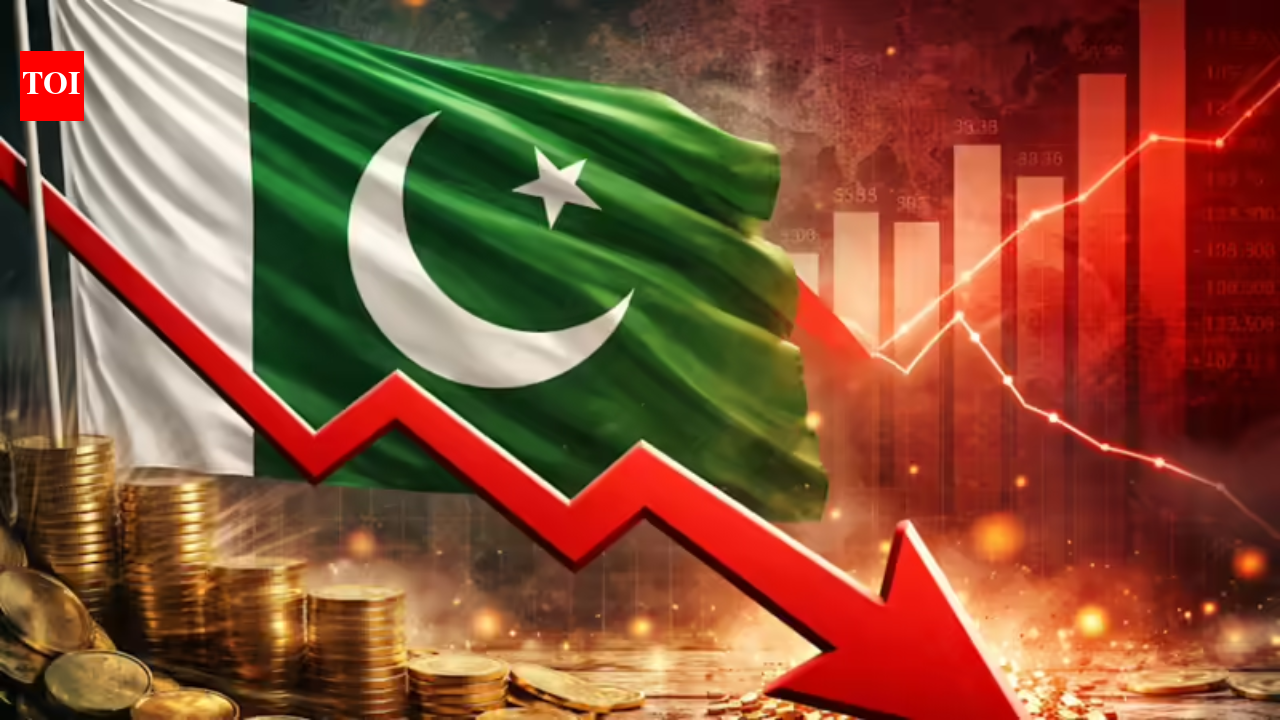
Pakistan’s struggling economy is likely to remain under sustained pressure, with double-digit inflation expected to persist if global oil prices continue to surge amid the ongoing Middle East crisis, according to a report by Dawn.Topline Securities Ltd, in its latest “Pakistan Strategy” report released Saturday, provided a grim assessment of the impact of rising energy costs and regional instability on the country’s economy and stock market. The brokerage described the situation as “prolonged and evolving,” warning that any improvement depends on an immediate and peaceful resolution to the conflict.The report, asx cited by ANI, said that under current conditions, inflation could average between 9 and 10 per cent over the next year, with fourth-quarter FY26 figures expected to exceed 11 per cent. These projections are based on oil prices at $100 per barrel, with every $10 increase adding around 50 basis points to inflation. If oil rises to $120 per barrel, annual inflation could reach 11 per cent, potentially forcing the State Bank of Pakistan into further aggressive interest rate hikes.The rising inflationary pressure is expected to slow economic growth. Topline Securities has cut its GDP forecast for FY27 to between 2.5 and 3.0 per cent from an earlier estimate of 4.0 per cent. Growth for FY26 is projected at 3.5 to 4.0 per cent, but the industrial sector remains vulnerable, with growth possibly dropping to just 1 per cent from nearly 4 per cent.According to Dawn, the current account deficit for FY27 could exceed $8 billion if the government fails to maintain strict import controls, worsening pressure on foreign exchange reserves. The fiscal deficit for FY26 is expected to range between 4.0 and 4.5 per cent of GDP, exceeding targets set by the International Monetary Fund.The Pakistan Stock Exchange has been among the worst-performing markets globally, reflecting the country’s heavy reliance on imported energy. Petroleum imports are projected to reach $15 billion in FY26, while Pakistan imports around 85 per cent of its energy needs. This dependence contributed to a 15 per cent decline in the market during the first quarter of the year.The economic outlook is further affected by a projected 3.5 per cent decline in remittances, with inflows from the Gulf Cooperation Council region expected to fall by 10 per cent. Exports are also forecast to decline by 4 per cent.On the currency front, the Pakistani rupee is expected to weaken to 298 against the US dollar by FY27. Persistent conflict could push depreciation beyond historical averages, increasing pressure on supply and demand.Dawn noted that while domestic exploration firms may eventually increase production to reduce reliance on liquefied natural gas imports, the near-term outlook remains marked by high interest rates, rising urea prices, and a growing dependence on emergency administrative measures to prevent a deeper economic crisis.
Business
OPEC+ set to agree third oil output quota hike since Hormuz closure, sources say | The Express Tribune

Seven OPEC+ members approve 188,000 bpd hike for June but increase remains symbolic until strait reopens
Ships and boats in the Strait of Hormuz, Musandam, Oman, May 1, 2026. PHOTO: REUTERS
OPEC+ is set to agree on Sunday a modest oil output hike, sources said, but the increase will remain largely on paper as long as the United States-Iran war continues to disrupt Gulf oil supplies.
Seven OPEC+ countries have agreed to raise oil output targets by about 188,000 barrels per day in June, the third consecutive monthly increase, the sources said and a draft OPEC+ statement showed.
The move is designed to show the group is ready to raise supplies once the war stops. It is also pressing on with plans to raise output targets despite the departure of the United Arab Emirates from the group this week, sources said.
Read: Oil prices trim gains after UAE exits OPEC, OPEC+
The seven members meeting on Sunday are Saudi Arabia, Iraq, Kuwait, Algeria, Kazakhstan, Russia, and Oman. With the UAE leaving, OPEC+ includes 21 members including Iran, but in recent years only the seven nations plus the UAE have been involved in monthly production decisions.
The Iran war, which began on February 28, and the resulting closure of Hormuz have throttled exports from OPEC+ members Saudi Arabia, Iraq and Kuwait, as well as from the UAE. Before the conflict, these producers were the only countries in the group able to raise production.
The output hike will remain largely symbolic until shipping through the Strait of Hormuz reopens and even then it will take several weeks if not months for flows to normalise, oil executives from the Gulf and global oil traders have said.
Read More: UAE reviewing multilateral ties after OPEC exit but rules out more departures, official says
The disruption propelled oil prices to a four-year high above $125 per barrel as analysts begin to predict widespread jet fuel shortages in one to two months and a spike in global inflation.
Crude oil output from all OPEC+ members averaged 35.06 million bpd in March, down 7.70 million bpd from February, OPEC said in a report last month, with Iraq and Saudi Arabia making the biggest cuts due to constrained exports.
OPEC+ seven members will meet again on June 7, the draft statement said.

Failing High Streets fuel a wider sense of political discontent which could prove crucial in the upcoming elections for English councils in May.
Source link


Princess Royal attends White Ensign Ceremony in Chatham

Israel approves deal to buy fighter jets from US

Karachi’s Shahrah-e-Bhutto to open before Eid ul Adha, announces CM Murad

-

 Tech6 days ago
A Brain Implant for Depression Is About to Be Tested in Humans
-
 Business6 days ago
‘I had £20,000 stolen and had to fight a 13-month fraud reporting rule to get it back’
-

 Tech6 days ago
Almost 90% of women leave tech industry within 10 years | Computer Weekly
-
 Business1 week ago
Pakistan’s oil market is fuelling the crisis | The Express Tribune
-

 Entertainment6 days ago
Melania Trump says ABC should ‘take a stand’ on late-night host Kimmel
-

 Tech5 days ago
This Ambitious Laptop Doesn’t Leave Much Room for Your Hands
-

 Sports5 days ago
Pro wrestling star Steph De Lander reveals how colleague’s advice helped lead her to title triumph at ACW
-
 Business6 days ago
Anta: The Chinese sports brand taking on Nike and Adidas