

Entertainment
A tribute to documentary filmmaker Frederick Wiseman

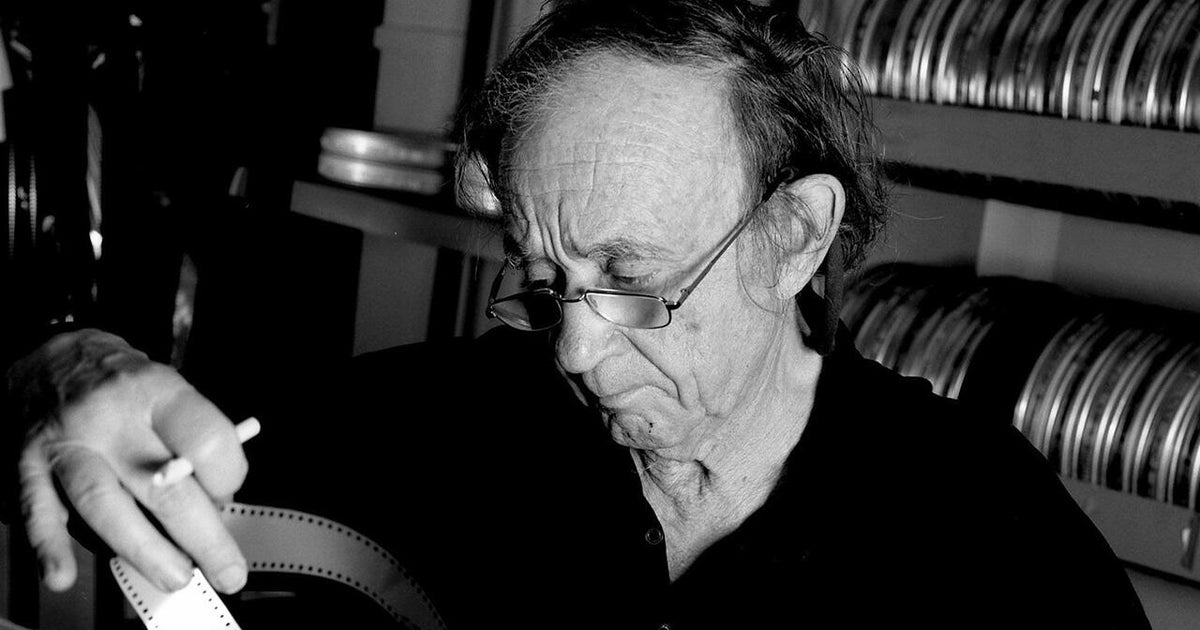
A few weeks ago, we lost a giant in the world of filmmaking. Celebrated documentarian Frederick Wiseman died February 16 at age 96, leaving behind a truly extraordinary body of work. David Pogue spoke with Wiseman last year about his life and legacy:
A Frederick Wiseman documentary doesn’t have a film score. There’s no narration. No text identifying the people or places. No re-enactments. Not even interviews! They often depict meetings, phone calls, and conversations. And these movies are up to six hours long.
Not the ingredients you might expect for masterpieces. At a retrospective last year at New York’s Film at Lincoln Center, one moviegoer, Ainsley, characterized the appeal of Wiseman’s films this way: “He got out of the way and just let things happen as they are.”
In 2016, Wiseman was awarded an honorary Oscar. In accepting his honor, he said, “It’s as important to document kindness, civility, and generosity of spirit as it is to show cruelty, banality, and indifference.”
Wiseman told us last year he didn’t like the term “documentaries” very much: “No. I like ‘movies’ better. It’s simpler. Maybe because when I grew up, documentaries were supposed to be good for you. And I thought what used to be called a documentary could be as funny, as sad, as tragic as a fiction film.”
In his 96 years, he made 44 documentaries without ever telling you who’s speaking, what you’re seeing, or how to feel about it. “You have to answer it yourself,” he said. “My job as an editor is to provide you with enough information in the context of the film so that you’re stimulated to pose that question, and you can answer it yourself.”
Wiseman grew up in Boston, and went to Williams College and Yale Law School. Then in 1966, he filmed an inside look at a state prison for the criminally insane. He called his movie “Titicut Follies.” It caused a sensation — and changed his life.
He filmed prisoners – some half naked – and guards being pretty abusive. And no one told Wiseman to turn off the cameras. “No,” he said. “Once they gave me permission, I had access to everything.”
But “Titicut Follies” was so shocking, and politically embarrassing, that a Massachusetts court banned it.
Years passed. “And then in the mid-’80s, I saw an article that said, ‘Titicut Follies Judge Dead.’ I don’t say that I was displeased with that news!” Wiseman laughed. “I brought a new action in front of a new judge. And ultimately it was cleared.”
Wiseman’s movies go behind the scenes of institutions: a high school, a hospital, a police department, a welfare office, a domestic-abuse shelter. Four of his early films Wiseman described as some of the most depressing films ever made. “There are aspects of some of the early movies that are depressing,” he said. “There are also aspects that are extremely funny, in my view. I mean, if you have a sick sense of humor!”
Zipporah Films 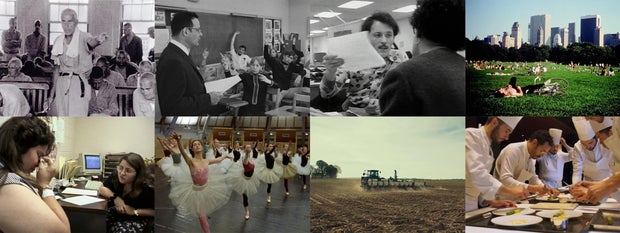
For all his movies, Wiseman served as his own soundman. He also did no research before filming. “Shooting the movie is all chance,” he said. “You never know what people are gonna say and do, which is one of the reasons I have to shoot a lot of film. And for most of films it’s 100-150 hours.”
Does the presence of a film crew subtly affect the way people behave? “Well, that’s the eternal question,” he said. “I don’t think people are good enough actors to suddenly change their behavior.”
After shooting those 150 hours of footage, Wiseman would spend eight to ten months alone in the editing room where, as he freely admitted, he shaped the story. “The notion that these movies are ‘The Truth’ is completely phony,” he said. “It’s one person’s version. It’s my version of a welfare center. Somebody else spending any time in a welfare center would make a completely different movie.”
Zipporah Films 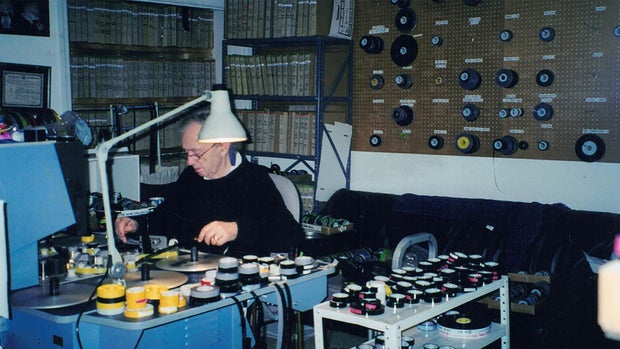
Over the years, Wiseman was occasionally asked to make a trim or two, and he always refused. He said, “It may be pretentious of me, but I think when I find a form for the material, that’s the movie. They’re not isolated sequences.”
In 1971, “60 Minutes” wanted to air his film “Basic Training” – if he’d cut out 30 minutes to fit the time slot. “And I said no, because it wouldn’t be the same movie,” he said. “So, it wasn’t shown.”
What does he think his reputation is with these people? “I hope they’d say, ‘He’s a very nice guy, but he protects his movies,'” Wiseman said.
Wiseman’s movies were never what you’d call theatrical blockbusters. They might play in 60 ot 70 theaters. But they did play on television. “PBS has shown everything,” he said. “PBS has helped me in every single film I made.”
But did they ever say, “Come on, Fred, six hours is too long for this one”? “Well, they said it once or twice, but I said, ‘No.’ And I won!” Wiseman said.
Over the decades, his movies seemed to become more optimistic. For example, his 2020 movie “City Hall” showed how hard the staff of Boston’s mayor worked to improve city life. But Wiseman wouldn’t admit to any kind of shift – no trendline from darker to brighter. “It’s totally random,” he said. “When I’m looking for subjects, you know, it’s a question of what interests me at the moment.”
His last movie, “Menus-Plaisirs – Les Troisgros,” about a fine-dining restaurant in the French countryside, came out in 2023. You can watch all of his movies, for free, on Kanopy.com; you just need a library card.
Meanwhile, they still teach Wiseman in film schools; they still put on Wiseman festivals; and when we visited his home in Cambridge, Massachusetts, his shelves were lined with awards.
“I mean, I obviously like the fact that the films were recognized, and that I get awards, or critics write intelligent reviews,” he said. “But the satisfaction is not that; the satisfaction is the work. I love working. And I love making movies. And I never get tired of sitting in front of the editing machine.”
For more info:
Story produced by Robert Marston. Editor: Emanuele Secci.
- Day being observed under “Shaping a Future at Peace” theme this year.
- President warns of AI misuse, fake news, global media manipulation risks.
- PM highlights journalism’s role in informed society and public awareness.
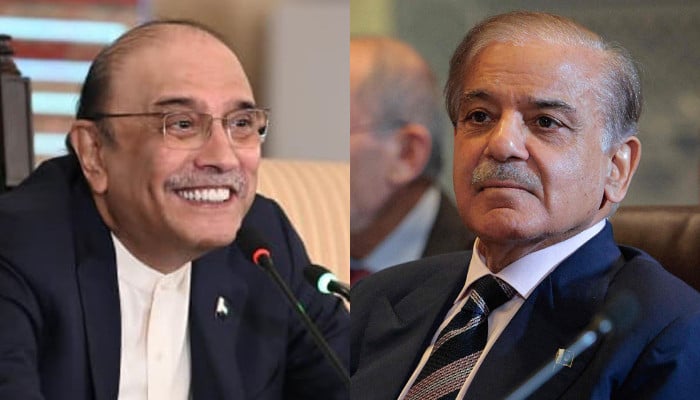
President Asif Ali Zardari and Prime Minister Shehbaz Sharif reaffirmed the government’s commitment to safeguarding and promoting press freedom on World Press Freedom Day.
The day is being observed under the theme “Shaping a Future at Peace” this year.
The president and the prime minister emphasised the role of responsible journalism, truth, and credible information in strengthening democracy, national unity, and creating a conducive environment for media freedom.
In his message, President Zardari extended greetings to media workers globally and warned of increasing global threats to press freedom, including misinformation, disinformation, artificial intelligence misuse, algorithmic manipulation, and pressure from powerful tech platforms and social media companies.
He said such forces can distort public discourse and weaken democratic values. Reaffirming constitutional commitment under Articles 19 and 19-A, he said a free press is essential for accountability, transparency, and democracy.
The president said that this year’s theme highlights that peace depends on truth, and truth depends on courageous journalism.
“At the same time, freedom brings responsibility. Accuracy must not be sacrificed for speed and balance must not give way to partisanship. Public trust, the most valuable asset of free press, must be earned, protected and never taken for granted,”he added.
He also referred to Pakistan’s unified response during Operation Bunyan-um-Marsoos, praising the media for countering false narratives and maintaining national cohesion. The President also paid tribute to journalists who sacrificed their lives in pursuit of truth and called for stronger protections and safer working conditions for media professionals.
He also urged citizens to reject falsehood and support credible journalism, and called upon both federal and provincial governments to ensure enabling laws and safe working conditions for journalists across the country.
Separately, PM Shebhaz paid tribute to journalists and media professionals worldwide for their services, stating that journalism plays a vital role in building an informed society.
He stressed that authentic, unbiased, and verified reporting is the foundation of journalism, while urging media professionals to prevent the spread of propaganda, fake news, and unverified content.
He said responsible journalism contributes to peace by shaping informed public opinion and strengthening international understanding.
He also acknowledged the sacrifices of journalists who lost their lives in the line of duty and emphasised the importance of adapting to digital transformation while maintaining credibility.
Warning against the rise of fake news and disinformation campaigns, he called on journalists to uphold verification, integrity, and professional ethics, reaffirming the government’s commitment to ensuring a safe and enabling environment for press freedom.
He further said that the media can play a constructive role in strengthening international relations, economic cooperation, and societal harmony, and emphasised that while speed is important in the digital era, it must never come at the cost of accuracy and verification, as public trust remains the most valuable asset of journalism.
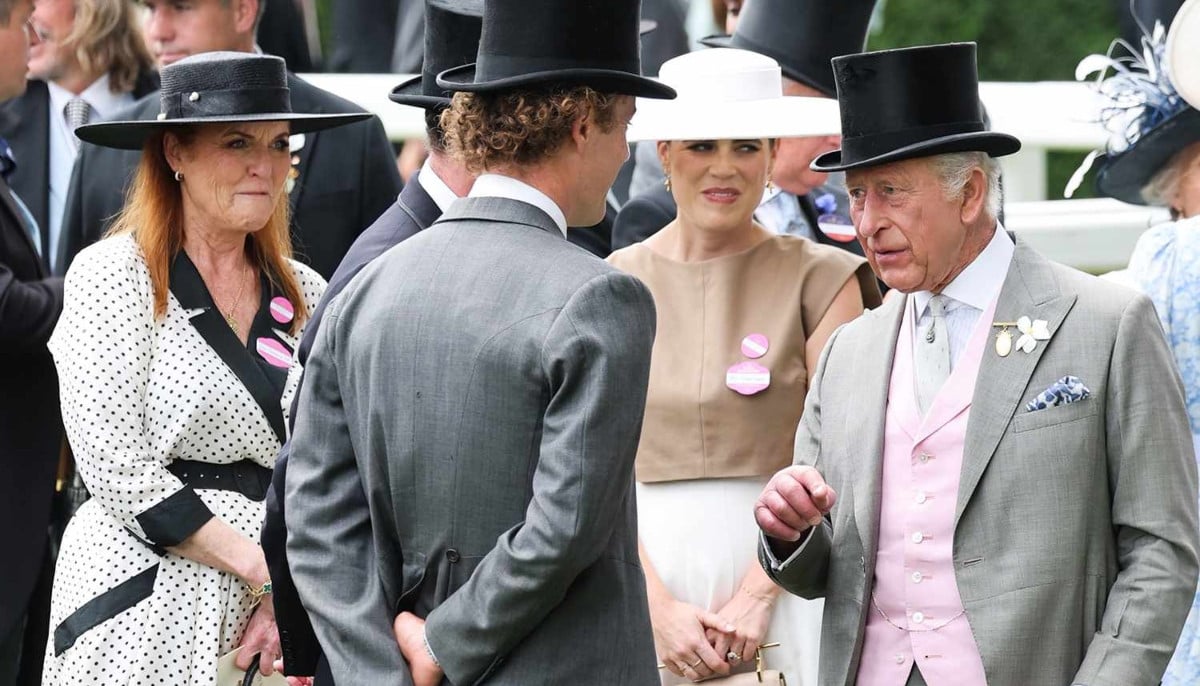
King Charles’ team released a fresh statement as Princess Eugenie once again became the talk of the town due to her third pregnancy rumours.
On the official social media channels of the royal family, the monarch’s personal message has been shared following his trip to Bermuda.
Buckingham Palace revealed that the King expressed gratitude towards the people of Bermuda for welcoming him with big hearts.
“Thank you to all the people of Bermuda for such a wonderful few days and for the fond memories that will last a lifetime,” King Charles began his statement.
He added, “I carry your joyful enthusiasm home with me, with my most heartfelt gratitude for your kind support and for that famous island hospitality. Until we meet again…”
It is worth noting that King Charles’ heartfelt note emerged during a time when both York sisters, Beatrice and Eugenie, were spotted by the cameras.
The daughters of Andrew Mountbatten-Windsor were captured enjoying lunch in Mayfair, London.
However, the detail which attracted fans was Eugenie’s ‘baby bump,’ visible in the photos.
Notably, no official confirmation or rejection has been made by Princess Eugenie or the royal family as of now.
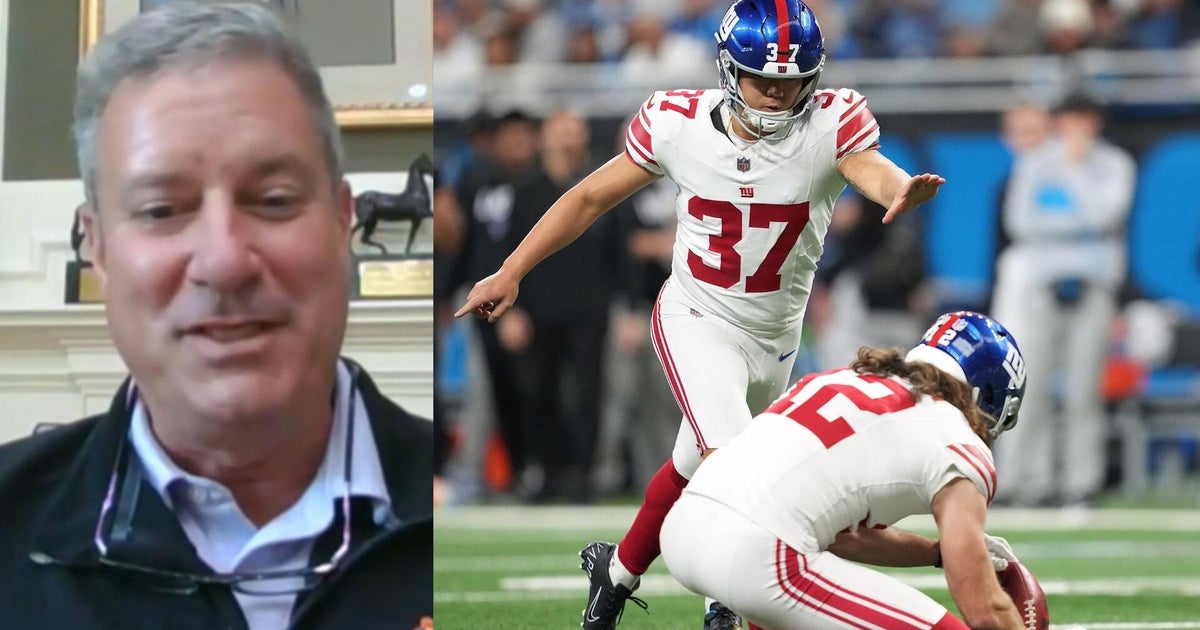
When former New York Giants’ placekicker Younghoe Koo completely missed the ball on a field goal attempt against the New England Patriots last December, the broadcasters weren’t the only ones laughing.
Mark Toothaker, a stallion sales manager for Spendthrift Farm in Lexington, Kentucky, was on the couch cracking up with his wife, Malory, about the whiffed field goal and consequential turnover.
Then, he felt something strange.
“I felt a shock in my left arm, and then I never felt anything else. Had no pain, anything after that,” Toothaker said.
He didn’t wake up for 25 minutes and was told at the hospital that he suffered a seizure.
Doctors also revealed the shocking news that he had a brain tumor the size of a tennis ball.
Luckily, his wife Malory is a nurse.
“Just happened at absolutely the right place if it had to happen,” Toothaker said. “I could have died, I mean, I’m on the road all the time.”
The tumor was benign, and Toothaker was home from the hospital after a whirlwind 24 hours.
But as he prepared for this year’s Kentucky Derby, where he was hoping to be in the winner’s circle with Spendthrift’s horse, Further Ado, he still thought about Koo, and the whiff that led to the tumor’s discovery.
Toothaker reached out to the kicker, who made the Pro Bowl and led the NFL in points with Atlanta in 2020.
“I’d love to have him come to the races, or come visit Spendthrift,” Toothaker said prior to Saturday’s race. “If he wants to go racing, we’ll go racing. If he wants to come out and see the mares and foals, it’d be my honor to come out and show him around this beautiful farm that we have here in Lexington, Kentucky.”
Further Ado ultimately finished Saturday’s Derby in 11th place.


I Lugged the Best Travel Totes on Work Trips, Weekends, and More

Trump says US not likely to accept new Iran peace proposal

President, PM pay tribute media workers on World Press Freedom Day

-

 Tech6 days ago
A Brain Implant for Depression Is About to Be Tested in Humans
-
 Business5 days ago
‘I had £20,000 stolen and had to fight a 13-month fraud reporting rule to get it back’
-

 Tech1 week ago
They Wanted to Join Raya. They’ve Been on the Waiting List for Years
-

 Tech1 week ago
Why Do I Like Dyson’s PencilVac So Much?
-

 Tech6 days ago
Almost 90% of women leave tech industry within 10 years | Computer Weekly
-
 Business7 days ago
Pakistan’s oil market is fuelling the crisis | The Express Tribune
-

 Entertainment6 days ago
Melania Trump says ABC should ‘take a stand’ on late-night host Kimmel
-

 Tech5 days ago
This Ambitious Laptop Doesn’t Leave Much Room for Your Hands