

Business
A ‘war room’ mentality: How auto giants are battling the Nexperia chip crunch


A Honda sedan moves down the assembly line on Jan. 28, 2025 at the automaker’s assembly plant in Marysville, Ohio.
Michael Wayland / CNBC
Global automakers are once again bracing for production disruptions due to a potential shortage of automotive semiconductor chips, this time sparked by the Dutch government amid geopolitical tensions between the U.S. and China.
Honda Motor became the first known automaker this week to reduce production due to the problem that involves chips from Netherlands supplier Nexperia, which is owned by Chinese company Wingtech Technology Co.
The industry was hopeful that a meeting this week between President Donald Trump and Chinese leader Xi Jinping in Asia would provide some relief, but no resolution on the chips issue has been announced.
Volkswagen on Thursday reportedly said it has until at least next week before its supplies impact production, while other major automakers have said they are monitoring the situation around the clock, attempting to mitigate disruptions.
“The chip situation from Nexperia, we have a cross-functional ‘war room’ in the building where I’m sitting that has this as [a] primary job,” Stellantis CEO Antonio Filosa told investors during a quarterly call Thursday. “And every day we are pushing actions and projects to extend our period. There is a day-by-day management of what is an industrywide global issue.”
U.S. President Donald Trump and Chinese President Xi Jinping shake hands as they depart following a bilateral meeting at Gimhae Air Base on October 30, 2025 in Busan, South Korea.
Andrew Harnik | Getty Images
Such “war rooms” have become a regular practice in the automotive industry amid supply chain disruptions, which have become more common since the Covid pandemic rattled production and deliveries of many parts, including chips, starting in 2020.
Several automotive industry insiders confirmed to CNBC that war rooms have been established in their companies, as they look into alternative purchasing methods. They included working with major suppliers in an attempt to find alternative sources as well as buying on the open market.
“Suppliers across the motor vehicle industry are working to understand the potential effects on production and supply continuity,” MEMA, the largest vehicle supplier association in the U.S., said in an emailed statement. “Chips and diodes are foundational to automotive components and systems, from infotainment systems to door handles, to steering and braking. Even the absence of a single diode or chip can disrupt the manufacture of vehicles.”
Nexperia
The situation involving Nexperia began late last month, when the Dutch government took control of the company, in what was seen as a highly unusual move, reportedly after the U.S. raised security concerns.
In making the decision, the Dutch government cited fears that tech from the company — which specializes in the high-volume production of chips used in automotive, consumer electronics and other industries — “would become unavailable in an emergency.”
China responded by blocking exports of the firm’s finished products, sparking alarm in Europe’s auto industry.
German automakers are especially sensitive to Nexperia-related disruptions because they rely heavily on large, domestic suppliers, known as “Tier 1s,” and local production facilities and companies, such as Nexperia, despite much of its manufacturing moving to China.
The European Automobile Manufacturers’ Association said this week that carmakers were close to closing production lines because of the chip shortage, which comes four years after a shortage of such parts amid the coronavirus pandemic.
A close-up view of the Nexperia plant sign in Newport, Wales on April 1, 2022.
Matthew Horwood | Getty Images News | Getty Images
“This means assembly line stoppages might only be days away. We urge all involved to redouble their efforts to find a diplomatic way out of this critical situation,” ACEA Director General Sigrid de Vries said in a statement.
The chips affected are legacy semiconductors used in basic vehicle functions such as windshield wipers and window controls — parts that lack sufficient alternative sources, according to S&P Global Mobility.
A Nexperia spokesman referred to a previous statement from the company, which summarized the ongoing situation and said it is seeking an exemption from the export restrictions and working to mitigate the impacts of the decision.
A Wingtech spokesperson on Thursday condemned the Dutch government’s actions, saying the company “will robustly defend its rights and use every legal avenue to do so.”
“Only by restoring full control and ownership rights to the company’s rightful shareholders and management, and by ceasing political interference in corporate governance, can the Dutch government begin to repair the damage to its reputation, de-escalate international tension, and safeguard its own and European economic security,” the spokesperson said via an emailed statement.
Fluid situation
Honda’s production cuts impacts include all of its main North American plants, including large vehicle assembly and supporting facilities across the U.S., Canada and Mexico.
“We are currently managing an industrywide semiconductor supply chain issue, making strategic adjustments to production as necessary to carefully manage the available supply of parts and meet the needs of our customers,” Honda said Thursday in an emailed statement, calling it a “fluid” situation.
The impacts are expected to continue to spread to other automakers if a resolution is not found.
Ford Motor CEO Jim Farley last week said the chip problem was at the forefront of conversations when he made a trip to Washington, D.C, earlier this month. He called it a “political issue,” saying the company is working with the U.S. and China administrations to resolve it.
“It’s an industrywide issue. A quick breakthrough is really necessary to avoid fourth-quarter production losses for the entire industry,” said Farley, adding that automakers have gotten “really good” at maximizing component purchases such as chips following the crisis in 2021.
General Motors CEO Mary Barra made similar comments last week, calling it an “industry issue” that will hopefully be resolved soon.
“While this has the potential to impact production, we have teams working around the clock with our supply chain partners to minimize possible disruptions. The situation is very fluid and we will provide updates throughout the quarter as appropriate,” she said during the company’s quarterly earnings call.
Other automotive executives from Volvo, Mercedes-Benz and more have also shared similar thoughts with investors and the media.
“This is a politically induced situation … which means that the solution to this, or the resolution to this, resides in the political space, primarily between the United States and China, in this case, with Europe kind of caught in the middle,” Mercedes-Benz CEO Ola Källenius said Wednesday during an earnings call.



The BBC has heard concerns about poverty and cost of living from St Helier Central voters.
Source link
Business
Versant stock jumps 10% after company’s Q1 report shows bright spots in licensing, platforms

Versant Media Group on Thursday unveiled results for its most recent quarter — its first as a stand-alone company after separating from Comcast’s NBCUniversal and beginning to trade on the Nasdaq earlier this year.
The report revealed continued pressure in the traditional pay TV bundle but highlighted growth in digital platform and licensing businesses.
Versant stock rose roughly 10% in early trading.
Linear distribution revenue for its pay TV networks — which include CNBC, MS NOW and the Golf Channel as well as USA, E!, Syfy and Oxygen — was down roughly 7% during the period to $1.01 billion. The company said that was due to subscriber declines and partially offset by rate increases.
Advertising revenue for the first quarter fell 5% to $368 million, which was considered an improvement from the same period last year when it posted a 12% decline.
Revenue from content licensing, however, rose 113.5% to $121 million, due largely to the licensing of the longtime reality TV series hit “Keeping Up With the Kardashians” and other related content to Disney’s Hulu.
Revenue from Versant’s platforms business, which includes Fandango, GolfNow and some of the already launched direct-to-consumer units, was up 9.5% to $192 million.
CEO Mark Lazarus said on Thursday’s earnings call with investors that the company aims to “build scale and expand our audiences” in direct-to-consumer.
“Yes, we hope that comes with a large base of subscribers, and we’ll gauge ourselves as [to] how do revenues look across all of our various forms of distributing content,” he said.
Lazarus added that the company is working to make sure it grows “revenue diversification within each of our verticals.”
More than 80% of Versant’s revenue comes from the pay TV business. However, executives have told Wall Street that it aims to eventually rebalance its revenue mix so that 50% is derived from its digital, platform, subscription, ad-supported and transactional businesses.
Overall revenue for the period ended March 31 was down about 1% compared with the same quarter last year to $1.69 billion. Wall Street analysts polled by LSEG had expected revenue of $1.62 billion.
Net income attributable to Versant decreased 22% to $286 million, or $1.99 per share, for the quarter, which the company said was due to lower revenue, higher public company costs and interest expense following the spinout from Comcast. This was partially offset by lower taxes during the quarter, it said.
Adjusted earnings before interest, taxes, depreciation and amortization fell 7% from the same period last year to $704 million.
When compared with stand-alone adjusted EBITDA, a metric to more directly compare performance of the pre-spin portfolio companies to current results, adjusted EBITDA was up about 5%, Versant said. That was due to lower entertainment programming expenses and reduced selling, general and administrative costs, which offset revenue declines.
Growth avenues
Versant has consistently touted its strength in sports and news. On Thursday the company highlighted viewership increases for CNBC and MS NOW as well as continued momentum for the Golf Channel and other live sports and events on its networks.
The company has been exploring growth through mergers and acquisitions, and obtaining more sports rights. On Thursday, Lazarus said Versant has been “looking in a variety of areas” when it comes to potential deals.
CFO and COO Anand Kini added during Thursday’s call that while exploring M&A remains a part of Versant’s strategy, the company is also looking to maintain a healthy balance sheet and is focused on organic growth within its businesses.
“Our platforms revenue growth this quarter demonstrates that was really organic growth in GolfNow and Fandango,” Kini said. “So we’re going to look when there’s opportunities that are inorganic, [but] they have a very high threshold even as they fit within those markets and those strategies.”
The company also continued on its earlier pledge of returning capital to its shareholders, mainly due to its light debt load.
The company on Thursday declared a quarterly cash dividend for the second quarter in a row, each time at 37.5 cents per share. The new dividend is payable on July 22 to shareholders of record as of the close of business on July 1.
Versant also announced that it expects to enter into a $100 million accelerated share repurchase agreement, beginning Friday, which it anticipates completing during the second quarter. Versant repurchased nearly 2.7 million shares of Class A common stock during the first quarter, with a remaining authorization of roughly $900 million as of March 31, it said.
Disclosure: Versant is the parent company of CNBC.
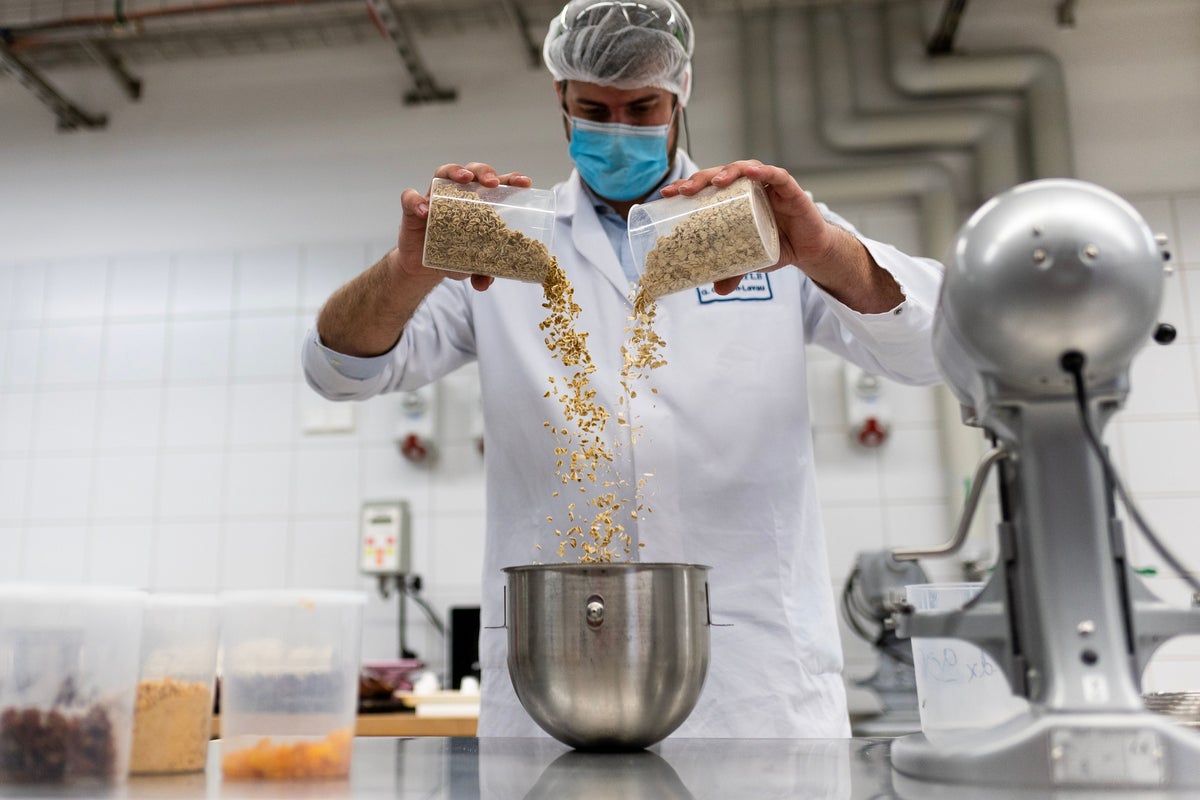
Sweetener and ingredients firm Tate & Lyle has revealed talks over a possible £2.7 billion takeover by US rival Ingredion Incorporated in the latest swoop on a UK company.
London-listed Tate & Lyle said it had received an approach from Illinois-based Ingredion worth 615p per share in cash, which follows a number of earlier proposals.
Tate and Ingredion are now in discussions, but Tate stressed there was no certainty an offer will be made.
Ingredion has until 5pm on June 11 to make a firm offer or walk away under Takeover Panel rules.
It comes amid a spate of approaches for British firms by overseas suitors, with laboratory testing company Intertek earlier this week giving its backing to a £9.4 billion proposal from Swedish firm EQT.
Shares in Tate & Lyle soared by over 50% in afternoon trading on Thursday.
But the takeover tilt comes after shares have come under pressure over the past year, with Tate warning over full-year profits last October and revealing a 10% drop in first half profits in November.
Tate & Lyle last year bought food and drink ingredients business CP Kelco in a deal worth around £1.4 billion.


Here’s how Marco Rubio avoids Chinese sanctions to reach Beijing

Taliban regime detains three journalists in Afghanistan, says UN

GFS 2026: Bio-based materials have arrived. Can fashion scale them?

-

 Tech6 days ago
A new frontier: Identity stack evolves for agentic systems | Computer Weekly
-

 Tech6 days ago
‘Orbs,’ ‘Saucers,’ and ‘Flashes’ on the Moon: Pentagon Drops New UFO Files
-
 Fashion6 days ago
New orders in German manufacturing up 5% MoM in Mar 2026: Destatis
-

 Tech6 days ago
Nick Bostrom Has a Plan for Humanity’s ‘Big Retirement’
-

 Sports6 days ago
Shaheen Afridi achieves landmark feat during opening Test against Bangladesh
-

 Entertainment6 days ago
Rihanna embraces new tattoo given by children
-

 Tech6 days ago
Immersive narratives: how VR transforms industries through storytelling | Computer Weekly
-
 Fashion6 days ago
US’ Carter’s taps retail veteran Sharon Price John as new CEO