

Politics
Activist exonerated in major victory after Hindutva riot conviction overturned

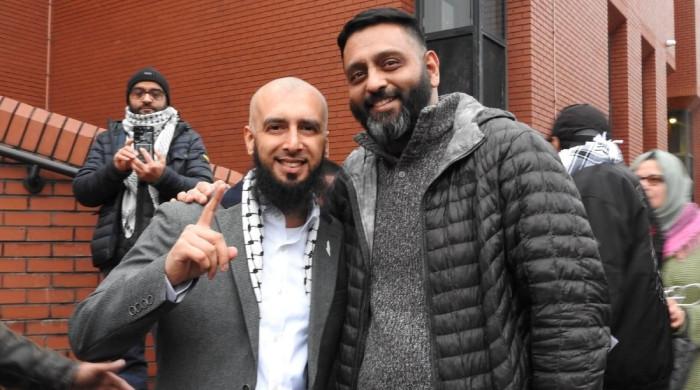
LONDON: In a monumental legal victory, Leicester-based Muslim activist Majid Freeman has been exonerated after a retrial led to the quashing of his conviction for a public order offence related to the 2022 Hindutva-inspired riots in Leicester.
Freeman, whose parents are originally from Indian Gujarat and who has spent the last three years facing relentless legal pressure, is now officially vindicated as he has been cleared of all charges. Geo News has extensively covered the aftermath of the riots and had interviewed Majid Freeman and other activists from all communities.
Freeman, who was imprisoned in 2024 after being convicted of “intending immediate unlawful violence” and using abusive language towards a police officer during the unrest, has seen his conviction overturned after the retrial confirmed the evidence against Freeman was baseless.
Judge Robert Brown, presiding over the case at Leicester Crown Court, stated that the prosecution had failed to prove Freeman’s intent, adding that Freeman’s positive contributions to the community were clear.
“We have listened with great care to the evidence provided by Mr Freeman. As a witness, he impressed us. He was measured, restrained, and showed humility when providing evidence,” Judge Brown said. “It is clear that he has consistently worked as a bridge-builder with the police to foster harmony in his community.”
“We are not satisfied that the Crown has proven that Mr Freeman acted with intent, and we have quashed his conviction following the appeal,” Judge Brown added.
Though the police officers involved in the events of September 17, 2022, were acknowledged for their efforts, the judge found the allegations against Freeman — ranging from pushing an officer to provoking violence — insufficient and unsubstantiated. The court noted Freeman’s use of strong language but emphasised that there is a vast difference between heated speech and actual threats.
Critical evidence presented during the retrial and police body-worn footage revealed Freeman’s attempt to de-escalate the situation on the night of the disorder. In fact, Freeman had been at Spinney Hill Police Station just hours before the violence erupted, where he was thanked by Leicestershire Police for his role in calming tensions.
Speaking outside the courthouse after the ruling, Freeman expressed his relief and frustration at the prolonged legal battle. “Today, I stand fully exonerated after a long and deeply distressing prosecution by Leicestershire Police. For more than three years, this case has loomed over my family and me, causing immense anxiety and strain. No one should have to endure such an ordeal for standing with their community and working to prevent harm,” Freeman said.
Freeman was visibly shaken by the toll the case had taken on him and his loved ones. “Despite serious provocation, I consistently called for calm, and as the court heard today, I helped save the life of a young Hindu man on the night of the unrest,” Freeman continued. “I worked alongside community leaders, councillors, and the police to de-escalate tensions and protect lives. The evidence made that clear.”
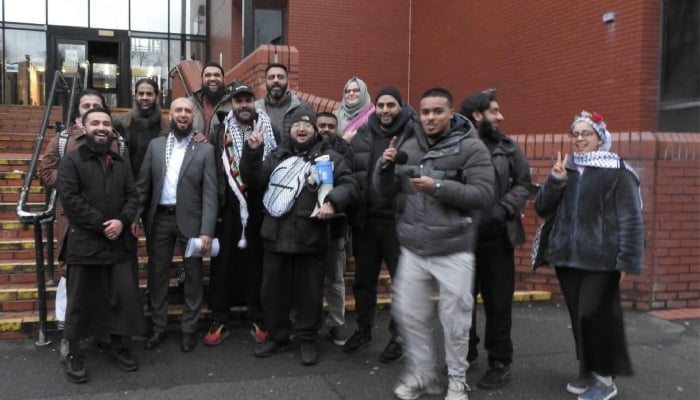
Freeman did not hold back his anger at the injustice he had faced: “I did not incite disorder. Instead, ordinary people were left to protect their communities when the police failed to keep the peace. Instead of reflecting on their own failings, Leicestershire Police chose to pursue someone they had previously relied upon. I am relieved this ordeal has ended, and I hope today’s outcome leads to serious reflection on the real threat of Hindutva extremism, which has been ignored for far too long.”
The Leicester unrest of 2022 was triggered by heightened religious tensions between the Muslim and Hindu communities, inflamed by the arrival of Hindutva ideology in the UK. This radical, supremacist ideology, which has been linked to violent sectarianism in India, found its way onto the streets of Leicester, leading to the violent clashes that Freeman was wrongfully accused of inciting.
On September 17, a mob of approximately 300 BJP and RSS supporters, many of whom were masked and carrying weapons, marched toward a Muslim-majority area in Leicester, chanting provocative slogans. Tensions rapidly escalated, resulting in missile throwing, injuries, and clashes between the two communities.
During the retrial, key witnesses came forward to speak about Freeman’s peacekeeping efforts during the riots. Local Hindu resident Ajay Nagla, who had known Freeman for years, was among the most compelling witnesses. He testified that Freeman was actively working to calm tensions and that right-wing extremists were the primary instigators of the violence.
“I was trying to do the same thing, trying to defuse the situation,” Nagla said. “I did not see Majid use violence. He was working to calm things down.” Nagla’s testimony, along with other local accounts, highlighted Freeman’s heroic role in preventing further bloodshed.
Additionally, a Sky News video from the night of the unrest was presented as key evidence. The footage showed Freeman shielding a local Hindu man, Ram Keshwala, from a violent mob.
The UK Islamic Mission (UKIMC) issued a statement celebrating Freeman’s acquittal, declaring: “This judgment decisively overturns the earlier conviction and marks an important moment of justice. It is a clear rejection of the Hindutva-aligned narrative that sought to portray Muslims as the sole instigators of the unrest.”
Claudia Webbe, the former MP for Leicester East, also expressed her support for Freeman, stating in a statement after the ruling: “As a former MP for Leicester East, I regarded Majid Freeman as a trusted mediator, anti-knife crime campaigner, and community organiser doing good deeds who sought to bring harmony to communities. I welcome his acquittal and was pleased to provide evidence in support.”
Speaking outside the court, Freeman reaffirmed his dedication to empowering the local Muslim community, fostering interfaith dialogue, and championing human rights.
“With the legal victory in this case behind me, I now turn my attention to the upcoming Gaza-related trial in April, where I face accusations of supporting terrorism simply for speaking out against genocide. InshaAllah, I will be exonerated once again,” Freeman declared, expressing his gratitude for the continued support of his community.
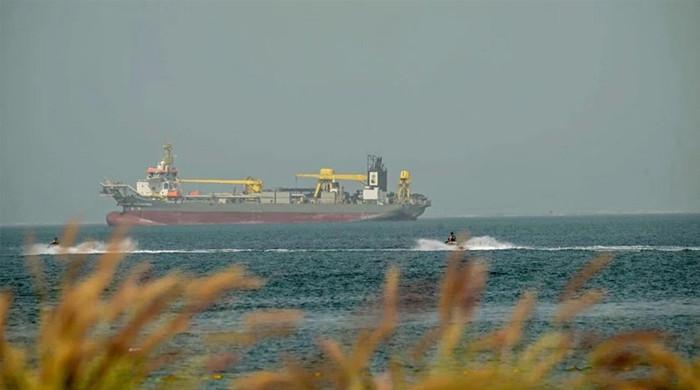
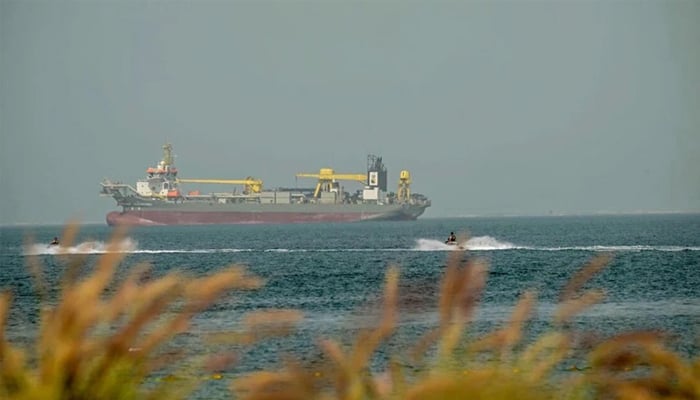
The global positioning system (GPS) capabilities of cargo ships, oil tankers and other vessels stuck in the Middle East because of the widening war are likely worse than those in your cell phone.
Experts say this deficiency explains why since the start of US-Israeli strikes, the jamming of satellite navigation signals has left about 1,000 ships in the Gulf and the Gulf of Oman unable to determine their location, either momentarily or continuously.
Dimitris Ampatzidis, a senior risk and compliance analyst for the energy market intelligence firm Kpler, told AFP the number represents about half of the vessels in the area.
The vast majority of those ships are located off the United Arab Emirates and Oman.
A satellite navigation system is made up of a constellation of satellites that send signals with the time to Earth, allowing the receiver to determine its precise location.
Modern smartphones receive signals from four groups of satellites: the American, European (Galileo), Russian (GLONASS) and Chinese (BeiDou) Global Navigation Satellite Systems (GNSS).
Most cell phones now use two GPS frequency bands — one that is older and fainter, and a second that is newer and stronger.
But “many ships only listen to the original civilian GPS signal, which is called the L1 C/A signal. It’s the one that’s been around since the early 1990s for civilian use,” Todd Humphreys, an engineering professor at the University of Texas at Austin, told AFP.
Most ships are thus unable to rely on the BeiDou or Galileo systems in the event that a GPS is jammed.
The situation is even worse for airplanes, due to aviation regulations.
“You will not find any aircraft flying in the world today whose built-in GPS receiver is capable of tracking and interpreting signals other than the GPS L1 C/A. So it´s out of date by 15 years,” Humphreys said.
Spoofing
Jamming a GPS signal is “not that complicated,” said Katherine Dunn, the author of an upcoming book of the history of GPS, “Little Blue Dot.”
All one needs is “another radio transmitter that can broadcast on the same frequency, but louder,” she said, which creates “a wall of mush.”
Spoofing is more sophisticated — and more dangerous, affecting a ship’s Automatic Identification System, or AIS.
Every vessel transmits a message per second over a universal radio frequency that announces its identity, destination and position.
Spoofing manipulates that system, causing the affected ship to send a fake, or even nonsensical, location — meaning that ships could appear to be on land in Iran or the Emirates.
Clocks
Today, GPS signals are not just used to determine location; they also power onboard clocks, radar systems and speed logs, Dunn said.
So even if the ships off the Emirates or Kuwait were protected from drone fire and escorted through the Strait of Hormuz, navigating without a GPS would be perilous.
“Given the size of the ships, electronic assistance has become necessary to steer them,” said one merchant marine captain who has sailed on cargo ships around the world.
Crews must “resort to using 20th-century instruments — radar or visible landmarks,” he told AFP on condition of anonymity.
Defensive jamming
Signal jamming is undoubtedly being used both offensively and defensively. Gulf states are directing their systems towards their own shores to ward off Iran’s satellite-guided Shahed drones — at the cost, deemed acceptable, of disrupting their own lives.
Israel did the same thing in 2024, as did Iran after its 12 days of conflict with Israel last year.
“Even if their own air traffic or maritime traffic or their delivery drivers or their dating apps are affected by GPS jamming and spoofing, they’ll do it, just like Israel did. Israel did it for a year in 2024,” Humphreys said.
For air and sea navigation, start-ups are developing alternative technologies using Earth’s magnetic field or inertial navigation.
But for ships today, navigating without a GPS is still far in the future.
- Iran was warned of possible retaliation, sources say.
- Saudi foreign minister spoke to Iranian counterpart.
- Iran’s president apologises to Gulf states for ‘actions’.
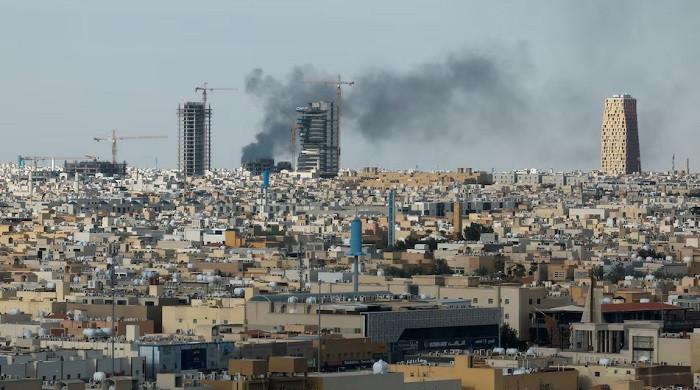
Saudi Arabia has told Tehran that while it favours a diplomatic settlement to Iran’s conflict with the United States, continued attacks on the kingdom and its energy sector could push Riyadh to respond in kind, four sources familiar with the matter told Reuters.
The message was conveyed before a speech on Saturday in which Iranian President Masoud Pezeshkian apologised to neighbouring Gulf states for Tehran’s actions — an apparent attempt to defuse regional anger over Iranian strikes that hit civilian targets.
Two days earlier, Saudi Foreign Minister Prince Faisal bin Farhan spoke to Iranian Foreign Minister Abbas Araqchi and set out Riyadh’s position with clarity, the sources said.
Saudi Arabia is open to any form of mediation aimed at de‑escalation and a negotiated settlement, the sources quoted the minister as saying, underlining that neither Riyadh nor other Gulf states had let the US use their airspace or territory to launch airstrikes on Iran.
But Prince Faisal was also quoted by the sources as saying that if Iranian attacks persisted against Saudi territory or energy infrastructure, Saudi Arabia would be forced to permit US forces to use their bases there for military operations. Riyadh would retaliate if attacks on the kingdom’s critical energy facilities continued, he said.
The sources said the kingdom had remained in regular contact with Tehran through its ambassador since the US and Israeli military campaign against Iran began on February 28, following the collapse of talks on Iran’s nuclear programme.
The Saudi and Iranian foreign ministries did not respond to requests for comment.
Drone, missile attacks on Gulf States
The United Arab Emirates, Kuwait, Qatar, Bahrain and Saudi Arabia have all come under heavy drone and missile fire from Iran over the past week.
Iran’s Supreme Leader, Ayatollah Ali Khamenei, was killed on the first day of the war. Tehran responded by hitting Israel and Gulf Arab states hosting US military installations, and Israel has attacked Lebanon’s Iran-backed Hezbollah armed group.
Araqchi said in an interview on Saturday that he remained in constant contact with his Saudi counterpart and other Saudi officials, adding that Riyadh had assured Tehran it was fully committed to not allowing its territory, waters or airspace to be used for attacks against Iran.
Pezeshkian said Iran’s temporary leadership council had approved suspending attacks on nearby countries – unless an attack on Iran came from those nations.
“I personally apologise to neighbouring countries that were affected by Iran’s actions,” he said.
To what extent Pezeshkian’s remarks signal a change is unclear. There were further reports of strikes directed at Gulf states on Saturday.
Also, in a sign of possible divisions within Iran’s leadership, Khatam al-Anbiya Central Headquarters – the unified combatant command of the Iranian armed forces – said in a statement afterwards that US and Israeli bases and interests across the region would remain targets.
The command said Iran’s armed forces respected the sovereignty and interests of neighbouring states and had not taken action against them so far. But it said US and Israeli military bases and assets on land, at sea and in the air across the region would be treated as primary targets and face “powerful and heavy” strikes by Iran’s forces.
US President Donald Trump said in a social media post that Iran had “apologised and surrendered to its Middle East neighbours, and promised that it will not shoot at them anymore. This promise was only made because of the relentless US and Israeli attack.”
Two Iranian sources confirmed that a call had taken place in which Riyadh warned Tehran to halt attacks on Saudi Arabia and neighbouring Gulf states. Iran, they said, reiterated its position that the strikes were not aimed at Gulf countries themselves but at US interests and military bases hosted on their territory.
One Iranian source said that Tehran had, in response, demanded that US bases in the region be closed and that some Gulf states stop sharing intelligence with Washington that Iran believes is being used to carry out attacks against it.
Another Iranian source said some military commanders were pressing to continue the strikes, accusing the US of using bases in Gulf states and these countries’ airspace to conduct operations against Iran.
Iran had in recent years mended fences with its Gulf neighbours, including former regional arch-rival Saudi Arabia. The diplomatic campaign imploded in the blitz of drones and missiles launched by Iran’s Revolutionary Guards in the past week.
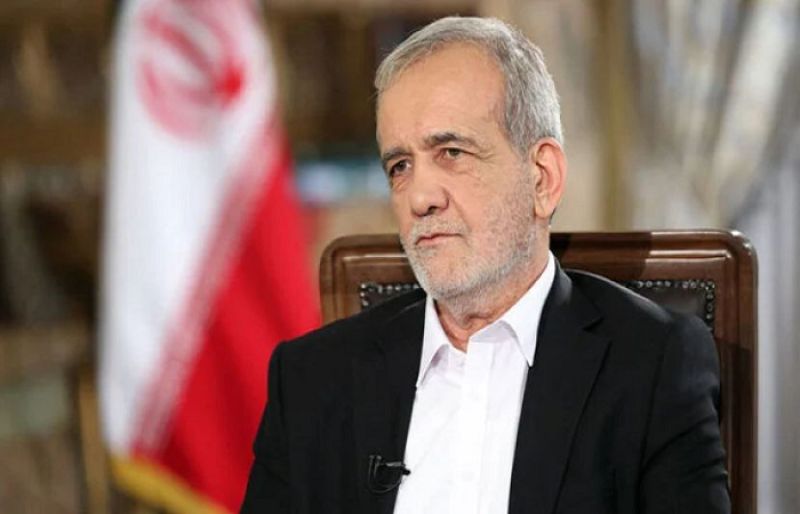

Iranian President Masoud Pezeshkian has issued a significant statement aimed at easing regional tensions, assuring that Iran will not launch missile strikes or take aggressive action against neighbouring countries.
The president said the decision was taken with the approval of the Interim Leadership Council, stressing that Iran’s policy of non-aggression will remain in place as long as no attacks are carried out on Iranian territory.
Commitment to Peace
In a message shared on social media, Pezeshkian said Iran harbours no hostility toward regional countries and expressed regret over the recent tensions affecting neighbouring states.
“We harbor no hostility toward regional countries and apologize for the recent situation with our neighbors,” the president said.
Sovereignty Will Be Protected
While calling for peace, Pezeshkian also emphasized that Iran’s sovereignty and national security would not be compromised.
He added that diplomatic efforts and mediation aimed at ending the ongoing conflict should be led by the countries that initiated the confrontation.
Regional De-escalation Efforts
The statement comes amid rising tensions in the Middle East following military exchanges involving Iran, Israel, and the United States, prompting calls from several countries for de-escalation and dialogue to restore regional stability.


Special loan facility for Feb wages in Bangladesh’s export units

Let girls fly

Why have 1,000 ships at times lost their GPS in the Mideast?

LPGA legend shares her feelings about US women’s Olympic wins: ‘Gets me really emotional’

India Us Trade Deal: Fresh look at India-US trade deal? May be ‘rebalanced’ if circumstances change, says Piyush Goyal – The Times of India

South Korea’s Misto Holdings completes planned leadership transition

-
 Sports1 week ago
LPGA legend shares her feelings about US women’s Olympic wins: ‘Gets me really emotional’
-
Business1 week ago
India Us Trade Deal: Fresh look at India-US trade deal? May be ‘rebalanced’ if circumstances change, says Piyush Goyal – The Times of India
-

 Entertainment1 week ago
Pakistan’s semi-final qualification scenario after England defeat New Zealand
-
 Fashion1 week ago
South Korea’s Misto Holdings completes planned leadership transition
-

 Entertainment1 week ago
Bobby J. Brown, “The Wire” and “Law & Order: SUV” actor, dies of smoke inhalation after reported fire
-
 Business1 week ago
Greggs to reveal trading amid pressure from cost of living and weight loss drugs
-
 Business1 week ago
CNBC To Merge TV And Digital News Operations, Nearly A Dozen Jobs To Be Cut: Report
-

 Entertainment1 week ago
What’s new in Pokémon? Every game, update, surprise from 30th anniversary event